What does a Western Mediterranean cruise on Norwegian Epic actually look like, port by port? In short: you sail a loop of the region’s greatest cities and coastlines from a floating base, waking up in a new place most mornings and spending your days ashore in Barcelona, the Balearic Islands, Provence, the French Riviera, Corsica, and the big Italian ports for Florence, Rome and Naples. This Western Mediterranean cruise guide walks you through each stop on Epic’s summer season, what to prioritize when you have only a day, and the practical realities — inland sights, all-aboard timing, the euro, passports and summer heat — that decide whether your trip runs smoothly or leaves you sprinting for the gangway.
Everything in this article and far more, deck by deck, in The Ultimate Guide to Sailing on Norwegian Epic.
Get the book →How Norwegian Epic’s Western Mediterranean season works
Norwegian Epic spends her marquee summer season in the Western Mediterranean, running seven-night voyages that come in two shapes. The first is a round-trip from Barcelona, where you start and end in the same city. The second is a one-way sailing between Barcelona and Rome (the port is Civitavecchia, roughly an hour and a half from the city center), which you can book in either direction. Both cover a similar arc of ports, but the one-way format lets you tack extra days onto whichever end city you’d rather explore on land.
Across these itineraries the ports typically include Palma de Mallorca in the Balearic Islands, Marseille or Toulon for Provence, Cannes on the French Riviera, Ajaccio on Corsica, Livorno for Florence and Pisa, Civitavecchia for Rome, and Naples for Pompeii, Capri and the Amalfi Coast. No single seven-night sailing hits every one of these — exact ports and the order vary by departure date, so the first thing to do once you’ve booked is open the NCL app and confirm your specific itinerary. That tells you which ports you get, your arrival and departure times in each, and how much daylight you’ll actually have on the ground.
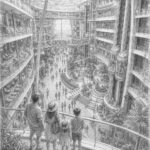
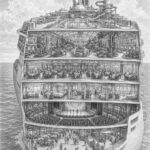
Epic herself is a huge, feature-packed megaship — around 155,000 gross tons, roughly 19 decks, and about 4,100 guests at double occupancy — built entirely around Freestyle Cruising. That matters for a port-heavy trip: because there are no fixed dining times and no assigned tables, you can come back from a long day ashore whenever you like and still find somewhere to eat. You’re not racing a 6:00 or 8:00 seating. That flexibility is one of the quiet advantages of doing the Med on this particular ship, and it’s worth understanding before you sail if you’re new to the line. Our first-timer’s guide to Norwegian Epic Freestyle breaks down how dining, dress and reservations really work day to day.
The single most important thing: many marquee sights are inland
If you take one planning lesson from this guide, make it this one. Several of the Western Mediterranean’s headline attractions are not at the port — they’re well inland, reached by a transfer, tour bus or train. Florence and Pisa are inland from the port of Livorno. Rome is inland from Civitavecchia. Pompeii and the towns of the Amalfi Coast are a drive from Naples. In each of these cases, the port town itself is not the main event; the reason you’re there is somewhere else entirely, and getting to it eats a meaningful chunk of your day.
This shapes every decision. It means you should choose in advance between an organized shore excursion and a well-planned independent trip by train or private transfer, rather than winging it on the pier. It means you should build in a comfortable buffer for the return leg, because traffic, a delayed train or a slow queue can turn a relaxed afternoon into a panic. And it means all-aboard time is not a suggestion. The ship leaves when it says it will. If you’re on an official NCL excursion and the group runs late, the ship waits for you; if you’re traveling independently and miss the all-aboard, you are responsible for getting yourself to the next port at your own expense. For the inland ports especially, that risk is real, so err toward earlier trains back and give yourself margin.
The flip side is the payoff. This is a region where a single week pairs beaches and glamour with some of the greatest art, history and food anywhere — Gaudí, ancient Rome, Renaissance Florence, Pompeii, the Riviera — all reachable as day trips from your cabin. You just have to respect the logistics to collect them.
Barcelona: your embarkation city (arrive early)
Barcelona is where most of these voyages begin, and it deserves more than the few hours you get on embarkation day. The strong recommendation is to fly in a day or two ahead. It cushions you against flight delays and lost luggage, it lets you shake off jet lag before the ship, and it gives you a proper run at one of Europe’s best cities instead of a rushed dash to the terminal.
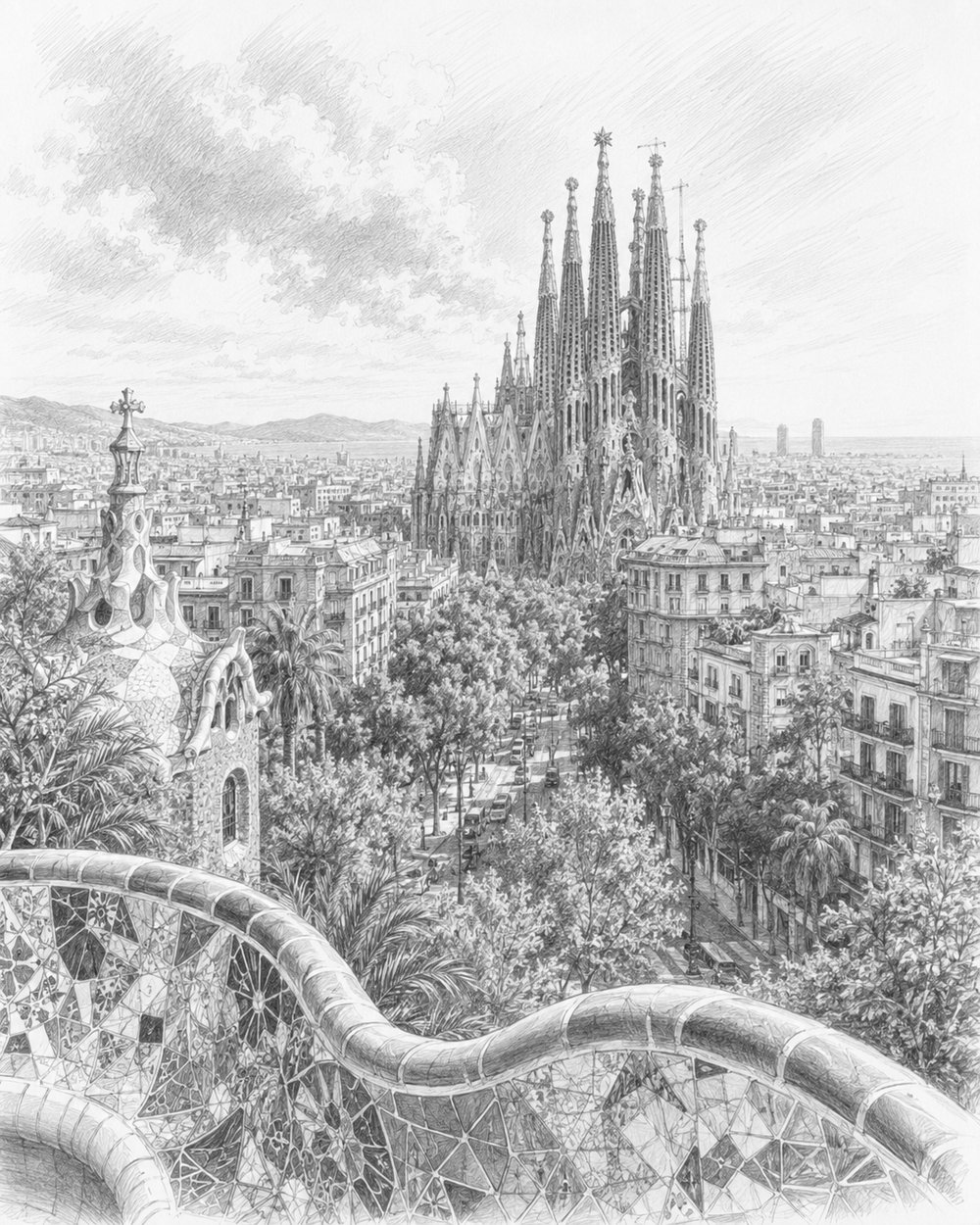
The unmissable sight is Antoni Gaudí’s Sagrada Família, the still-unfinished basilica whose interior is unlike anything else. Book a timed entry ticket well in advance, because they sell out and there is no reliable walk-up option in summer. Gaudí’s Park Güell, up on a hill with its mosaic terraces and city views, is the other essential and also uses timed entry. Beyond Gaudí, wander Las Ramblas, get lost in the medieval lanes of the Gothic Quarter, and if the heat gets to you, the city beaches are a short trip from the center. If you only have embarkation-day hours rather than a pre-cruise stay, pick one or two things close together and accept you’ll want to come back.
Palma de Mallorca: an easy, walkable island day
Palma, the capital of Mallorca in the Balearic Islands, is one of the gentler stops on the itinerary and a good one to take at a relaxed pace. The dominating landmark is La Seu, the enormous Gothic cathedral that rises right above the waterfront — you can practically navigate to it from the ship. Around it spreads an atmospheric old town of narrow streets, courtyards and cafés that rewards aimless walking.
For a bit more, Bellver Castle sits above the city with panoramic views, and the island is ringed with beaches and quiet coves if you’d rather trade sightseeing for a swim. Palma is compact enough that you can do the cathedral and old town on your own two feet without booking anything, which makes it a nice contrast to the logistics-heavy Italian ports later in the week.
Marseille and Provence: the Old Port and beyond
Depending on your sailing you’ll call at Marseille or nearby Toulon, both gateways to Provence. In Marseille, the natural anchor is the Vieux-Port, the old harbor lined with cafés and boats, and above it Notre-Dame de la Garde, the hilltop basilica that watches over the city and gives you the best views of the coast. You can build a satisfying day out of the port, the surrounding old streets and that climb (or shuttle) up to the basilica.
Provence, though, is really about what’s inland. Aix-en-Provence — elegant, fountain-filled and full of café-terrace charm — makes a classic day trip from the Marseille area, whether by organized excursion or independent train. As with the Italian ports, if you head inland, keep one eye on the clock and plan a return with margin. If you’d rather stay near the water and take it easy, Marseille’s own core is more than enough for a single day.
Cannes and the French Riviera
Cannes is the Riviera in miniature and often a tender port, so factor in a little extra time to get ashore. The seafront Croisette, with its palm trees, grand hotels and beaches, is the postcard image, and just behind it the old town of Le Suquet climbs a hill of narrow lanes to a viewpoint over the bay. That’s a complete, walkable day if you want it to be.
Cannes is also a springboard to the rest of the coast. Nice, with its long promenade and old town, Antibes with its ramparts and market, and the principality of Monaco are all within reach by train or road for those who want to see more of the Riviera in a day. The regional train line along this coast is scenic and useful, but on a cruise day it’s a tool to use carefully — check the timetable both ways before you commit, and give yourself a wide buffer for the trip back so a delay doesn’t cost you the ship.
Livorno: the gateway to Florence and Pisa
Livorno is the classic example of an inland-sights port. Almost no one comes for Livorno itself — the day is about Florence and Pisa in Tuscany, both a real distance from the pier. This is a stop where you should decide your plan before you dock, because the choices genuinely diverge and doing both cities in one port day is ambitious.
Florence is the heavyweight: the Renaissance city of the Duomo with its terracotta dome, world-class art, and streets that are themselves a museum. Pisa is quicker and mostly about one thing — the Leaning Tower and the cathedral square around it — which makes it an easier add-on. Many visitors pick Florence and go deep, some do a lightning Pisa-plus-Florence combination by tour, and others keep it simple with Pisa alone. Whichever you choose, the transfer time is significant, so an organized excursion or a carefully timed train is essential, and returning before all-aboard is the whole game. We keep this one deliberately light here because it deserves its own treatment; our Norwegian Epic Mediterranean ports guide goes much deeper on making the most of Florence, Rome and the other big calls.
Civitavecchia: the port for Rome
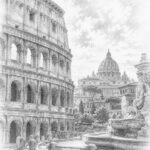
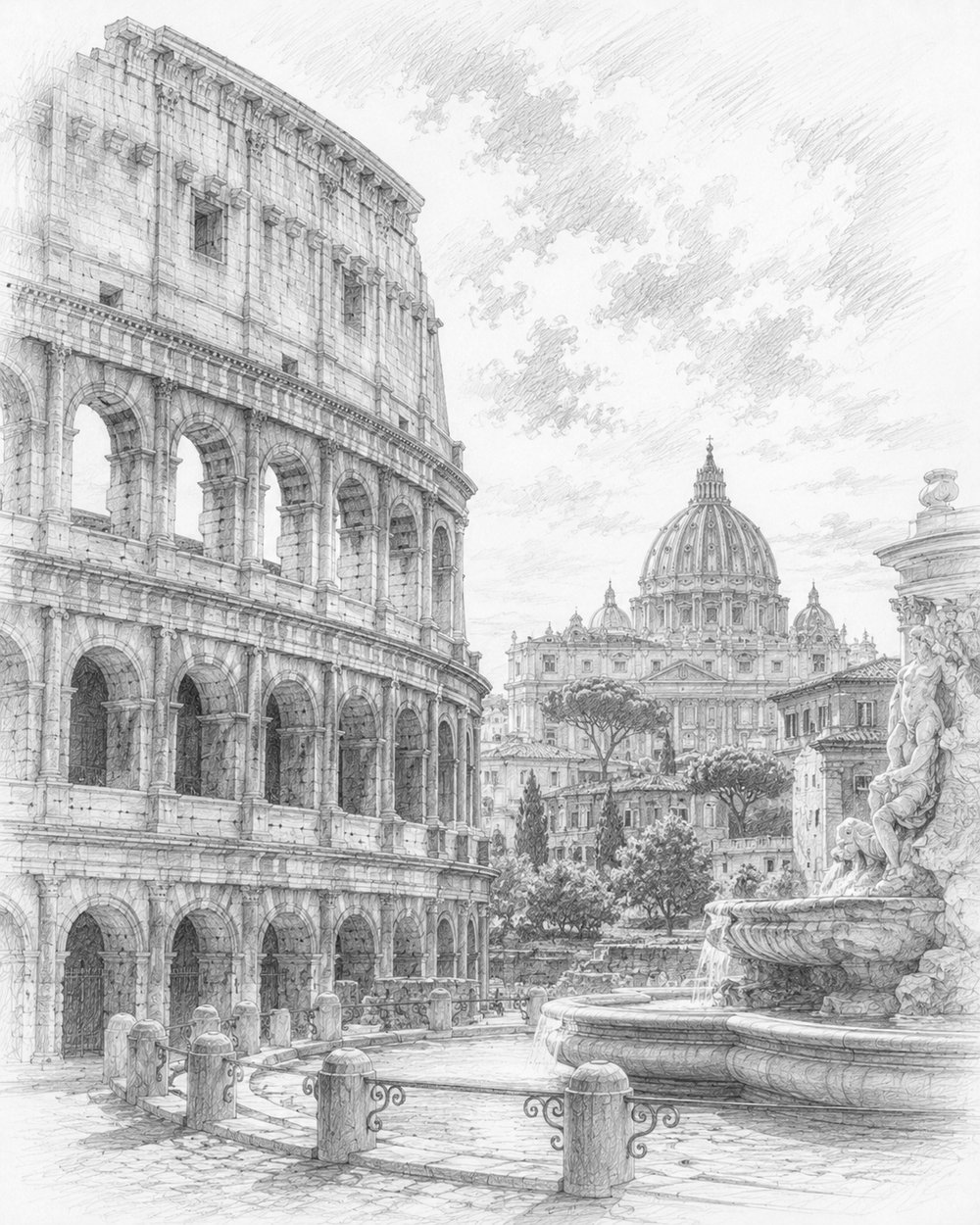
Rome is the other great inland day. The ship docks at Civitavecchia, roughly an hour and a half from central Rome by train or transfer, so the same rules apply in bold: plan ahead, choose your method, and protect your return. A full day in Rome is easily filled — the Colosseum and the Roman Forum, the Vatican with St. Peter’s and the museums, and the fountains and piazzas scattered across the historic center. It is more than you can see in one port call, which is exactly why choosing a focus beats trying to cram everything in.
Timed tickets for the Colosseum and the Vatican Museums sell out and should be booked in advance if you’re going independently; an organized excursion handles that for you and, crucially, guarantees the ship waits if the group runs late. Because Rome is far from the pier, this is not the day to improvise. Pick two or three sights that sit near each other, book what needs booking, and start back earlier than feels necessary. As with Florence, we keep the Rome deep-dive brief here and cover it properly in the dedicated ports article.
Naples: Pompeii, Capri, the Amalfi Coast and pizza
Naples is the port with the most tempting menu of day trips, and it forces a genuine choice because they point in different directions. Pompeii, the Roman city frozen by Vesuvius, is a short trip from the port and one of the most extraordinary archaeological sites on earth — the closest thing to walking through the ancient world. The isle of Capri, reached by ferry, is all glamour, blue water and cliff-top views. The Amalfi Coast — Positano, Amalfi, Ravello — is a string of dramatic seaside towns along one of the world’s most beautiful coast roads. You realistically pick one of these for the day.
Pompeii pairs well with Naples itself if you want ruins in the morning and a taste of the city after. Capri and the Amalfi Coast are more of a full-day commitment with ferry or coach time built in, so watch the return timing carefully — the coast road is slow and beautiful in equal measure. And whatever else you do, Naples is the birthplace of pizza, so a proper Neapolitan pie is a legitimate use of a couple of hours. Given the range on offer here, decide before you dock rather than debating it on the pier.
Ajaccio, Corsica: Napoleon’s island
Ajaccio, on the French island of Corsica, is one of the more laid-back and scenic stops, and it’s a welcome change of pace after the intensity of the Italian mainland ports. It’s the birthplace of Napoleon, and the town leans into that history with sites tied to him, alongside a pleasant old town, a citadel, and a waterfront that’s easy to stroll. It’s a walkable port where you can happily do without a formal tour.
Corsica’s real signature, though, is its landscape — beaches for a swim near town, and rugged mountains inland for anyone who wants a more active excursion. Ajaccio is a good day to slow down, wander, have a long lunch, and enjoy the fact that the marquee sight is simply the place itself rather than something an hour up the road.
Ports at a glance
| Port | Main sights | Inland trip needed? |
|---|---|---|
| Barcelona (embark) | Sagrada Família, Park Güell, Gothic Quarter, beaches | No — arrive early |
| Palma de Mallorca | La Seu cathedral, old town, Bellver Castle | No — walkable |
| Marseille / Provence | Old Port, Notre-Dame de la Garde, Aix-en-Provence | Optional (Aix) |
| Cannes | The Croisette, Le Suquet, Nice, Antibes, Monaco | Optional (coast) |
| Livorno | Florence’s art and Duomo, Pisa’s Leaning Tower | Yes — significant |
| Civitavecchia (Rome) | Colosseum, Forum, Vatican, piazzas | Yes — ~1.5 hrs |
| Naples | Pompeii, Capri, Amalfi Coast, pizza | Yes — pick one |
| Ajaccio, Corsica | Napoleon sites, old town, citadel, beaches | No — walkable |
Money, passports and entry rules
The single currency makes this trip refreshingly simple: Spain, France and Italy all use the euro, so you don’t juggle three currencies across the week. Cards are widely accepted, but carry some cash for small cafés, markets, taxis and tips, where card acceptance can be patchy. On board, none of this applies day to day — your Cruise Card is your cashless account for everything on the ship, and service charges and gratuities are added per the line’s policy.
On documents, take this seriously. A Western Mediterranean cruise visits multiple countries in the Schengen area, and a passport is required. Non-EU travelers should check the current visa and entry requirements ahead of time, including the newer European entry requirements that apply to some visitors — the rules can change, so confirm well before you sail rather than assuming last year’s answer still holds. Getting this sorted early is not optional; it’s the difference between boarding and not.
Summer heat, walking and pacing yourself
This is a Mediterranean summer season — warm, sunny, and genuinely hot in mid-summer. Combine that with the fact that the trip is both port-intensive and walking-intensive, across cobbled streets, ruins and hilly old towns, and pacing becomes a real skill. Pack a hat, sunglasses, sunscreen and comfortable walking shoes, plus a light layer for cool evenings and the ship’s air conditioning. Carry water and refill it; the midday sun in July and August is not to be underestimated when you’re on your feet for hours at Pompeii or across Rome.
The smart approach is to treat the ship as your base and not try to win every port. Front-load the big walking days with an earlier start when it’s cooler, book timed tickets wherever you can so you’re not queuing in the heat, and don’t be afraid to spend a lighter port — Ajaccio or Palma — actually resting. The Freestyle setup helps here too: you can eat late after a long day without missing a fixed seating, and Epic’s Aqua Park, adults-only Spice H2O sundeck and quirry venues like the Ice Bar are waiting when you get back aboard. If you want the full rundown of the ship’s onboard side, our what to expect on Norwegian Epic guide covers the pools, shows, bars and dining in detail.
Making the itinerary work for you
The best Western Mediterranean cruise is the one you plan around your own priorities rather than trying to maximize everything. Before you sail, look at your specific itinerary in the NCL app and, for each port, decide whether it’s a walkable do-it-yourself day (Palma, Cannes, Ajaccio, embarkation-day Barcelona) or an inland day that needs a real plan (Livorno, Civitavecchia, Naples). Book the shore excursions or independent trains and tickets for the inland ports first, since those sell out and carry the most risk, then leave the easy ports loose.
If you’re sailing solo, this itinerary is especially appealing on Epic because she’s the ship that pioneered NCL’s solo studio cabins, priced for one with access to a private Studio Lounge — a genuinely different way to do a port-packed week without the single supplement. Our guide to the Norwegian Epic solo studio cabins explains how they work. However you cabin, the formula for a great trip is the same: respect the inland logistics, protect your all-aboard times, pace yourself in the heat, and let the ship carry you between some of the finest cities on the map.
Get the complete Norwegian Epic playbook
“The Ultimate Guide to Sailing on Norwegian Epic” turns a week in the Western Mediterranean into a stress-free plan, with clear action steps in every chapter for each port, the ship, and the details that trip up first-timers. It’s part of the Ultimate Ship Guides series by Leo Sotropa.
Frequently asked questions
Where does Norwegian Epic’s Western Mediterranean cruise start and end?
Her seven-night Western Mediterranean voyages run either round-trip from Barcelona or one-way between Barcelona and Rome, using the port of Civitavecchia for Rome. You can usually book the one-way version in either direction. Ports and the exact route vary by departure, so confirm your specific sailing in the NCL app once you’ve booked.
Which ports will I visit?
Across these itineraries the stops typically include Palma de Mallorca, Marseille or Toulon for Provence, Cannes on the French Riviera, Ajaccio in Corsica, Livorno for Florence and Pisa, Civitavecchia for Rome, and Naples for Pompeii, Capri and the Amalfi Coast. No single week includes all of them, so check your itinerary for the exact list and times.
Why does it matter that some sights are inland?
Florence and Pisa are inland from Livorno, Rome is about an hour and a half from Civitavecchia, and Pompeii and the Amalfi Coast are a drive from Naples. Reaching these takes real time each way, so you need to choose between an organized excursion and a well-planned independent trip in advance, and build in a comfortable buffer for the return so you don’t miss the ship.
What happens if I’m late back to the ship?
The ship departs at its all-aboard time. If you’re on an official NCL shore excursion and the group runs late, the ship waits for you. If you’re traveling independently and miss the all-aboard, you’re responsible for getting yourself to the next port at your own cost. For the inland ports, that risk is why an earlier return is always the safer call.
What currency and documents do I need?
Spain, France and Italy all use the euro, so you only deal with one currency ashore; cards are widely accepted, but carry some cash for small cafés, markets and tips. You need a passport, and because the cruise visits several Schengen-area countries, non-EU travelers should check current visa and entry requirements, including the newer European entry rules, well before sailing.
How hot does it get, and how much walking is involved?
It’s a Mediterranean summer, warm and sunny and hot in mid-summer, and the trip is both port-intensive and walking-intensive across cobbled streets and ruins. Pack a hat, sunglasses, sunscreen and comfortable shoes, carry water, start big walking days early, and use lighter ports like Palma and Ajaccio to rest. A light layer helps for cool evenings and the ship’s air conditioning.
Should I arrive in Barcelona before the cruise?
Yes, arriving a day or two early is strongly recommended. It protects you against flight delays and lost luggage, helps with jet lag, and gives you time to actually see the city — the Sagrada Família and Park Güell both need timed tickets booked in advance, which is hard to manage in a few embarkation-day hours.
Ready for the whole ship in one place? It is all in The Ultimate Guide to Sailing on Norwegian Epic.
Get the book →
Meet Leo: The Heartbeat Behind ‘A Country A Month’
Journeying through the pages of A Country A Month, you might often feel the rhythm of a storyteller’s heartbeat, pulsating through each line, each image, and each adventure shared. That heartbeat belongs to none other than our remarkable website editor, Leo.
With a lens in one hand and a pen in the other, Leo seamlessly marries his passions for photography and writing. His eye captures moments that words can barely describe, yet his eloquence brings those images to life, transcending borders and connecting us all through shared stories. An avid traveler, every country he’s visited has added another chapter to his expansive tale, and through our platform, he generously shares these chapters with us.