The short answer: Yes — retiring in Colombia on an ordinary Social Security check is genuinely realistic, and the money is the easy part. A single American lives comfortably in Medellin for roughly $1,300–1,800 a month, and much less in the coffee region, where a couple can live a full life for well under $2,000. The retirement visa asks only for pension income of about $1,616 a month, which most Social Security recipients already clear. The two things that actually ask something of you are not cost: they are the safety habits (Colombia carries a real security caveat, told straight below) and sorting out the tax-residency question with a local accountant. This guide walks through all of it.
For a lot of Americans, the math of growing older at home has quietly stopped working. Housing and healthcare keep climbing faster than a fixed income can follow, and a Social Security deposit that felt adequate on paper feels thin by the third week of the month. Colombia offers a genuinely different arithmetic. The same check that leaves you counting days until the next deposit in Phoenix or Tampa can, in Pereira or Envigado, cover your rent, your groceries, your restaurant meals, your healthcare, and a housekeeper who comes once a week — and still leave money in the account at the end of the month.
Add to that a healthcare system that delivers surgery and specialists at a fraction of U.S. prices, a spring-like climate in the cities retirees actually choose, people ranked among the friendliest on earth, and a visa that leads to residency and even citizenship, and you can see why thousands of Americans have quietly made the move. But this guide promises you the truth in the same breath as the dream, and Colombia’s truth includes a caveat the brochures skip: safety. We handle it honestly here, because Colombia earns the caution — and because the risks are, overwhelmingly, avoidable by people who learn a short set of habits and keep them. Throughout, dollar figures are converted at 1 USD ≈ 3,250 COP, the working rate from mid-2026 — the peso is volatile and has strengthened sharply, so treat conversions as approximate and plan with a cushion.
Want the whole plan in one place? This article summarizes No-Nonsense Guide to Retiring in Colombia: Without a Millionaire’s Budget by Leo Sotropa — three real budgets, the visa step by step, healthcare, taxes, the best-value cities, and the safety caveat handled candidly, every figure sourced. No hype, no fear.
What this guide covers
- Is retiring in Colombia realistic on a modest income?
- What it actually costs: real monthly budgets
- Where to live: the best-value cities compared
- The Migrant Pensioner visa, in plain steps
- Healthcare (and what happens to your Medicare)
- Money, taxes, and the paperwork with teeth
- The safety question, told straight
- Settling in and daily life
- Is it right for you? The honest trade-offs
- Frequently asked questions
Is retiring in Colombia realistic on a modest income?
The most useful way to answer that is to watch ordinary people do it. The book follows three composite retirees — honest blends of real rents, food prices, and healthcare costs — each balanced line by line against a real Social Security-sized income:
- Sharon, 66, a divorced retired school nurse living on a single ~$1,700/month check in Envigado, a leafy, safe town on the south end of Medellin. Her budget lands near $1,330, leaving a real ~$370 cushion. Her $1,700 check clears the visa’s ~$1,616 income bar on its own, so she qualified with no savings to show at all.
- Roger and Anne, 67 and 65, a couple on ~$2,600/month combined in Pereira in the coffee region — Roger’s own check at ~$1,700, Anne’s at ~$900. They spend about $1,705 and bank close to $900 a month.
- Mike, 64, a single retiree on ~$3,000/month in Medellin’s upscale El Poblado, who enrolled in private health coverage early and takes the safety rules seriously — precisely because the safety chapter is written for someone like him.
| Retiree | Income / mo | City | Budget / mo | Cushion |
|---|---|---|---|---|
| Sharon (solo) | ~$1,700 | Envigado, Medellin | ~$1,330 | ~$370 |
| Roger & Anne (couple) | ~$2,600 | Pereira | ~$1,705 | ~$895 |
| Mike (solo) | ~$3,000 | El Poblado, Medellin | ~$2,055 | ~$945 |
None of them is wealthy. Every one of them lives below their income, with a cushion between $370 and $945 a month, and every one qualified for the visa on income most Social Security recipients have. In Colombia, the money is easy. What the country asks in return is not in the budget: it asks you to be genuinely street-smart, to handle the tax question with a professional, and to actually learn Spanish. That trade — the easy money for the real habits — is the whole story.
What it actually costs: real monthly budgets
Here is the single most important budgeting fact in the whole book: a comfortable single retiree lives well in Medellin for around $1,300–1,800 a month, and much less in the coffee region, where a single lands near $1,100 and a couple near $1,705. Compare those totals to a typical Social Security income of $1,200–3,000, and you see the pattern that runs through the entire book: most retirees here bank money every month rather than draining savings.
The texture of the affordability is in the small numbers. A menú del día — a set lunch of soup, a plate of meat or fish, and a fresh juice — runs 15,000–28,000 COP ($4.60–8.60). A cup of coffee is about fifty cents, the Medellin metro fare $0.85, an Uber across town $3–8. And an empleada (a housekeeper) costs about $9–11 for a full day, so most expats hire one once or twice a week without thinking of it as a luxury.
Here is how two representative budgets shake out:
| Budget | Where | Per month |
|---|---|---|
| Comfortable, single | Coffee region | ~$1,100 (~3.6M COP) |
| Comfortable, single | Medellin (Laureles/Envigado) | ~$1,330 (~4.3M COP) |
| Higher-comfort, single | Medellin (El Poblado) | ~$2,055 (~6.7M COP) |
| Comfortable, couple | Coffee region | ~$1,705 (~5.5M COP) |
Notice the estrato lever hiding in those numbers. Every Colombian address carries an estrato rating from 1 to 6, and your utility rates scale with it. Choosing an estrato 3–4 neighborhood like Envigado, Sabaneta, or Laureles over estrato 5–6 El Poblado saves roughly $120–240 a month across rent and utilities — for a life that is, honestly, just as pleasant. Read the full breakdown, with every line and the currency-risk math, in Cost of Living in Colombia for Retirees.
Where to live: the best-value cities compared
Colombia gives a budget retiree an unusual gift: several genuinely good options at several price points, from a $1,100-a-month coffee town to a $2,000-a-month upscale city quarter. Rents below are for a furnished one-bedroom, showing a nicer or safer area against a cheaper local one:
| Place | Altitude / climate | Rent, 1BR | Best for |
|---|---|---|---|
| Medellin | ~1,495m · spring 18–28°C | El Poblado $700–1,200 · Laureles/Envigado $450–800 | the default first choice: English within reach, top hospitals, eternal spring |
| Coffee region | ~1,411–2,150m · spring-like | $400–900 nicer · $150–350 local | lowest cost, highest safety, green calm — if you’ll live in Spanish |
| Bogota | 2,640m · cool 8–19°C | Chicó/Usaquén $770–1,075 · Teusaquillo $430–680 | the best hospitals and full big-city life, if you can take the cold and altitude |
| Bucaramanga | ~959m · mild | $550–950 nicer · $200–380 local | mild, safe, good healthcare, underrated and cheaper |
| Cali | ~1,000m · warm 23–30°C | Granada/Ciudad Jardín $600–1,200 · $250–450 local | salsa, warmth, low cost — with the highest crime caution |
| Cartagena / Santa Marta | sea level · hot, humid | Cartagena center ~$600 · Santa Marta $500–900 | the Caribbean postcard — priciest, with A/C bills and higher caution |
The single most powerful cost lever in the book: go to the coffee region, or one estrato down. A comfortable coffee-region single at ~$1,100 saves $230 to nearly $1,000 a month over Medellin depending on neighborhood — not a discount, a different financial universe. What the city dweller buys back for that premium is English within reach, top hospitals nearby, and a dense expat scene. See How to Retire Abroad on a Budget (Colombia) for the full comparison toolkit, and Moving to Medellin to Retire for the deep dive on the number-one expat hub.
The Migrant Pensioner visa, in plain steps
The single most reassuring fact in the whole book is that the Colombian retirement visa is easy. The Migrant Pensioner visa (the Visa M, Pensionado, governed by Resolución 5477 of 2022) exists for one purpose: to let people with a pension income come and live in Colombia.
The income bar is set at three times the Colombian monthly minimum wage. For 2026 the minimum wage is 1,750,905 COP, so three times that is about 5,252,715 COP — roughly $1,616 a month at 3,250 to the dollar. If your Social Security or pension clears that, you meet the bar, and most recipients do. (The threshold resets every January with the new minimum wage, and the peso moves the dollar figure, so check both in the year you apply.)
The point that quietly saves applications: couples only need one check to clear the bar. The higher-earning spouse holds the visa on their own pension, and the other comes on as a beneficiary — which is exactly how Roger and Anne do it, with Roger’s $1,700 check qualifying them both. The process runs: gather six documents (passport, pension-proof letter, photo, health insurance with repatriation coverage, a health certificate, and an apostilled criminal background check — apostille it in the U.S. before you leave), apply online through the Cancillería portal for roughly $300 in total fees, and then within 15 days of approval register with Migración Colombia for your cédula de extranjería. Best of all, the visa is renewable indefinitely while your pension continues, and it leads somewhere: a Resident (R) visa after five continuous years, and citizenship roughly five years after that — with dual citizenship allowed. Full detail in Colombia’s Retirement Visa: The Complete Guide.
Healthcare (and what happens to your Medicare)
The medical care may be the single best reason to retire in Colombia — not just the cost, the care itself. A total knee replacement runs $7,000–12,500 here versus $35,000–50,000 in the U.S.; a dental implant is $700–1,200 versus $3,000–5,000. Colombia runs a universal, two-tier system, and as a resident with a cédula you use both layers:
- EPS — the contributory public insurance, legally required once you have your cédula and declared income. It runs about 12.5% of declared income with a floor near $67/month, and covers the big, expensive things: emergencies, hospitalization, surgery, labs, medicines. The catch is the queue — and the public system is in a well-publicized crisis right now, which is exactly why you add the second layer.
- Prepagada — private supplemental insurance on top of EPS that buys speed and choice: the specialist next week instead of next quarter. It runs roughly $60–130/month under 60 and $150–250 once you are past 60. The trap is age: it gets hard to buy new after 60, with entry-age caps and pre-existing-condition exclusions, so enroll early — which is precisely what Mike did at 64.
- International plans — from insurers like Cigna Global, Bupa, or IMG (~$2,000–6,000/year) are the fallback if local prepagada shuts you out with age.
Your Medicare is a separate decision, and the most expensive misunderstanding in American retirement abroad lives here: Medicare does not travel — it covers nothing in Colombia. But don’t drop Part B carelessly. Dropping it triggers a permanent 10%-per-year Late Enrollment Penalty if you ever re-enroll, so keep it while you’re uncertain (and veterans on TRICARE For Life must keep it). The Part B premium is $202.90/month in 2026. Full detail in Healthcare in Colombia for American Retirees.
Money, taxes, and the paperwork with teeth
Because the U.S. taxes by citizenship, moving abroad doesn’t end your relationship with the IRS — it adds a second tax authority. Spend 183 or more days in Colombia in any rolling 365-day window and you become a Colombian tax resident, taxed in principle on worldwide income. Here is the honest part: unlike many countries, there is no income tax treaty between the U.S. and Colombia, so relief from double taxation runs through foreign tax credits, not tidy treaty rules.
The protection that likely saves you is Colombia’s pension exemption: under the 2022 reform, the first 1,000 UVT per month of pension income is tax-exempt, which in 2026 works out to roughly $16,000 a month — far above any normal Social Security check. Specialist sources indicate this applies to foreign pensions too, which would leave a typical retiree’s entire pension untaxed by Colombia even as a full resident. But treat it as probably fine, confirm with a contador, not settled fact: the expert sources conflict on the nuance, and a later pension reform (Ley 2381 of 2024) was suspended by Colombia’s Constitutional Court. And remember that filing is not the same as paying — you can be required to file (gross income above ~69.7M COP, or net worth above ~224M COP) even when the exemption means you owe nothing.
Your U.S. obligations continue regardless: Form 1040 on worldwide income every year, the FBAR (FinCEN 114) if your foreign accounts top $10,000 at any point, and FATCA Form 8938 at higher thresholds. On the practical side, most retirees keep a U.S. account for the Social Security deposit and use Wise to convert dollars to pesos in tranches — because the peso is the one variable that moves your budget without your permission. It strengthened from about 4,000 to the dollar in 2024 to about 3,250 in 2026, a nearly 19% drop in buying power on the same check. Build your budget conservatively and keep a dollar reserve. See Living in Colombia on a Fixed Income for the full money rhythm.
The safety question, told straight
This is the chapter the book thought about hardest, and it is the one that separates Colombia from every other easy retirement. Both halves are true at once: Colombia carries a real security caveat a full step higher than the usual retirement destinations, and millions live here safely while the retiree cities are far safer than the national headlines suggest.
The U.S. State Department rates Colombia Level 3, “Reconsider Travel” (reissued March 31, 2026), with specific Level 4 “Do Not Travel” zones — Arauca, most of Cauca, Norte de Santander, parts of Valle del Cauca, and the Venezuela border region. Retirees do not live in those places; they are remote conflict regions, not the eternal-spring cities anyone moves to. Look instead at where you’d actually live: Medellin recorded a homicide rate of about 11 per 100,000 in 2024 — its lowest in 82 years, making it the safest major city in Colombia. Bogota runs ~14.7, versus the U.S. average of ~6. Cartagena (~37) and Cali (~41) are materially higher, which is exactly why retirees cluster in Medellin, the coffee region, and Bogota’s good zones.
The homicide rate mostly isn’t your risk. The dangers that actually reach a foreign retiree are specific and, once named, largely defeatable: scopolamine (a drug slipped into a drink to rob you — never leave a drink unattended), dating-app crime (a U.S. Embassy alert followed at least eight suspicious American deaths in Medellin in late 2023 — never invite a match home), express kidnapping (forced ATM withdrawals — use Uber or Didi, not street taxis), and phone theft (endemic — keep it in your pocket). Colombians compress the whole chapter into three words: no dar papaya — don’t make yourself an easy target. If you’ll keep those habits, Colombia opens up as one of the best-value retirements you’ll find. If you honestly know you won’t, choose differently. Read the full picture in Is Colombia Safe for Retirees?
Settling in and daily life
Arrival runs on paperwork, in a specific order, because one document unlocks the next. Within 15 days you register with Migración and get your cédula — the master key to banking, healthcare, phone contracts, and leases. Then you open a bank account (Bancolombia, Davivienda, or BBVA — expect friction, bring patience and extra documents), enroll in EPS and add prepagada, and find a longer-term home. Land into a furnished rental or monthly Airbnb first: it sidesteps the codeudor requirement (Colombian landlords routinely demand a property-owning Colombian co-signer, a wall for foreigners) and lets you choose your neighborhood from the inside before signing a bare lease.
The daily life is the payoff. Colombia was ranked #2 in the world for friendliness and #3 for ease of settling in (InterNations Expat Insider 2025) — a country whose warmth actively pulls you out of the loneliness you feared. Two underrated gifts specific to Colombia: it sits on roughly Eastern time with no daylight saving, so you call your family in real time, not on a twelve-hour delay; and Miami is a cheap 4–5 hour flight, so you can be there for the graduations and the holidays. Spanish is the whole game, though — English proficiency is low, and daily life happens in Spanish. The good news is that Colombian Spanish is among the clearest to learn. See Living in Colombia on a Fixed Income for what the day-to-day actually feels like.
Is it right for you? The honest trade-offs
The book is frank about the trade-offs worth reading before you fall in love:
- The safety caveat is real — Colombia asks for a level of everyday street awareness the easier countries don’t. It’s learnable, but it’s a daily practice, not a one-time adjustment.
- The tax question is genuinely unsettled — the pension exemption very likely shelters your income, but the law is in motion, so you hire a Colombian contador rather than guess.
- You will truly need Spanish — more than in most retirement destinations. Outside the expat bubble, almost nothing runs in English.
- The peso is volatile — a dollar income in a peso economy swings, so you budget with a cushion and convert in tranches.
- Bureaucracy tests your patience — opening a bank account can take multiple visits, and everything runs on the cédula.
None of these is a dealbreaker; each is a plan, not a surprise. If you’re on a Social Security check somewhere in the $1,200–3,000 band, you’re willing to learn some Spanish and keep street-smart habits, and you can handle an unhurried bureaucracy, then retiring in Colombia is not a fantasy for the lucky few. The money is easy. The rest is habits you can start building at your kitchen table tonight.
What the move costs up front
The monthly budgets are the easy part to picture; the one-time costs are what people forget. Plan for:
- The visa: roughly $300 all in (study fee ~$50–55, visa issuance ~$170–230, cédula ~$60–75), plus the apostilled background check and the health-insurance-with-repatriation policy that bridges you until your Colombian coverage is live.
- Flights and shipping: one-way flights are cheap and short (Miami is 4–5 hours), and you’ll want to ship very little — furnished rentals mean you bring the irreplaceable and buy the rest locally.
- Move-in: a deposit of about one month’s rent, plus — if you can’t produce a codeudor — either a seguro de arrendamiento (about a month’s rent per year) or several months paid up front.
- A dollar buffer: a reserve held in dollars so a bad exchange-rate month never forces a bad decision.
A realistic first-year timeline
Here’s the shape of a well-run move, from first idea to fully settled:
- Months −6 to −3: shortlist two cities that match your climate zone and budget, run your budget at a conservative exchange rate, and start the document chase — the apostilled criminal background check is the long pole, and it must be apostilled in the U.S. before you leave.
- Months −3 to −1: apply online through the Cancillería portal, and take a scouting trip if you can — sleeping in the neighborhoods you’d rent in, walking the streets in daylight and after dark.
- Month 0: land into a furnished short-term rental; within 15 days register with Migración and get your cédula, then open a bank account, enroll in EPS, and add prepagada.
- Months 1–3: choose your long-term neighborhood from the inside, sort the codeudor workaround, hire a contador, push your Spanish, and build a first circle.
- Ongoing: renew the M visa every three years, and — after five continuous years — consider the R visa and the path toward citizenship.
Follow that arc and “move to another country” resolves from a daunting leap into a sequence of ordinary, doable steps.
Who this is really for
Retiring in Colombia fits the reader whose reliable monthly income sits roughly in the $1,200–3,000 band, who is genuinely willing to learn Spanish and build street-smart habits, and who can be patient with an unhurried, in-person bureaucracy. If that’s you, the affordability isn’t a gamble; it’s arithmetic that has already worked for thousands of Americans. If the security caveat is a dealbreaker, that’s important self-knowledge, and one of the other countries in this series will suit you better.
What tends to surprise new arrivals
A few things catch even well-prepared movers off guard. On the good side: how cheap and excellent the healthcare is (a specialist for $46–123, cash), how warmly the culture folds you in, how little a car is missed, and how close home feels on a near-zero time difference. On the adjusting side: la hora colombiana (the plumber says morning and arrives after lunch), the documentation friction at the bank, and the fact that the reputation from the movies lags the reality by about thirty years. The quiet fork is the expat bubble — in Medellin’s El Poblado you can live in English and never really need Spanish, which is how people spend two years in the friendliest country on earth knowing only other Americans. Use the expat groups for a soft landing, then push past them into a local life.
Ready to build your own plan? No-Nonsense Guide to Retiring in Colombia gives you the three worked budgets, the full visa checklist, the healthcare sequence, the unsettled tax reality explained plainly, a city-by-city comparison, and the safety caveat told straight — the dream and the truth, in the same breath.
Frequently asked questions
Can I really retire in Colombia on just Social Security?
Yes, in the right city. A single retiree on ~$1,700/month lives well in Envigado with a cushion, and a couple thrives in the coffee region on ~$2,600 combined. The visa’s income bar is only about $1,616/month, which most Social Security recipients clear. See Can You Retire in Colombia on Social Security?
How much money do I need to move to Colombia?
To qualify for the Migrant Pensioner visa you show pension income of about $1,616/month (three times the minimum wage). To live, budget ~$1,100–1,800/month for a single depending on the city, and ~$1,705–2,250 for a couple, plus roughly $300 in visa fees and move-in costs.
Is Colombia safe for retirees?
In the right neighborhoods, yes — Medellin is the safest major city in the country, at an 82-year low. Colombia carries a real Level 3 advisory and specific risks (scopolamine, dating-app crime, express kidnapping, phone theft), but they’re largely avoidable with the “no dar papaya” habits. It asks for daily street awareness the easier countries don’t.
Will Colombia tax my Social Security?
Probably not — a pension exemption very likely shelters a normal Social Security check even at full tax residency. But there’s no U.S.–Colombia treaty and the law is genuinely unsettled, so confirm it with a Colombian contador rather than assume. You’ll still file U.S. taxes, and likely file in Colombia too.
What happens to my Medicare?
It doesn’t work in Colombia. Keep it while you’re uncertain about the move, because dropping Part B triggers a permanent 10%-per-year penalty if you re-enroll — and veterans on TRICARE For Life must keep Part B to stay covered.
Do I have to speak Spanish?
For a real life here, yes — more than in most retirement destinations, because English is thin outside the expat bubble. The good news is Colombian Spanish is among the clearest versions to learn, and the warmth of the culture rewards every clumsy sentence you attempt.
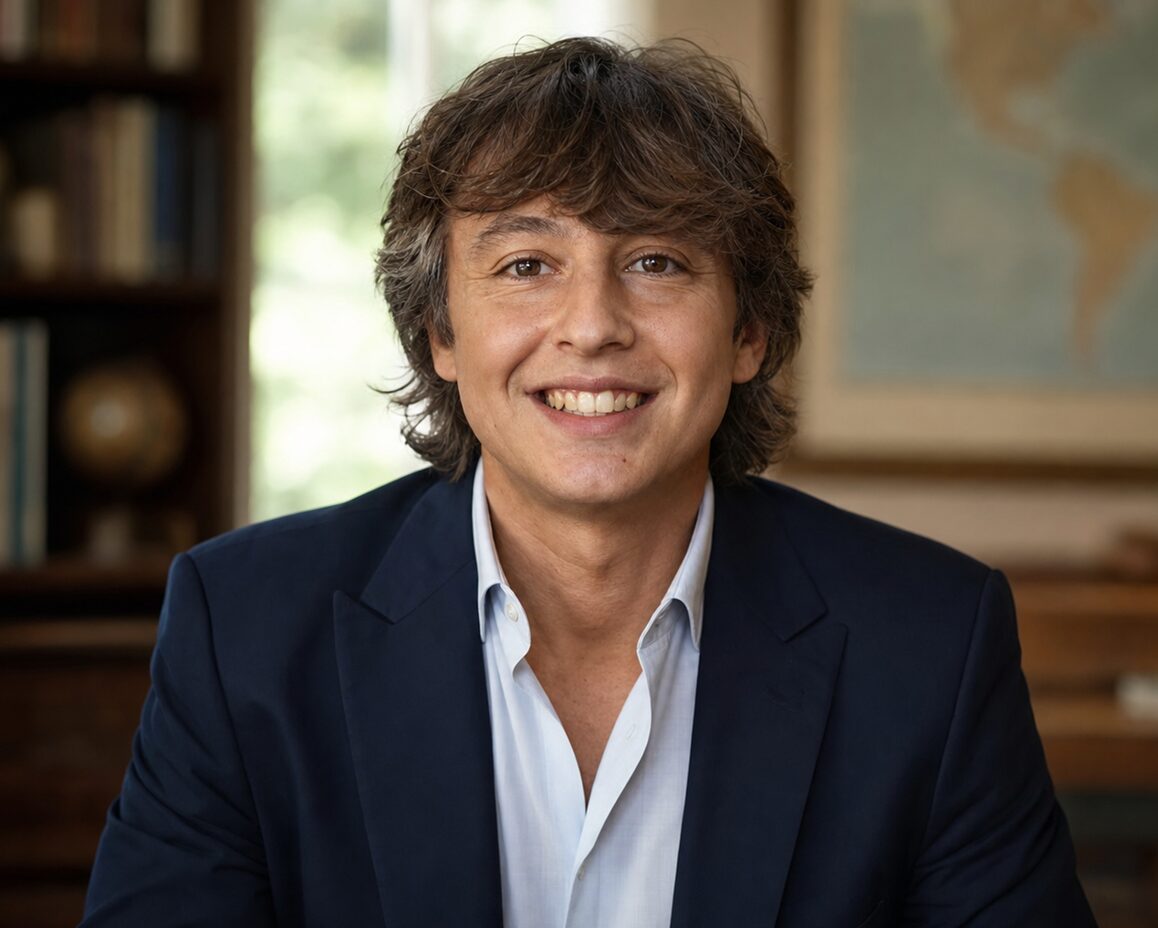
Meet Leo: The Heartbeat Behind ‘A Country A Month’
Journeying through the pages of A Country A Month, you might often feel the rhythm of a storyteller’s heartbeat, pulsating through each line, each image, and each adventure shared. That heartbeat belongs to none other than our remarkable website editor, Leo.
With a lens in one hand and a pen in the other, Leo seamlessly marries his passions for photography and writing. His eye captures moments that words can barely describe, yet his eloquence brings those images to life, transcending borders and connecting us all through shared stories. An avid traveler, every country he’s visited has added another chapter to his expansive tale, and through our platform, he generously shares these chapters with us.