The short answer: Living in Italy on a fixed income is less about frugality than rhythm. The daily numbers are small — a €2 morning cappuccino, a €10 phone plan, a €150 private MRI, world-class public healthcare for about €2,000 a year — so a Social Security income stretches into a genuinely full life. What actually determines whether you thrive isn’t the budget. It’s whether you learn some Italian and build a community, because isolation, not money, is what ends most moves. Keep Medicare Part B as your safety net, and let the slow rhythm become the thing you’d never trade back.
The budgets and the visa get the attention, but the question underneath them is quieter: what does the day-to-day actually feel like when your income is a fixed monthly deposit? The honest answer is that Italy is unusually kind to a fixed income — but only if you understand where the real costs and the real risks live. (Dollar figures use €1 = $1.14, the mid-2026 rate.)
This summarizes the healthcare, Medicare, and cultural-adaptation chapters of No-Nonsense Guide to Retiring in Italy — what daily life costs, and what actually makes the move work.
The daily numbers are cheerfully small
The individual lines of an Italian life are small almost everywhere, which is exactly why a modest income goes so far. A cappuccino is about €2 (standing at the bar, in the morning). A monthly transit pass is €32–39 and buys a life without a car. A mobile plan runs about €10 — Iliad famously sells 200GB for €9.99. Home fiber is €25–32. The weekly open-air market and the local alimentari and forno put fresh food on your table for less than a supermarket, and half the reason you moved is in that sentence.
The two lines that swing hard are utilities (budget the January gas bill up north or the August cooling bill in the south, not the mild month) and healthcare. Get those two right and a single retiree lives comfortably in the affordable south for around $1,790 a month, a couple for about $2,520 — with a real cushion left over for flights home.
Healthcare on a fixed income: the SSN
The fact that dissolves most anxiety: Italy’s national health service, the SSN, is universal and tax-funded, and Italians live longer than almost anyone on earth (life expectancy 83.5 years). Hospital stays, surgery, cancer treatment, emergencies, and your family doctor are covered — no $40,000 bill for a heart attack. As a non-working resident you buy in voluntarily for about €2,000 a year per person (roughly €167/month, income-based, capped near €2,788) — about €4,000 for a couple. Forget the obsolete €387 figure on old blogs; it’s gone.
Plan for one first-year quirk: to get the visa you must first show a private policy (€450–1,000), and you can’t register with the SSN until you’re resident, so year one often carries both costs — roughly €2,450–3,000 for a single, €4,900–6,000 for a couple. Set that money aside as a dedicated first-year health fund, and it stops being a shock.
What you’ll actually pay out of pocket
Even with the SSN, you’ll sometimes pay privately to skip a waiting list, and this is where an American jaw drops:
| Service | Typical private price |
|---|---|
| Private GP visit | €50–100 |
| Specialist consultation | €80–200 |
| MRI | €250–600 |
| Blood test panel | €20–60 |
| Dental cleaning | €60–120 |
An MRI for €250–600, cash, no pre-authorization fight, is often cheaper than the copay at home. The sensible rule: use the free public system (and wait if you must) for anything expensive, ongoing, or urgent; pay privately for the small and time-sensitive — a specialist you don’t want to wait four months for, a scan you want this week. On the public side, small copays (“tickets”) run €20–36, and there’s relief built in: age-65+ residents under an income threshold, and those with chronic conditions, get an esenzione that waives the ticket entirely. Most budget retirees run the SSN alone or add an Italian resident top-up (€800–2,000/adult) for faster specialist access, and skip the $3,000–7,000 international plans.
Keep Medicare Part B as your safety net
One decision from home follows you: Original Medicare does not cover you in Italy. Keep Part A (it’s free). Think hard about Part B ($202.90/month in 2026): it buys nothing in Lecce, but dropping it triggers a permanent 10%-per-year Late Enrollment Penalty if you ever re-enroll — seven years away means a 70% surcharge for life. Most fixed-income retirees keep Part B and run the “snowbird strategy,” spending a few months a year in the U.S. and timing elective procedures (knee, cataract, big dental) for those stays. The asymmetry is the whole point: keeping it costs a few thousand a year, bounded; dropping it and being wrong costs tens of thousands, forever. Veterans especially must keep it — TRICARE For Life requires Part B and then pays as your primary coverage in Italy.
Managing a dollar income in a euro world
Your income is in dollars; your life is in euros, and that gap is the quiet variable that can eat 5–7% of your purchasing power in a bad year. The fixed-income playbook is behavioral: keep your Social Security landing in a U.S. account, convert to euros in steady monthly tranches with Wise or Revolut (near the mid-market rate, versus a bank wire’s hidden 1–3% margin), always decline “dynamic currency conversion” and pay in euros, and hold a buffer of several months’ expenses in euros. In small towns, Poste Italiane’s BancoPosta is genuinely pensioner-friendly, and keeping your Italian balance under €5,000 dodges the €34.20 annual stamp duty.
The real work: language and community
Here is the truth money cannot buy around, and it’s the most important sentence in the whole book: the single biggest predictor of a failed move is isolation and a refusal to learn Italian. People don’t usually go home because they ran out of money. They go home because they got lonely and stayed marooned in an English-speaking bubble that turned the dream into a scenic form of solitary confinement.
Italy ranks last in the EU for English, and the affordable towns this life steers you toward have little of it — that scarcity is part of what keeps them affordable and authentic. You don’t need fluency; you need a functional A2 to B1, enough to handle your own bureaucracy and hold a real conversation (and A2 is required for permanent residency at five years, B1 for citizenship at ten). Start before you leave with an app, take an in-person class once there (the classroom is a friend factory), add a weekly language exchange, and above all use it badly and often. Italians are delighted and forgiving when an older American butchers their language with an honest smile; the offense is never bad grammar, it’s not trying.
The small rituals that make you a local
Belonging is built through repetition and small loyalty, not grand gestures. Drink your coffee standing at the bar. Say buongiorno to the whole room when you enter a shop and arrivederci when you leave — Italians notice its absence far more than they notice bad grammar. Buy your produce from the same market stall until the vendor sets aside the good tomatoes for you. Join the evening passeggiata, the nightly stroll that’s free, sociable, and one of the healthiest habits on earth. Use the expat community (InterNations, regional Facebook groups) as a launchpad in year one — then deliberately step out of it into Italian friendships, a class, a choir, a hiking club — because a life lived entirely among other Americans is an English-speaking cul-de-sac with better scenery. Trust here forms slowly: the barista who’s polite but distant for three months is waiting to see if you stay. Keep showing up, and one morning he makes your coffee before you order. That’s the door opening.
The honest trade-offs
Living well on a fixed income in Italy is real, but it asks things of you: patience with a slow, in-person bureaucracy and the midday riposo; the willingness to learn a language and be a little uncomfortable while you do; and the discipline to plan for what changes — a strong euro, a health shift, the day you’re suddenly doing this alone. The retirees who thrive aren’t the ones who assume nothing will go wrong. They’re the ones who kept a few doors open (a U.S. address, a bank account, Medicare Part B) and then went right back to enjoying the tomatoes. Preparation isn’t pessimism; it’s what lets you relax into the life you moved for.
Want the full healthcare playbook, the Medicare decision framework, and the cultural-adaptation chapter in depth? It’s all in No-Nonsense Guide to Retiring in Italy.
FAQ
Is healthcare in Italy good for retirees on a fixed income?
Very. The national SSN covers the big things for about €2,000/year per person, Italians live longer than Americans, and private out-of-pocket prices (an MRI for €250–600) are often below U.S. copays. Most retirees run the SSN plus a modest top-up.
Do I need to speak Italian to live in Italy?
Functionally, yes — Italy ranks last in the EU for English and the affordable towns have little of it. Aim for A2–B1 (also required for residency and citizenship). It’s the single highest-return investment in your happiness.
Should I keep Medicare if I live in Italy on a fixed income?
Keep free Part A. Most people keep Part B too and run the snowbird strategy, because dropping it risks a permanent 10%-per-year penalty. Veterans must keep it for TRICARE For Life.
Keep reading: Cost of living in Italy for retirees · Moving to Italy as an American retiree · The complete guide to retiring in Italy
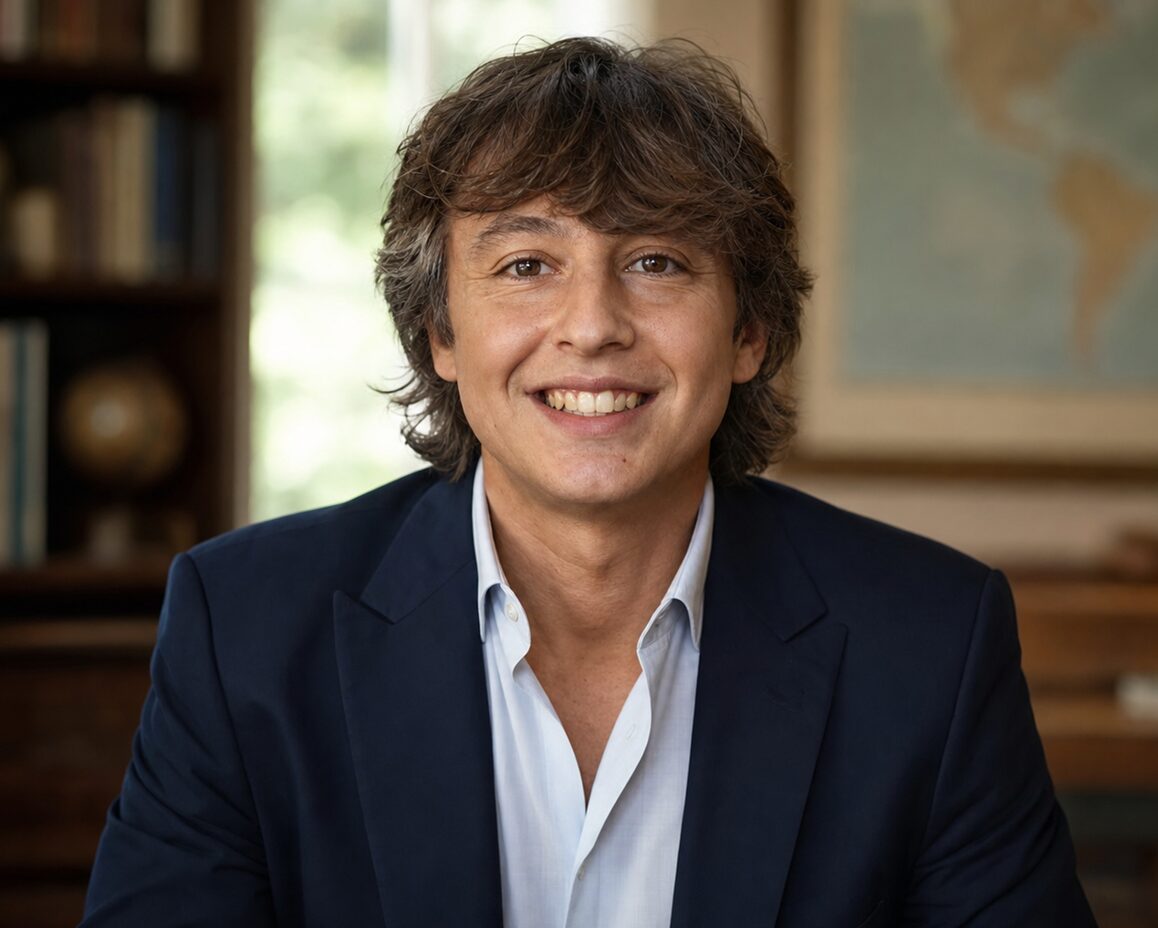
Meet Leo: The Heartbeat Behind ‘A Country A Month’
Journeying through the pages of A Country A Month, you might often feel the rhythm of a storyteller’s heartbeat, pulsating through each line, each image, and each adventure shared. That heartbeat belongs to none other than our remarkable website editor, Leo.
With a lens in one hand and a pen in the other, Leo seamlessly marries his passions for photography and writing. His eye captures moments that words can barely describe, yet his eloquence brings those images to life, transcending borders and connecting us all through shared stories. An avid traveler, every country he’s visited has added another chapter to his expansive tale, and through our platform, he generously shares these chapters with us.