Planning a trip to Dublin is easier when the city is treated as a set of connected neighborhoods and decisions, not a checklist of famous names. This complete guide brings together the essential sights, the right time to visit, transport, places to stay, food, realistic costs, and the choices that most affect a first trip.
Use this article with the complete Dublin travel guide, the three-day itinerary, and the where-to-stay guide.
Stand at the top of Grafton Street on an ordinary weekday afternoon and count what is happening within earshot. A busker is three verses into a song he has played ten thousand times and still means every word of. Two strangers at a bus stop are deep in a conversation about the weather that will last four minutes and settle nothing. And somewhere behind you, unremarked, is a city that has produced four Nobel laureates in literature, William Butler Yeats, George Bernard Shaw, Samuel Beckett, and Seamus Heaney, plus James Joyce and Oscar Wilde without the prize, and cannot be bothered to make a fuss about it. That is Dublin’s trick, and it is the whole reason this book exists: a capital with a global literary and cultural weight that behaves, on the ground, like a market town that never quite got around to being intimidating.
It helps that Dublin is small. The whole historic core, Trinity College to Phoenix Park, is a walk of under an hour, and most of what you came to see sits inside a tighter circle than that. The River Liffey splits the city into Northside and Southside, a divide Dubliners still needle each other about, and Georgian red brick with brass fanlight doorways stands a few streets from Viking-era lanes and glass Docklands towers built on tech money. You can cross centuries in the time it takes to cross a bridge. Add a pub culture that functions as genuine social infrastructure, not a performance staged for visitors, and no language barrier if you speak English, and you have one of the friendliest cities on earth to get to know deeply in a short trip.
None of that means Dublin is easy in every way, and this book will not pretend otherwise. It is one of the pricier cities in Western Europe for a hotel room and a restaurant dinner, and its accommodation market has been genuinely tight for years, which means the traveler who books late pays for it. The weather earns its reputation: rain gear is not optional in any month, including the ones that call themselves summer. And the city center’s housing and homelessness crisis is visible on some streets in a way that can jar a first-time visitor who was only expecting fanlight doors and pints. This guide deals with all of it straight, because a book that only shows you the postcard is not actually helping you plan a trip.
Here is how the rest of the book is built. First the city itself and the handful of sights everyone crosses an ocean for, with honest verdicts on which earn the price of admission. Then the planning layer: when to come, how to get around on a Leap card, and where to sleep. Then Dublin up close, neighborhood by neighborhood, each one with a walking route you could follow this afternoon without a map. Then the eating and drinking, which in this city is not a side activity but close to the main event, the culture, the day trips into real countryside within the hour, and ready-made itineraries for one, two, and five days. And at the end, the deeper story: how a Viking trading post became a capital, and the buskers, publicans, market traders, and museum guides who keep it running today.
A word on what this book is not. It is not a directory. Dublin has apps and official sites for exhaustive listings, and they will always be better at being databases than any book can be. What a book can still do better is judge, sequence, and tell the truth at length: which paid sight is worth the money, which order turns four attractions into one effortless morning, and why the city looks the way it does, so what you see means something when you see it. Where a pub, restaurant, or shop appears by name, it is either an institution that has outlasted decades of fashion or it is hedged and pointed at its official page, because nothing dates a guidebook faster than false confidence about a price or an opening hour that changed last spring.
Two promises. Every price, fare, and opening pattern in these pages was accurate when this was written, and wherever a detail changes often, you will see the phrase “as of this writing” and a nudge toward the official source to confirm, because ticket prices move, festival dates shift, and a much-discussed tourist levy has been proposed but not yet enacted as this book goes to print. And nothing in here is padding. If a famous attraction is honestly skippable, this book will say so and tell you what to do instead.
One friendly warning before the complete guide: Dublin has a way of making people who came for three days start quietly researching a return trip by day two. Consider yourself told.
Action Steps
- Decide your trip length now: two to three days covers the highlights, four to five lets you add a day trip and a slower neighborhood day, and the itineraries in the complete guide are built for one, two, and five days.
- Before booking flights, skim the complete guide for the sights that need advance tickets, especially Kilmainham Gaol, which sells out fastest.
- Read the complete guide month-by-month guide before you fix your dates; Dublin’s price and crowd swings are real, even though its temperatures barely move.
Walk out through Trinity College’s Front Arch onto College Green and stop, because everyone does, whether they mean to or not. Behind you, students are still crossing Parliament Square the way students have crossed it since 1592, past the campanile and the cricket pitch, toward a library that holds a thousand-year-old illuminated manuscript like it is no big deal. In front of you, buses and taxis swing around the old Irish Houses of Parliament, now a bank, and Grafton Street’s pedestrianized spine runs off to your left, already carrying the afternoon’s first busker’s guitar over the traffic. You have been in Dublin for the length of one walk from a train or tram, and you have already stood in the middle of eight hundred years of it at once.
Here is the thing that makes Dublin Dublin: that scene is not a set piece cordoned off for tourists. It is a working intersection that a barrister, a courier, and a group of German exchange students all cross without slowing down. Two streets over, a Georgian square glows with brightly painted front doors that were never designed to be photographed and are photographed constantly anyway. A twenty-minute walk west, a medieval cathedral shares a block with a whiskey distillery reborn from a derelict building. Dublin does not perform its history for you. It just keeps living on top of it, and that is the organizing idea of this book.
One river, two sides
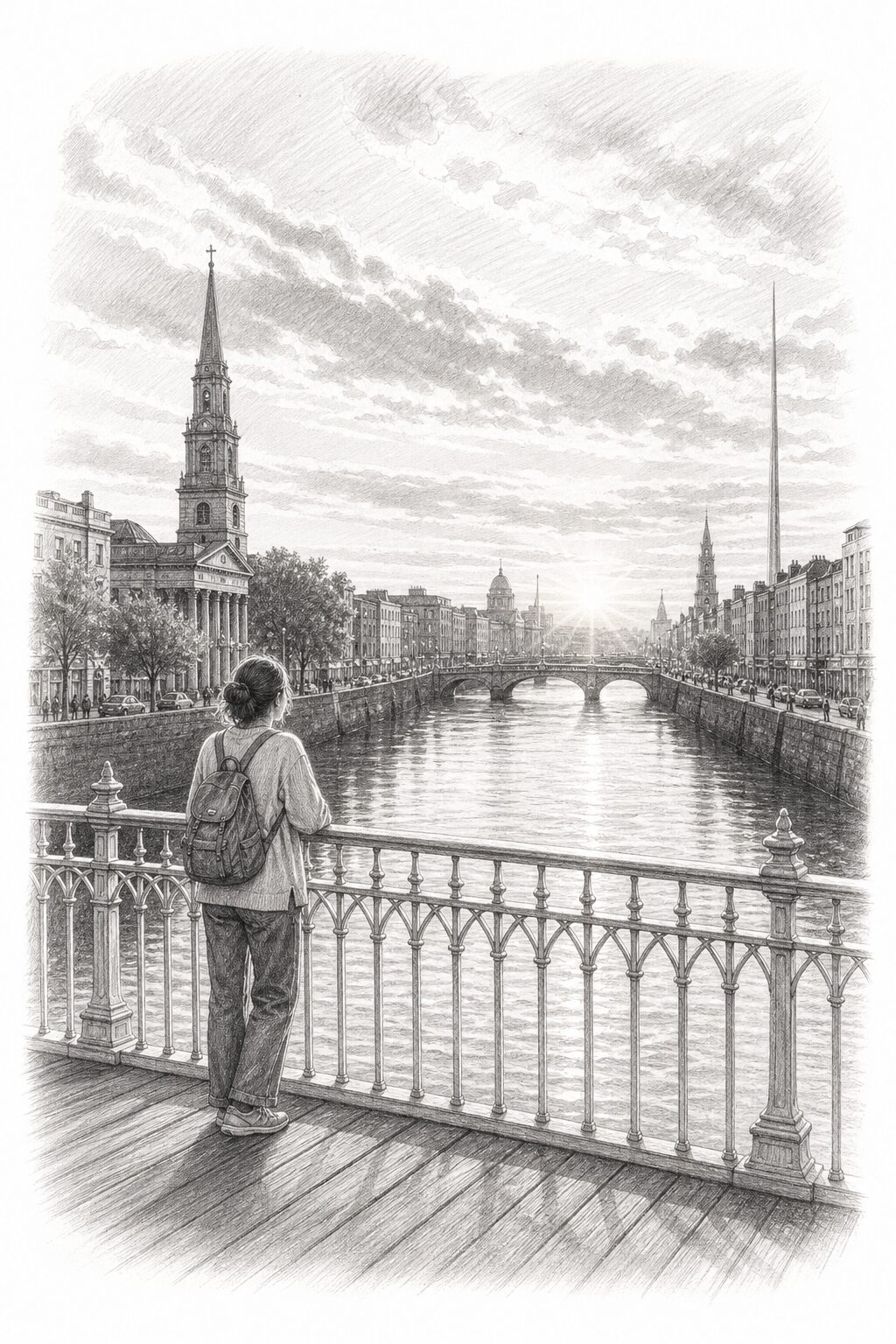
Dublin’s shape makes sense the moment you learn where it started. Around AD 841, Vikings established a longphort, a fortified ship harbor, on the south bank of the River Liffey at a tidal pool the Irish called Dubh Linn, the black pool, which the Norse rendered as Dyflin and which gave the city its English name. That trading settlement grew into a genuine city, and the river that made it useful still organizes it today. The Liffey splits Dublin into Northside and Southside, a divide that started as simple geography and became, over centuries, a running joke about class and character that Dubliners on both banks will happily explain to you, usually with a grin and usually contradicting each other.
The Southside holds most of what a first-time visitor comes for: Trinity College and Grafton Street at the center, the Georgian elegance of Merrion Square and St Stephen’s Green just beyond, and the older, working-class Liberties district running west toward the cathedrals and the Guinness Storehouse. The Northside carries O’Connell Street, the city’s grand ceremonial boulevard and the site of the General Post Office, still visibly scarred from the events of 1916, along with the Northside’s own working markets and neighborhoods that see fewer visitors and, for that reason, reward the ones who wander over. The Royal Canal and Grand Canal loop around the historic core like a second, quieter boundary, giving the city a set of green, walkable edges that most visitors never fully explore, though the complete guide will send you there.
Do not expect a grid. Dublin’s streets follow old cart tracks and property lines as much as any plan, and its scale is genuinely small: the Dublin City local authority area counted about 592,713 residents at the 2022 census, and the wider Greater Dublin Area, the city plus its commuter counties, ran to roughly 2,082,605, close to 40 percent of the entire Republic’s population, with estimates nearing 2.16 million by 2024. Whatever the exact figure by the time you read this, the working number to hold onto is this: Dublin has the cultural weight of a major European capital packed into a city you can walk end to end in under an hour.
A short arc of history
A Viking trading hub for its first three centuries, briefly expelled around 902 and rebuilt by 917 into a serious port dealing in silver, textiles, and, in a dark chapter the city does not hide, enslaved people. Then Norman conquest: the Anglo-Norman lord known as Strongbow took Dublin in 1170, and Dublin Castle rose from 1204 on the old Viking fortification, becoming the seat of British administration in Ireland for more than seven hundred years, a run that did not end until 1922. The medieval city grew up around its two great cathedrals, Christ Church and St Patrick’s, both rooted in this period even though what stands today is heavily rebuilt.
Then came the Georgian boom of the eighteenth century, when aristocratic landowners laid out the wide streets and elegant squares, Merrion Square, Fitzwilliam Square, St Stephen’s Green, that still define the city’s postcard image, brightly colored front doors and brass fanlights included. On Easter Monday 1916, armed republicans seized the General Post Office and other key buildings in a rebellion that was militarily crushed within a week; the British execution of its leaders, several of them at Kilmainham Gaol, turned public opinion decisively and set off the chain of events that led to the Irish Free State in 1922, ending Dublin Castle’s centuries as the seat of foreign rule. And in living memory, the “Celtic Tiger” boom of the 1990s and 2000s transformed the Docklands into a European tech and pharma hub, nicknamed “Silicon Docks,” survived a hard 2008 crash, and grew into today’s Dublin: a genuinely international, fast-changing capital that has somehow kept its small-scale, literary character intact through all of it. the complete guide tells this story in full, with the streets and buildings where you can still see each era.
A day in the life
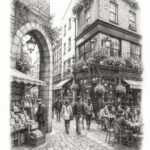
Run the city through one ordinary rotation and you will understand what you are joining. Early morning belongs to commuters filing off DART trains at Tara Street and Pearse, and to the Moore Street traders on the Northside setting up their fruit and vegetable stalls the way their families have for generations, calling out prices in the fast, warm patter the street is known for. By mid-morning, Grafton Street’s shop shutters are up and the first buskers are tuning, while across the river Trinity’s Old Library opens its doors to the day’s first, calmest visitors to the Book of Kells. Midday brings lunch rushes at pub counters, where ordering and paying at the bar, not waiting for table service, is simply how it works, and the parks fill with office workers and sandwiches whenever the weather permits, which Dubliners treat as an invitation rather than a guarantee. Afternoon is the busker’s real stage, two to five is prime time on Grafton Street, and it is also when the Guinness Storehouse and Trinity fill with the day’s heaviest crowds. Early evening tips the city toward its pubs, rounds start getting bought, and by nightfall the Cobblestone in Smithfield and O’Donoghue’s near St Stephen’s Green have their traditional musicians tuning up for sessions that are not staged for anyone, they would happen with or without an audience. Late at night, Temple Bar’s core lanes turn considerably louder and rowdier, a different city from the one you walked through at noon, while quieter neighborhoods carry on unaffected a few streets away. The city has run something like this program for over a thousand years, plague and rebellion and boom included. You are stepping into the ordinary version of it.
The numbers, briefly
Ireland recorded around 6.4 million overseas visitors in 2025, and Dublin, as the country’s main international gateway, absorbs the large majority of them. The Guinness Storehouse alone draws well over a million visitors a year, making it consistently Ireland’s single most visited paid attraction, while the free National Museum and National Gallery pull in large numbers of their own without charging a euro at the door. For a city this size, that is a remarkable amount of world attention concentrated into a walkable core, and it is a large part of why booking ahead matters more here than the city’s relaxed reputation suggests.
What genuinely makes it special
Plenty of cities have history. Dublin has a literary weight almost absurd for its size: four Nobel laureates in literature to its name, plus Joyce and Wilde, whose homes, haunts, and pub tables are still pointed out with real local pride rather than manufactured tourist trivia. Pub culture here is not a show put on for visitors; it is genuine social infrastructure, the place where news gets shared, arguments get settled, and a traditional-music session unfolds because musicians want to play, not because a venue is paying them to perform authenticity. Add a human-scale city you can walk from end to end, no language barrier for English speakers layered over a distinct and proud Irish identity, and real countryside, coastline, cliffs, and monastic ruins, within an hour by train or coach, and you have a capital that rewards both a rushed weekend and a slow week equally well.
And the honest cons, because this book deals straight with you. Dublin is genuinely pricey: hotel rooms and restaurant dinners run high by Western European standards, and a well-documented accommodation shortage keeps prices firm even outside the peak months. The weather is changeable in every season, rain gear earns its space in your bag every single month. The city’s housing and homelessness crisis is visible in parts of the center in a way some first-time visitors find jarring. Late-night weekends around Temple Bar and parts of the north inner city can turn rowdy in a way that is more nuisance than danger, but is worth knowing about in advance. And the transit network is still missing a full metro system, with a long-planned underground line still under construction as of this writing. None of this should keep you away. All of it is easier to navigate when someone tells you first.
The districts at a glance
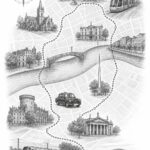
the complete guide gives you the full walking-route treatment, but start forming the mental map now. Trinity College and Grafton Street sit at the dead center, the city’s shopping and civic heart. Temple Bar, cobbled and tourist-dense, sits right beside it, wonderful by day and considerably rowdier after dark on weekends. Georgian Dublin, Merrion Square and the south side of St Stephen’s Green, is the quiet, dignified quarter of brightly colored doors and free national museums. The Liberties, west of the center, is the old working-class distillery-and-market district, home to the Guinness Storehouse and the two cathedrals. Smithfield and Stoneybatter form the genuinely local corner, cobbled squares, craft beer, and nightly traditional music. The Docklands, nicknamed Silicon Docks, is the modern riverside of glass towers and tech money, with the Custom House and EPIC museum along its quays. Portobello, Rathmines, and Ranelagh, the canal villages south of the center, are residential, Georgian, and a genuine local favorite for a value base. And Phoenix Park and Kilmainham, west of it all, pair one of Europe’s largest enclosed city parks with the single most moving historical site in the city.
Who this city is best for
Dublin is close to an ideal city for literature and history lovers, pub-culture and live-music fans, first-time European travelers who want no language barrier to fight through, committed walkers, and anyone building a wider UK and Ireland circuit, since Dublin pairs naturally with London and Edinburgh and takes Belfast as an easy add-on. It is a superb short-trip city: two or three focused days cover the highlights well, and it rewards a longer stay just as generously with day trips and slower neighborhoods.
Who might prefer somewhere else? Travelers chasing warm evenings on a café terrace, sun-and-beach vacationers, and anyone hoping for a grand boulevard capital on the scale of Paris or Rome; Dublin’s charm is intimacy and character, not architectural grandeur on that scale. And budget travelers who have not planned around Dublin’s hotel prices will feel it fastest in their wallet. If your dream trip is sunshine and low costs, look elsewhere. If your dream trip is a city that feels like a great, slightly chaotic conversation you get to join for a few days, there may be no better address in Europe.
Action Steps
- Fix the shape of the city in your head: the Liffey divides Northside and Southside, most of the postcard sights cluster south of the river, and the whole historic core is walkable.
- Accept that Dublin rewards slowness: plan by neighborhood cluster rather than by how close two things look on a map, and let the complete guide do the sequencing for you.
- Star the free-museum fact early: the National Museum branches and the National Gallery are free and genuinely world-class, which frees up budget for the paid sights that matter more to you.
- If it is your first visit, give Dublin at least three days; that is roughly the line between seeing the postcard and actually meeting the city.
Every city has a short list of things you would regret missing, and Dublin’s is manageable in a way few capitals can claim. This article is that list: the sights people build a trip around, each with the practical truth attached, what it costs, how far ahead to book, when to go, and, where it matters, whether it is honestly worth your money. If you see nothing else in this city, see these; and if one of them is skippable for your particular trip, this article will say so plainly.
One note before you book anything: Dublin’s paid landmarks are not cheap, but several of its very best sights, the National Museum, the National Gallery, and the Chester Beatty among them, cost nothing at all. Spend your money where the experience genuinely needs it, and let the free giants do a lot of the heavy lifting.
Guinness Storehouse
Ireland’s single most visited paid attraction, built inside a former fermentation plant at St James’s Gate, where Guinness has been brewed since 1759. It is, honestly, a branded museum: seven floors walking you through hops, brewing, advertising history, and the pour, and it knows exactly what it is selling. As of this writing, adult tickets run roughly EUR 26 or more booked online off-peak, climbing to EUR 30 to 36 at peak times under dynamic pricing, with children aged 5 to 17 around EUR 10; book online for a timed slot, since walk-up access is not reliable.
The reason this book still tells you to go once: the top-floor Gravity Bar, a 360-degree glass-walled room with a pint of stout included in your ticket, gives you the best panoramic view in the city, free museums included. Go at weekday opening to beat the coach groups, and treat the middle floors as an efficient walk-through rather than a full read of every panel. Allow one and a half to two hours. Verdict: worth it once for the view and the ritual, even for visitors who would rather just drink their pints in an ordinary pub afterward, which, honestly, many Dubliners would recommend anyway.
Book of Kells and the Old Library, Trinity College
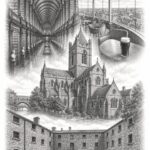
A ninth-century illuminated gospel manuscript, one of the most lavishly decorated books to survive from the early medieval world, displayed inside the university’s Old Library alongside the Long Room, a barrel-vaulted hall of dark wood and marble busts holding around 200,000 of the library’s oldest volumes. This is Dublin’s genuine once-in-a-lifetime sight, and this book does not hedge on it. Self-guided tickets start from roughly EUR 26; guided options run from around EUR 65. Book online and take the first available timed slot of the day, both to beat the crowds and because the manuscript display is small and the Long Room gets dense fast in the middle hours.
Frequently asked questions
How many days are enough for Dublin?
Three well-planned full days cover a strong first visit, while four or five allow slower neighborhoods, additional museums, or a day trip. Count usable sightseeing days rather than hotel nights.
What should be booked first?
Reserve the experience you would be most disappointed to miss, then secure lodging and any limited-entry sights. Verify current rules and opening information on the official operator’s website shortly before travel.
How do you avoid rushing?
Group each day geographically, allow time for security and transport, and treat extra stops as optional. One demanding reservation plus nearby flexible experiences usually produces a better day than a chain of timed entries.
Continue planning Dublin
- Complete Dublin travel guide
- 3 days in Dublin: first-time itinerary
- Where to stay in Dublin
- Best things to do in Dublin
- Dublin food guide
- Dublin first-time tips
- Dublin on a budget

Meet Leo: The Heartbeat Behind ‘A Country A Month’
Journeying through the pages of A Country A Month, you might often feel the rhythm of a storyteller’s heartbeat, pulsating through each line, each image, and each adventure shared. That heartbeat belongs to none other than our remarkable website editor, Leo.
With a lens in one hand and a pen in the other, Leo seamlessly marries his passions for photography and writing. His eye captures moments that words can barely describe, yet his eloquence brings those images to life, transcending borders and connecting us all through shared stories. An avid traveler, every country he’s visited has added another chapter to his expansive tale, and through our platform, he generously shares these chapters with us.