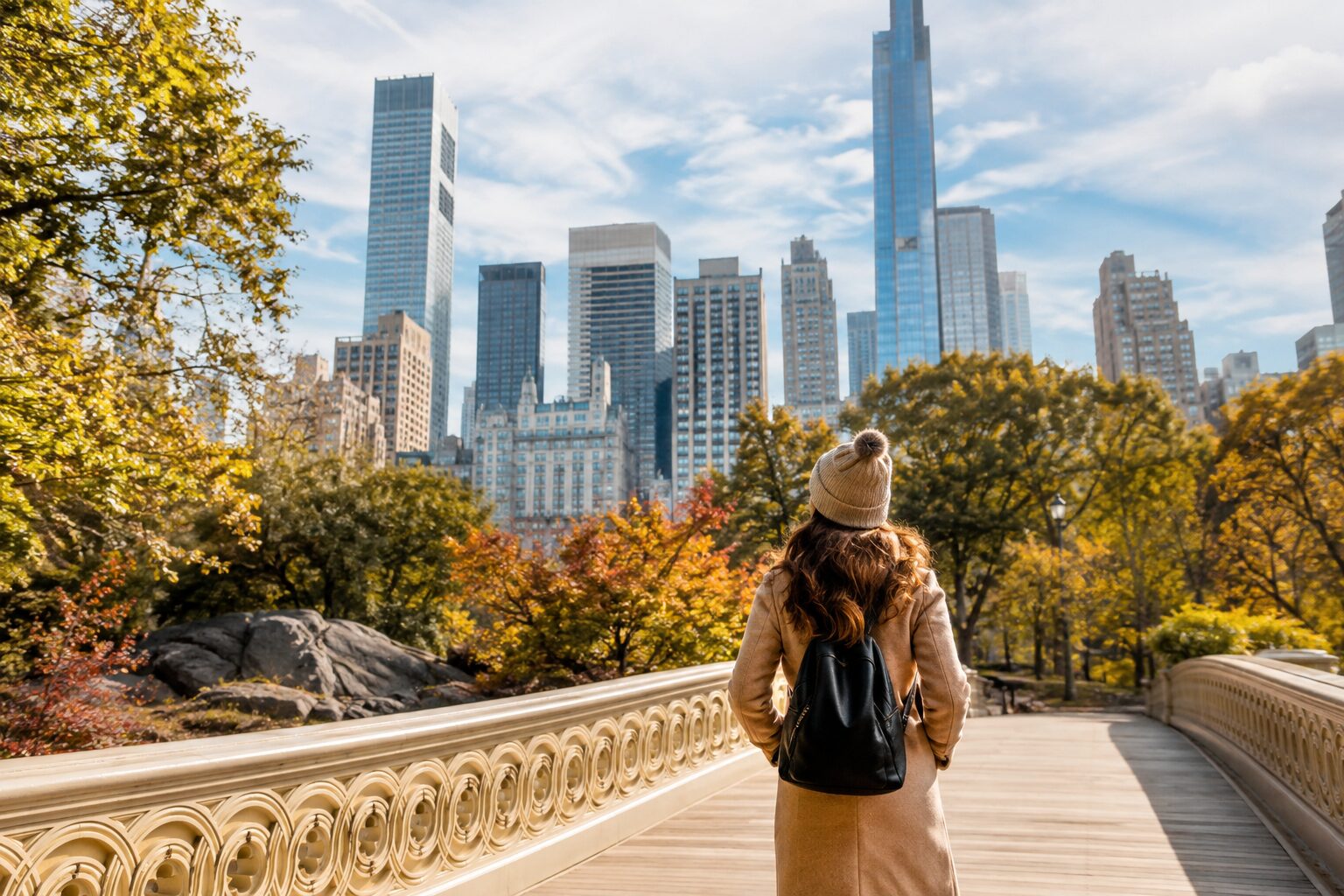
Three days in New York works when you keep each day geographically compact and limit fixed reservations.
Day 1: Midtown and Central Park
Start around Grand Central Terminal, the New York Public Library, and Bryant Park. Continue toward Rockefeller Center and Fifth Avenue, then spend a focused block in Central Park. Reserve one observation deck near sunset and finish with a Broadway show or relaxed dinner.
Day 2: Lower Manhattan and Brooklyn
Begin in the Financial District, visit the 9/11 Memorial area, and walk toward Battery Park. If the Statue of Liberty and Ellis Island are priorities, reserve them and give the excursion much of the day. Otherwise, cross the Brooklyn Bridge and explore DUMBO and Brooklyn Heights before dinner.
Day 3: museums and downtown neighborhoods
Choose the Metropolitan Museum of Art or American Museum of Natural History, not both. Afterward, take the subway downtown for Greenwich Village, SoHo, Chinatown, or the Lower East Side. Follow your food interests and leave time to wander.
Reservations to make
- Your preferred observation deck.
- A Broadway show or other must-see performance.
- Statue of Liberty tickets if landing on Liberty or Ellis Island.
- Any destination restaurant central to the trip.
How to adapt
Families can shorten museums and add playgrounds or ferry time. Art lovers can replace part of day three with MoMA or the Whitney. In extreme weather, emphasize museums, markets, and performances and keep outdoor routes flexible.
Frequently asked questions
Is three days enough?
It is enough for a strong introduction, but not every major neighborhood.
Should you stay in Times Square?
It is convenient for theatre and transit, but other neighborhoods may be quieter or offer better value.
How much walking is involved?
Often several miles per day even with subway use; wear proven shoes.
Continue with our complete NYC guide and first-time tips.
Before the three days begin
Treat this itinerary as a geographic framework, not a race. In New York City, reserve only the attractions that would genuinely disappoint you, save confirmations offline, and check current opening days. Move the days to suit weather and reservations rather than forcing a famous sight into the wrong conditions.
On arrival, obtain the payment method or transit setup you intend to use, withdraw or organize a modest cash backup, and locate breakfast, a pharmacy, and the nearest useful station. A quiet first evening near the hotel is an investment in the three full days ahead.
How to pace each day
Start with the most time-sensitive or crowd-sensitive experience, then allow the afternoon to loosen. Include a seated meal or park break and avoid crossing the city for a single photograph. If the morning runs long, remove the least important stop rather than compressing everything that follows.
Use the subway and buses, supported by ferries, commuter rail, walking, and occasional taxis; use the same contactless card or device for OMNY taps between major clusters. Within a district, walk deliberately and follow whatever looks interesting. Record the hotel address offline so fatigue or a lost connection does not become a crisis.
Detailed route notes for the essential stops
One observation deck
Choose by view, location, price, and reservation time rather than buying several versions of the same skyline. Place this stop in the half-day already devoted to the surrounding area. Verify the entrance and current ticket rules, then identify one nearby cafe, park, or indoor alternative.
Central Park
Follow a deliberate route linking a few landscapes and pair it with one nearby museum or neighborhood. Place this stop in the half-day already devoted to the surrounding area. Verify the entrance and current ticket rules, then identify one nearby cafe, park, or indoor alternative.
Lower Manhattan
Connect the harbor, Financial District, 9/11 Memorial area, and waterfront on foot. Place this stop in the half-day already devoted to the surrounding area. Verify the entrance and current ticket rules, then identify one nearby cafe, park, or indoor alternative.
The Brooklyn Bridge
Cross early or later in the day, respect bicycle lanes, and continue into Brooklyn Heights or DUMBO. Place this stop in the half-day already devoted to the surrounding area. Verify the entrance and current ticket rules, then identify one nearby cafe, park, or indoor alternative.
A major museum
Give the Met, Museum of Natural History, MoMA, Whitney, or another collection enough time instead of stacking institutions. Place this stop in the half-day already devoted to the surrounding area. Verify the entrance and current ticket rules, then identify one nearby cafe, park, or indoor alternative.
A live performance
Make Broadway, jazz, comedy, dance, or music a central evening rather than an exhausted afterthought. Place this stop in the half-day already devoted to the surrounding area. Verify the entrance and current ticket rules, then identify one nearby cafe, park, or indoor alternative.
The High Line and Chelsea
Walk the elevated park outside peak congestion and continue into galleries, markets, or Hudson River Park. Place this stop in the half-day already devoted to the surrounding area. Verify the entrance and current ticket rules, then identify one nearby cafe, park, or indoor alternative.
A food-led Queens outing
Choose Jackson Heights, Flushing, Astoria, or another district around a cuisine and explore respectfully. Place this stop in the half-day already devoted to the surrounding area. Verify the entrance and current ticket rules, then identify one nearby cafe, park, or indoor alternative.
Breakfast, lunch, and dinner strategy
Use breakfast to begin near the first sight rather than commuting twice. For lunch, select one of the city’s characteristic options—such as a New York slice, a properly baked bagel, or a deli sandwich—in the district already being explored. Keep dinner flexible on the most tiring day.
Save two or three restaurants per neighborhood rather than one supposedly perfect choice. Check opening hours and reservation practices. If a line consumes the time needed for an important visit, choose the quieter alternative and return only if the restaurant itself is a priority.
If weather or energy changes the plan
Heavy rain, heat, cold, or jet lag should change the order without destroying the trip. Move outdoor panoramas to the clearest period, use a museum or food hall during the worst conditions, and shorten long exposed walks. Keep the geographic cluster intact even when individual stops move.
At the end of day two, decide whether day three needs simplification. The temptation is to add everything not yet seen; the better choice is often to protect one meaningful experience and an enjoyable final evening.
Departure and onward travel
Do not place a nonrefundable major attraction on departure morning. Confirm checkout, luggage storage, airport or station route, and the realistic time needed to collect bags. Keep the final activity in the hotel neighborhood or on the line toward departure.
Route continuity
After One observation deck, continue through the surrounding streets instead of starting a second commute. Choose by view, location, price, and reservation time rather than buying several versions of the same skyline. The itinerary works because the next meal, rest, and evening plan remain in the same part of New York City.
A realistic morning
Begin early enough to enjoy the first area, but do not schedule breakfast, a long transfer, and a timed entrance with no margin. Prepare the night before and keep the first hour simple.
A flexible afternoon
Treat Lower Manhattan as an afternoon zone rather than a sequence of appointments. It offers harbor history, the Financial District, memorial sites, and direct Brooklyn connections. Choose one anchor and let the remaining time respond to weather and energy.
Protect the evening
A good evening requires enough energy to enjoy it. Return to the hotel only when the route makes sense, eat near the final daytime cluster, and cancel an optional stop before sacrificing the experience you anticipated most.
Meal placement
Choose a meal such as Chinatown dumplings in the district already on the route. A famous restaurant across the city can consume the time that makes a three-day itinerary coherent.
Daily review
At the end of each day, check the next morning’s opening information and transport. Move one flexible item if necessary and prepare tickets, clothing, water, and directions before sleep.
Crowd strategy
For The High Line and Chelsea, earlier or later hours may feel different, but current reservation rules control the choice. Protect the booking first and build the nearby route around the available time.
The optional stop
Label one item each day as genuinely optional. When lunch runs long or a street rewards exploration, remove that item without negotiation. The itinerary was designed to absorb the change.
Transit margin
Allow more than the app’s ideal travel time when moving through New York City. Platform decisions, station exits, traffic, and the final walk all belong in the estimate.
A memorable finish
End one day in The Upper West Side, where Central Park, museums, neighborhood restaurants, and a comfortable residential rhythm. A relaxed final hour often creates a stronger memory than squeezing in one more admission.
Route continuity
After One observation deck, continue through the surrounding streets instead of starting a second commute. Choose by view, location, price, and reservation time rather than buying several versions of the same skyline. The itinerary works because the next meal, rest, and evening plan remain in the same part of New York City.
A realistic morning
Begin early enough to enjoy the first area, but do not schedule breakfast, a long transfer, and a timed entrance with no margin. Prepare the night before and keep the first hour simple.
A flexible afternoon
Treat The Lower East Side and Chinatown as an afternoon zone rather than a sequence of appointments. It offers food, immigration history, nightlife, museums, and dense street life. Choose one anchor and let the remaining time respond to weather and energy.

Meet Leo: The Heartbeat Behind ‘A Country A Month’
Journeying through the pages of A Country A Month, you might often feel the rhythm of a storyteller’s heartbeat, pulsating through each line, each image, and each adventure shared. That heartbeat belongs to none other than our remarkable website editor, Leo.
With a lens in one hand and a pen in the other, Leo seamlessly marries his passions for photography and writing. His eye captures moments that words can barely describe, yet his eloquence brings those images to life, transcending borders and connecting us all through shared stories. An avid traveler, every country he’s visited has added another chapter to his expansive tale, and through our platform, he generously shares these chapters with us.