
Where does Oasis of the Seas actually stop, and how do you spend those port days well? Sailing round-trip from Cape Liberty in Bayonne, New Jersey, she runs two main patterns you will see most often: a seven-night Bahamas run built around Nassau and Perfect Day at CocoCay, and a longer nine-night Eastern Caribbean loop that adds a port such as Puerto Plata in the Dominican Republic and, on some sailings, reaches San Juan, St. Thomas, or St. Maarten. The ports shift from season to season, so the single most useful habit is to confirm your exact stops in the Royal Caribbean app before you plan anything. This guide walks each port you might see, what it is known for, a couple of things worth doing, and the honest ship-versus-independent call for each one.
Everything in this article and far more, deck by deck, in The Ultimate Guide to Sailing on Oasis of the Seas.
Get the book →The two itineraries you are most likely to sail
Oasis of the Seas sails round-trip from Cape Liberty, one of her biggest draws for the Northeast: much of the region can drive to the port, park there, and board without a single flight or a lost bag. The shorter option is a seven-night Bahamas cruise that leans on sea days plus Nassau and Perfect Day at CocoCay, Royal Caribbean’s private island. The longer option is a nine-night Eastern Caribbean cruise that keeps CocoCay and usually Nassau but adds real Caribbean ports, most commonly Puerto Plata, and on certain departures San Juan, St. Thomas, or St. Maarten as well.
The practical takeaway is that the number of nights tells you how much port variety you get. Seven nights is Bahamas-focused with generous sea time; nine nights spreads you across the Eastern Caribbean with more distinct cultures, forts, and beaches. Neither is better in the abstract, so if you want maximum relaxation and the private island, the shorter cruise delivers, and if you want to collect several genuinely different islands, book the longer run and read the port list carefully. For a broader look at how these sailings fit together, the Cape Liberty cruise overview is a good companion to this port-by-port breakdown.
Perfect Day at CocoCay: what is included and what costs extra
Perfect Day at CocoCay is the private-island stop that appears on both the seven-night and nine-night runs, and the one place where the free-versus-paid split matters most. A large amount of the island is included in your cruise fare. You can spend the whole day on the included beaches, swim in Oasis Lagoon (the big freshwater resort-style pool), use the other freshwater areas, and ride the free tram that loops the island so you are not walking long distances in the heat. Loungers on the included beaches, the shuttle, and access to the general grounds all come with the cruise.
The paid layer is where the island earns its reputation. The Thrill Waterpark, with its tall slides and wave pool, is a separate ticket, as are the zip line that runs across the island, the upgraded Coco Beach Club with its overwater cabanas and dedicated pool, and the adults-only Hideaway Beach for a quieter scene without kids. None of these are required to have an excellent day: a family on a budget can eat lunch (included), swim in Oasis Lagoon, claim a stretch of included beach, and go home happy. If you do want the waterpark or a cabana, book it in the app before you sail, because the best-value passes and the limited cabanas sell out early and prices climb closer to the date.
Ship-versus-independent does not really apply here, because CocoCay is Royal Caribbean’s own island and there is no independent alternative. The real decision is included-versus-paid and how early you commit to the extras. Arrive early to grab shade near the free beaches, and use the tram rather than baking on the walk.
Nassau, Bahamas: forts, Atlantis, and an easy beach
Nassau is the Bahamian capital and a walkable cruise port, which changes the excursion math. Because the ship docks right in town, you do not necessarily need a paid tour to see the highlights. The Queen’s Staircase, a set of steps carved out of limestone that leads up toward Fort Fincastle, is a short taxi ride or a modest walk from the pier and makes an easy self-guided stop with a bit of history and a view. Junkanoo Beach is close enough that many guests simply walk to it for a few hours of sand and water without booking anything.
The big-ticket option is Paradise Island and Atlantis, the sprawling resort with its water park, aquarium, and marine habitats. This is the case where a booked experience makes sense: a day pass to the water park or the aquarium is a real cost and access can be limited, so going through the app or a reputable operator saves you the guesswork of what is actually available to cruise visitors on the day. A couple of easy things to do: climb the Queen’s Staircase and see Fort Fincastle in the morning, then decide between Junkanoo Beach for a relaxed afternoon or the Atlantis day pass if you committed to it in advance. Nassau is a busy port, so doing the fort and staircase early keeps you ahead of the midday rush.
Puerto Plata, Dominican Republic: the cable car and a real port town
Puerto Plata is the anchor port of the nine-night Eastern Caribbean run and the one that feels most like a genuine Caribbean day rather than a resort bubble. The ship uses the Amber Cove port area, a purpose-built cruise complex with pools, shops, and a relaxed atmosphere where you can happily spend the whole day without leaving if you want an easy, low-effort stop. Amber Cove itself is a fine plan-B for anyone who does not want to venture far.
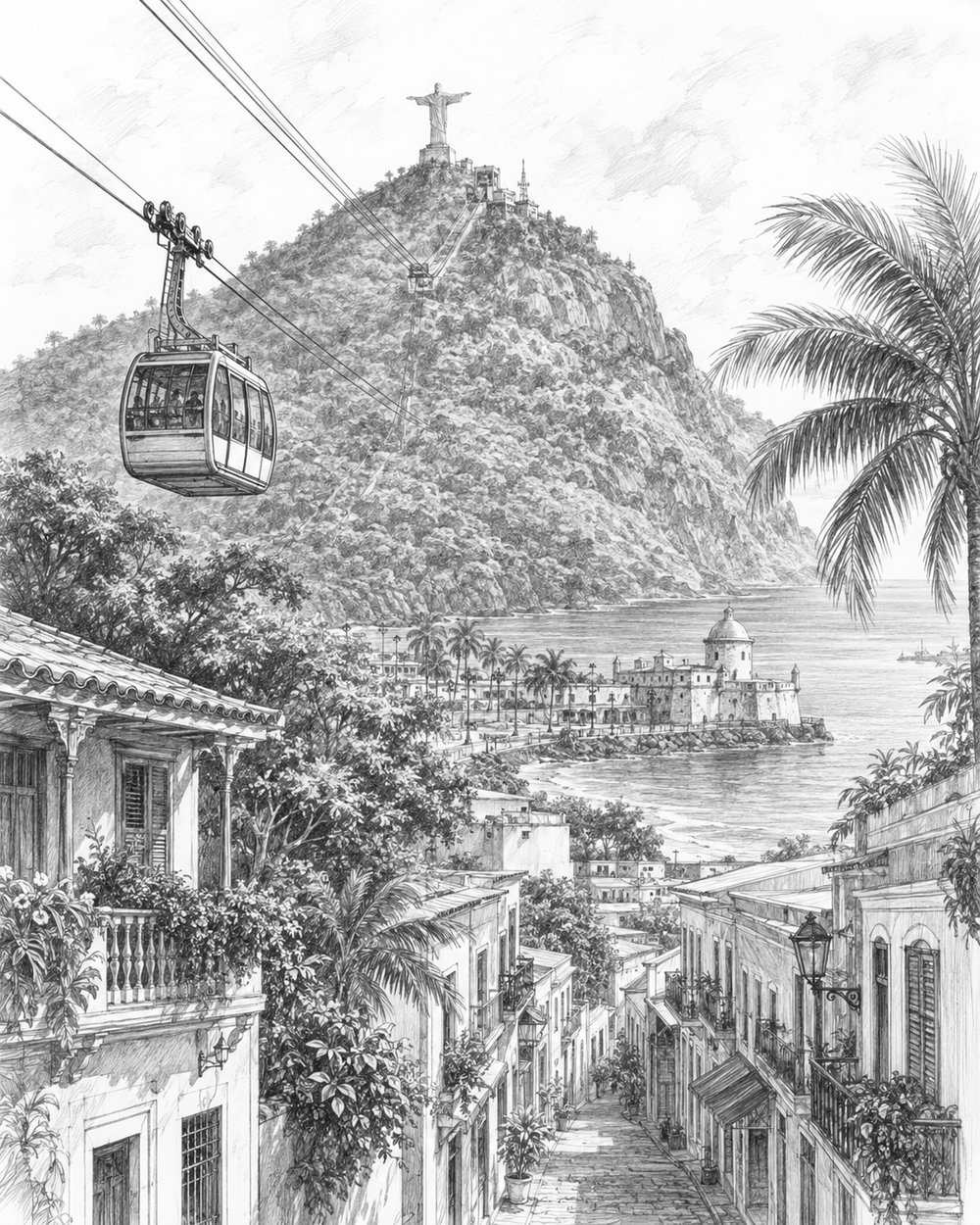
The standout landmark is the Mount Isabel de Torres cable car, which rises above the town to a hilltop with gardens and a large statue overlooking the coast. It is the signature Puerto Plata experience and worth doing at least once. Down in the historic town you will find Fort San Felipe, the old fortress guarding the harbor, plus the surrounding streets and nearby beaches. A couple of things to do: ride the cable car for the view in the cooler part of the day, then walk the fort and old town, or trade the town for a nearby beach if you would rather relax.
Here the ship-versus-independent call is more balanced. Because Amber Cove sits a little outside the historic center, a ship excursion is the low-stress way to combine the cable car, the fort, and a beach into one guided loop with transport handled and a guaranteed return to the ship. Independent taxis are available and can be cheaper, but you take on the logistics and the responsibility of getting back before all-aboard, so for a first visit a booked tour that bundles the cable car is a reasonable choice.
San Juan, Puerto Rico: Old San Juan on foot
On the sailings that reach San Juan, you get one of the easiest self-guided ports in the Caribbean, because the ship docks within walking distance of Old San Juan. The historic district is a compact grid of colorful colonial streets, plazas, and shops you can explore on foot. The crown jewel is El Morro, the great sixteenth-century fortress on the point, with its ramparts, tunnels, and sweeping ocean views; nearby Castillo San Cristóbal is the larger companion fort a short walk away.
This is the port where I would lean independent for most people. You can walk off the ship, spend a couple of hours wandering Old San Juan, tour El Morro, and add Castillo San Cristóbal if you have the energy, all without a single booking. A ship excursion still has its place if you want a rum-distillery tour, a rainforest trip out to El Yunque, or a guide to explain the history, but the core sightseeing here does not require one. Because San Juan is a hub with lots of foot traffic, the forts are most pleasant earlier in the day before the heat and crowds build.
St. Thomas: Magens Bay and the view over Charlotte Amalie
St. Thomas, with its main town of Charlotte Amalie, is a beach-and-shopping port on the sailings that include it. The headline attraction is Magens Bay, one of the most famous beaches in the Caribbean, a long curve of calm, sheltered water ideal for families and easy swimming. It sits on the far side of the island from the piers, so getting there is the main logistical question of the day.
Because Magens Bay is not walkable from the port, this is a stop where a little planning pays off. A couple of things to do: spend the core of the day at Magens Bay, and pair it with one of the island’s viewpoints over Charlotte Amalie and the harbor. A beach excursion or a beach-and-shopping combo tour handles the transport across the island and the timing back to the ship, which removes the one real risk of the day. Independent shared taxis (the open-air safari trucks) run to Magens Bay and cost less, and shopping in Charlotte Amalie’s duty-free district is a classic St. Thomas activity you can do on your own near the port. If your day is only about the beach, a booked transfer keeps it foolproof.
St. Maarten: Maho Beach, Philipsburg, and the French side
St. Maarten is the two-nations island, Dutch on one side and French on the other, and the sailings that stop here dock at Philipsburg on the Dutch side. Front Street in Philipsburg is the shopping-and-boardwalk strip right by the beach, walkable from the port and an easy independent afternoon. The island’s most talked-about spot is Maho Beach, where aircraft pass low over the sand on their approach to the airport, a genuinely unusual sight that draws a crowd.
The French side, centered on Marigot, has a different feel, more café-and-market than duty-free strip, and it is worth crossing over if you want the contrast. A couple of things to do: watch the planes and swim at Maho Beach, then either stroll Front Street in Philipsburg or make the trip over to Marigot for the French-side markets. Ship-versus-independent here tilts toward independent for the confident traveler, because a taxi or small-group island tour can hit Maho, Marigot, and a beach in a loop for a fair price. A ship excursion still makes sense for a guided tour tying the Dutch and French sides together, or a catamaran sail.
An excursion booking strategy that actually works
The smartest approach across all these ports is to match the tool to the port rather than booking everything the same way. Some stops (Old San Juan, Nassau’s forts, Philipsburg’s Front Street) are close and walkable, so you save real money going independent. Others (Magens Bay in St. Thomas, the cable car in Puerto Plata) are away from the pier, where a booked tour or transfer buys you a guaranteed ride back. And CocoCay is a booking decision only about the paid extras, not about a tour at all.
- Book the private-island extras (Thrill Waterpark, cabanas, zip line) and any resort day passes like Atlantis early in the app, since they sell out and prices rise closer to sailing.
- For away-from-port beaches and signature rides, prefer a ship excursion or a reputable pre-booked operator, so all-aboard timing is on the ship, not on you.
- For walkable historic centers, go independent and put the savings toward lunch or a taxi to one extra sight.
- Read what is actually included in a tour price (entry fees, lunch, gear) so you can compare it fairly against doing it yourself.
- Keep prices in relative terms in your own head and confirm the current cost in the app, because they change.
The single biggest reason to book through the ship is protection: if a Royal Caribbean excursion runs late, the ship waits for it, while an independent tour or taxi that misses all-aboard leaves you to catch up to the next port on your own. That safety net is worth paying for where timing is tight or the drive is long. The Oasis tips guide covers app bookings and day-of logistics in more depth.
Docking, tendering, and all-aboard timing
Good news for planning: on these itineraries Oasis of the Seas generally docks alongside rather than tendering. CocoCay has a pier that lets a ship this size tie up so you walk straight off; Nassau, San Juan, St. Thomas, and Philipsburg in St. Maarten are all alongside berths; and in Puerto Plata the Amber Cove complex is a docked port. Docking matters because it means no waiting for a small boat to ferry you ashore, which speeds up your morning and lets you reach a beach or a fort before the crowds. Confirm your ship’s arrangement in the app, since assignments can vary, but tendering is not the norm here.
All-aboard is the one deadline of a port day you cannot miss. The ship posts an all-aboard time that is typically half an hour before departure, and it runs on ship’s time, which is not always the same as the local time ashore. Set your phone, note the time when you walk off, and build in a cushion, especially in ports where you have traveled away from the pier. If you are on a ship-sponsored excursion the vessel will wait for your group; on your own, you are responsible for being back.
Money and tipping ashore
The US dollar is easy to use across this routing. In Puerto Rico (San Juan) it is the official currency; in the US Virgin Islands (St. Thomas) it is as well; and in the Bahamas, St. Maarten’s Dutch side, and much of the Dominican Republic’s tourist areas, US dollars are widely accepted alongside the local currency. Carry a mix of small bills for taxis, beach chairs, market stalls, and tips, because vendors and drivers may not have change for large notes and some smaller spots are cash-only.
On the ship your daily gratuities are auto-added to your SeaPass account, so onboard tipping is handled unless you want to give extra. Ashore is different: tipping taxi drivers, tour guides, and beach and restaurant staff a reasonable amount in cash is customary and appreciated, so budget a little separately from your activity money. Remember the SeaPass card is cashless onboard only, so you do want physical currency for the day off the ship.
Making the most of sea days
Sea days are a feature of these Northeast sailings, not filler, especially on the longer nine-night run where you cross more open water. Oasis of the Seas was the first of her class and the ship that invented the seven-neighborhood layout, so a day at sea is genuinely a day at the destination. The Ultimate Abyss dry slide, The Perfect Storm waterslides, the FlowRider surf simulator, the rock wall, the zip line over the Boardwalk, and the ice rink give you full days of activity, while Central Park’s open-air garden and the adults-only Solarium give you quiet corners.
The trick on sea days is to book the popular things ahead in the app, because show reservations and specialty dining fill up. Plan around the big productions: a Broadway-style theater show, the AquaTheater high-diving performance in the open-air venue carved into the stern, and the ice-skating show are the marquee events across a cruise, so space them out rather than cramming everything into the last night. If you are still deciding how to fill the calendar, the what-to-expect guide lays out the onboard experience, and first-timers may want the first-time cruise walkthrough before sailing.
Get the complete Oasis of the Seas playbook
Want every port, excursion, and sea-day decision mapped out before you sail? “The Ultimate Guide to Sailing on Oasis of the Seas,” part of the Ultimate Ship Guides series by Leo Sotropa, turns all of this into clear action steps in every chapter so you board knowing exactly how to spend each day.
Frequently asked questions
Which ports does Oasis of the Seas visit from Cape Liberty?
The seven-night Bahamas cruise centers on Nassau and Perfect Day at CocoCay with sea days, while the nine-night Eastern Caribbean cruise adds a port such as Puerto Plata and, on some sailings, reaches San Juan, St. Thomas, or St. Maarten. The exact stops change by season, so confirm your sailing in the Royal Caribbean app.
Do I need to book excursions, or can I explore on my own?
It depends on the port. Old San Juan, Nassau’s forts, and Philipsburg’s Front Street are walkable and easy to do independently. For away-from-pier spots like Magens Bay in St. Thomas or the Mount Isabel de Torres cable car in Puerto Plata, a booked tour or transfer is the low-stress choice because it handles transport and getting you back on time.
What is included at Perfect Day at CocoCay versus what costs extra?
Included with your fare are the beaches, Oasis Lagoon pool, the freshwater areas, and the tram. Paid extras include the Thrill Waterpark, the zip line, the upgraded Coco Beach Club, and the adults-only Hideaway Beach. You can have a full day on the included areas without spending more; book the extras early in the app if you want them.
Does Oasis of the Seas tender at any of these ports?
On these itineraries she generally docks alongside rather than tendering, including at CocoCay, Nassau, Puerto Plata’s Amber Cove, San Juan, St. Thomas, and St. Maarten. That means you walk straight off. Assignments can vary, so confirm your ship’s arrangement in the app, but tendering is not typical on this routing.
How does all-aboard timing work in port?
The ship posts an all-aboard time, usually about half an hour before departure, and it runs on ship’s time, which may differ from local time ashore. If you are on a ship excursion the vessel waits for your group; on an independent tour or taxi, being back on time is your responsibility, so build in a cushion.
What money should I carry ashore, and how does tipping work?
US dollars work across this routing, whether as the official currency in Puerto Rico and the US Virgin Islands or as a widely accepted currency in the Bahamas, St. Maarten, and Dominican tourist areas. Carry small bills for taxis, chairs, and markets, and set aside cash to tip drivers, guides, and staff. Onboard gratuities are auto-added to your SeaPass account.
Is the seven-night or nine-night itinerary better for ports?
The seven-night run is Bahamas-focused with more sea time and the private island, ideal for relaxation. The nine-night run trades some sea days for more distinct Eastern Caribbean ports, forts, and beaches. If you want variety and different cultures, choose the longer sailing; if you want the island and downtime, the shorter one fits better.
Ready for the whole ship in one place? It is all in The Ultimate Guide to Sailing on Oasis of the Seas.
Get the book →
Meet Leo: The Heartbeat Behind ‘A Country A Month’
Journeying through the pages of A Country A Month, you might often feel the rhythm of a storyteller’s heartbeat, pulsating through each line, each image, and each adventure shared. That heartbeat belongs to none other than our remarkable website editor, Leo.
With a lens in one hand and a pen in the other, Leo seamlessly marries his passions for photography and writing. His eye captures moments that words can barely describe, yet his eloquence brings those images to life, transcending borders and connecting us all through shared stories. An avid traveler, every country he’s visited has added another chapter to his expansive tale, and through our platform, he generously shares these chapters with us.