Which ports does Legend of the Seas visit, and which shore excursions are worth booking? The short answer is that this ship runs two completely different programs across the year, so it depends on the season. In summer, Legend works a 7-night Western Mediterranean loop alternating between Barcelona and Rome/Civitavecchia, calling at La Spezia, Marseille, Palma de Mallorca, Naples and Málaga. In winter, after an October repositioning, she moves to Fort Lauderdale for Caribbean sailings that include Perfect Day at CocoCay, Falmouth in Jamaica, Labadee in Haiti, plus Curaçao, Aruba and Cabo Rojo in Puerto Rico on the longer route. Below is a port-by-port breakdown of what each place is known for, things to do, and the honest call on a ship excursion versus going independent. Exact ports vary by sailing, so confirm your itinerary in the Royal Caribbean app.
Everything in this article and far more, deck by deck, in The Ultimate Guide to Sailing on Legend of the Seas.
Get the book →Why Legend of the Seas has two port programs
Legend of the Seas is the third ship in Royal Caribbean’s Icon Class, the largest and newest of that trio at roughly 250,800 gross tons. What makes her unusual is that she is the only Icon-Class ship that splits the calendar across two regions: the Mediterranean in summer and the Caribbean in winter. The same ship can put you in front of the Sagrada Família in July and on a Bahamian beach in January.
That split matters for how you approach ports. The Mediterranean itinerary is port-dense and culture-heavy, with historic cities that reward planning. The Caribbean itinerary mixes Royal Caribbean’s own private destinations with a few classic island calls and is more relaxed. Your excursion strategy, budget and even the currency in your pocket change between the two. If you are weighing which season to sail, the summer route gets a full treatment in our Legend of the Seas Mediterranean cruise guide.
The Mediterranean ports (summer)
The summer program is a 7-night Western Mediterranean round-trip that alternates its home port between Barcelona and Rome/Civitavecchia. Across the season the ports of call include La Spezia, Marseille, Palma de Mallorca, Naples and Málaga, plus a couple of sea days.
Barcelona, Spain
Barcelona is known for the architecture of Antoni Gaudí and a walkable old core. The obvious anchors are the Sagrada Família, still under construction and unlike anything else you will see, and Park Güell, Gaudí’s mosaic-filled hillside park with views over the city. Add La Rambla and a wander through the Gothic Quarter for a full day.
The ship-versus-independent call: as a home port, many guests arrive a day or two early rather than treating Barcelona as a port call, and it is an easy city to do on your own with a compact center and a straightforward metro. The one thing not to leave to chance is the Sagrada Família, which uses timed-entry tickets that sell out; book that slot well ahead and build the day around it.
Palma de Mallorca, Spain
Palma, the capital of Mallorca, is known for its enormous seafront cathedral and an atmospheric old town. Palma Cathedral, known locally as La Seu, dominates the skyline and is worth going inside as well as photographing from the waterfront. The lanes of the old town behind it are made for slow walking, and the island’s beaches are a draw if you would rather have sand.
The call: Palma’s center is close enough that a cathedral-and-old-town day needs no tour. Book a ship excursion mainly to get out to a specific beach or across the island, where a coach and a set return time remove the guesswork.
La Spezia (Florence, Pisa, Cinque Terre)
La Spezia is a gateway rather than a destination, and it is the most consequential planning decision of the itinerary because it opens onto three very different day trips. It is the closest port to the Cinque Terre villages along the Ligurian coast. It is also the jumping-off point for Florence, with the Duomo, the Uffizi and the Ponte Vecchio, and for Pisa and its Leaning Tower. The catch is distance: Florence and Pisa are a longer transfer inland, so you choose one direction, not all of it.
This is the port where a ship excursion earns its keep. Florence in particular is far enough that missing the return transfer is a real risk, and the ship’s tour guarantees you are back aboard on time. If you are confident with regional trains and want the Cinque Terre, independent travel is doable and often more flexible. But for the Florence or Pisa run, weigh a guaranteed return against the freedom of going it alone.
Marseille, France (Provence)
Marseille is the gateway to Provence and a substantial port city in its own right. Notre-Dame de la Garde, the basilica crowning the hill above the city, gives you the best panorama, and the Vieux-Port, the old harbor, is the historic heart. Marseille is also the launch point for Aix-en-Provence if you want a Provençal town.
The call: staying in Marseille is easy to do independently, with the Vieux-Port and the basilica both reachable without a tour. The case for a ship excursion is stronger if you want Aix-en-Provence or the wider countryside, where a coach and guide save you from working out connections.
Rome / Civitavecchia, Italy
Rome needs no introduction: the Colosseum, the Vatican and St. Peter’s, the Trevi Fountain and the Roman Forum are all on the short list. The wrinkle is that the cruise port is at Civitavecchia, roughly a 1.5-hour transfer from Rome itself. That distance is the most important fact to plan around, because it eats into your day at both ends and raises the stakes on getting back to the ship.
Given the transfer, this is another port where a ship excursion is worth considering, purely for the guaranteed return after a long day inland. Independent travel to Rome is possible by train, but you are managing a tight schedule with no safety net. If Rome is your embarkation port, treat it like Barcelona and give yourself extra days on land. The major Vatican sites use timed tickets, so book those ahead.
Naples, Italy
Naples is one of the richest ports on the itinerary for choice. From here you can reach Pompeii and Mount Vesuvius, the Amalfi Coast and the island of Capri, and the city itself is the home of Neapolitan pizza. The port sits close to the center, so Naples rewards both the ambitious day-tripper and the person who just wants to walk and eat well.
The call: Pompeii and the Amalfi Coast are the excursions where a guided tour adds the most, both for context at the ruins and for the logistics of the coast road. Capri involves a ferry and is a bigger commitment. If you would rather keep it simple, staying in Naples for the historic center and a proper pizza is a valid, low-stress day, an easy walk from the ship.
Málaga, Spain
Málaga, on the Costa del Sol, is known for the Alcazaba, a hilltop Moorish fortress, its cathedral, and as the birthplace of Pablo Picasso, with a museum devoted to him. It also has city beaches within reach of the port.
The call: Málaga’s center and main sights are close to the port and very walkable, one of the easiest independent ports on the route. A ship excursion is worth it mainly to head farther afield; for the Alcazaba, cathedral and Picasso museum, your own two feet will do fine.
The Caribbean ports (winter)
For the winter season, after an autumn transatlantic repositioning, Legend runs round-trip from Fort Lauderdale at Port Everglades. The 6-night Western Caribbean route features CocoCay, Falmouth in Jamaica and Labadee in Haiti. The 8-night Southern Caribbean route swaps in Curaçao, Aruba and Cabo Rojo in Puerto Rico, along with CocoCay. Exact ports vary by sailing.
Perfect Day at CocoCay, Bahamas
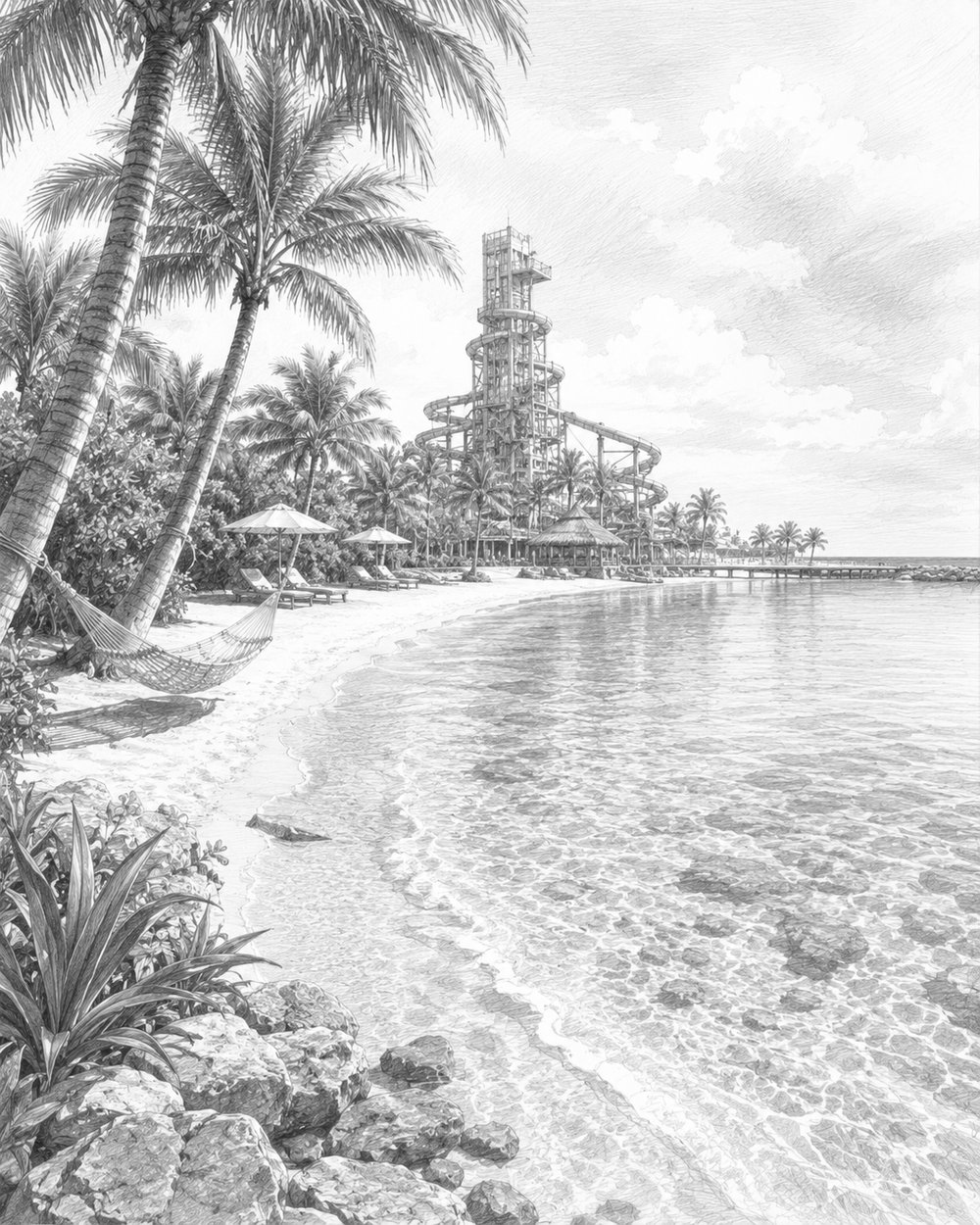
CocoCay is Royal Caribbean’s private island in the Bahamas, and it is the port where the excursion decision is simplest, because so much is already included. Your fare covers the beaches, the Oasis Lagoon pool, freshwater areas and the island tram. The paid extras are the big-ticket add-ons: the Thrill Waterpark, the zip line and the Coco Beach Club. There is no town to explore, so this is a day about how you relax.
The call: there is no independent option here, so the only question is whether to pay for the extras. If you have kids who want the waterpark, or you want the Beach Club’s quieter setup, book those in the app before you sail, as capacity is limited and prices move.
Falmouth, Jamaica
Falmouth is known as the gateway to Dunn’s River Falls, the terraced waterfall you can climb, which is the marquee Jamaican excursion. Beyond that, the area offers beaches, river rafting on the Martha Brae, and the historic town of Falmouth itself, with a well-preserved Georgian core right by the port.
The call: Dunn’s River Falls is a fair drive from Falmouth, so a ship excursion is the low-stress way to do it, with the transfer and return timing handled for you. Booking through the ship buys peace of mind if you head any distance from the pier. If you would rather stay close, the historic town is walkable from the port.
Labadee, Haiti
Labadee is Royal Caribbean’s private peninsula on the north coast of Haiti, and like CocoCay it is a self-contained resort day rather than a town visit. The draws are the beaches, a zip line, an alpine coaster and water sports.
The call: there is no independent exploring here, so this is another book-the-extras-in-the-app situation. The zip line and alpine coaster are popular and can sell out, so reserve early if they matter to you. If you just want a beach and a hammock, the included areas deliver at no extra cost.
Curaçao (Willemstad)
Curaçao’s capital, Willemstad, is known for its colorful UNESCO-listed waterfront, the Handelskade, and the floating Queen Emma Bridge that swings open to let ships pass. Beyond the center there are beaches and good snorkeling.
The call: Willemstad’s historic waterfront is right by the port and completely walkable, so this is an easy port to do independently. Book a ship excursion if you want a specific beach or snorkeling spot outside town. For the Handelskade and the floating bridge, just walk off and explore.
Aruba (Eagle and Palm Beach)
Aruba is a beach island first. Eagle Beach and Palm Beach are the famous stretches of white sand, Oranjestad is the walkable capital near the port, and the interior is a dry landscape of cactus and desert.
The call: Oranjestad is a short walk from the pier and the famous beaches are reachable on your own, so independent days work well. A ship excursion earns its place mainly for the rugged interior, which is harder to reach and better with a guide and the right vehicle.
Cabo Rojo, Puerto Rico
Cabo Rojo, on Puerto Rico’s southwest corner, is the quietest and most natural of the Caribbean calls. It is known for its beaches, the Los Morrillos lighthouse on the cliffs, and pink-hued salt flats. This is a scenery-and-nature port, not a shopping one.
The call: because the highlights are spread across a natural landscape rather than clustered by the pier, a ship excursion is often the practical way to reach the lighthouse and salt flats. If you prefer a simple beach day, that is fine, but check what is within reach of the docking point on your sailing.
An excursion booking strategy that works
Across both seasons, the same framework serves you well: match the excursion to the risk. The bigger the distance between the pier and the thing you want to see, the stronger the case for booking through the ship, because Royal Caribbean guarantees it will wait for its own tours if they run late. Rome from Civitavecchia, Florence from La Spezia and Dunn’s River Falls from Falmouth are the clearest long-transfer ports where that guarantee is worth paying for.
- Book high-demand items early in the app: private-island add-ons like the CocoCay Thrill Waterpark and the Labadee zip line, and timed-entry sights such as the Sagrada Família and the Vatican.
- Keep close-in, walkable ports independent: Málaga, Palma, Willemstad, Oranjestad and central Naples cost nothing extra to do on your own.
- Reserve the ship tour for long inland runs where missing the ship is a real risk, or for landscapes like Aruba’s interior and Cabo Rojo’s coast that are awkward to reach independently.
- Keep prices in perspective. Excursion pricing changes, so confirm the current cost in the app rather than relying on old figures.
One more habit: do not overschedule. A single well-chosen excursion plus time to wander usually beats stacking two tours into one day, especially in the port-dense Mediterranean. For a broader planning overview, our Legend of the Seas cruise guide pulls the pieces together, and if this is your first Royal Caribbean sailing, the first-time cruiser guide to Legend of the Seas covers the basics that make port days smoother.
Docking, tendering and all-aboard timing
Not every port lets you simply walk off. At some calls the ship docks alongside and you step straight onto the pier; at others she anchors offshore and you reach land by tender, a smaller boat that ferries guests back and forth. Tendering adds time at both ends and can be weather-dependent, so check how your ship arrives at each port, which the app shows closer to the sailing.
The rule that matters most is the all-aboard time, and it runs on ship time. The ship keeps its own clock, which may differ from local time ashore, particularly in the Caribbean where you can cross time zones. Set your watch to ship time when you leave, note the all-aboard time in the daily schedule, and give yourself a generous buffer. If you are on a ship excursion, the vessel waits for you; if you are independent and late, it does not. That asymmetry is the strongest argument for booking a ship tour on any long-distance day.
Money and tipping ashore
Currency is one of the practical differences between the seasons. In the Mediterranean, all the ports on this itinerary are in the eurozone, so euros are your cash currency in Spain, France and Italy. In the Caribbean, the U.S. dollar is widely accepted across the islands on this route. Cards are common in both regions, but carrying some local cash for taxis, market stalls and tips is sensible.
On tipping, your onboard daily gratuities are handled separately and auto-added to your SeaPass account, so tipping ashore is only about the people you deal with on land: guides, drivers and restaurant staff. Norms vary by country, and small amounts in local cash are easiest.
Making the most of the Mediterranean’s fewer sea days
The two itineraries feel different partly because of their rhythm. The Mediterranean route packs in ports with only a couple of sea days across the week, which means less time for everything Legend offers onboard, from the Category 6 waterpark to the AquaDome shows. If you want time on the ship as well as ashore, be deliberate: pick your must-do ports, treat one or two calls as lighter stay-close days, and use the sea days to actually experience the neighborhoods.
The Caribbean route, by contrast, gives you more breathing room between ports, which suits a slower holiday and more onboard time. If you want to see as much of Europe as possible, the summer program is built for you; if you want a beach-and-ship balance, the winter program leans that way. For more on getting the timing right, the Royal Caribbean Legend of the Seas tips article is a useful companion. Whichever you choose, confirm your itinerary, port times and excursion availability in the app, and book the high-demand items early.
Get the complete Legend of the Seas playbook
Want every port day, excursion decision and money tip laid out with clear action steps? Grab the full Legend of the Seas guide, part of the Ultimate Ship Guides series by Leo Sotropa, and walk aboard knowing exactly how to plan both her seasons.
Frequently asked questions
What ports does Legend of the Seas visit?
It depends on the season. In summer, Legend runs a 7-night Western Mediterranean round-trip alternating between Barcelona and Rome/Civitavecchia, with calls including La Spezia, Marseille, Palma de Mallorca, Naples and Málaga. In winter she sails from Fort Lauderdale to Caribbean ports including CocoCay, Falmouth, Labadee, plus Curaçao, Aruba and Cabo Rojo on the longer route. Exact ports vary by sailing, so confirm yours in the app.
Should I book excursions through the ship or go independent?
Match the choice to the distance. For long inland transfers where missing the ship is a real risk, such as Rome from Civitavecchia, Florence from La Spezia or Dunn’s River Falls from Falmouth, a ship excursion is worth it because the vessel waits for its own tours. For close-in, walkable ports like Málaga, Palma, Willemstad and Oranjestad, independent days work well and cost nothing extra.
What is included at CocoCay and Labadee?
At CocoCay your fare includes the beaches, the Oasis Lagoon pool, freshwater areas and the island tram, while the Thrill Waterpark, zip line and Coco Beach Club are paid extras. At Labadee the beaches are included, with the zip line, alpine coaster and water sports as add-ons. Both are private Royal Caribbean destinations with no independent option, so the only decision is which extras to book.
Which port needs the most careful planning?
La Spezia, because it is the gateway to three very different day trips: the Cinque Terre villages nearby, and Florence and Pisa farther inland. You have to choose one direction for the day. Rome/Civitavecchia is a close second, since the port is roughly a 1.5-hour transfer from Rome itself, which makes return timing tight on independent visits.
What currency should I bring for each season?
In the Mediterranean, all the ports on this route are in the eurozone, so bring euros for Spain, France and Italy. In the Caribbean, the U.S. dollar is widely accepted across the islands on this itinerary. Cards work in most shops and restaurants in both regions, but carry some local cash for taxis, markets and tips.
What is all-aboard time and why does it matter?
All-aboard time is the deadline to be back on the ship, and it runs on ship time, which can differ from local time ashore, especially in the Caribbean. Set your watch to ship time when you leave, note the all-aboard time in the daily schedule, and leave a buffer. If you are on a ship tour the vessel waits for you; if you are independent and late, it will not.
Do I still need to tip ashore if gratuities are added onboard?
Yes, those are separate. Your onboard daily gratuities are auto-added to your SeaPass account and cover shipboard service. Tipping ashore is only for the guides, drivers and restaurant staff you deal with on land, where norms vary by country. Small amounts in local cash are the simplest way to handle it, so keep some coins and small notes on hand.
Ready for the whole ship in one place? It is all in The Ultimate Guide to Sailing on Legend of the Seas.
Get the book →
Meet Leo: The Heartbeat Behind ‘A Country A Month’
Journeying through the pages of A Country A Month, you might often feel the rhythm of a storyteller’s heartbeat, pulsating through each line, each image, and each adventure shared. That heartbeat belongs to none other than our remarkable website editor, Leo.
With a lens in one hand and a pen in the other, Leo seamlessly marries his passions for photography and writing. His eye captures moments that words can barely describe, yet his eloquence brings those images to life, transcending borders and connecting us all through shared stories. An avid traveler, every country he’s visited has added another chapter to his expansive tale, and through our platform, he generously shares these chapters with us.