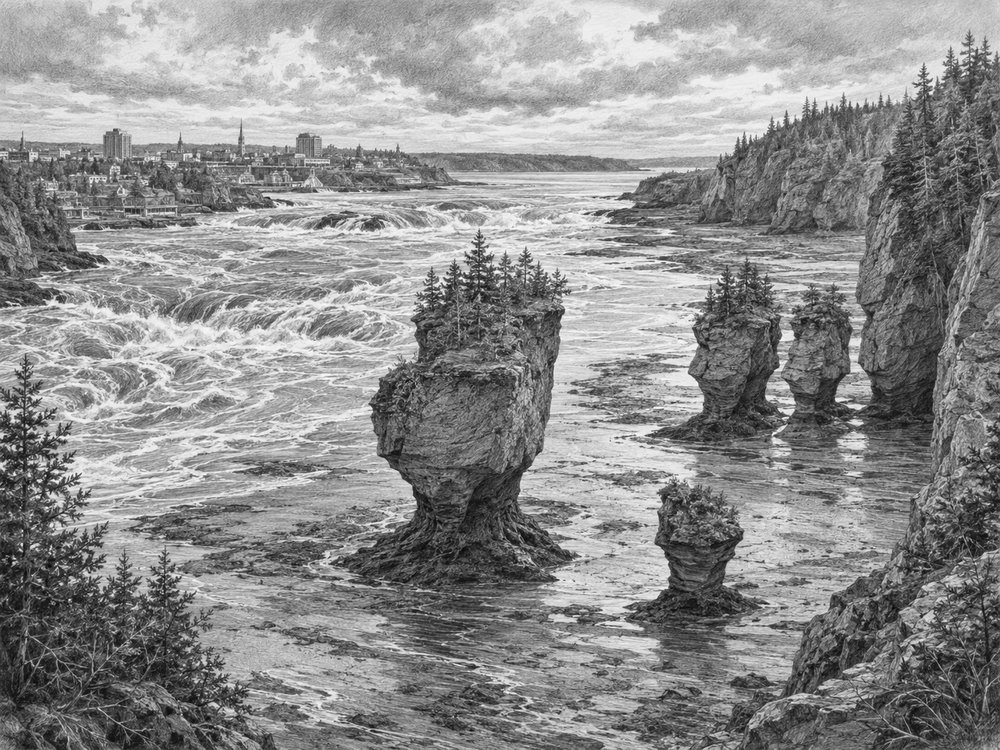
What are the two ports that make a Norwegian Escape Canada & New England sailing worth booking? Bar Harbor, Maine and Saint John, New Brunswick. Bar Harbor is the gateway to Acadia National Park, where Cadillac Mountain, the carriage roads and a walkable seaside town sit within a short ride of the pier. Saint John opens onto the Bay of Fundy, home to the highest tides on Earth and the odd spectacle of the Reversing Falls. Get those two right and the rest of the itinerary, from Halifax to Cape Breton, falls into place around them. This guide walks through both headline ports in detail, explains the Fundy tides in plain language, and covers the excursions, tendering logistics and packing that actually matter.
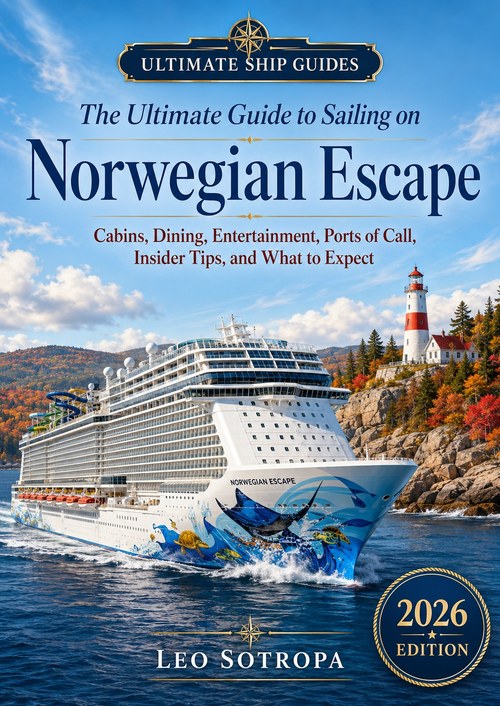
Everything in this article and far more, deck by deck, in The Ultimate Guide to Sailing on Norwegian Escape.
Get the book →Why these two ports headline the itinerary
Norwegian Escape sails seven-night Canada & New England voyages round-trip from New York City in the cooler, colorful months. The itineraries are port-intensive, with a new town almost every day, and the ports vary by sailing, so always confirm your exact calls in the NCL app. But two names recur because they carry the trip: Bar Harbor for Acadia, and Saint John for the Bay of Fundy. One gives you a genuine US national park in miniature, reachable in a single shore day. The other gives you a natural phenomenon you can watch happen, tides that rise and fall by dozens of feet, twice a day, moving more water than any coastline on the planet.
Everything else about this cruise, the lobster rolls, the lighthouses, the Gilded Age mansions in Newport, the Freedom Trail in Boston, is a strong supporting cast. If you plan your time and your excursions around these two nature ports, you get the best of the voyage. Escape herself is one of the largest-capacity ships in the NCL fleet, built around Freestyle Cruising, so the ship never dictates your day the way a fixed-dining ship might. You come back aboard when the tender or the gangway suits you and eat when you want. That flexibility matters more than usual on a route this busy. For the full rundown of how she works day to day, see our Norwegian Escape cruise guide.
Bar Harbor and Acadia National Park
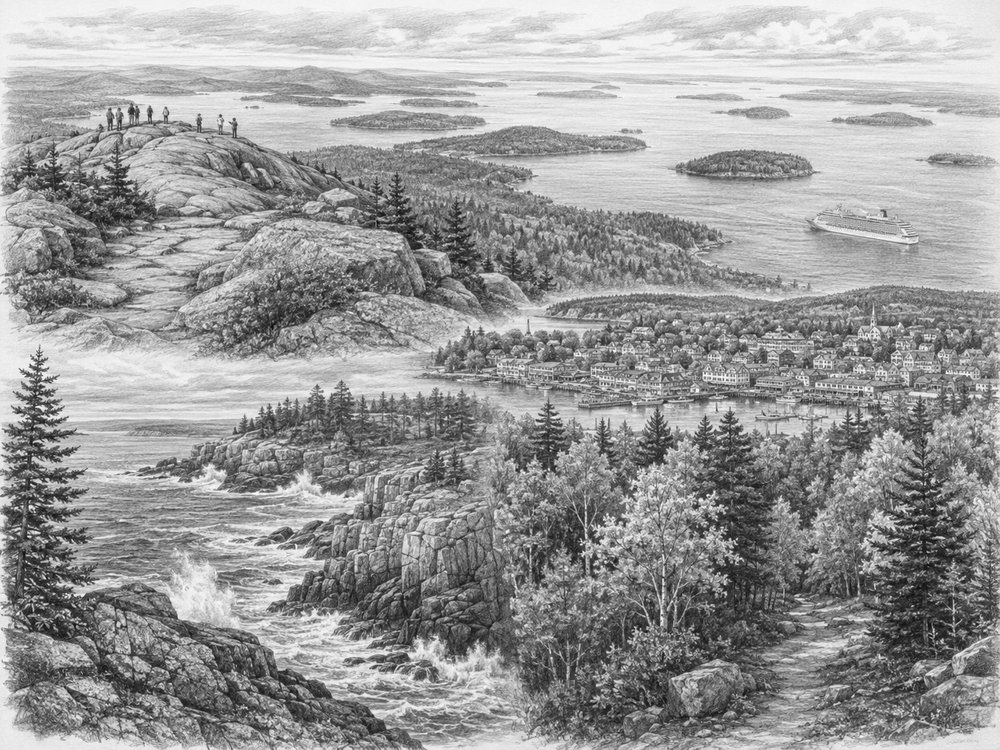
Bar Harbor sits on Mount Desert Island on the Maine coast, and it exists in the cruise world for one reason: it is the doorstep to Acadia National Park. Acadia packs granite peaks, a rugged shoreline, forests and carriage roads into a compact area, which is exactly what you want on a port day with limited hours. You are not choosing between the town and the park, you can do a slice of both.
Cadillac Mountain
Cadillac Mountain is the tallest point on the North Atlantic seaboard, and the summit road delivers you to a bare granite dome with a sweeping view over Frenchman Bay, the offshore islands, and, on a clear morning, your own ship at anchor below. It is the single most photographed spot in Acadia for good reason. Most guests reach the summit on a bus or van tour out of Bar Harbor, because the drive is the easy part and parking at the top is limited. If you only do one thing in this port, this is the strongest candidate.
The carriage roads
Acadia’s carriage roads are a network of broad, crushed-stone lanes built without cars in mind, threading through the woods and past ponds and stone bridges. No motor traffic uses them, which makes them a calm way to see the park’s interior on foot or by bike. You will not cover the whole network in a shore day, but an hour or two on a scenic stretch gives you the quiet, wooded side of Acadia that the summit view does not. Guided walking and cycling excursions use these roads, and they suit travelers who would rather move at a human pace than ride a bus.
The town of Bar Harbor
The seaside town is genuinely walkable and worth time in its own right. The compact grid of shops, galleries and seafood spots runs down to the waterfront, and the Shore Path along the edge of Frenchman Bay is a short, level stroll with island views. This is a place to eat a lobster roll, watch the harbor, and buy something local. If Acadia is the reason you came, the town is the reward you come back to before the last tender.
Tendering logistics at Bar Harbor
Bar Harbor is a tender port on some calls, meaning Escape anchors offshore and small boats ferry you to and from the pier rather than tying up alongside. This changes how you plan the day. Booked ship excursions get priority tender access, so if you want an early start on Cadillac Mountain or a timed tour, booking through the ship is the reliable route. Independent travelers collect a tender ticket and wait for their group to be called, which can eat into a morning on a full ship. Build in buffer time on the way back too, the last tender leaves well before all-aboard, and you do not want to be the guest sprinting down the Shore Path. Confirm whether your specific call is a tender or an alongside berth in the NCL app, because it affects everything else.
- Book Acadia excursions through the ship if you want priority tender access and a guaranteed timed start.
- Independent explorers should tender early and target Cadillac Mountain first, before the summit fills.
- Leave a generous cushion for the return tender line, especially on a busy sailing.
- Pack a light rain shell, the Maine coast turns quickly and the summit is exposed.
Saint John and the Bay of Fundy
Saint John, New Brunswick is your gateway to the Bay of Fundy, and the Bay of Fundy is the reason to be excited about this port even though the city itself is workmanlike rather than pretty. The bay records the highest tides on Earth, and unlike a mountain view or a historic street, the tides are something you can watch change over the course of your shore day. That is the hook. Understand what is happening and the port goes from a name on the itinerary to one of the trip’s highlights.
The tides, explained simply
Tides everywhere are the ocean rising and falling as the moon and sun pull on the water. In most places that rise and fall is a few feet. In the Bay of Fundy it can be dozens of feet, the difference between low and high water taller than a house. The reason is the bay’s shape. It is long, narrowing and shallowing toward its head, and the natural rhythm at which water sloshes in and out of that funnel happens to match the roughly twice-daily tidal cycle. The two reinforce each other, the way a child pumping their legs at the right moment sends a swing higher and higher. Water pushed into the narrowing funnel has nowhere to spread, so it piles up, and an enormous volume moves in and out twice a day.
The practical upshot for you: whatever the shoreline looks like when you arrive, it will look dramatically different a few hours later. Mudflats become channels, boats sitting on the bottom float free, and the water level against a pier climbs visibly. Ask locally, or check a tide table, for the high and low times on your day so you can time what you want to see.
The Reversing Falls
The Reversing Falls is the tides made visible in one spot. Where the Saint John River meets the bay, the river runs out through a narrow rocky gorge. At low tide the river pours seaward through the gorge as you would expect. But the Fundy tide rises so high and so fast that at high tide the sea overpowers the river and forces the water to flow backward, upstream, through the same gorge. In between, at the turn of the tide, the whole thing goes briefly slack and calm. The rapids literally reverse direction over the course of a few hours. Timing is everything here, the show depends on the tide, so a ship excursion or a local guide who knows the day’s schedule is the safe way to catch it at its best rather than arriving at slack water and wondering what the fuss is about.
The Fundy coast and best excursions
Beyond the Reversing Falls, the Fundy coast offers rugged shoreline, sea caves and lookouts shaped by that huge tidal range. Excursions from Saint John typically pair the Reversing Falls with a scenic drive along the coast or a stop in the old city, and some pair the port with whale-watching, because the same nutrient-rich, tide-churned waters draw feeding whales. If wildlife is your priority, this is a strong port for it. If you would rather stay grounded, a coastal tour that shows you the tide line at two different heights teaches you more about the bay than any single stop.
| Port | Headline draw | Best for | Timing note |
|---|---|---|---|
| Bar Harbor, ME | Acadia National Park, Cadillac Mountain | Hikers, scenery, the seaside town | Tender on some calls; go early |
| Saint John, NB | Bay of Fundy tides, Reversing Falls | Natural phenomena, whale-watching | Time your visit to the tide table |
| Halifax, NS | The Citadel, Peggy’s Cove | History, lighthouses, waterfront | Peggy’s Cove is a drive out of town |
| Sydney / Cape Breton, NS | The Cabot Trail | Scenic driving, Highlands landscapes | Long loop; a full-day excursion |
Halifax and Cape Breton, the other Canadian stops
The two nature ports headline, but the Nova Scotia calls round out the Canadian side of the voyage, and both reward a little planning. For the wider seasonal picture, our guide to the Norwegian Escape Canada & New England route puts these ports in the context of the whole week.
Halifax: the Citadel and Peggy’s Cove
Halifax is the largest city on the itinerary after New York and the easiest to enjoy on foot. The waterfront runs right along the harbor, and the Halifax Citadel, the star-shaped hilltop fort above town, gives you the city’s military history and a commanding view in one walkable stop. Halifax also carries a strong thread of Titanic history, with graves and artifacts tied to the disaster, which many guests find unexpectedly moving.
The signature excursion, though, is Peggy’s Cove, the much-photographed lighthouse standing on wave-smoothed granite outside the city. It is a drive from the pier, so it works best as a booked tour or an arranged ride rather than a casual wander. If you want the postcard image of maritime Canada, this is where you get it. Pair it with time on the Halifax waterfront and you have a full, satisfying day.
Cape Breton and the Cabot Trail
The Sydney call opens up Cape Breton Island, and its headline is the Cabot Trail, one of the great scenic drives in North America, looping through the Cape Breton Highlands with ocean on one side and forested hills on the other. It is a long circuit, so seeing a meaningful stretch of it usually means a full-day excursion rather than a quick outing. Cape Breton also holds the Fortress of Louisbourg, a large reconstructed 18th-century French fortress town, for guests who prefer history to hairpin coastal roads. Either way, this is a port where booking ahead pays off, the best tours are long and they sell out early.
Timing, packing and practicalities
This route runs from late summer into autumn, cool and changeable, with mild days often in the 50s to 70s Fahrenheit and cooler evenings, plus a real chance of rain and wind. It is not a beach-cruise packing list. The single most useful thing you can carry is layers under a waterproof shell, because a Bar Harbor morning on an exposed summit and a Saint John afternoon by the water can both turn on you. Comfortable walking shoes are non-negotiable on a port-intensive itinerary like this one. If you are sailing in the fall, the reward for the cool weather is the Northeast foliage, covered in depth in our Norwegian Escape fall foliage guide.
- Layers plus a waterproof shell, the weather changes fast on both nature ports.
- Comfortable walking shoes for the carriage roads, the Shore Path and the Halifax waterfront.
- A camera, and binoculars if you plan to whale-watch off Nova Scotia or Saint John.
- Some Canadian dollars for Saint John, Halifax and Cape Breton, though cards are widely accepted; US dollars in New York and the New England ports.
- A passport is strongly recommended and required for some travelers on this US-round-trip cruise that calls in Canada; check current CBP rules, and non-US citizens should verify their own requirements.
A few ship-side habits make the port days smoother. Your Cruise Card is your cashless account and your gangway pass, so it goes everywhere. Service charges and gratuities apply, Wi-Fi is a paid plan, and the NCL app runs your day, tender information, all-aboard times, excursion tickets and any last-minute itinerary changes all live there. Because Escape is built around Freestyle Cruising, you decide when and where to eat after a long shore day rather than racing a fixed dining time. Come back from Cadillac Mountain late and you can still grab a full dinner at the Garden Café buffet or a main dining room, or book a specialty spot if you planned ahead. First-timers should read up on how that flexibility works in our guide to first-time Norwegian Escape Freestyle so you use it well.
One planning principle ties the whole week together: mix your marquee excursions with relaxed town wanders. You cannot do a big tour in every port without burning out, and this is one of the great seafood regions, worth slowing down for. Spend your excursion budget on the things you cannot do on your own, Cadillac Mountain, the Reversing Falls at the right tide, a whale-watch, the Cabot Trail, and simply walk the towns on the other days. Bar Harbor, Portland and Halifax all reward an unhurried afternoon and a lobster roll far more than a rushed bus tour would.
Get the complete Norwegian Escape playbook
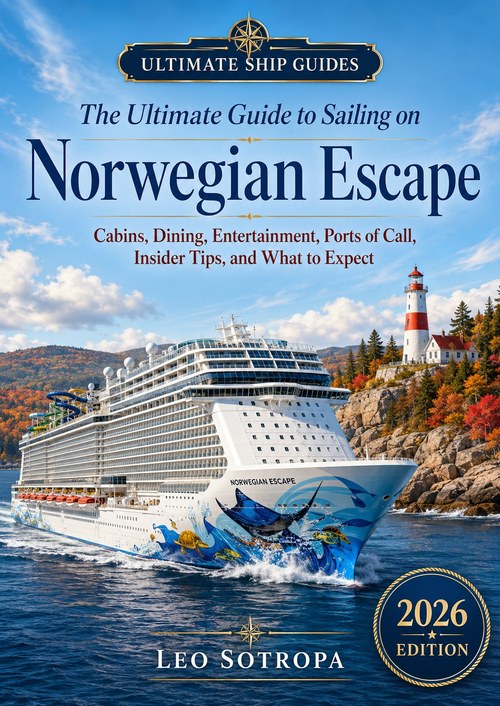
Want every port, cabin and Freestyle dining decision mapped out before you sail? “The Ultimate Guide to Sailing on Norwegian Escape” is part of the Ultimate Ship Guides series by Leo Sotropa, with clear action steps in every chapter so you spend your shore days on the Bay of Fundy and Acadia, not on second-guessing.
Frequently asked questions
Is Bar Harbor a tender port on Norwegian Escape?
It is a tender port on some calls, meaning Escape anchors offshore and small boats carry you to the pier. Booked ship excursions get priority tender access, so if you want an early, timed start on Cadillac Mountain, booking through the ship is the reliable route. Always confirm whether your specific call is a tender or an alongside berth in the NCL app.
Why are the Bay of Fundy tides so high?
The bay is long and narrows toward its head, and the natural rhythm at which water flows in and out of that funnel closely matches the twice-daily tidal cycle. The two reinforce each other, like well-timed pushes on a swing, so an enormous volume of water piles into the shallowing bay and drains out again twice a day, producing the highest tides on Earth.
What is the best time to see the Reversing Falls?
The falls depend entirely on the tide. At low tide the river runs seaward; at high tide the risen sea forces the flow backward upstream; at the turn it goes slack. The dramatic reversal is a timed event, so check the day’s tide table or take a ship excursion or local guide who knows the schedule, otherwise you may arrive at slack water and miss the show.
Do I need a passport for this cruise?
Because this is a round-trip US cruise from New York that calls in Canada, many US citizens can sail with a passport or, in some cases, other approved documents, but a passport is strongly recommended and is required for some travelers. Check current CBP rules before you book, and non-US citizens should verify their own entry requirements.
Which Canadian ports besides Saint John are on the itinerary?
The Nova Scotia calls typically include Halifax, home to the Citadel and the gateway to the Peggy’s Cove lighthouse, and Sydney on Cape Breton Island, home to the scenic Cabot Trail and the Fortress of Louisbourg. Exact ports vary by sailing, so confirm your itinerary in the NCL app.
What should I pack for the nature ports?
Pack layers under a waterproof shell, since both Bar Harbor and Saint John can turn cool, wet and windy without warning, and add a warmer layer for autumn sailings. Bring comfortable walking shoes for the carriage roads and waterfronts, a camera, and binoculars if you plan to whale-watch. This is not a beach-cruise packing list.
Should I book excursions or explore on my own?
Spend your excursion budget on the things you cannot do easily alone, Cadillac Mountain, the Reversing Falls at the right tide, whale-watching, and the Cabot Trail, which is a long, sell-out-early loop. On the other days, the towns like Bar Harbor and Halifax reward an unhurried walk and a lobster roll more than a rushed bus tour would. Mixing the two keeps you from burning out on a port-intensive week.
Ready for the whole ship in one place? It is all in The Ultimate Guide to Sailing on Norwegian Escape.
Get the book →
Meet Leo: The Heartbeat Behind ‘A Country A Month’
Journeying through the pages of A Country A Month, you might often feel the rhythm of a storyteller’s heartbeat, pulsating through each line, each image, and each adventure shared. That heartbeat belongs to none other than our remarkable website editor, Leo.
With a lens in one hand and a pen in the other, Leo seamlessly marries his passions for photography and writing. His eye captures moments that words can barely describe, yet his eloquence brings those images to life, transcending borders and connecting us all through shared stories. An avid traveler, every country he’s visited has added another chapter to his expansive tale, and through our platform, he generously shares these chapters with us.