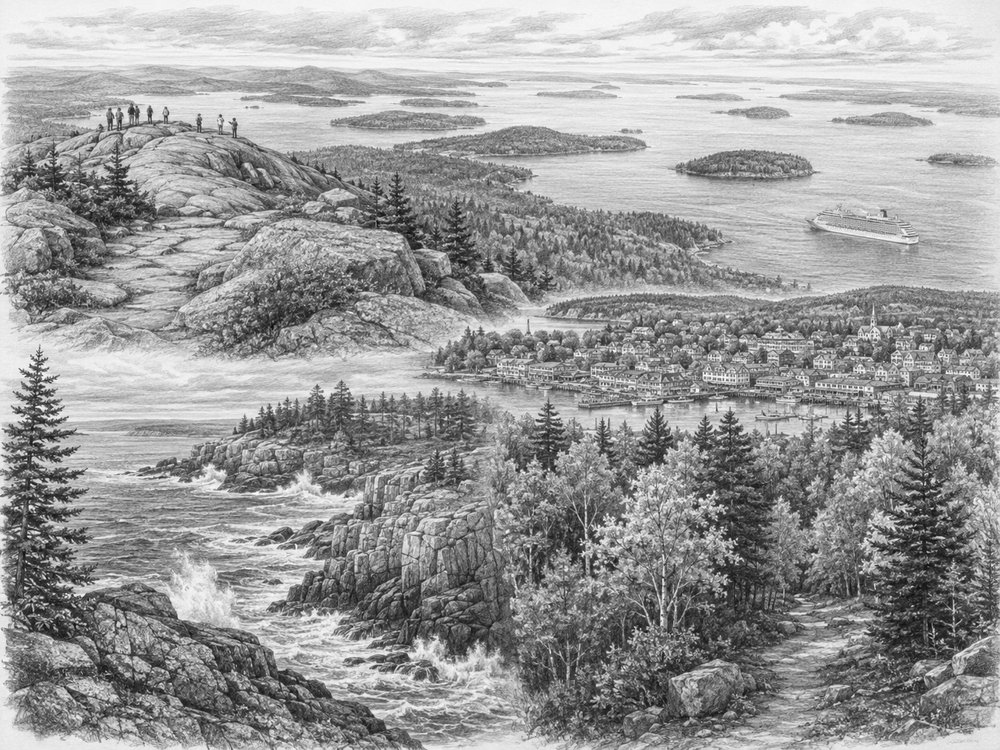
When should you sail for the autumn colors, and can a big cruise ship really deliver a fall foliage cruise in New England? The honest answer: a Canada & New England voyage on Norwegian Escape is one of the easiest ways to see the Northeast turn, because she strings together the ports where the color shows best and gives you a warm, comfortable base to come back to each evening. But foliage is a living thing, not a scheduled event. It peaks in autumn, moves generally from north to south and from higher, inland ground down toward the coast, and it shifts a week or two either way from year to year. No cruise line can guarantee a specific tree on a specific day. What you can do is stack the odds: pick a later-season sailing, favor the northerly and inland stops, and plan excursions that climb and drive away from the waterfront. This guide covers how the timing works, which ports reward leaf-peepers, what to pack for cool weather, and how to fold the color into the seafood and coastal scenery that make this route worth the trip on its own.
Everything in this article and far more, deck by deck, in The Ultimate Guide to Sailing on Norwegian Escape.
Get the book →How fall foliage timing actually works
Fall color is driven by shortening days and cooling nights, not by a calendar date. As daylight drops, trees stop producing the chlorophyll that keeps leaves green, and the yellows, oranges and reds that were there all along finally show through. Because temperature and daylight change fastest in the north and at elevation, the color arrives there first and works its way south and downhill over several weeks. That single fact explains most of what you need for planning a cruise around it.
On a Canada & New England itinerary that runs from late summer into autumn, the earliest sailings tend to catch green hillsides with the first hints of turn, while later-autumn departures have the best shot at broad, saturated color, especially in the Maritimes and the higher ground behind the coastal ports. There is a trade-off: push too late and you risk trees that have already dropped, along with cooler, wetter weather. The sweet spot for most travelers is the heart of autumn, but since Norwegian Escape sails these waters across the whole cooler season, the smarter move is to understand the gradient rather than chase one perfect week.
A few principles worth internalizing before you book:
- North turns before south. Nova Scotia, Cape Breton and New Brunswick generally color up ahead of Maine, which leads Massachusetts and Rhode Island.
- Up and inland beats down and coastal. Hills, ridges and interior valleys turn before the milder, salt-influenced shoreline. Excursions that gain elevation see more.
- Weather nudges the timing. A warm, wet autumn slows the turn; a spell of cool, clear nights speeds and brightens it. This is why the same week varies year to year.
- Peak is a window, not a day. Any given area holds good color for roughly a week to ten days, and a port-intensive cruise crosses several zones, so you are rarely betting everything on one location.
That last point is the quiet advantage of doing this by ship. A land trip pins you to one region and one set of dates. A seven-night voyage round-trip from New York City calls at a new town almost every day and crosses a wide band of latitude, so if one port is a touch early, the next may be right on time. You spread your bets across the whole Northeast instead of staking them on a single hillside.
Choosing your sailing date
Norwegian Escape currently sails seven-night Canada & New England voyages round-trip from New York City through the cooler, colorful months, and the departure you choose shapes what you are likely to see. Rather than tie this to a calendar, think in terms of position within the season, and always confirm the current schedule and ports in the NCL app before you commit.
- Earlier-autumn departures: milder weather, longer daylight, and mostly green landscapes with early color on the higher ground and in the far-north ports. Good if you care as much about comfortable touring and seafood as about peak leaves.
- Mid-autumn departures: the broadest overlap between the northern and southern parts of the route hitting color at once. This is the classic leaf-peeping window and typically the most in-demand, so book early.
- Later-autumn departures: the best odds for deep, saturated color in the Maritimes and inland, balanced against cooler, wetter, windier days and the chance that the earliest-turning areas have already dropped.
Whatever the date, exact ports vary by sailing. Some itineraries lean more toward Maine and Massachusetts; others reach farther into Nova Scotia and Cape Breton. Since the northern, inland-leaning ports are your strongest foliage bets, it is worth comparing itineraries and giving weight to the ones that include Bar Harbor, Saint John, Halifax and Sydney. If you have flexibility, a later sailing that reaches deep into the Maritimes is the most color-forward choice; if you want a gentler weather experience, an earlier one that emphasizes New England still delivers plenty. For a fuller look at the route itself, our Norwegian Escape Canada & New England guide breaks down the ports and the rhythm of the week.
The ports where color shows best
Not every stop is a foliage stop, and that is fine; some are about lighthouses and lobster. But a handful of calls are genuine leaf-peeping opportunities if you plan the day around getting to higher or greener ground.
Bar Harbor, Maine, and Acadia National Park
This is the marquee foliage day for most travelers on the route. Bar Harbor is the gateway to Acadia National Park, and Acadia is where coast and color meet in a way few places manage. Cadillac Mountain gives you long views over a patchwork of turning hardwoods and dark evergreens down to the island-dotted sea; the carriage roads wind through mixed forest that glows when the maples and birches turn; and the seaside town itself is a pleasant, walkable base. Because Bar Harbor is a tender port on some calls, tender times can eat into a short day, so decide early whether you want a guided tour that whisks you into the park or a self-guided plan by shuttle or taxi. Either way, this is the port to prioritize for both leaves and scenery.
Portland and the Maine coast
Portland is more about the Old Port, the lighthouses and the rocky coast than about deep forest, but the surrounding countryside colors up nicely, and a drive out to a lighthouse or along the shore pairs early foliage with classic Maine views. This is also one of the best lobster days of the week, so it is a natural place to lean into the seafood side of the trip and treat the color as a bonus rather than the headline.
Saint John, Halifax and Cape Breton, the Maritimes
The Canadian ports are where a later sailing pays off. Saint John, New Brunswick, sits on the Bay of Fundy, home to the world’s highest tides and the Reversing Falls; the Fundy coast and the wooded country behind it turn early and hard. Halifax, Nova Scotia, offers the Citadel, the working waterfront, Peggy’s Cove and Titanic history, with color on the hills around the harbor and out along the coast road. Sydney and Cape Breton are the northern high point of the route in more ways than one: the Cabot Trail threads through the Cape Breton Highlands, some of the most celebrated fall-color driving in eastern North America, and the Fortress of Louisbourg adds a dose of history. If your itinerary reaches Cape Breton in mid-to-late autumn, that can be the single best foliage day of the cruise. Our deep dive on the Bay of Fundy and Acadia ports covers how to make the most of these calls.
Newport and Boston
The southern New England ports are the last to turn, so on an earlier sailing expect them to be mostly green, and on a later one they may be near or at peak. Newport, Rhode Island, pairs the Gilded Age mansions of the Cliff Walk with harbor and colonial-town wandering; Boston, Massachusetts, gives you the Freedom Trail, Faneuil Hall and the harbor, with the option to cross to Cambridge. Neither is a wilderness foliage day, but the tree-lined streets, parks and the Common can look genuinely handsome in full autumn dress.
Shore excursions that maximize leaf-peeping
The color rewards getting off the waterfront, so choose excursions with a bit of elevation, a scenic drive or a walk through the woods rather than a town-square stroll. Guided tours through the NCL app are the low-stress option, and on tender days or in the busiest ports they can be worth it simply for the logistics. Independent plans give you more control over pace and photo stops if you are comfortable arranging your own transport. A few excursion types that consistently deliver:
- Acadia National Park tours from Bar Harbor. Anything that gets you up Cadillac Mountain or onto the carriage roads. This is the highest-value foliage excursion on the route.
- The Cabot Trail from Sydney / Cape Breton. A scenic drive through the Highlands is one of the great fall-color routes anywhere in the east.
- Bay of Fundy and Fundy-coast tours from Saint John. The tides are the draw, but the wooded coast and interior add early, reliable color.
- Peggy’s Cove and coastal drives from Halifax. Lighthouse-and-coast tours pass through turning countryside on the way.
- Lighthouse and coastal drives from Portland. Lower on foliage, high on classic Maine scenery and lobster.
- Whale-watching where offered. Not a foliage activity, but the waters off New England and Nova Scotia are excellent for it, and it makes a fine counterpoint to a leaf day. Bring binoculars.
Two practical notes. First, the best excursions, especially the Acadia and Cabot Trail tours, sell out early in foliage season, so book as soon as your plans are firm rather than waiting until you are aboard. Second, this is a port-intensive week with a new town almost every day, so resist the urge to cram every port with a full-day tour. Pace yourself: a couple of marquee excursions plus some relaxed town wanders and long lunches will leave you far happier than a forced march. For a broader sense of how to plan the week, our complete Norwegian Escape cruise guide is a good starting point.
What to pack for cool, changeable weather
This is not a beach-cruise packing list, and getting the wardrobe wrong is the fastest way to be miserable on deck or ashore. Expect cool and changeable conditions: mild days often in the 50s to 70s Fahrenheit, cooler evenings, and a real chance of rain and wind, more so on later-autumn sailings and in the Maritimes. The strategy is layers you can add and shed through the day plus genuine protection from wet and wind.
- A waterproof shell. Wind-and-rain protection matters more here than a heavy coat; a packable waterproof jacket earns its place.
- Layers. A base layer, a mid layer such as a fleece or sweater, and the shell over the top. Mornings on Cadillac Mountain or the Cabot Trail can be sharp even when the afternoon warms.
- A warmer layer for autumn. The later you sail, the more you will want a proper insulating layer for exposed decks and viewpoints.
- Comfortable, broken-in walking shoes. This is a walking cruise, carriage roads, trails, cobbled town centers, and possibly damp ground.
- A hat, gloves and a scarf for later sailings and windy days on deck, including the ship’s outdoor viewpoints.
- A camera and binoculars. The binoculars double for whales off New England and Nova Scotia and for picking out color across a valley.
- Freestyle-friendly clothes. There are no formal dress codes to pack around, so bring what is comfortable and warm rather than fussy.
Onboard, the key card is your cashless account, and the NCL app runs your day, deck plans, dining, excursions, showtimes and the latest schedule, so download it before you sail. Wi-Fi is a paid plan; service charges and gratuities apply. You will use US dollars in New York and the New England ports and Canadian dollars in the Maritimes, though cards are widely accepted almost everywhere.
Combining foliage with seafood and coastal scenery
The color is the headline, but this route earns its reputation on more than leaves. This is one of the great seafood regions in North America, and autumn is a fine time to eat your way through it: lobster rolls and clam chowder in New England, fresh catch in the Maritimes. Build a day or two around a proper lobster lunch ashore, then let the ship handle dinner, one of the real advantages of Freestyle Cruising is that you can come back aboard hungry and simply eat when and where you like.
Freestyle Cruising is the core of the NCL experience: no fixed dining times, no assigned tables, no formal dress codes. You dine when, where and with whom you like across a wide range of restaurants. Complimentary options include the main dining rooms, Savor and Taste, and the Garden Café buffet; specialty spots such as Cagney’s Steakhouse, Le Bistro, La Cucina, Teppanyaki, Food Republic and the seafood-focused Ocean Blue carry an extra charge or run through a dining package, and reservations help at peak times. On a port-intensive foliage cruise this flexibility is a genuine asset: after a long day chasing color on the Cabot Trail or hiking Acadia, you are not locked into a set seating, you eat on your own schedule. If you want the full rundown of how the dining and the ship work, see what to expect on Norwegian Escape.
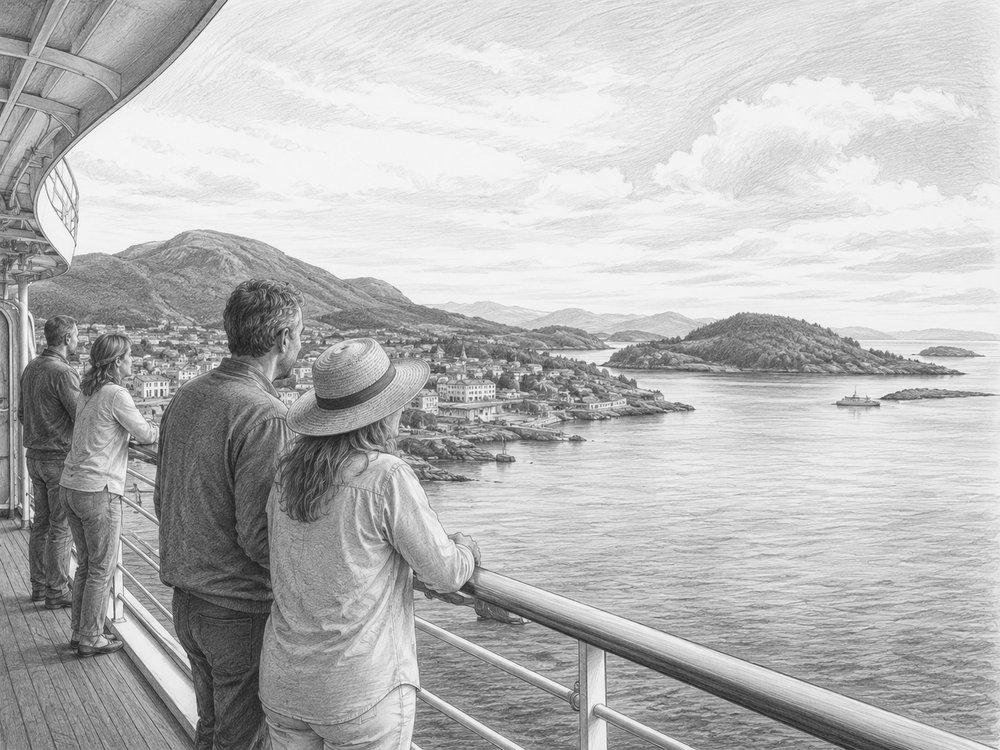
The scenery is a throughline even on the passages between ports. Norwegian Escape carries the signatures that launched NCL’s Breakaway Plus Class, the Free Fall slides, the three-story ropes course with its sky rails and planks that jut out over the side, and the quarter-mile open-air Waterfront promenade lined with restaurants and bars. That Waterfront is the sleeper feature of a foliage cruise: a place to sit with a coffee or a drink and watch the coast slide by. Spice H2O, the adults-only sundeck at the stern, is another good perch when the weather cooperates. Wrap up warm and the outdoor spaces become the best seats on the ship.
Solo travelers are unusually well served here, which matters because autumn cruising draws a lot of independent-minded travelers. Norwegian Escape has one of the larger studio complexes in the fleet, solo cabins priced without the traditional single supplement, with keycard access to a private Studio Lounge. If you are sailing alone for the color, our guide to the solo studio cabins on Norwegian Escape is worth a read before you book.
Setting expectations honestly
It is worth saying plainly: even a perfectly chosen sailing can land on a year when the turn runs early or late, or a grey, wet week that flattens the color. That is the nature of foliage, and anyone promising a guaranteed peak is selling you something. The right frame of mind is to plan so the color is the best of several good reasons to be there, not the only one. Book a later-autumn sailing that reaches the northern, inland ports if leaves are your priority, favor excursions that climb into the interior, and keep the seafood, history, coastal scenery and the ship itself firmly on your list. Do that, and even an off year is a genuinely great cruise, and a good year is unforgettable.
Get the complete Norwegian Escape playbook
For a port-by-port plan of the Canada & New England season, foliage timing, excursions and Freestyle dining all in one place, read “The Ultimate Guide to Sailing on Norwegian Escape.” Part of the Ultimate Ship Guides series by Leo Sotropa, it turns every chapter into clear action steps so you arrive knowing exactly how to work the ship and the ports.
Frequently asked questions
When is the best time to sail for fall foliage on Norwegian Escape?
The heart of autumn generally offers the best overlap between the northern and southern parts of the route hitting color at once, and it is the most in-demand window. Later sailings improve your odds of deep color in the Maritimes and inland but bring cooler, wetter weather. Because timing shifts from year to year, think in terms of position within the season rather than a fixed week, and confirm the current schedule in the NCL app.
Can anyone guarantee I’ll see peak color?
No. Foliage is driven by daylight and temperature, so the exact peak moves a week or two either way each year and can be dulled by warm or wet weather. A cruise spreads your chances across many ports and a wide band of latitude, which is the best hedge available, but no line can promise a specific tree on a specific day.
Which ports are best for leaf-peeping?
Bar Harbor for Acadia National Park is the standout, with Cadillac Mountain and the carriage roads. Sydney and Cape Breton, with the Cabot Trail through the Highlands, can be the single best foliage day on a later sailing. Saint John and Halifax add strong Maritime color, while Portland, Newport and Boston lean more toward coast, history and seafood, though the southern ports can be near peak on later departures.
What should I pack?
Layers and a waterproof shell are the essentials, plus a warmer insulating layer for later sailings, comfortable walking shoes, and a hat, gloves and scarf for windy days on deck. Bring a camera and binoculars, the binoculars double for whale-watching. This is not a beach-cruise wardrobe; expect mild days and cooler evenings with a real chance of rain and wind.
Do I need a passport for this cruise?
This voyage sails from New York and calls in Canada, so US citizens can often sail with a passport or, in some cases, other approved documents, though a passport is strongly recommended and required for some travelers. Check current CBP rules before you sail, and non-US citizens should verify their own requirements. Cards are widely accepted in every port, with US dollars in the New England stops and Canadian dollars in the Maritimes.
How does dining work on a port-intensive foliage cruise?
Norwegian Escape uses Freestyle Cruising, so there are no fixed dining times, assigned tables or formal dress codes. You eat when, where and with whom you like. Complimentary main dining rooms and the Garden Café buffet are always there, and specialty restaurants are available for an extra charge or through a dining package. After a long day ashore chasing color, you simply return and eat on your own schedule.
Is Bar Harbor a tender port?
On some calls, yes, guests come ashore by tender rather than at a pier, which can shorten the usable time in port. If your sailing tenders at Bar Harbor, plan the day tightly: decide in advance whether you want a guided Acadia excursion that maximizes park time or a self-guided plan by shuttle or taxi, and book early because the best tours sell out in foliage season.
Ready for the whole ship in one place? It is all in The Ultimate Guide to Sailing on Norwegian Escape.
Get the book →
Meet Leo: The Heartbeat Behind ‘A Country A Month’
Journeying through the pages of A Country A Month, you might often feel the rhythm of a storyteller’s heartbeat, pulsating through each line, each image, and each adventure shared. That heartbeat belongs to none other than our remarkable website editor, Leo.
With a lens in one hand and a pen in the other, Leo seamlessly marries his passions for photography and writing. His eye captures moments that words can barely describe, yet his eloquence brings those images to life, transcending borders and connecting us all through shared stories. An avid traveler, every country he’s visited has added another chapter to his expansive tale, and through our platform, he generously shares these chapters with us.