Some Americans can retire in Spain primarily on Social Security. The strongest plans combine a manageable location, controlled housing, reliable savings, and a clear understanding of Spain’s residence and tax rules.
The important word is primarily. Even when the monthly benefit covers normal life, savings are usually needed for the move, visa evidence, deposits, healthcare, emergencies, currency changes, and a possible return to the United States.
Two different financial tests
Start by separating two questions:
- Can your Social Security support the Spanish life you want?
- Can you demonstrate the current financial resources required for legal residence?
These are not interchangeable.
A modest benefit may support a careful life in Granada or another regional city while falling below the non-lucrative visa’s current financial standard. Savings or other qualifying resources may help with the application, but the responsible consulate’s rules must be checked.
Likewise, clearing the visa standard does not prove that an expensive coastal or central-city lifestyle is sustainable.
What the monthly budget must include
Build the budget from a real long-term rental, not a national average or an off-season vacation listing.
Include:
- Rent and deposits
- Electricity, water, gas, heating, and cooling
- Internet and phone
- Groceries and household supplies
- Public transportation or a car
- Private insurance
- Prescriptions, dental, and vision
- Restaurants and entertainment
- Tax preparation
- Document and administrative help
- Flights home
- Currency-conversion costs
- Emergency savings
Housing normally decides whether the plan works. Walkability is the second major lever because living without a car can reduce insurance, fuel, parking, maintenance, and replacement costs.
Where a modest benefit has a better chance
Spain should be compared city by city.
Granada can offer culture, transit, and a more manageable budget than the largest cities, although its winters, hills, and Spanish-language demands deserve attention.
Alicante and other Costa Blanca communities can provide warm weather and international support. Popularity has tightened rents, so the best-known coastal zones are not automatic bargains.
Seville may provide strong value and a rich urban life, but extreme summer heat affects comfort, health, and cooling bills.
Smaller inland cities may reduce rent further. They can also mean fewer English-speaking services, smaller rental inventories, and greater distance from major airports or specialist hospitals.
Central Madrid, central Barcelona, the islands, and prime Costa del Sol markets are difficult targets for one modest benefit unless substantial housing or savings advantages exist.
Healthcare and Medicare
Medicare generally does not pay for routine healthcare in Spain. Retirees need a separate Spanish plan.
The non-lucrative visa typically requires qualifying private insurance. After residence, other access routes may become relevant depending on regional rules and the retiree’s circumstances. Public care, private care, prescriptions, dental services, and long-term support should be budgeted separately.
Keeping Medicare is another decision. It may protect options if you return to the United States, but it does not replace Spanish coverage.
Taxes change spendable income
American citizens generally continue filing U.S. returns. Becoming a Spanish tax resident can also create Spanish obligations involving worldwide income and foreign assets.
The treatment of Social Security, pensions, retirement-account withdrawals, investments, and government benefits can differ. Do not estimate affordability from gross income until a qualified cross-border adviser has modeled your specific sources.
Currency is a monthly variable
Social Security arrives in dollars while most Spanish expenses are in euros. Test the budget with:
- A favorable dollar
- A normal working assumption
- A meaningfully weaker dollar
If the plan fails under the third case, increase the reserve, lower housing costs, or reconsider the location.
How much savings do you need?
There is no universal answer, but the savings plan should contain separate amounts for:
- Immigration and relocation
- Deposits, temporary housing, and setup
- Medical and family emergencies
- Several months of living expenses
- Moving to another Spanish home
- Returning to the United States
Do not count the same dollars as both visa evidence and an emergency reserve without recognizing that spending them weakens both plans.
A durability test
Before moving, ask whether the retirement still works if:
- Rent rises
- The dollar falls
- One spouse dies
- A medical condition requires private treatment
- You must fly home twice in one year
- You can no longer manage stairs or a car
Spain can stretch Social Security, but only a durable plan converts lower costs into long-term security.
For the complete framework, read the Spain cornerstone guide, the non-lucrative visa guide, and the fixed-income retirement plan.
Get the complete retirement guide
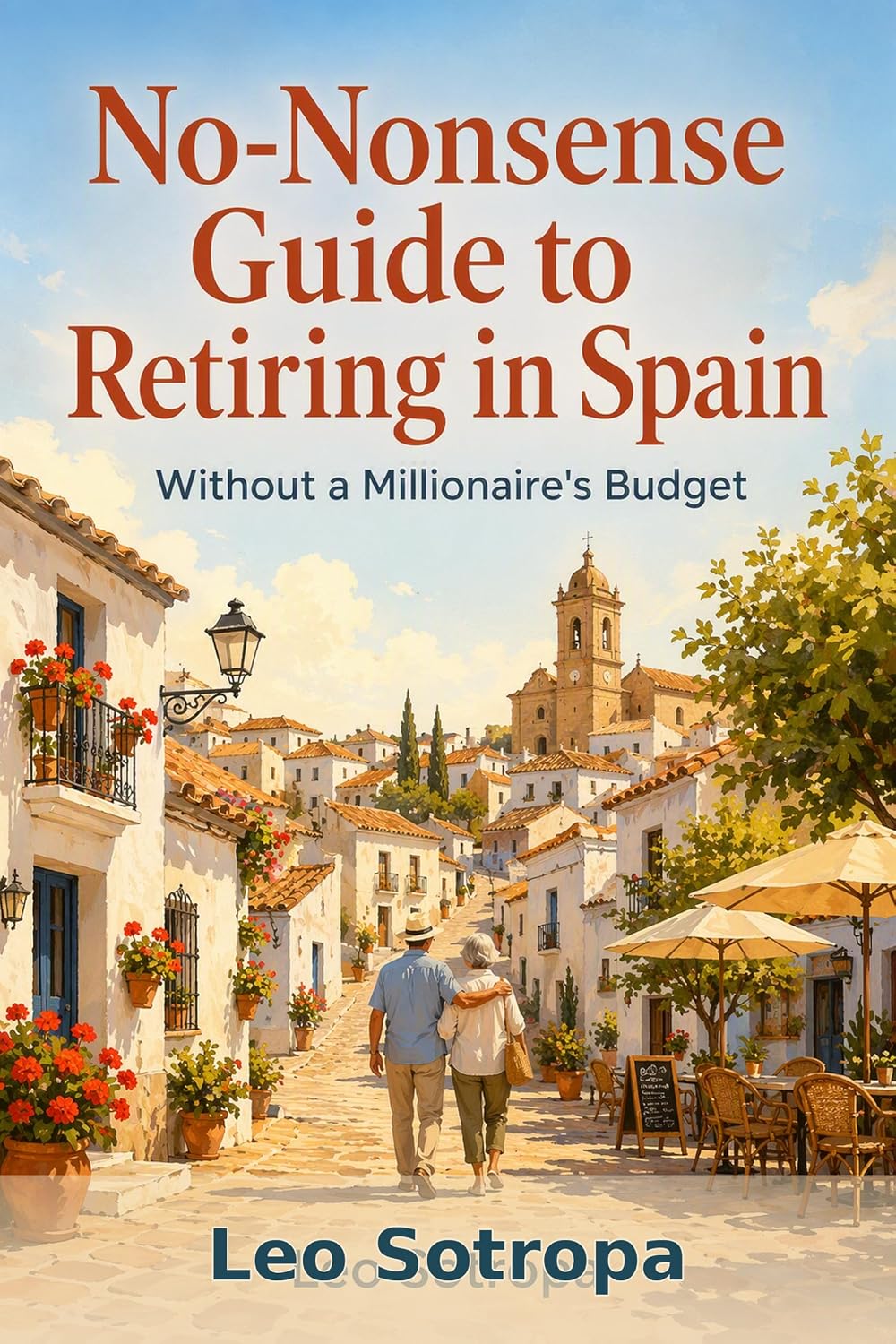
No-Nonsense Guide to Retiring in Spain by Leo Sotropa brings the budget, residency, healthcare, housing, tax, and location decisions together in one practical plan.
Frequently asked questions
Can I receive Social Security in Spain?
Eligible Americans can generally receive U.S. Social Security payments while living in Spain, subject to applicable rules and account arrangements. Confirm your individual payment and reporting setup with the Social Security Administration.
Is one Social Security check enough?
It can be for some retirees in carefully chosen locations. The answer depends on the benefit, rent, taxes, healthcare, exchange rate, and savings. Visa eligibility remains a separate test.
Is a couple better positioned?
Two benefits often make the household more resilient because rent, utilities, and internet are shared. Healthcare, travel, and visa-resource requirements still apply to both people.

Meet Leo: The Heartbeat Behind ‘A Country A Month’
Journeying through the pages of A Country A Month, you might often feel the rhythm of a storyteller’s heartbeat, pulsating through each line, each image, and each adventure shared. That heartbeat belongs to none other than our remarkable website editor, Leo.
With a lens in one hand and a pen in the other, Leo seamlessly marries his passions for photography and writing. His eye captures moments that words can barely describe, yet his eloquence brings those images to life, transcending borders and connecting us all through shared stories. An avid traveler, every country he’s visited has added another chapter to his expansive tale, and through our platform, he generously shares these chapters with us.