Can you retire in Mexico on Social Security and a modest nest egg without pretending that every beach town is cheap or every part of the country is equally safe? No-Nonsense Guide to Retiring in Mexico by Leo Sotropa was written to help Americans answer that question with a practical plan.
Mexico offers an unusual combination of advantages: proximity to the United States, warm weather, established expatriate communities, excellent private healthcare in major cities, varied climates, and everyday costs that can be lower than in many American communities. A retiree can choose a lakeside town, a colonial city, a modern regional capital, a beach destination, or a culturally rich southern city without crossing an ocean.
Yet Mexico is not one simple retirement product. Housing costs vary sharply. Safety must be evaluated locally. Medicare generally does not pay for routine care there. Residency qualification may be harder than covering monthly living expenses, and consulates can interpret financial evidence differently. Buying near the coast involves legal structures many newcomers have never encountered.
This book brings those pieces together. Its central message is encouraging but disciplined: Mexico can support a satisfying retirement on an ordinary income, provided that you choose the right location, qualify for an appropriate status, budget for healthcare, and maintain a contingency fund.
What this book actually is
No-Nonsense Guide to Retiring in Mexico is an independent retirement-planning handbook. It is not an official immigration manual, a real-estate sales pitch, or a vacation guide with retirement added to the title.
A vacation guide asks what you can see in a week. This book asks whether the life will still work in year five.
It helps readers examine:
- Whether their income and savings support both residency and daily life
- Which Mexican communities match their climate, healthcare, transport, and social needs
- How temporary and permanent residence generally work
- How private care, IMSS, and out-of-pocket medical costs may fit together
- What the loss of routine Medicare coverage means
- How to compare local safety instead of relying on national headlines
- Whether renting or buying makes sense
- How pesos, banking, taxes, and U.S. reporting affect the plan
- What to do if health, mobility, income, or family obligations change
The chapters follow a real decision sequence: define priorities, compare locations, build a budget, understand residency, plan healthcare, investigate housing, arrange banking, scout, move, adapt, and prepare for later-life needs. Each stage ends with action steps so the reader can convert information into decisions.
Why Mexico attracts practical retirees
Mexico’s greatest retirement advantage is range.
Lake Chapala offers a long-established international community and mild highland weather. Mérida combines urban services with Yucatán culture and heat. Querétaro provides a modern economy, a major airport, and strong medical infrastructure. Oaxaca offers extraordinary culture and food. Puerto Vallarta and Mazatlán deliver coastal living with very different rhythms and prices. San Miguel de Allende is beautiful and socially accessible, but its popularity has made it expensive.
That range lets retirees solve for the things that matter most:
- A short flight to family in the United States
- A climate suited to health and energy
- Walkability or reliable local transport
- Access to hospitals and English-speaking specialists
- An established community for an easier landing
- A more immersive Mexican environment
- Lower housing costs away from famous expatriate zones
- Cultural life, food, markets, and festivals
The book does not declare one winner. It teaches readers to compare trade-offs. A beach town may be warm and sociable but humid, storm-exposed, and expensive in high season. A highland city may be temperate and affordable but less convenient for direct U.S. travel. A smaller town may feel peaceful until a medical emergency requires a long transfer.
Three retirees, three workable versions of Mexico
The guide opens with three composite retirees because a national average cannot show how a retirement really works.
A solo retiree near Lake Chapala
The first retiree lives on one Social Security benefit near Lake Chapala. Her budget succeeds because she rents a modest home, uses local markets, lives without a car, and chooses an area where newcomers can quickly find social activities and practical help.
The established expatriate community lowers the friction of arrival. English-speaking services are easier to find, and Guadalajara’s advanced healthcare is within reach. The trade-off is that popular lakeside neighborhoods are no longer undiscovered bargains. Seasonal demand, traffic, air quality, and the quality of individual rentals require careful inspection.
Her example shows why the lowest advertised rent is not the goal. The goal is a stable home that leaves enough monthly margin for healthcare, trips, repairs, and emergencies.
A couple in Mérida
The second household is a couple with two benefits and moderate savings. Mérida gives them a major city, private hospitals, an international airport, a strong food culture, and access to the Yucatán Peninsula.
Their budget includes air-conditioning, because extreme heat and humidity are not optional details. It also allows for transportation, private healthcare, and trips home. Their case demonstrates why a retirement budget must reflect the climate as it is lived rather than the climate shown in photographs.
They enjoy more space and services than the solo retiree, but they still rent first. A full year teaches them which neighborhoods flood, how utility costs change, and whether they want to live through the hottest season.
A single retiree in Querétaro
The third retiree chooses Querétaro for modern services, hospitals, business infrastructure, and access to central Mexico. His cost of living is not the lowest in the country, but his plan values predictability and medical access over a beach address.
He pays more for housing than someone in a smaller regional city. In return, he receives better transport links, a broad range of specialists, and an active year-round city. His case illustrates a core lesson: the cheapest location is not necessarily the safest financial choice if it increases car dependence, isolation, or medical travel.
Together, the three examples show that Mexico can accommodate very different retirement styles. The durable plan is the one built around the retiree’s actual income, health, and habits.
The honest cost-of-living discussion
Mexico can cost less than the United States, but “Mexico is cheap” is not a budget.
Housing drives most outcomes. A furnished apartment in a celebrated colonial center or beachfront neighborhood can cost far more than a comparable home in an ordinary inland city. Imported food, frequent restaurant meals in tourist districts, a private car, international insurance, air-conditioning, and regular flights can quickly erase expected savings.
The guide builds budgets from categories rather than a single national number:
- Rent and deposits
- Electricity, water, gas, internet, and telephone
- Food at local markets and supermarkets
- Local transportation or car ownership
- Private insurance and out-of-pocket care
- Immigration renewals and professional help
- Travel to the United States
- Household help and recreation
- Currency fluctuation
- Emergency reserves
Readers are encouraged to build three versions: a normal monthly budget, a first-year budget, and a stress-test budget. The first year usually costs more because it includes documents, deposits, temporary lodging, furnishings, insurance, travel, and mistakes. The stress test asks whether the plan survives a weaker dollar, higher rent, a medical expense, or a trip home.
Choosing where to retire in Mexico
The location chapters compare places by retirement function, not simply beauty.
Lake Chapala and Ajijic offer community, a mild climate, and an easier social landing. San Miguel de Allende offers architecture, art, and a large international population but commands premium prices. Mérida provides urban services and relative calm, paired with intense heat. Puerto Vallarta combines hospitals, air access, and beach life, though desirable areas can be costly. Mazatlán can offer better coastal value and a working Mexican city beyond the tourist zone. Oaxaca provides culture and a walkable center, while medical depth and local disruptions require consideration. Querétaro offers infrastructure and healthcare with a less resort-oriented lifestyle.
The book asks readers to score each contender on:
- Housing within the real budget
- Hospital and specialist access
- Climate in the least pleasant month
- Airport and family access
- Walkability and transport
- Safety by neighborhood and travel route
- Language environment
- Community and social opportunities
- Resilience during storms, outages, or water problems
A scouting trip should test ordinary life. Buy groceries, visit a clinic, ride local transportation, inspect rentals, walk after dark where appropriate, and experience noise, hills, heat, and distance for yourself.
Residency: affordability is not qualification
One of the guide’s most important distinctions is between being able to live in Mexico and qualifying to reside there.
Temporary residence is a common starting point for retirees. Financial qualification may be based on regular income or savings, but thresholds change and can vary by consulate. Permanent residence can be available in certain circumstances, including higher financial qualification or family connections, subject to current rules.
The book explains the broad sequence: prepare documents, apply through a Mexican consulate when required, enter Mexico, and complete the local residence-card process. It also highlights practical issues such as appointment availability, passport validity, bank statements, name consistency, renewals, and travel timing.
No printed guide can replace current official instructions. Readers should verify the rules with the Mexican consulate serving their residence and Mexico’s immigration authority before acting. The value of the guide is that it helps them anticipate the process, assemble questions, and avoid building an affordable plan they cannot legally execute.
Healthcare, IMSS, and Medicare
Mexico has excellent physicians and private hospitals in many major cities. Routine private care may be affordable enough that some retirees pay out of pocket for ordinary visits while carrying insurance for larger events. Other residents investigate IMSS or other public options, eligibility permitting.
There is no single correct arrangement. Age, preexisting conditions, location, savings, and tolerance for financial risk matter.
The guide helps readers compare:
- International or Mexican private insurance
- Deductibles, exclusions, age limits, and hospital networks
- Paying out of pocket for routine care
- Public-system eligibility and enrollment
- Emergency transport and hospital deposits
- Prescription availability and brand differences
- Medical evacuation or a planned return to the United States
Medicare generally does not cover routine treatment in Mexico. Some retirees retain Medicare because they may return for major treatment or eventually move back. That choice must be evaluated alongside premiums, travel capacity, and the risk of later enrollment penalties.
Healthcare planning should shape location selection. A charming remote community can become impractical when regular specialists, dialysis, oncology, or rapid emergency treatment enter the picture.
Safety without slogans
Mexico is too large and varied for a one-word safety verdict.
Millions of residents and visitors live ordinary lives in Mexican cities every day. At the same time, organized crime, robbery, road risks, natural disasters, and local disruptions are real. Conditions can differ between states, neighboring municipalities, and even routes through the same region.
The guide recommends local research: review current government advisories, talk with year-round residents, ask about specific neighborhoods and highways, understand nighttime transport, and learn how locals handle valuables, ATMs, taxis, and home security.
Safety also includes heat, hurricanes, earthquakes, falls on uneven streets, emergency response time, and isolation. A sensible plan is neither panic nor denial. It is a set of habits and location choices based on current evidence.
Housing, buying, and the restricted zone
Renting first is one of the book’s strongest recommendations.
A year of renting reveals noise, water pressure, internet reliability, construction, climate, landlord practices, and the true cost of utilities. It also protects capital while the retiree learns whether the chosen city fits.
Foreigners can own property in Mexico, but residential property in restricted coastal and border zones is commonly held through a bank trust known as a fideicomiso, while other structures may apply depending on the property and buyer. Transactions require independent legal and technical review.
The guide warns readers not to rely solely on the seller’s agent or assume that an attractive listing has clear title, correct boundaries, working utilities, or suitable condominium finances. A cross-border purchase should follow a life decision, not substitute for one.
Taxes, banking, and the peso
Moving does not end a U.S. citizen’s federal filing obligations. Mexican tax residence and treatment may depend on facts such as home, center of vital interests, and income. U.S.-Mexico treaty rules and foreign-account reporting can also matter.
The book does not offer personal tax advice. It gives readers the questions to take to professionals who understand both systems before the move.
For daily money management, many retirees combine a U.S. account with a Mexican account, transfer services, and more than one card. They plan for ATM limits, fraud controls, exchange rates, and temporary account freezes. A peso budget should include a currency cushion rather than assuming today’s rate will last throughout retirement.
Moving, language, and belonging
Successful retirement abroad is more than paperwork.
The guide encourages a deliberate move: reduce possessions, carry essential records, arrange prescriptions, establish communications, and avoid shipping an entire American household before knowing what fits the Mexican home.
Learning Spanish is treated as a practical tool and a form of respect. A strong expatriate community can make arrival easier, but a durable life grows through neighbors, local businesses, volunteering, classes, and everyday participation.
Culture shock is normal. So is the frustration of unfamiliar administration, slower repairs, noise, and different concepts of time. Readers are encouraged to build routines and relationships before the novelty fades.
Planning for change
A retirement plan must work after the healthy first years.
The guide asks readers to prepare for the death of a spouse, reduced mobility, cognitive decline, a major medical event, currency changes, rising rent, and an unexpected return to the United States. That includes powers of attorney, beneficiary information, translated medical records, emergency contacts, accessible savings, and a clear plan family members can follow.
Contingency planning does not weaken the dream. It protects it.
Who this guide is for
The book is especially useful for:
- Americans considering retirement in Mexico on Social Security
- Couples and solo retirees comparing inland and coastal locations
- Readers who need to understand residency before committing money
- Retirees evaluating private care, IMSS, and Medicare decisions
- People who want a local, evidence-based approach to safety
- Adult children helping a parent assess an overseas move
- Readers willing to rent first and test ordinary life
- Anyone comparing Mexico with Portugal, Spain, Italy, or Greece
It is not a promise of luxury on a tiny budget. It is a framework for making an informed decision.
What makes it no-nonsense
Every advantage is paired with the question it creates.
Mexico may be affordable. Can you qualify for residence and absorb first-year costs?
The country is close to the United States. Can you afford repeated flights and maintain a plan on both sides of the border?
Private healthcare may offer strong value. What happens during an expensive hospitalization?
A beach town may look perfect. How do heat, storms, insurance, and hospital access affect daily life?
An expatriate community may ease the move. Will you also build a life in Mexico?
That balance is what makes the guide useful. It replaces sales language with decisions.
About Leo Sotropa and the series
Leo Sotropa writes practical travel and retirement guides for readers who want enough detail to act. The No-Nonsense Guide to Retiring Abroad series uses a consistent framework: realistic budgets, location comparisons, residency, healthcare, taxes, banking, safety, culture, moving logistics, adaptation, and contingency planning.
The framework makes country comparisons more meaningful. Mexico offers proximity, regional variety, and strong private healthcare, while Portugal and Spain offer European residency paths and different public systems. Greece may offer attractive daily living costs but a higher financial hurdle for some retirees. No country is universally best; the right choice is the one whose trade-offs fit the reader’s resources and priorities.
Get No-Nonsense Guide to Retiring in Mexico
No-Nonsense Guide to Retiring in Mexico: Without a Millionaire’s Budget by Leo Sotropa is a practical handbook for building a Mexican retirement around real income, appropriate residency, healthcare, safety, housing, taxes, banking, and a plan for change.
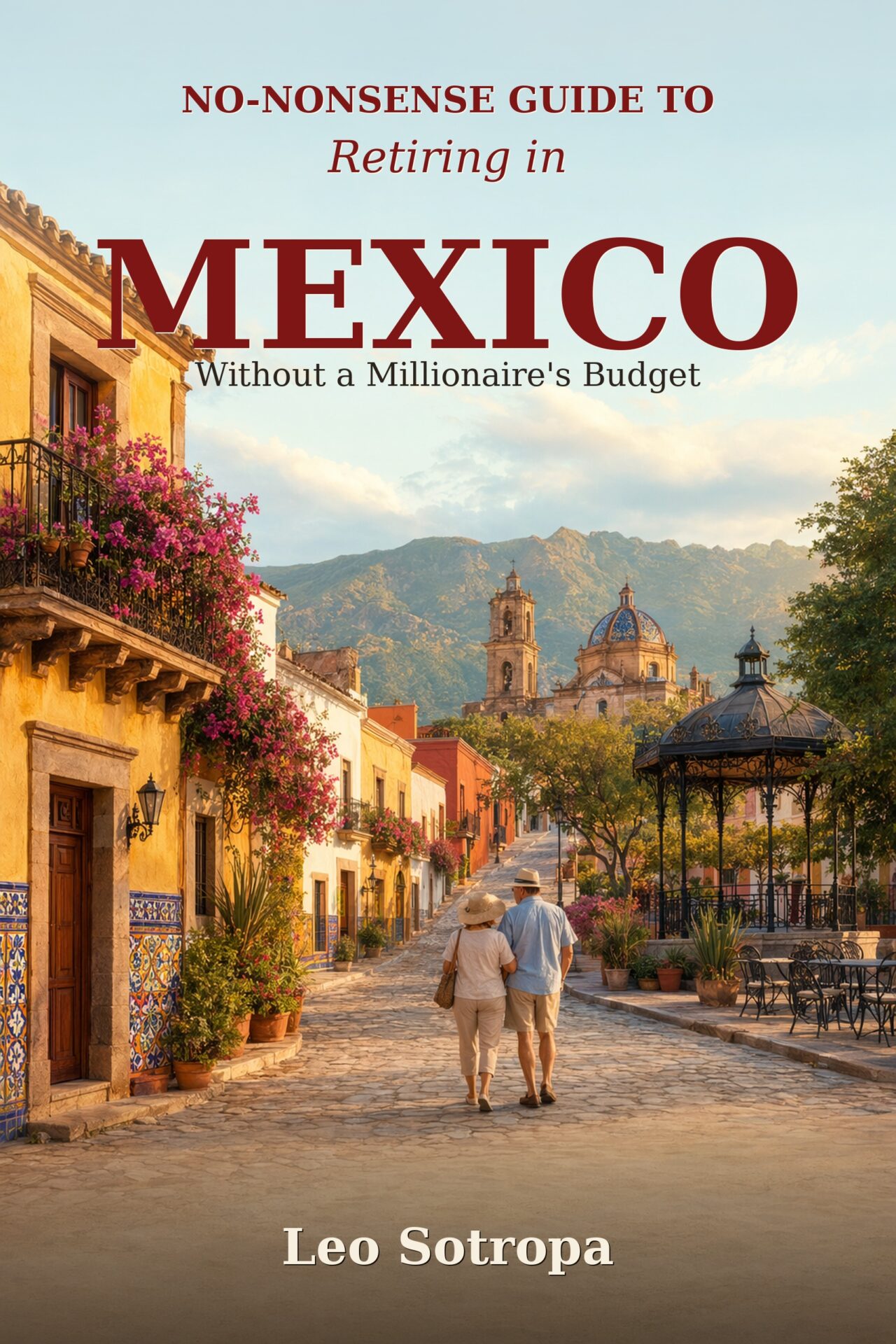
No-Nonsense Guide to Retiring in Mexico by Leo Sotropa is available on Amazon.
Mexico may offer the life you want. This book helps you determine where it works, what it costs, and how to protect the retirement behind it.
Frequently asked questions
Can an American retire in Mexico on Social Security?
It may be possible, particularly with modest housing outside the most expensive tourist areas. The answer depends on household size, location, healthcare, exchange rates, and savings. Residency qualification must be evaluated separately from the monthly living budget.
How do retirees get residence in Mexico?
Many begin with temporary residence based on qualifying income or savings. Requirements and financial thresholds change and may vary by consulate. Applicants should follow current instructions from the appropriate Mexican consulate and immigration authority.
Is it safe to retire in Mexico?
Safety varies by state, municipality, neighborhood, and travel route. Retirees should review current advisories and local information, then evaluate ordinary risks such as transport, weather, medical response, and home security.
Does Medicare work in Mexico?
Medicare generally does not cover routine care in Mexico. Retirees need a local healthcare strategy and should separately decide whether retaining Medicare supports a future return or treatment in the United States.
Should I rent or buy?
Rent first. Living through a full year provides evidence about climate, utilities, neighborhoods, healthcare, and long-term fit before you commit substantial capital.
What is a fideicomiso?
It is a bank trust commonly used by foreign buyers to hold residential property in Mexico’s restricted coastal and border zones. Property purchases require independent professional advice and careful title review.
Is Mexico inexpensive everywhere?
No. Famous beach communities and expatriate centers can be expensive. Better value may be found in ordinary neighborhoods, inland cities, and less-publicized regional centers.
Is this an official Mexican government guide?
No. It is an independent planning guide. Mexican authorities and qualified immigration, legal, medical, and tax professionals remain the final sources for decisions affecting an individual case.
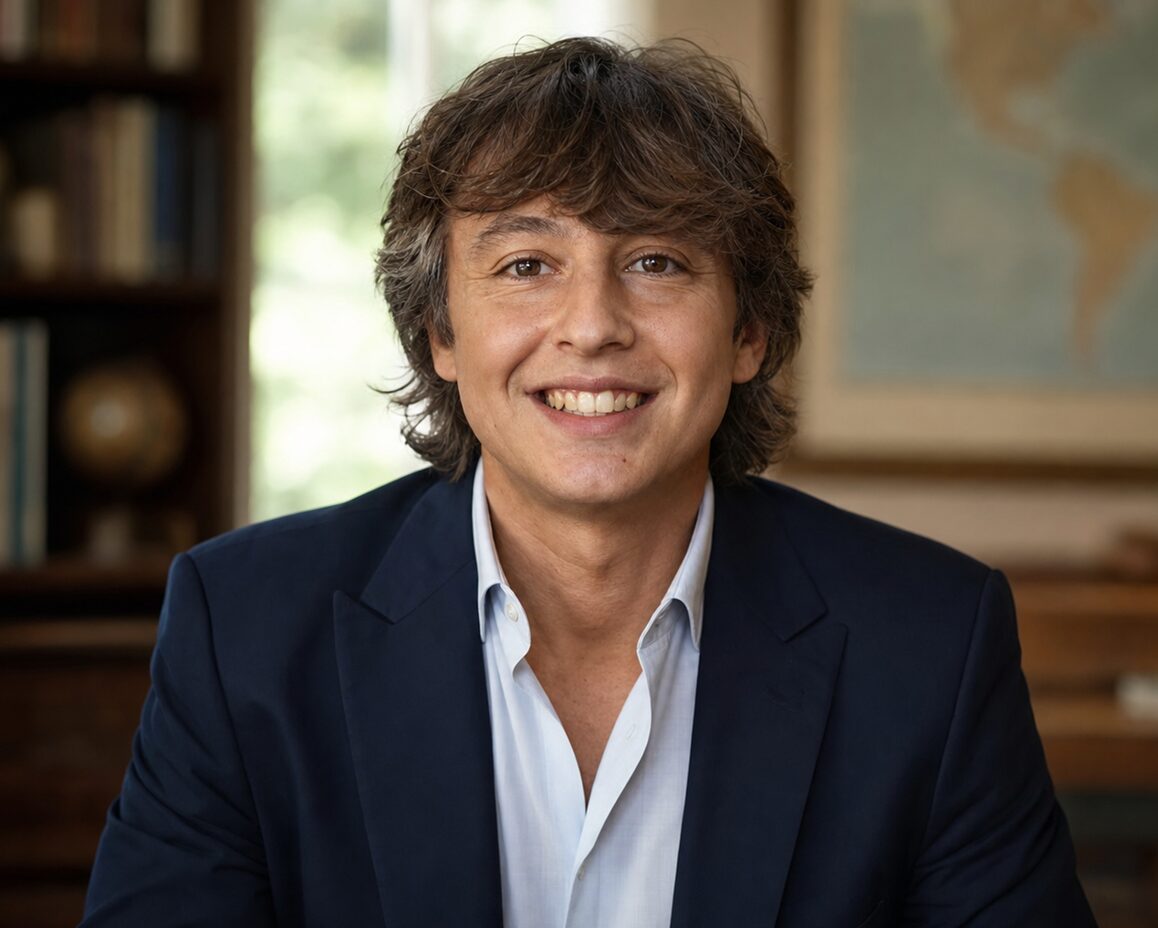
Meet Leo: The Heartbeat Behind ‘A Country A Month’
Journeying through the pages of A Country A Month, you might often feel the rhythm of a storyteller’s heartbeat, pulsating through each line, each image, and each adventure shared. That heartbeat belongs to none other than our remarkable website editor, Leo.
With a lens in one hand and a pen in the other, Leo seamlessly marries his passions for photography and writing. His eye captures moments that words can barely describe, yet his eloquence brings those images to life, transcending borders and connecting us all through shared stories. An avid traveler, every country he’s visited has added another chapter to his expansive tale, and through our platform, he generously shares these chapters with us.