The short answer: The Philippines’ retirement visa is the SRRV (Special Resident Retiree’s Visa), an indefinite residence visa that never expires. It was restructured on September 1, 2025, so ignore the old deposit numbers still quoted everywhere. For SRRV Classic at age 50+, you place a bank deposit of $15,000 with a qualifying pension (or $30,000 without), and the pension bar is just $800/month single — below a typical Social Security check. The deposit is your money and is recoverable. Add about $1,500 in one-time fees and $360/year. Verify every figure at pra.gov.ph before you commit.
This is the chapter people come for, and it’s the one where being current actually matters. If a guide tells you that you can retire in the Philippines on a $10,000 or $20,000 deposit, it’s describing a program that no longer exists. Here’s the program that does — the main road, step by step. (Dollar figures use ₱60 = $1; nothing here is legal advice, so confirm current requirements at pra.gov.ph and with the Bureau of Immigration.)
This summarizes the visa chapter of No-Nonsense Guide to Retiring in the Philippines by Leo Sotropa — the restructured tiers, the marriage route, the process, and every figure flagged for verification.
Try before you buy: the tourist path
You do not have to decide your whole life at the airport, and you should not. American citizens get 30 days visa-free on arrival, extendable in stages up to a total of roughly 36 months before you exit and re-enter to reset the clock. This is the single most underrated tool in the whole process. A great many sensible retirees begin here: they come as tourists, live somewhere for six months or a year, find out whether the dream survives contact with a rainy season, and only then commit to a visa and a deposit.
The mechanics: you extend at a Bureau of Immigration office in bundles. Once you pass 59 days of total stay you must get an ACR I-Card (the Alien Certificate of Registration), on the order of $50 (₱3,000) plus fees. A common six-month long-stay extension bundle runs roughly $190–200. None of this makes you a resident or grants the SRRV’s tax and duty perks — but it’s a cheap, low-commitment way to test a city before you wire a deposit. The deposit will still be there in a year.
The SRRV, in full
The SRRV is issued by the Philippine Retirement Authority (the PRA, a government agency). It’s an indefinite, multiple-entry residence visa: it never expires and never renews — you simply pay an annual fee to keep it active. It makes you a resident for banking and tax purposes, carries duty and travel-tax perks, and frees you from the exit clearances tourists deal with. After the September 2025 restructuring there are two live categories: Classic and Courtesy.
The heart of the visa is a time deposit you place in a Philippine bank under the program. After the restructuring, here is what the PRA’s revised table requires — verify each figure at pra.gov.ph:
| Category / age | With qualifying pension | Without pension |
|---|---|---|
| Classic, age 50+ | $15,000 (₱900,000) | $30,000 (₱1,800,000) |
| Classic, age 40–49 | $25,000 (₱1,500,000) | $50,000 (₱3,000,000) |
| Courtesy, 50+ (special categories) | as low as $1,500 (₱90,000) | |
The minimum age dropped from 50 to 40 in the restructuring, but the under-50 deposits are steep, so this route mostly suits the 50-plus retiree. SRRV Courtesy is a smaller side road with a deposit as low as $1,500, reserved for specific categories such as retired foreign diplomats, certain “high achiever” former military, and former Filipinos — ask the PRA directly if you might qualify, because the difference is large.
The pension discount, and why most retirees get it
The “with pension” discount is the one most American retirees will want, and the bar is low. You need a verifiable lifetime pension of at least $800/month (₱48,000) if single, or $1,000/month (₱60,000) for a couple. Most US Social Security recipients clear this comfortably — a typical solo check is well above $800. Bring your Social Security award letter and benefit-verification documents; they are your proof. See Can You Retire in the Philippines on Social Security? for how the check does double duty, funding the life and unlocking the visa.
The fees, and what the deposit does
Beyond the deposit, the PRA charges a one-time application fee of $1,500 (₱90,000), plus $300 per dependent, then an annual fee of $360 for the Classic category, which covers the principal plus up to two dependents. Dependents means your spouse and unmarried children under 21; each dependent beyond the first two requires an additional $15,000 in deposit.
Here’s the part that trips people up emotionally: the deposit is your money. It sits in a Philippine bank in your name under the program’s control — it is not a fee you hand over and lose. Better still, once your account is established and with PRA approval obtained first, the Classic deposit can be redirected into a condominium purchase or a long-term house-and-lot lease. The commonly cited threshold for converting to property is around $50,000, so this route suits someone bringing more capital who wants to turn the required deposit into an actual home. Remember the iron rule: you cannot own land, only a condo unit (subject to a 40% foreign-ownership cap per building) or a long-term lease of up to 50 years, renewable for 25. Do not move a peso toward property without written PRA approval first — getting the sequence wrong can cost you the perk.
Adding it up: the real upfront cost
Using the 50-plus, with-pension figures most readers will use (and flagging that you must confirm each at pra.gov.ph):
| Item | Amount | Nature |
|---|---|---|
| Bank deposit | $15,000 | recoverable / convertible to a home |
| One-time application fee | $1,500 | true sunk cost |
| Dependent spouse (if any) | +$300 | one-time |
| Annual fee | $360/year | recurring (covers principal + 2 dependents) |
So a single retiree is looking at roughly $16,500 out the door up front, of which $15,000 is a recoverable deposit and only about $1,500 is a true sunk cost, then $360 a year thereafter. The deposit is the psychological hurdle, not the actual expense — you get it back, or you convert it into your home. Marcus, a retiree in Cebu, did exactly that: he added some savings to reach the property-conversion threshold and redirected the whole sum into the walls of his condo, and the visa came along for the ride.
What the process actually looks like
The document list is where people either relax or panic, and it should be the former. You will generally need your passport, birth certificate, a marriage certificate if bringing a spouse, a police clearance from your home country, a medical clearance, passport photos, the bank certificate proving your deposit, and — since the restructuring — a Bureau of Immigration Clearance Certificate, now mandatory. US documents typically need authentication, so build in time. The PRA quotes processing of roughly 20 to 30 working days once your complete application is in — about a month of business days, not a year.
A realistic sequence:
- Gather and authenticate your home-country documents, ideally before you leave the States.
- Come to the Philippines (often on the tourist entry) and open the required bank account, placing the deposit.
- Complete your Philippine-side medical clearance.
- Submit the application to the PRA with the fees.
- Wait out the 20-to-30-working-day processing.
- Receive your SRRV — and then, within 90 days, use the one-time duty-free household-goods import (up to $7,000), so time any shipment to land inside that window.
Plenty of people handle the SRRV themselves; it’s genuinely doable if you’re organized and patient. But there’s an honest case for a reputable immigration lawyer or a PRA-accredited agent if your situation has any wrinkle — a complicated pension, dependents, or a plan to convert the deposit to property. Whichever way you go, verify every figure they quote against pra.gov.ph, because some agents still work from the old, dead numbers too.
The marriage route, and permanent residency
If you’re married to a Filipino, the calculus changes in your favor. The relevant visa is the 13(a) Non-Quota Immigrant Visa: it starts as a one-year probationary status, then converts to permanent residence with a simple annual report to the Bureau of Immigration — and it requires no retirement deposit at all. There’s also the lighter Balikbayan privilege: a foreign spouse who enters together with their Filipino spouse gets a one-year visa-free stay, renewed on each joint entry. Read the fine print in “together” — it lapses if you enter alone, so couples who travel solo eventually settle onto the 13(a).
Do you need separate “permanent residency” beyond the SRRV? For most retirees, no — the SRRV is your indefinite-residence solution. Should you pursue Philippine citizenship? Almost certainly not: naturalization is a slow court petition requiring ten years of residence, and it wouldn’t even let you own land. The realistic, comfortable end state for an American here is permanent resident, not citizen. You keep your US passport and your Social Security, and you live your life.
The common mistakes, so you can skip them
- Trusting an out-of-date guide. The internet is thick with confident articles quoting pre-September-2025 deposits. Acting on them leaves you short by thousands at the bank-certificate stage. Anchor to pra.gov.ph.
- Wiring the deposit toward property before PRA approval. The deposit-to-condo conversion is real and useful, but it runs through the PRA. Approval first, always, in writing.
- Underestimating document authentication. Your birth certificate, marriage certificate, and police clearance generally need authentication before the PRA will accept them. Start early, from the States.
- Treating the pension bar as an obstacle. The $800 single / $1,000 couple thresholds sit below a typical Social Security check. Bring your award letter.
- Skipping the try-before-you-buy period and committing the full deposit to a city you’ve never actually lived in. Live somewhere first.
One last piece of context: the PRA suspended new SRRV processing in October 2020 over abuse and security concerns, and the September 2025 restructuring — higher deposits, higher fees, new mandatory immigration clearance — is part of the same tightening. The program is real and open, with roughly 60,000 active SRRVs as of mid-2025, but it’s a road the government watches closely now. Do everything by the book, keep copies of every document, and verify the current rules at the source.
Want the full document checklist, the agent-versus-DIY breakdown, and the deposit-to-condo playbook? It’s in No-Nonsense Guide to Retiring in the Philippines.
FAQ
How much is the Philippines SRRV deposit now?
After the September 2025 restructuring, SRRV Classic at age 50+ requires $15,000 with a qualifying pension or $30,000 without. Ages 40–49 pay $25,000 or $50,000. Confirm at pra.gov.ph.
What pension do I need for the SRRV?
A verifiable lifetime pension of $800/month for a single applicant or $1,000/month for a couple qualifies you for the lower “with pension” deposit. Most Social Security recipients clear it.
Is the SRRV deposit refundable?
Yes — it’s your money, held in a Philippine bank under the program, not a fee. With PRA approval first, it can also be redirected into a condo purchase or long-term lease (commonly cited threshold around $50,000).
Does the SRRV let me own land?
No visa does. Foreigners cannot own land in the Philippines. You can own a condo unit (up to 40% foreign per building) or hold a long-term land lease (50 years, renewable for 25).
Keep reading: Can you retire on Social Security? · Cost of living for retirees · The complete guide to retiring in the Philippines
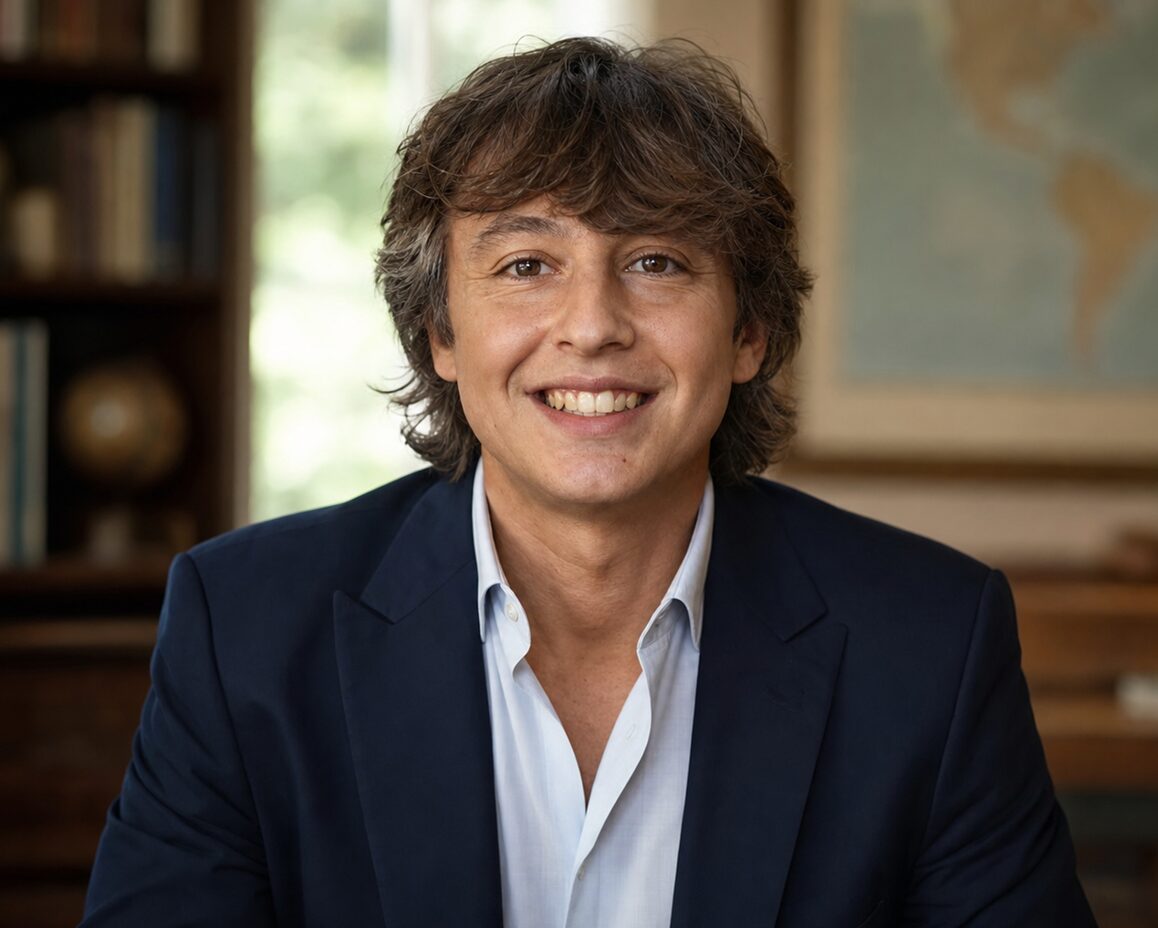
Meet Leo: The Heartbeat Behind ‘A Country A Month’
Journeying through the pages of A Country A Month, you might often feel the rhythm of a storyteller’s heartbeat, pulsating through each line, each image, and each adventure shared. That heartbeat belongs to none other than our remarkable website editor, Leo.
With a lens in one hand and a pen in the other, Leo seamlessly marries his passions for photography and writing. His eye captures moments that words can barely describe, yet his eloquence brings those images to life, transcending borders and connecting us all through shared stories. An avid traveler, every country he’s visited has added another chapter to his expansive tale, and through our platform, he generously shares these chapters with us.