The short answer: On a fixed income, the Philippines gives you back things a US retirement quietly takes away — a full-time helper for $100–250 a month, meals out for a couple of dollars, a haircut for a dollar or two, and a warm, communal public life that costs almost nothing. Your dollar stretches because labor and local food are cheap, and because English removes the daily friction. The trade-offs are honest: the electricity bill (aircon), the road (the real everyday danger), and the distance from family. Manage those three and the day-to-day is quietly, reliably good.
Everything about the visa and the budget is logistics. This is about the life on the other side of it — what an ordinary Tuesday actually feels like when your income is a fixed monthly deposit and you’re living it out in the Philippines. (Dollar figures use ₱60 = $1, the book’s 2026 rate.)
This draws on the settling-in, daily-life, and staying-connected chapters of No-Nonsense Guide to Retiring in the Philippines by Leo Sotropa — the texture of the life, told straight.
The quiet luxuries a fixed income can suddenly afford
The most striking thing about a fixed income here is how far it reaches into daily comfort. Household help is genuinely affordable — a full-time maid or helper runs ₱6,000–15,000 a month ($100–250), and part-time costs less. Someone cleans, does the laundry, handles market runs, and cooks a few times a week, and it costs less than a few restaurant dinners back home. For many couples this single fact is why a comfortable life fits inside a modest budget; the chores that eat your days in retirement simply get handled.
Eating out stops being a special occasion. A filling meal at a local carinderia or neighborhood spot is ₱150–300 ($2.50–5); a proper sit-down dinner for two might be ₱600–1,200. One retiree who cooked for herself for forty years says one of the small liberations of Dumaguete is that eating out is finally cheap enough that she stopped treating it as an indulgence. Add a haircut for a couple of dollars, a full-body massage for less than a fast-food meal, and the small indulgences become the ordinary rhythm of the week. See the full breakdown in Cost of Living in the Philippines for Retirees.
The daily texture
Filipino warmth is not a brochure cliché; it’s a lived experience that will catch you off guard with its generosity. You’ll be invited to things. Neighbors will feed you. A stranger will go out of their way to help you find an address. Alongside it comes a gentler pace — “Filipino time,” where the party that starts at 6 begins in earnest at 8, and the repair promised for Tuesday may arrive Thursday. You can rage against it and be miserable, or downshift and be happy. The whole reason you retired was to stop living by the clock; here is a culture ready to help you do exactly that.
The year runs on the Catholic calendar and the fiestas — Christmas isn’t a day here but a months-long season, and the town-patron festivals turn ordinary neighborhoods into music, food, and open-door hospitality for days. Being the foreigner who shows up, eats the lechon, and joins in is one of the fastest ways to belong. And the fruit alone is a reason to be glad to be alive: mangoes that taste like the platonic ideal of a mango, for pocket change.
Getting around, and the road
Transport is cheap if you skip the car. Jeepneys run fixed routes for a few pesos; tricycles handle short hops (agree the fare before you climb in, since foreigners are often quoted a premium); and in the cities the expat default is Grab, the ride-hailing app — metered, cashless if you want, and free of fare haggling. Going car-free, one retiree’s whole transport line is just $45–70 a month.
The book is blunt about why so many expats don’t self-drive: the roads are the real everyday danger — roughly 11,000 road deaths a year, loose lane discipline, and swarms of motorbikes that make up half the traffic and much of the toll. Choosing Grab and hired drivers removes you from the single most dangerous activity in the country, and it happens to be the cheaper choice too. If you do drive, wear a helmet on any motorbike, every time, and avoid night highway driving. Whether you drive or not, be a defensive, conservative pedestrian.
A sane money setup for daily life
The plumbing that makes a fixed income work smoothly, assembled:
- Keep a US bank account open at home for US obligations and the occasional trip back.
- Open a local peso account at BDO, BPI, or Metrobank (your SRRV resident status makes this easy), and possibly a USD account alongside it to hold dollars and convert on your own timing.
- Move money across with Wise or Remitly at near mid-market rates (usually under 1% fee), comparing live quotes for anything sizable — or direct-deposit your Social Security via form SSA-1199-OP77.
- Set up GCash or Maya for the tap-to-pay layer that runs daily life — bills, load, splitting a tab, paying your helper.
- Carry a float of small-denomination cash for the market, the tricycle, and the corner store, and withdraw from ATMs sparingly and in larger chunks (surcharges run ~₱250 and single-withdrawal caps are low).
None of it is hard, and it’s all conducted, like everything else here, in English. See Can You Retire on Social Security? for the delivery mechanics in full.
Staying connected across the distance
The distance is the honest tax on this whole life, and no app fully closes it — but technology shrinks it a lot. Video calling actually works here: city fiber is genuinely good (PLDT, Converge, Globe, around $40–75 for phone and internet together), and on islands, Starlink now delivers real broadband (80–200 Mbps) for roughly $47–58 a month after the hardware. A stable line means high-definition calls that feel present — reading to a grandchild at bedtime, being a face on the kitchen wall at a birthday.
Using it well across a 12-to-16-hour gap takes a little deliberateness. The trick is to find the overlap — your morning is their evening — and make it a ritual: a standing weekly call you protect, with a running family group chat and shared photo albums filling the gaps. Most retirees settle into one significant trip home a year, budgeted as a fixed line and often flown in the cheaper shoulder seasons. And run the traffic both ways: your dollars stretch far enough that hosting the grandchildren generously, once they absorb the flight cost, turns the distance into an adventure they look forward to.
The honest low weeks, and pushing through
It would be dishonest to end on pure sunshine. Somewhere in the first several months — often after the excitement burns off and before the new life has formed — most retirees hit a low patch: homesickness, a bureaucratic frustration that won’t resolve on your timeline, a sudden acute missing of the grandchildren made worse by a time zone that flips your day into their night. This is not a sign you made a mistake. It’s the ordinary, predictable trough of any major move, and nearly everyone who now loves their life here passed through it first.
What gets people through isn’t willpower; it’s connection and time. The retirees who push through are the ones who built a routine and a community before the dip hit — the coffee group, the church or veteran club, the neighbors whose names they learned. Say yes to invitations in your first months even when you’re tired, because the party you drag yourself to in month two is where you meet the friend you keep for a decade. One veteran will tell you his lowest week was month three, when a typhoon knocked the power out for days; his wife will tell you that by month six they couldn’t imagine living anywhere else. Both are true, and the second only exists because they stayed through the first.
Why it’s worth it
Once you’re through, there’s the life itself: seven thousand islands that turn a long weekend into turquoise water, some of the best diving in the world cheap enough to become a weekly habit, warm nights spent outside in a T-shirt in what would be the dead of winter back home, and a public life lived outdoors that many Americans didn’t realize they’d been missing. The Philippines gives you time and it gives you warmth, both the literal kind and the human kind, and it charges you very little for either. The distance becomes something you manage rather than something that defeats you — and most retirees who live it, asked directly, would tell you the trade was worth making.
Want the full first-ninety-days playbook, the household-help and transport detail, and the honest chapter on the distance? It’s in No-Nonsense Guide to Retiring in the Philippines.
FAQ
What is daily life like in the Philippines on a fixed income?
Comfortable and social. A full-time helper costs $100–250 a month, meals out are a couple of dollars, and a warm public life of markets, fiestas, and neighbors costs almost nothing. English removes the daily friction. The things to manage are the electric bill, the road, and the distance from family.
Do I need a car to live in the Philippines?
No, and many expats deliberately don’t drive. Grab (ride-hailing), tricycles, and jeepneys cover most needs cheaply, and skipping the car keeps you off the country’s most dangerous feature — the road, which sees around 11,000 deaths a year. Going car-free, one retiree’s transport line is just $45–70 a month.
How do I pay for things day to day?
A blend: a local peso account (BDO, BPI, or Metrobank), the GCash or Maya mobile wallet for tap-to-pay, and physical cash in small bills for markets and tricycles. Move money in with Wise or Remitly, or direct-deposit Social Security.
How do I stay close to family from the Philippines?
Reliable fiber or Starlink makes high-definition video calls routine; the key is a standing weekly ritual across the time gap plus a running family chat. Most retirees budget one significant trip home a year and host visiting family generously, since dollars stretch far on the ground.
Keep reading: Cost of living for retirees · Why an English-speaking retirement matters · The complete guide to retiring in the Philippines
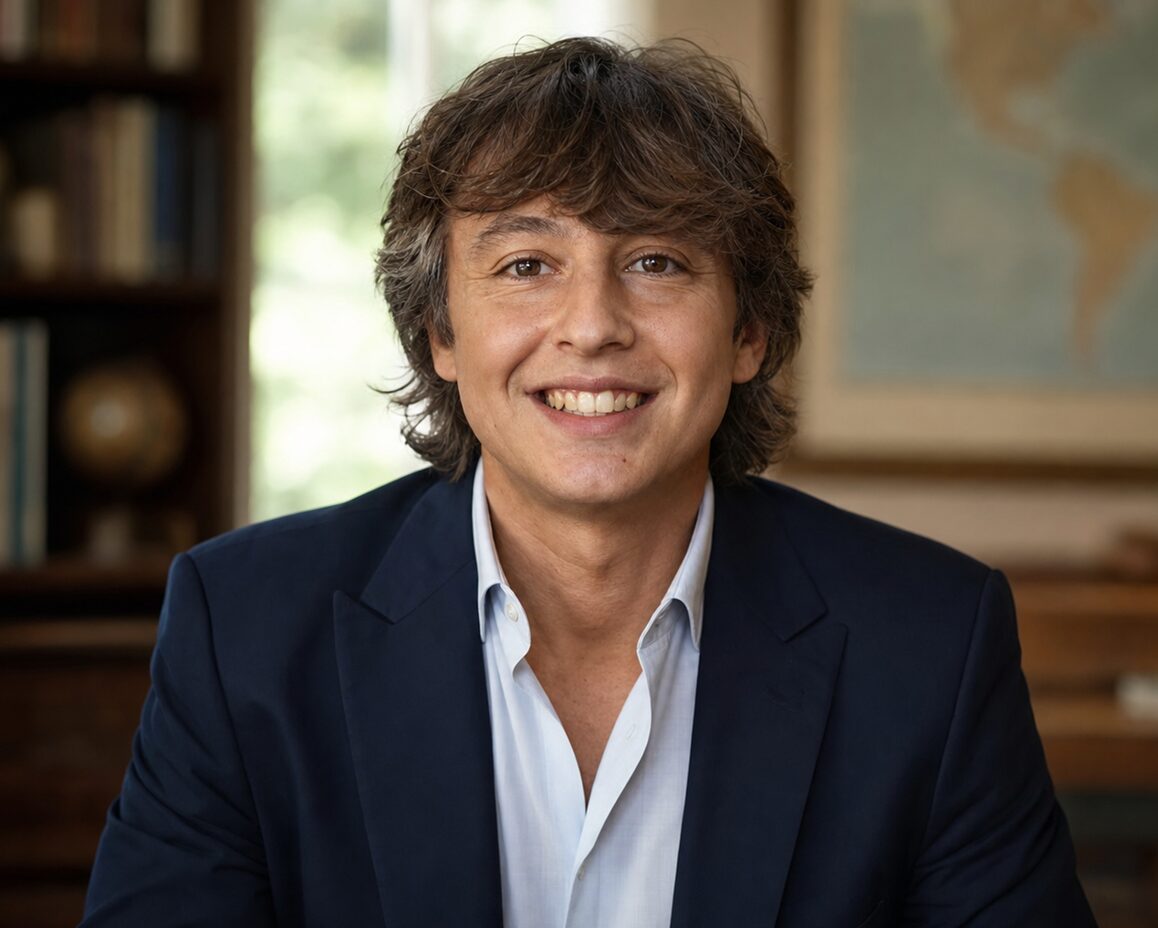
Meet Leo: The Heartbeat Behind ‘A Country A Month’
Journeying through the pages of A Country A Month, you might often feel the rhythm of a storyteller’s heartbeat, pulsating through each line, each image, and each adventure shared. That heartbeat belongs to none other than our remarkable website editor, Leo.
With a lens in one hand and a pen in the other, Leo seamlessly marries his passions for photography and writing. His eye captures moments that words can barely describe, yet his eloquence brings those images to life, transcending borders and connecting us all through shared stories. An avid traveler, every country he’s visited has added another chapter to his expansive tale, and through our platform, he generously shares these chapters with us.