Half Moon Cay is Carnival’s award-winning private island in the Bahamas, a crescent of powder-white sand fronting water so clear and shallow you can wade out a long way before it reaches your waist. If your ship calls here, the best way to spend the day is simple: get off early, claim a stretch of beach, and let the island’s calm rhythm do the rest. There is no town and no traffic — just one of the finest beaches in the Caribbean, set up entirely for cruise passengers. This Half Moon Cay guide covers how you get ashore, what to do, what costs extra, and how to make the most of the day.
Officially named Little San Salvador, the island sits between Eleuthera and Cat Island and is used exclusively by Carnival Corporation ships. Because it is a leased, undeveloped cay, the experience is deliberately low-key: the draw is the sand and sea, not attractions.
Where your ship docks: a tender port
Half Moon Cay has no pier large enough for cruise ships, so it is a tender port. Your ship anchors offshore and small boats — the tenders — ferry passengers to a landing dock in shifts through the morning. From the dock it’s a short, flat walk or a quick tram ride to the beach. Bring your ship card and a bit of patience: the first tender waves are busiest.
The one thing to understand is that tender ports are weather-dependent. Because the ship anchors in open water and runs boats to shore, rough seas or strong winds can make tendering unsafe, and the captain will occasionally cancel the call or cut it short. It doesn’t happen often, but it happens — treat Half Moon Cay as a wonderful bonus rather than a guarantee. Confirm your exact tender times and any changes in your cruise line’s app on the morning of the call.
If Half Moon Cay is on your itinerary, it’s often paired with other Bahamian stops. Many sailings that call here also visit Celebration Key, Carnival’s purpose-built destination on Grand Bahama, so it’s worth reading up on both before you sail.
Top things to do on a port day
The beach itself
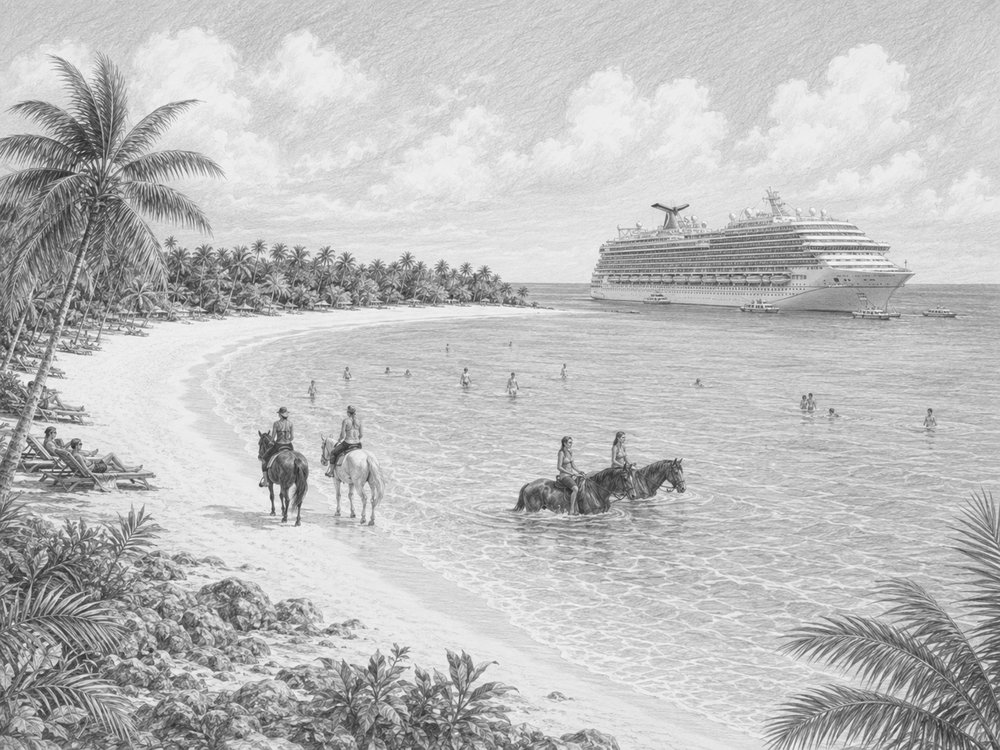
The beach is the reason the island wins awards, and it lives up to the reputation. The sand is soft and pale, the crescent shape shelters the water from open-ocean swell, and the shallow, gently sloping bottom stays calm and warm — ideal for floating, wading, and swimming without fighting waves. Loungers and shade are set out along the shore. Arrive early if you want a lounger in the shade, because the best spots go first and there is little natural cover once you leave the tree line.
Snorkeling and water sports
The clear, protected water makes Half Moon Cay a good place to snorkel, even for beginners. Rent gear or bring your own, then explore the shallows off the beach. Beyond snorkeling, there are water sports to rent by the hour — kayaks, paddle craft, and more — plus a floating aqua park with slides and inflatables anchored offshore that older kids and teens love. These rentals are extra and popular items sell out, so if water sports are the point of your visit, head to the rental hut soon after you land.
Horseback riding on the beach and in the sea
The island’s signature experience — and one of the most photographed excursions in the Bahamas — is horseback riding along the sand and then straight into the sea. Riders trek along the beach before the horses wade into the shallows, where you feel them move through the water beneath you. It has limited daily capacity and carries rider weight and age restrictions, so it books up fast. Reserve it through your cruise line as early as you can rather than hoping to sign up on the day.
Private cabanas
For a more comfortable base, the island rents private cabanas along and above the beach — shade, seating, and a reserved spot away from the crowds, with larger ones suiting a family or a group splitting the cost. They’re a paid upgrade and limited in number, so book ahead; by the morning of the call they’re usually long gone.
Food, families, and the kids’ areas
The food pavilion and barbecue
Lunch is handled at a large open-air food pavilion, where the island serves a barbecue-style buffet — grilled meats, burgers, salads, fruit, and the usual beach-day spread. This meal is included in your fare, just like dining aboard the ship, so you don’t need cash for food. It’s served during a set midday window; check the times posted at the pavilion or in your app, and eat a little before or after the main rush to skip the longest lines.
Families and children
Half Moon Cay is one of the easiest ports anywhere for families with young children. The water is shallow and calm well out from shore, so little ones can splash safely, and there are dedicated kids’ play areas and shaded spots. Strollers manage the flat paths, and because everything is on one beach you never lose sight of the group. Older kids gravitate to the aqua park and rentals; younger ones are happy with a bucket and the shallows.
What’s included versus what costs extra
Knowing the split ahead of time saves confusion. As a rule:
- Included: access to the island and beach, standard loungers, the barbecue lunch, and the tender ride to and from the ship.
- Extra: horseback riding and other organised excursions, private cabanas, water-sports and snorkel-gear rentals, the aqua park, and any drinks beyond what your onboard beverage package covers.
Treat prices for the extras as relative rather than fixed — confirm the current cost and what’s included when you book through your cruise line’s app or excursion desk. Because the marquee experiences have limited capacity, booking before you sail is almost always cheaper and safer than waiting until you’re aboard.
What to bring
There are no shops for forgotten essentials once you’re on the sand, so pack a small beach bag before you leave the ship:
- Reef-safe sunscreen and a hat — shade is limited and the sun is strong.
- Water shoes for the walk and for wading over the occasional patch of shell or rock.
- Your own snorkel gear, if you have it, to skip the rental line.
- A dry bag or waterproof pouch for your phone and ship card.
- A towel from the ship, plus a light cover-up for the tender ride back.
- A refillable water bottle to stay hydrated in the heat.
You won’t need much cash since food is included and excursions are charged to your onboard account, but a little is useful for tipping.
How much time you need and getting the most from the day
A call at Half Moon Cay is usually a full day, and you’ll want all of it. The most useful move is to tender ashore early — the beach is calmest and least crowded in the first couple of hours, and you’ll have the pick of loungers and shade. Do your excursion or water sports in the morning, break for the barbecue lunch, then float the afternoon away. Keep an eye on the last-tender time: the final boats back stop well before all-aboard, so build in a buffer rather than leaving your return to the last tender.
Half Moon Cay pairs naturally with other Bahamian stops. Itineraries often combine it with a day in Nassau, which gives you a port town and history to balance out the pure beach day here.
What to skip and watch out for
The warnings are few but worth heeding. Respect the tender schedule and all-aboard time — this is the biggest risk of the day. Don’t underestimate the sun; there’s little natural shade, and a long day on white sand and reflective water burns fast. If a marquee experience like horseback riding matters, book it in advance, because on-the-day availability is thin. And if seas are rough, be prepared for the call to be shortened or cancelled.
Cruise ships that visit Half Moon Cay
Half Moon Cay appears on Bahamas and Caribbean itineraries across Carnival’s fleet. Read the full ship guide for the vessel you’re sailing to see how the island fits into its route:
Frequently asked questions
Is Half Moon Cay a tender port?
Yes. There is no pier big enough for cruise ships, so the ship anchors offshore and tenders ferry passengers to the island dock, a short walk or tram from the beach. Because tendering depends on calm seas, the call can occasionally be shortened or cancelled in rough weather — confirm your tender times in your cruise line’s app on the day.
Which cruise line owns Half Moon Cay?
Half Moon Cay, officially Little San Salvador, is Carnival Corporation’s private island in the Bahamas and is used by its cruise lines. It is a leased, largely undeveloped cay set up purely for beach days, which is why it stays so quiet and uncrowded compared with a regular port town.
Is lunch included on the island?
Yes. A barbecue-style buffet is served at the island’s food pavilion during a set midday window and is included in your cruise fare, like meals aboard the ship. Drinks beyond your onboard package, plus excursions, cabanas, and rentals, cost extra.
Can you really go horseback riding in the sea?
You can. The island’s famous excursion takes you on horseback along the beach and then wades the horses into the shallow water. It has limited daily capacity plus weight and age rules, so it sells out quickly — book it through your cruise line before you sail rather than waiting until you’re aboard.
Is Half Moon Cay good for families with young kids?
It’s one of the best ports for families. The water is shallow and calm a long way out, there are dedicated kids’ play areas and shaded spots, and the whole day happens on a single beach so nobody wanders far. Older kids enjoy the floating aqua park and water-sports rentals.
Do I need to bring cash?
Not much. Lunch is included, and excursions, cabanas, and rentals are charged to your onboard account with your ship card. A little cash is handy for tipping, but you can get through the whole day without it.
What should I book in advance?
Reserve the limited-capacity extras early: horseback riding, private cabanas, and popular water sports all tend to sell out. Booking through your cruise line’s app before you sail is usually cheaper and far more reliable than signing up on board. If a nearby island like Great Stirrup Cay is also on your route, plan those beach days together so you know what to book for each.

Meet Leo: The Heartbeat Behind ‘A Country A Month’
Journeying through the pages of A Country A Month, you might often feel the rhythm of a storyteller’s heartbeat, pulsating through each line, each image, and each adventure shared. That heartbeat belongs to none other than our remarkable website editor, Leo.
With a lens in one hand and a pen in the other, Leo seamlessly marries his passions for photography and writing. His eye captures moments that words can barely describe, yet his eloquence brings those images to life, transcending borders and connecting us all through shared stories. An avid traveler, every country he’s visited has added another chapter to his expansive tale, and through our platform, he generously shares these chapters with us.