The short answer: Safety in Mexico is geographic, not national. The country’s overall U.S. State Department rating is Level 2 — the same tier as France or Italy — and its crime rate (~53.8 per 100,000) sits not far above the United States (~49.3). Violence is real but concentrated in specific cartel-conflict regions, not the tourist and expat zones. Only Yucatán and Campeche are Level 1; six states are Level 4. You read the state-by-state map, choose your spot, follow four movement rules, and get on with your life.
Somebody at your kitchen table is going to say it: “Mexico? Are you out of your mind?” They’ll say it the way Americans say it about anywhere the evening news has trained them to fear. So here’s an answer grounded in facts instead of vibes — neither the alarmist version nor the whitewash. The honest, specific picture is that there is no single answer to “is Mexico safe” any more than there is to “is the United States safe.” It depends entirely on where you are.
This summarizes the safety chapter of No-Nonsense Guide to Retiring in Mexico by Leo Sotropa — the full state-by-state map and the neighborhood-level detail.
The number that reframes the whole conversation
Mexico’s country-wide U.S. State Department rating is Level 2, Exercise Increased Caution — the very same tier as France or Italy. And by one cross-country measure, Mexico’s overall crime rate sits at about 53.8 per 100,000, not far above the United States at about 49.3. Violence in Mexico is real, but it’s concentrated in specific cartel-conflict regions, and the tourist and expat zones are, in the words of one analysis, not the target. The fear your relative is broadcasting is aimed at a country-sized average that does not describe the street you’d actually live on.
The state-by-state map
The State Department issues its Mexico advisory state by state, and the most recent reissue sorts the country into four tiers:
| Level | Meaning | Includes |
|---|---|---|
| Level 4 | Do Not Travel | Colima, Guerrero, Michoacán, Sinaloa, Tamaulipas, Zacatecas (6 states) |
| Level 3 | Reconsider Travel | Baja California, Chiapas, Chihuahua, Guanajuato, Jalisco, Morelos, Sonora |
| Level 2 | Exercise Increased Caution | Mexico City, Nayarit, Nuevo León, Oaxaca, Puebla, Querétaro, Quintana Roo (Cancún/Riviera Maya), and more |
| Level 1 | Exercise Normal Precautions | Campeche, Yucatán (Mérida) — only two states |
Sit with the two ends of that table. Six states carry the most serious Level 4 warning. At the other end, only two states earn Level 1 — Campeche and Yucatán, whose capital Mérida is routinely cited as one of the safest cities in Mexico. The same country contains a Do-Not-Travel state and a place safer than most American cities. That is what “geographic, not national” means in practice.
The catch expats must understand
Now the nuance that matters most. Several of the most popular expat hubs sit inside higher-advisory states. Lake Chapala and Puerto Vallarta are both in Jalisco, a Level 3 state. San Miguel de Allende is in Guanajuato, also Level 3. And Mazatlán sits in Sinaloa, a Level 4 “Do Not Travel” state.
Read that carefully before you panic or dismiss it, because both reactions are wrong. The state-level rating reflects rural and cartel-corridor risk across the whole state, not the safety of the specific expat enclave — Acapulco being in Level 4 Guerrero does not make Mérida a high-risk destination, and by the same logic the troubles in rural Jalisco do not describe daily life in Ajijic. Expats in these enclaves generally live safely and ordinarily, year after year. But the rating is not nothing: it’s real, it reflects genuine risk in the broader state, and a Level 4 rating in particular can void some U.S. travel-insurance policies. The grown-up posture for a higher-advisory hub is neither denial nor avoidance — it’s to stay in the established zones, take the precautions seriously, and accept the rating with eyes open.
The Mazatlán question
Mazatlán earns its own section, because it’s the honest-caveat case readers ask about most. It’s a big, affordable Pacific beach city with a beautifully restored Centro Histórico and a long-standing snowbird scene — and it sits in Sinaloa, a Level 4 “Do Not Travel” state. How do you think about that without lying to yourself in either direction? In practice, the tourist, Centro, and Golden Zone corridors have stayed stable, and tourism officials report normal visitor numbers. But cartel conflict in the broader state is real, not a rumor, and the Level 4 rating carries that practical sting: it can void some U.S. travel-insurance policies. The grown-up recommendation is narrow and specific. Mazatlán can work for a retiree who will genuinely stay in the established zones, avoid rural night driving, and accept the Level 4 rating with eyes fully open. It’s not a place to wave the warning away, and not a place to panic over either — it’s a place to choose deliberately, or not at all.
The four movement rules
The State Department gives the same handful of movement precautions to all U.S. citizens in Mexico, and they’re worth following whether you live in Level 1 Mérida or Level 3 Lake Chapala, because they target the realistic risks:
- Don’t travel between cities after dark. Night driving on intercity highways is where ordinary travelers most expose themselves.
- Use app-based rides (Uber, Cabify, Didi) or regulated taxi stands. Don’t hail taxis off the street.
- Avoid driving between the border cities and the interior. That corridor carries elevated risk.
- Comply at any checkpoint; don’t try to flee one.
None of those four rules costs you anything or cramps a normal retired life. They simply route you around the situations where trouble actually concentrates.
The crime you’ll actually encounter
Here’s the truth that should resize the fear. For a retiree, the realistic daily risks are not cartel violence; they’re the same petty crimes and scams that prey on newcomers anywhere — pickpocketing, ATM skimming, “express” robberies (a quick forced-ATM-withdrawal), taxi overcharging, and rental scams aimed at foreigners. These are far more likely to touch you than anything involving a cartel, and they’re also far more recoverable and preventable. Express kidnapping relies on a cash machine, so use ATMs inside banks by day and keep withdrawal limits modest. Taxi overcharging evaporates the moment you use an app where the fare is set in advance. And rental scams come down to one rule: never wire a deposit for a place you, or a trusted local, haven’t seen with your own eyes. None of this is sophisticated once you know the script — a retiree who has read it is a genuinely hard target.
How expats actually live safely
So how do the hundreds of thousands of Americans already in Mexico live day to day without bracing against violence? Not by vigilance or luck, but by a handful of sensible habits and one or two good decisions about where to put down roots:
- Ask locals which colonias are fine and which to skip — they know the block-by-block reality no advisory map can capture.
- Favor Level 1 and Level 2 areas, or proven enclaves with a long track record, over riskier choices.
- Rent before you buy, so you learn a neighborhood through a full year before committing.
- Use Uber and Didi rather than street taxis, and avoid rural night driving.
- Keep a low profile — dress down, and don’t advertise that you’re a wealthy foreigner.
- Enroll in STEP, the free Smart Traveler Enrollment Program, so the nearest U.S. embassy can send you alerts and reach you in an emergency. It takes five minutes and is among the cheapest insurance there is.
Almost none of those habits cost money or demand vigilance; they’re choices you make once and then forget. Renting before you buy is the quiet keystone, because it lets you learn a neighborhood’s real texture — which streets feel right after dark, which block the locals steer you away from — before you commit a single peso. The expert consensus, from people who’ve spent careers watching American retirees settle here, is refreshingly undramatic: most of Mexico is fine, and it depends on where you are. That’s not a dodge — it’s the single most accurate sentence anyone can say about safety in this country.
Keep it in proportion
Step back and hold the whole thing in proportion, because proportion is the entire point. Six states carry the most serious warning, and most of the popular expat hubs sit in Level 1 or Level 2 areas, or in proven enclaves with years of track record. The fear so many Americans carry about Mexico is genuinely overblown for the tourist and expat zones, and the cross-country crime numbers put the two countries in roughly the same neighborhood rather than on different planets. But the fear is not zero either, and the difference is geographic: a country with a Do Not Travel state and a city safer than most American ones cannot be summed up in a single word. You read the map, you choose your spot with open eyes, you follow four simple movement rules, and then you file this whole category of worry where it belongs — understood, planned for, and behind you. This is not the lurid danger your worried relative imagines, and it is not a paradise without a single shadow. It is a real place with a real map.
Want the full state-by-state breakdown, the neighborhood-by-neighborhood detail for each hub, and the honest take on the Mazatlán question? It’s in No-Nonsense Guide to Retiring in Mexico.
FAQ
Is Mexico safe for American retirees?
In the right place, yes. Mexico is rated Level 2 overall — like France or Italy — and its crime rate is close to the U.S. figure. Safety is geographic: choose a Level 1 or 2 area or a proven enclave, follow the movement rules, and the realistic risk drops to petty crime you can prevent.
Which parts of Mexico are safest to retire in?
Yucatán (including Mérida) and Campeche are the only two Level 1 states. Querétaro and Oaxaca City sit in Level 2. Several popular hubs like Lake Chapala are in higher-advisory states where the risk is rural, not in the enclave.
Is it safe to live in Lake Chapala or Puerto Vallarta?
Both are in Level 3 Jalisco, but the established expat areas have long track records of ordinary, safe living, because the state rating reflects rural risk. Stay in the proven colonias, follow the movement rules, and know a higher rating can affect travel insurance.
Keep reading: Best places to retire in Mexico on a budget · Living in Mexico on a fixed income · The complete guide to retiring in Mexico
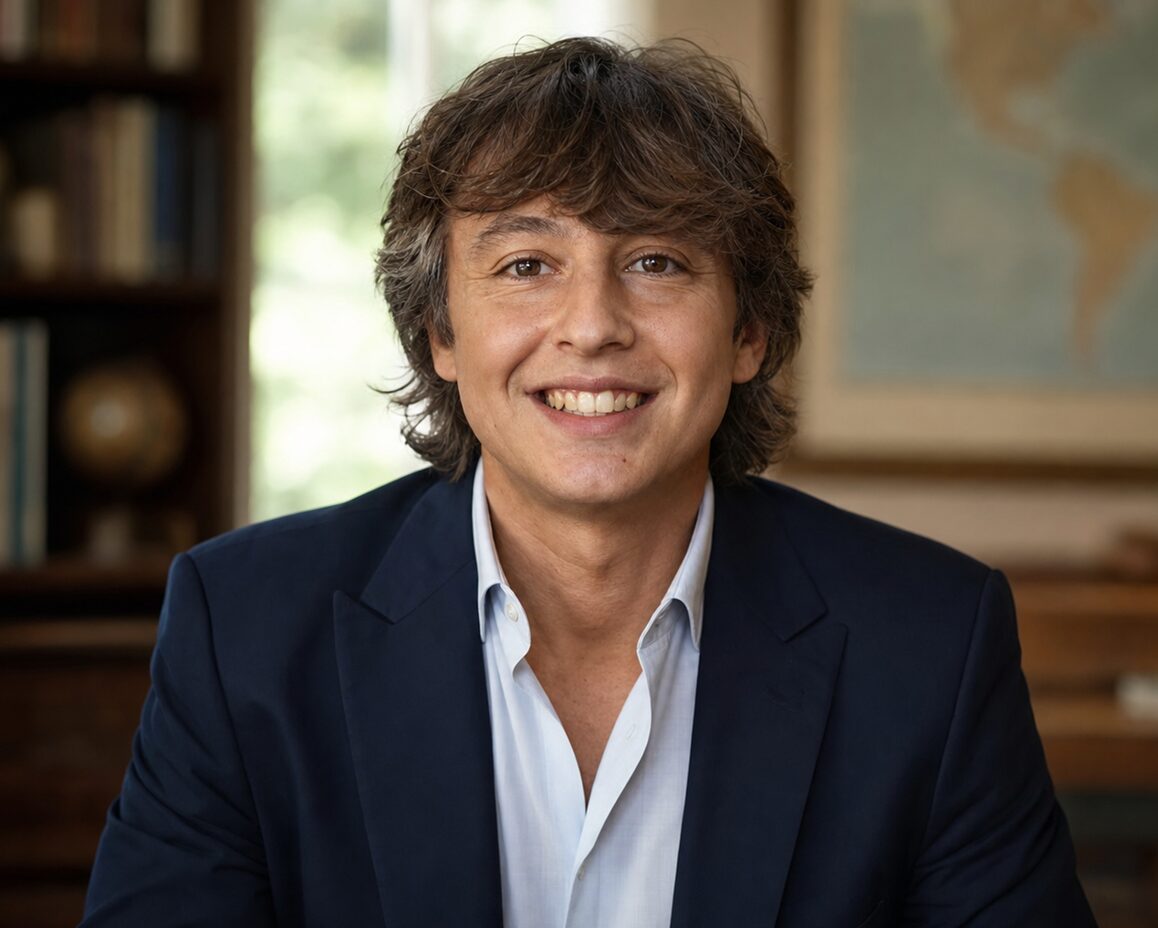
Meet Leo: The Heartbeat Behind ‘A Country A Month’
Journeying through the pages of A Country A Month, you might often feel the rhythm of a storyteller’s heartbeat, pulsating through each line, each image, and each adventure shared. That heartbeat belongs to none other than our remarkable website editor, Leo.
With a lens in one hand and a pen in the other, Leo seamlessly marries his passions for photography and writing. His eye captures moments that words can barely describe, yet his eloquence brings those images to life, transcending borders and connecting us all through shared stories. An avid traveler, every country he’s visited has added another chapter to his expansive tale, and through our platform, he generously shares these chapters with us.