Why do so many Alaska cruises skip Glacier Bay entirely? Because entering it takes a permit, and there are only a handful to go around. This Alaska cruise guide to Glacier Bay is built around the single most important thing to know before you book: Holland America holds the permits that let Koningsdam sail a full day deep into Glacier Bay National Park, past ships that will never see it. That day — with a National Park ranger narrating from dawn to the Margerie and Grand Pacific glaciers — is the reason to choose this line for Alaska, and everything else on the seven-day Inside Passage route is arranged around it.
Everything in this article and far more, deck by deck, in The Ultimate Guide to Sailing on Koningsdam.
Get the book →The Glacier Bay permit is the whole point
Glacier Bay National Park is a limited-entry park. The number of large cruise ships allowed inside on any given day is capped, and those slots are allocated as concession permits well in advance. Lines that hold permits can promise the day; lines that don’t route their Alaska sailings to other scenic areas — Tracy Arm, Endicott Arm, College Fjord — which are genuinely beautiful, but are not Glacier Bay. Holland America is one of the operators that holds Glacier Bay permits, and Koningsdam’s seven-day round-trip from Vancouver is built to use one.
The practical consequence: when you compare Alaska itineraries, check whether the sailing actually enters Glacier Bay National Park, or whether it visits a different glacier area with a similar-sounding name. It is one of the few Alaska details that is genuinely hard to change once you’ve booked. If Glacier Bay is on your list, confirm it is on the itinerary before anything else. You can verify the day-by-day plan and scenic cruising for your specific sailing in the Navigator app.
What the Glacier Bay day actually looks like
There are no ports and no tenders on the Glacier Bay day. The ship is the excursion. At dawn, near the mouth of the bay, Koningsdam stops to bring National Park rangers aboard from a small boat. They stay all day, narrating over the ship’s system, setting up an information station, and often running a talk or a junior-ranger program for kids. This ranger-aboard program is part of the park’s concession agreement, and it turns a scenic cruise into something closer to a guided national-park visit. It is included in your fare — there is nothing to book and nothing extra to pay.
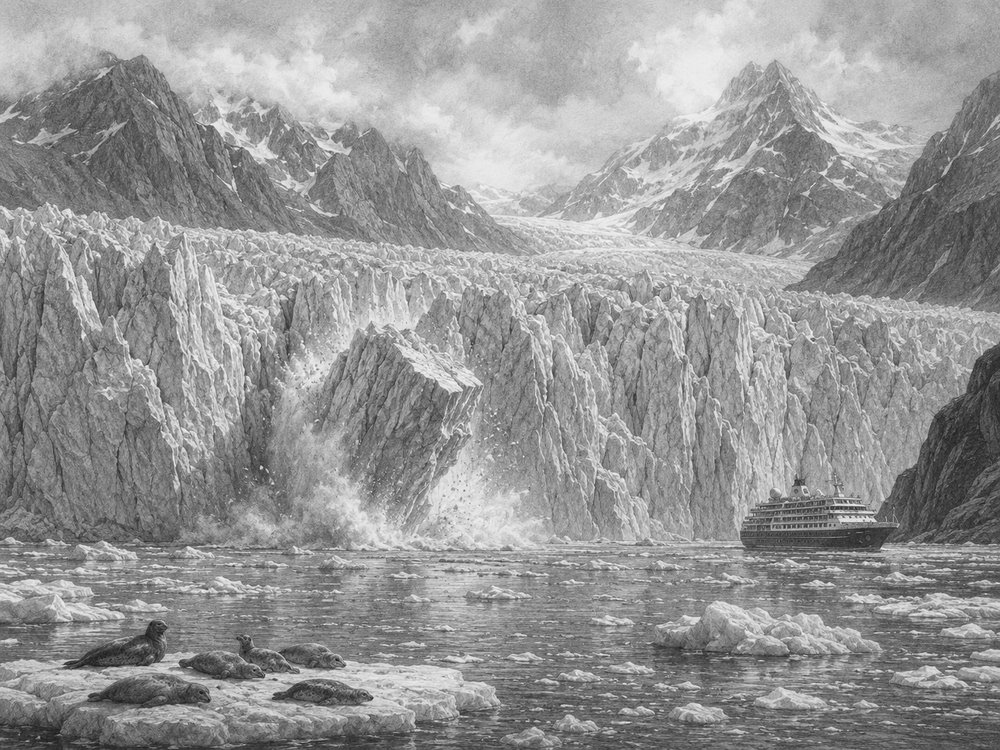
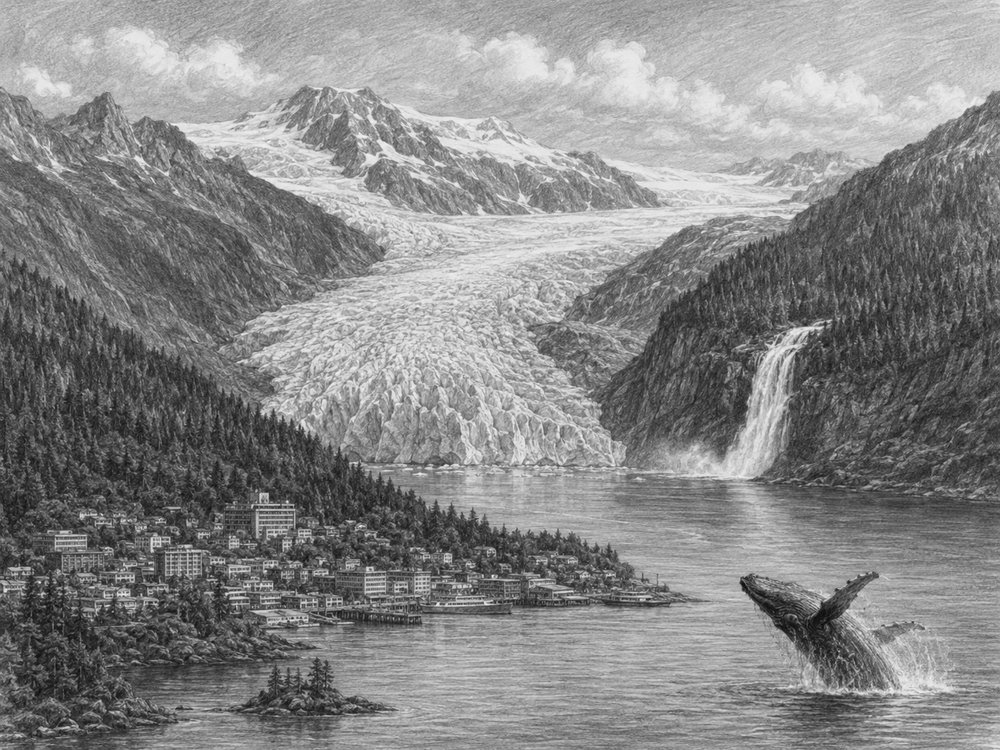
From the entrance, the ship sails slowly up the bay over several hours toward its head, where the two headline glaciers sit. The Margerie Glacier is the star — a tidewater glacier roughly a mile wide with a face that rises high above the water, striped with blue ice and rock. It is active, which means if you’re patient you’ll see and hear it “calve”: a crack like a rifle shot, then a slab of ice dropping into the sea. Right beside it, the Grand Pacific Glacier fills the head of the bay with a broad, darker, debris-streaked front. The captain typically holds position in front of Margerie and slowly rotates the ship so both sides get the view, then reverses course to head back out.
Wildlife is part of the day, not a bonus. Sea otters raft in the calmer water, harbor seals haul out on the ice floes that drift from the glacier faces, and the shorelines hold the chance of bears, mountain goats on the high slopes, and eagles. The rangers are good at calling out what they spot, so keep the volume up on your verandah and listen for it.
Because there’s no gangway and no schedule to race, the day rewards a slower rhythm than a port day. Plan your meals around the ship’s position rather than the clock — grab something from the Lido Market or Dive-In and eat it on deck or on your balcony rather than sitting down to a long meal in the Dining Room while the ship is at the glacier face. The best light and the most active calving tend to come once the ship is holding at the head of the bay, so you don’t want to be indoors and away from a window for that stretch.
Best viewing: where to be and when
The glaciers sit at the head of the bay, and the ship holds there for the best part of an hour or more, rotating. Because the captain turns the ship, there is no single “correct” side — everyone gets the view at some point — but here is how to make the most of it.
- Get out early. The most dramatic scenery builds through the morning as the ship works up the bay. Have breakfast that lets you keep moving to the rail — the Lido Market buffet and Dive-In are easy grab-and-go options that don’t tie you to a table.
- Layer up and dress for cold. Even in summer the air near a glacier face is genuinely cold, and the wind off the ice makes it colder. People who plan to stand outside for the calving are the ones who see it.
- Use the high, open decks for the panorama and the Crow’s Nest observation lounge — the forward-facing glass room high on the ship — when you want the view with a hot drink and shelter from the wind.
- Bring binoculars. The glacier faces are bigger and farther than they look, and wildlife on the ice and shore rewards a closer look.
- Watch, then listen. Calving announces itself with sound as much as sight. If you hear a crack, look at the face, not the water.
Why a verandah matters more here than anywhere else
On a Caribbean sailing, a verandah is a pleasant extra. In Glacier Bay it changes the day. You are looking at glaciers and wildlife for hours from a moving ship, and the difference between fighting for rail space on a crowded open deck and stepping out onto your own private balcony — coffee in hand, out of the wind on the sheltered side, back inside to warm up whenever you like — is real. On the scenic-cruising days especially, a verandah is the room feature that earns its cost.
If you’re weighing categories, a midship verandah on the mid-decks is the best all-round Alaska choice: steady underfoot, central for getting anywhere on the ship, and well-placed for viewing on either side. Book one high enough and central enough to avoid an obstructed view — some lower verandahs look onto lifeboats or structure, so check the deck plan. If the budget doesn’t stretch to a verandah, an Interior or Ocean View is honestly fine value on this itinerary, because you’ll spend the big days out on deck and in the Crow’s Nest with everyone else anyway. At the top end, a Neptune Suite adds the Neptune Lounge and a concierge. There’s more on choosing a room in this guide to what to expect on Koningsdam, and a fuller walkthrough of the ship in the main Koningsdam cruise guide.
A few rooms to be wary of on the deck plan, whatever category you choose: cabins directly under the Lido pool deck or the buffet can catch early-morning noise as deck chairs are dragged around, rooms under the World Stage or right beside the Music Walk can pick up late music, and forward high-deck rooms feel the most motion — worth avoiding if anyone in the party is prone to seasickness on the more open water crossings. Obstructed lower-deck verandahs are the other trap; the balcony exists but the view is partly blocked, which defeats the point on this itinerary. If it’s your first time with the line, the room and fare choices are worth reading through in this first-time Holland America on Koningsdam guide before you commit.
The rest of the Inside Passage itinerary
Glacier Bay is the centerpiece, but the seven-day round-trip from Vancouver is a full Inside Passage loop. Ports vary by sailing, so confirm your exact call list in the Navigator app, but the classic lineup runs through the Alaska capital, the gold-rush north, the totem south, Russian Alaska, and a Tlingit-owned port, before an evening call in Canada on the way home.
Vancouver — embarkation
The trip begins and ends in Vancouver, which is a superb cruise gateway and worth a night or two on either end. Stanley Park, Granville Island, the old brick streets of Gastown, and the Capilano Suspension Bridge are all easy to fit around embarkation day. Arriving early also removes the stress of a same-day flight and the ship’s departure clashing.
Juneau
Alaska’s capital is the whale-watching capital of the route, with reliable humpback sightings in summer. The Mendenhall Glacier is a short trip from town and can be paired with a whale boat, and the Mount Roberts Tramway climbs straight from the dock for a quick, high view when time is tight.
Skagway
The gold-rush town at the head of the Inside Passage. The headline is the White Pass & Yukon Route railway — a narrow-gauge train that climbs a spectacular pass out of town on the old Klondike route. It sells out early in the season, so book it before you sail.
Ketchikan
The totem capital, and often the rainiest, greenest stop. Creek Street’s boardwalk over the water is the postcard, the totem parks hold some of the finest carving in Alaska, and Misty Fjords by floatplane or boat is the big-ticket excursion for anyone who wants wilderness on top of the town.
Sitka
Russian Alaska, out on the Pacific side. The onion domes of St. Michael’s Cathedral sit in the middle of town, Tlingit totems stand among the trees at the national historical park, and the outer-coast location makes for some of the best wildlife on the route. Sitka is sometimes a tender port, which is where priority tender access earns its keep.
Icy Strait Point
A Tlingit-owned port at Hoonah, and one of the most likely places on the route to see whales close in. It also has the world’s largest ZipRider for anyone who wants an adrenaline stop, and Tlingit cultural programs that are worth your time. There’s a deeper look at the full port lineup in this Koningsdam Alaska from Vancouver guide.
Victoria, British Columbia
The homeward call, usually in the evening, and a change of pace from the wilderness. The Butchart Gardens are the famous excursion, and the Inner Harbour is a short, walkable evening if you’d rather stay near the ship. It’s a British Columbia bookend to an Alaska week.
Want to go inland? The cruisetour option
If a week at sea isn’t enough Alaska, Holland America runs optional cruisetours that add a land segment before or after the cruise, using the line’s own domed rail cars and wilderness lodges to head inland toward Denali and the Yukon. It’s the way to add the interior — big mountains, tundra, and wildlife on land — to a coastal cruise, and it’s arranged as one booking. If you’re considering it, decide early, because the rail and lodge inventory is limited.
What to book, and when
Glacier Bay itself needs no booking — the ranger day is included. Everything on land is different. Alaska shore excursions, especially the marquee ones, sell out earlier than almost any other cruise region, so the planning happens before you sail, not at the gangway.
- Book the White Pass railway in Skagway and any whale-watching in Juneau or Icy Strait Point ahead of time — these are the first to go.
- Consider Have It All, Holland America’s bundled fare that folds in a drinks package, Wi-Fi, a shore-excursion credit, and specialty dining. On an Alaska week where you’ll want a few tours anyway, the excursion credit alone can make the tiers worth understanding.
- Weigh Club Orange, the paid upgrade that adds an exclusive restaurant, expanded menus, priority embarkation, and — the part that matters in Alaska — priority tender access. On a busy sailing with tender ports like Sitka, getting ashore first is a genuine advantage.
- Confirm your ports and scenic-cruising day in the Navigator app before you sail; Alaska itineraries can shift, and you want the real call list, not last year’s.
Life aboard on the sea days
Koningsdam is a mid-size Pinnacle-Class ship — around 2,650 guests at double occupancy — which suits Alaska. She’s refined and less frantic than the mega-ships, and the scale means the open decks and the Crow’s Nest don’t feel like a scrum on a viewing day. Between ports, the Music Walk is the line’s signature run of included live-music rooms: B.B. King’s Blues Club with a Memphis blues and soul band, Billboard Onboard with duelling pianists on the chart hits, and the Rolling Stone Rock Room with a five-piece rock band that is unique to the Pinnacle-Class ships. There’s a full rundown in this guide to the Koningsdam Music Walk and entertainment.
The World Stage, the main theatre wrapped in a 270-degree LED screen, is at its best for the “BBC Earth in Concert” films — a live orchestra playing to nature footage — and destination programming, which fits an Alaska trip better than a standard show lounge would. The Explorations Central enrichment program leans into the region with talks and guides. And the small, complimentary Grand Dutch Café, with its croquettes, poffertjes, and Dutch beer, is one of the most-loved rooms aboard and a warm spot to duck into after a cold morning on deck.
Evenings are where an Alaska cruise earns its slower reputation. After a long day outside in the cold, a booked table is a good reward: the Pinnacle Grill is the steakhouse flagship, Tamarind serves excellent pan-Asian food and is exclusive to the Pinnacle and Signature ships, and Rudi’s Sel de Mer is a French seafood brasserie from Master Chef Rudi Sodamin. Canaletto adds a relaxed Italian option up in the Lido. Included, the two-deck Dining Room does proper sit-down service, and if you’ve bought Have It All, your specialty-dining nights are already built into the fare — worth planning around the ports so you’re not trying to eat late after a full excursion day.
One note on the line’s history that’s relevant to why this itinerary exists at all: Holland America has been carrying passengers since 1873, which makes it one of the oldest travel companies on earth, and Alaska has been a core part of what it does for decades. That longevity is part of why it holds Glacier Bay permits and runs its own rail cars and lodges inland — the operation is built around this region, not bolted onto it.
Get the complete Koningsdam playbook
Ready to plan your Glacier Bay week down to the last verandah decision and shore excursion? “The Ultimate Guide to Sailing on Koningsdam” walks you through the ship, the Alaska itinerary, and every booking choice with clear action steps in every chapter. It’s part of the Ultimate Ship Guides series by Leo Sotropa.
Frequently asked questions
Does Koningsdam actually enter Glacier Bay National Park?
Yes. Holland America holds Glacier Bay concession permits, and Koningsdam’s seven-day Inside Passage round-trip from Vancouver is built around a full day inside the park. Because Glacier Bay is limited-entry, many other Alaska itineraries never enter it and visit a different glacier area instead — so always confirm your specific sailing’s scenic day in the Navigator app before booking.
What is the ranger-aboard program?
At dawn on the Glacier Bay day, National Park rangers board the ship from a small boat and stay all day. They narrate over the ship’s system as it sails up the bay, run an information station, and often host talks and a kids’ junior-ranger activity. It’s part of the park’s concession agreement, it’s included in your fare, and there’s nothing to book.
Which glaciers will I see?
The two at the head of the bay: the Margerie Glacier, an active tidewater glacier about a mile wide that regularly calves, and the Grand Pacific Glacier next to it, a broad, darker front that fills the head of the bay. The ship typically holds position in front of them and slowly rotates so both sides of the ship get the view.
Do I need a verandah for Alaska?
You don’t need one, but it matters more here than on most itineraries. On the glacier and scenic-cruising days you’re watching for hours from a moving ship, and a private balcony lets you view out of the wind and step back inside to warm up. A midship verandah on the mid-decks is the best all-round choice; an Interior or Ocean View is still good value if the budget is tight, since you’ll spend the big days out on deck anyway.
What should I book before I sail?
The Glacier Bay day needs nothing. Land excursions are another matter — Alaska tours sell out early. Reserve the White Pass & Yukon railway in Skagway and whale-watching in Juneau or Icy Strait Point well ahead. Also look at Have It All for the bundled excursion credit and dining, and Club Orange if priority tender access at ports like Sitka appeals.
Which ports does the itinerary include?
The classic seven-day round-trip from Vancouver calls at Juneau, Skagway, Ketchikan, Sitka, and Icy Strait Point, with an evening call in Victoria, British Columbia on the way home — plus the full scenic day in Glacier Bay National Park. Ports vary by sailing, so confirm your exact list in the Navigator app.
Can I add an inland trip to Denali?
Yes. Holland America offers optional Alaska cruisetours that pair the cruise with a land segment using the line’s own domed rail cars and wilderness lodges, heading inland toward Denali and the Yukon. It’s booked as one package, and because rail and lodge space is limited, it’s worth deciding early.
Ready for the whole ship in one place? It is all in The Ultimate Guide to Sailing on Koningsdam.
Get the book →
Meet Leo: The Heartbeat Behind ‘A Country A Month’
Journeying through the pages of A Country A Month, you might often feel the rhythm of a storyteller’s heartbeat, pulsating through each line, each image, and each adventure shared. That heartbeat belongs to none other than our remarkable website editor, Leo.
With a lens in one hand and a pen in the other, Leo seamlessly marries his passions for photography and writing. His eye captures moments that words can barely describe, yet his eloquence brings those images to life, transcending borders and connecting us all through shared stories. An avid traveler, every country he’s visited has added another chapter to his expansive tale, and through our platform, he generously shares these chapters with us.