The short answer: Day-to-day life in Portugal on a fixed income is calmer and cheaper than the one you left — a one-euro coffee you can nurse for an hour, a slower pace built around long lunches, fast cheap fiber, and one of the safest countries on earth. The two things that quietly decide whether it works aren’t money: they’re taming currency risk (your income is in dollars, your life in euros) and beating loneliness (the top reason people go home). Both are solvable if you plan them like you plan a budget.
Once the paperwork is filed and the boxes are unpacked, what do your actual days feel like? You didn’t cross an ocean for a residence card — you crossed it for the life it unlocks. This is the honest texture of that life: the pleasures, the money plumbing that keeps it running, the real risks, and the work of building a life among people who weren’t expecting you. (Figures use €1 ≈ $1.13, the mid-2026 rate the book uses.)
This summarizes the banking, safety, staying-connected, and cultural chapters of No-Nonsense Guide to Retiring in Portugal by Leo Sotropa — the day-to-day of a fixed-income life, told straight.
The rhythm your dollars can buy
The whole point of the lower cost of living is not to hoard the savings — it’s to spend the surplus on living. The same check that rationed your life in America buys more here: the long lunch, the train ticket to a town you’ve never seen, the fast cheap internet that lets you call home without watching the clock, the unhurried morning on the plaza. The café is not a drive-through; it’s a piece of civic infrastructure, a place to sit, to nurse a small strong coffee that costs about a euro, to become a regular. Service is warm but not American-fast, and the check won’t arrive until you ask, because lingering is the point.
You’ll need to recalibrate your internal clock, and there’s a catch worth naming: a laid-back country is not automatically a low-stress one. The café that lingers is the same culture as the office that takes weeks and the bank that wants one more form. You can’t accept the pleasant slowness and reject the inconvenient slowness — they’re one thing. The retirees who make peace with the whole package are far happier than the ones waiting for it to behave like home. Pick your relationship with the pace early, because it touches everything.
Taming currency risk, the quiet threat
This is the financial fact that most quietly affects a dollar-funded retirement, and the one your Social Security COLA won’t save you from. The euro traded near $1.03 in early 2025 and climbed to roughly $1.13–1.15 through mid-2026, with one bank forecasting about $1.20 by 2027. One retiree quoted by CNBC lived it in real time: as the euro rose “from about $1.03 … to nearly $1.14,” he found most things his family bought “now cost us over 10% more.” A 10% adverse swing on a $2,000 budget is $200 a month, gone, with the exchange rate doing all the damage silently.
The defenses are unglamorous and effective:
- Budget as if the dollar is weaker than it is today. If your budget still works at €1 = $1.20, you’ve baked in a shock absorber.
- Keep a euro buffer of several months’ expenses, so a dip never forces you to convert at a terrible rate just to pay this month’s rent.
- Ladder your transfers. Convert in planned chunks on a regular rhythm rather than dumping your whole nest egg at one exchange rate.
Put those three together and currency risk shrinks from a scary threat into a manageable, almost boring part of your routine — which is exactly what you want your money to be.
The money plumbing that runs it all
The setup that works for most American retirees is to keep a foot in both banking systems: your U.S. account as home base (where Social Security lands, fraud-protected, and your clean re-entry path if you ever move back), and a Portuguese account for rent, utilities, and the D7 savings requirement. The bridge between them is a low-cost transfer service like Wise or Revolut, which converts near the real mid-market rate for a small transparent fee rather than an invisible big one baked into a bank wire. Two ATM habits keep cash cheap: always choose to be charged in euros, not dollars (that “dynamic currency conversion” is a quiet markup), and make fewer, larger withdrawals from Portugal’s excellent Multibanco network. Build the plumbing once, build it well, then forget about it and go live your life.
Staying safe: the real risk isn’t what your relatives fear
Someone at your kitchen table will ask, “Portugal? Is that even safe?” The evidence-based answer: it’s genuinely one of the safest countries in the world, ranked 7th of 163 on the 2025 Global Peace Index, with an intentional homicide rate around 1.0 per 100,000 — well below the European average, and far above the country you’re leaving. The U.S. State Department keeps it at Level 1, its lowest advisory tier.
So the violent crime your relative pictures is not the Portuguese risk. The real risks are two, and both are manageable. First, petty theft: pickpocketing concentrates around Lisbon’s Baixa-Chiado, the famous trams, and tourist landmarks, and smash-and-grab car break-ins are common at beaches and scenic pull-offs. A handful of habits handle it — a zipped cross-body bag worn in front, your phone off the café-table edge, nothing visible in a parked car, alertness on Lisbon transit. Second, the risk that isn’t crime at all: summer heat and wildfires, concentrated in the central and northern interior. Wherever you settle, make “can I keep this place cool in August?” a real question, and respect the local rhythm of staying indoors mid-afternoon. Enroll in the free STEP program before you fly, and you’ve addressed the realistic risks almost entirely.
Beating loneliness, the top reason people leave
Now the fear the brochures never mention. It’s not getting sick or crime — it’s a Tuesday evening in November when you’ve eaten dinner alone again and your daughter’s voice sounds very far away, because it is. A visible minority of Americans who move to Portugal move back, and the reasons are consistent: bureaucracy, surging hotspot rents, the Medicare gap, and, again and again, social isolation. One observer noted that by month nine, many are already pricing flights home. Loneliness and the language wall feed each other: the retiree who can’t chat with the neighbors or joke with the pharmacist gets lonely faster.
The people who flourish treat loneliness as a logistics problem, not a mood to wait out. You are not a pioneer — the American presence has grown fast, and Lisbon, Cascais, the Algarve, and Porto have dense, organized expat scenes (InterNations, Meetup, language exchanges, church and volunteer groups). But use those as a landing pad, not a permanent address, because an all-expat social world sits on a conveyor belt that keeps carrying people home. A concrete first-90-days plan: pick one neighborhood café and become a known face in weeks 1–2; commit to one recurring anchor (a class, a walking group, a volunteer slot) in weeks 3–6; then start saying yes early and often in weeks 7–12, exactly when month-two homesickness peaks. Friendship runs on repetition — the same faces in the same room — and the trough of month two is not a verdict, just the normal dip before the roots take hold.
Language: the master key
You don’t need to be fluent, but learning functional Portuguese is one of the highest-return investments in your own happiness. English carries you far in Lisbon, Porto, Cascais, and the Algarve, but inland — Viseu and much of the interior — daily life runs in Portuguese: the town hall, the pharmacy, the neighbors. Language and loneliness are the same problem wearing two hats, and each bit you pick up is another door into the square-and-café social life that makes Portugal so good at curing loneliness. There’s a bonus: A2-level Portuguese is also the citizenship bar, so the language you learn for friendship doubles as the language you need for paperwork. Aim not for perfect grammar but for “I can be a gracious, comprehensible human in my own neighborhood” — Portuguese people warm considerably to the foreigner who is visibly, imperfectly trying.
Staying close to home
You’re retiring abroad at the best moment in history to do it, because the ocean has never been thinner. Portugal’s internet is fast, cheap, and widely available — a phone-and-internet bundle runs about €45–60/month — good enough for crisp video calls and for telehealth back to U.S. doctors you’ve known for years. A few rhythms keep relationships alive across the time difference: set a standing weekly video call at a fixed time, send voice messages and photos of your ordinary life across the day, and keep a spare bed so “we should come someday” becomes “we’re booking flights.” The distance is real, and pretending otherwise is how people get blindsided — but a shrunken distance, bridged on purpose before you need it, becomes a manageable ache rather than a daily wound.
Want the full currency playbook, the safety checklist, and the community plan that keeps people from going home? It’s in No-Nonsense Guide to Retiring in Portugal.
FAQ
What is daily life in Portugal like on a fixed income?
Calmer and cheaper: one-euro coffees, long lunches, fast cheap fiber, walkable towns where a car is optional, and a safe, unhurried pace. The main adjustment is making peace with slowness that runs through both the café and the bureaucracy.
How do I protect a dollar income from currency swings?
Budget at a conservative rate (try €1 = $1.20), hold a euro buffer of several months’ expenses, and ladder your dollar-to-euro transfers rather than converting everything at one rate.
Is loneliness really the biggest risk?
It’s among the top reasons retirees go home. Treat community as a project: join one group in your first month, become a regular somewhere, use expat networks as a landing pad, and learn enough Portuguese to be a neighbor.
Keep reading: Cost of living in Portugal for retirees · Expat healthcare and taxes in Portugal · The complete guide to retiring in Portugal
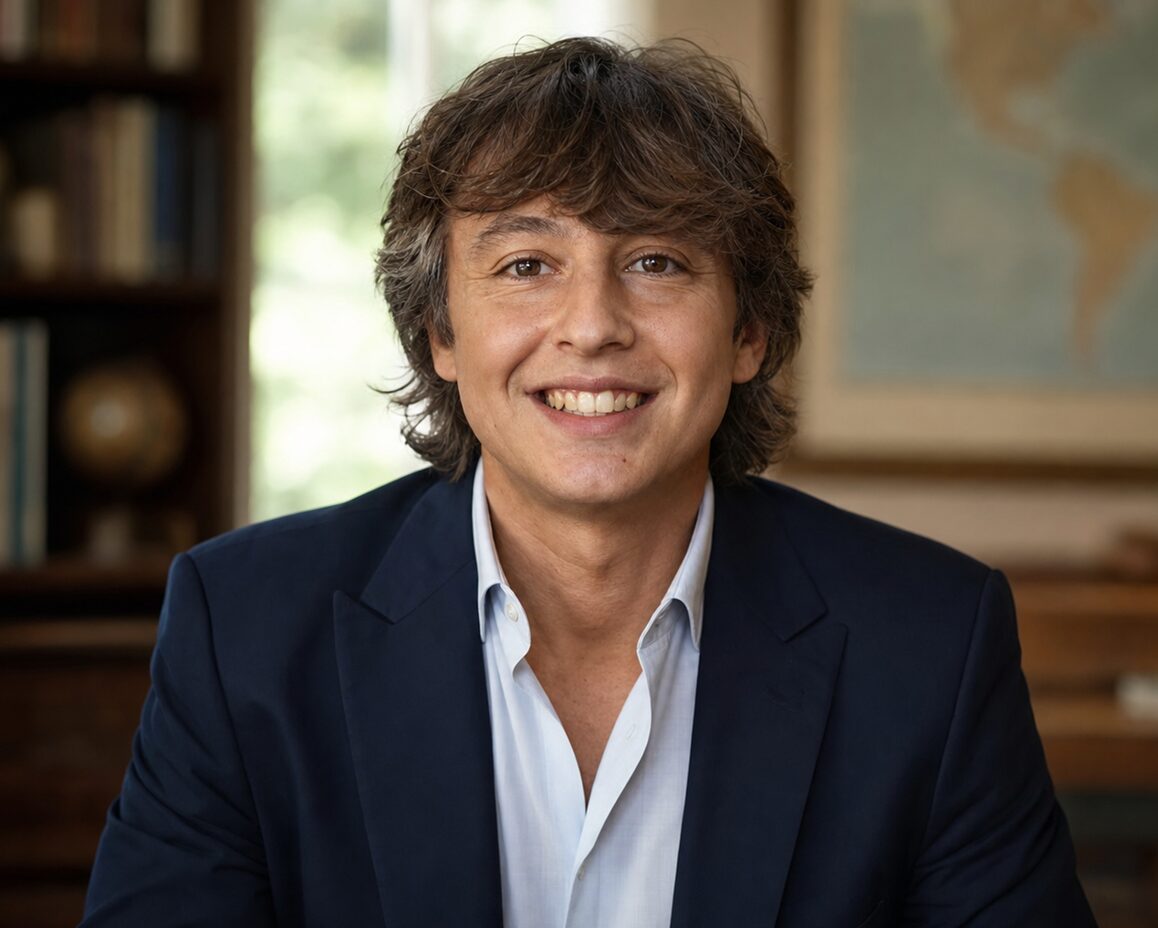
Meet Leo: The Heartbeat Behind ‘A Country A Month’
Journeying through the pages of A Country A Month, you might often feel the rhythm of a storyteller’s heartbeat, pulsating through each line, each image, and each adventure shared. That heartbeat belongs to none other than our remarkable website editor, Leo.
With a lens in one hand and a pen in the other, Leo seamlessly marries his passions for photography and writing. His eye captures moments that words can barely describe, yet his eloquence brings those images to life, transcending borders and connecting us all through shared stories. An avid traveler, every country he’s visited has added another chapter to his expansive tale, and through our platform, he generously shares these chapters with us.