The short answer: Mexico has no dedicated retiree visa — retirees qualify for the Temporary Resident visa under “economic solvency,” proving either income (roughly $2,600–$4,400/month) or savings (roughly $45,000–$75,000 held about twelve months in your own name). Because the income bar sits above a typical solo Social Security check, most modest retirees use the savings route. You apply at a U.S. consulate, enter Mexico on a ~180-day visa, then complete the canje at an immigration office within 30 days to get your resident card.
This is the chapter where Mexico is harder than the brochures suggest, and where a clear head now saves you a heartbreak later. The paperwork itself is manageable. The surprise that catches careful retirees off guard is not a form — it’s a number. So let’s face that number squarely, then build the path around it. (Every figure here is the kind that changes: thresholds are set as multiples of a Mexican unit called the UMA, they rise each January, and they vary by roughly 5–10% from one consulate to the next. Confirm the current numbers with your consulate before you act.)
This summarizes the visa chapter of No-Nonsense Guide to Retiring in Mexico by Leo Sotropa — the full reference table, both routes, and the step-by-step process.
The number that surprises everyone
The income bar for a Temporary Resident visa is high, and for many solo Social Security retirees it sits above their monthly check. The most authoritative current calculation puts the figure near the top of the range, around $4,400/month; across 2025 and 2026, consulates have quoted requirements roughly in the $2,600–$4,400/month band depending on their math. Sit with what that means: a solo retiree living on $1,500 or $1,800 of Social Security does not meet the income test at any consulate — not the friendly ones, not the strict ones. For a typical single retiree, monthly income is not the door into Mexico. Something else is.
The savings route: your real door
Here is the relief. Mexico offers a second qualifying path, and it’s the one most modest retirees actually use: instead of proving monthly income, you prove a lump sum. The authoritative calculation puts the Temporary savings figure near $75,000, and in practice many consulates land below that, so the realistic planning band is $45,000–$75,000 held in your own name for about the prior twelve months.
Two rules inside the savings route trip people up, so know them now. First, the money has to be in your own name — an account statement in someone else’s name will not do. Second, certain assets do not count: cryptocurrency and precious metals are not accepted as qualifying savings. So if your cushion sits in Bitcoin or gold coins, convert it into a recognized account and let it season before it can qualify you. For many readers, the path into Mexico runs straight through a documented savings balance — from a home sale, a refinance, or a consolidated nest egg — which is a decision to plan months ahead, not weeks.
Couples qualify more easily than you’d think
If you’re a couple, you do not double the requirement. The principal applicant shows the full income or savings figure, and then you add a relatively modest amount for the dependent spouse — on the order of an extra $1,434/month of income, or the equivalent in savings. Because the add-on is far smaller than a second full requirement, couples often qualify more easily, per person, than a solo retiree does. One spouse can carry the main figure while the other is covered by the smaller dependent amount.
If you fall short of both
What if you don’t clear the income bar and your savings aren’t seasoned yet? You’re not stuck. Many people in exactly your position visit Mexico first on the standard tourist permit (commonly up to 180 days), use that runway to live in their chosen town, test the budget, and arrange their savings documentation, and then apply for residency once their qualifying balance is in place. It’s a slower on-ramp, but a real and common one.
The documents you’ll assemble
The typical file a consulate wants is shorter than your fears: a valid passport; the visa application form; a passport-style photo; your proof of income (commonly six to twelve months of statements) or proof of savings (about twelve months); your appointment confirmation; and the consular fee, often cited around $48 for the application. Budget several hundred dollars in total once you add the separate government fees charged inside Mexico when your resident card is issued.
The thing that actually carries weight is not the length of the list; it’s the quality of the file. Clean, complete, consistent statements in your own name, with the numbers clearly clearing whichever bar you’re using, are what move a consular interview along. A messy file creates delay — not a missing exotic document.
The process, step by step
- Apply at the consulate that serves you. Book the appointment early (waits vary widely by city), attend the interview, and if approved receive a visa sticker in your passport. That entry visa is typically valid for about 180 days, meaning you have roughly six months to use it to enter Mexico.
- Enter Mexico on that visa. Crossing the border or landing at the airport on your approved visa starts the clock on the next step.
- Complete the canje at INM within 30 days. This is the part people forget at their peril. Within 30 days of entering, you go to a Mexican immigration office (INM), submit the forms, give your biometrics, and pay the in-country fees. Your physical resident card commonly arrives within about two to six weeks. Miss the 30-day window and you can undo the whole consular effort, so put it at the very top of your arrival to-do list.
- Renew on schedule. A Temporary Resident card is generally issued for one year first, then renewable to a four-year total. After four years on Temporary, you convert to Permanent.
From Temporary to Permanent
Most retirees enter on Temporary and, after holding it for four years, convert to Permanent Residency from inside Mexico — with no new consulate trip and generally no new financial proof for that standard conversion. That is the gentle path, and the one to plan for. Be wary of applying for Permanent directly from the consulate: the financial bars for direct Permanent Residency are several times the Temporary ones, and consulates increasingly expect a direct-Permanent applicant to clearly be of retirement age. For this book’s audience, the clean strategy is usually Temporary first, then convert.
Remember, too, that the canje and the resident card are exactly what unlock the rest of your practical life: a Mexican bank account, a CLABE for direct deposit, the ability to hold a Temporary Import Permit for a car as a Temporary Resident, and the local registrations you’ll do on arrival. The card is not just permission to stay — it’s the key that opens the next several doors.
The mistakes that cause delay
A handful of avoidable errors account for most of the trouble. The first is treating every quoted figure as fixed: thresholds are tied to the UMA, rise each January, and vary by consulate, so a number from a forum post two years old can be badly stale — confirm in writing with the consulate that serves your state. The second is a savings balance that isn’t seasoned: the money generally needs to have sat in your own account for about twelve months, so a sum shuffled in last week won’t do, and crypto or precious metals have to be converted and left to season first. The third is missing the 30-day canje window after you enter Mexico, which can undo the entire consular effort. And the fourth is chasing direct Permanent Residency to “save a step” — the direct-Permanent bars are several times higher, and for most retirees the clean path is Temporary first, then convert after four years. None of these requires genius to avoid; they just require knowing they exist.
Visa reference table
| Item | What to plan for |
|---|---|
| Visa type | Temporary Residency under “economic solvency” (no dedicated retiree visa) |
| Income route | Roughly $2,600–$4,400/month (often above a solo Social Security check) |
| Savings route | Roughly $45,000–$75,000 held ~12 months, in your own name |
| Dependent spouse add-on | Roughly +$1,434/month, or the savings equivalent |
| What does NOT count | Cryptocurrency and precious metals; statements must be in your own name |
| Consular fee | Often ~$48 for the application; budget several hundred total with in-Mexico fees |
| Entry visa | Sticker valid ~180 days to enter Mexico |
| The canje | Complete at INM within 30 days; card in ~2–6 weeks |
| Renewals | 1 year first, then renewable to a 4-year total; convert to Permanent after |
| Volatility | Thresholds rise with UMA each January; vary ±5–10% by consulate — verify |
Want the full reference table with every flag, plus how the visa route connects to your housing and money plan? It’s in No-Nonsense Guide to Retiring in Mexico.
FAQ
Is there a retiree visa for Mexico?
No. Retirees qualify for the Temporary Resident visa under “economic solvency,” proving either income or savings. There is no dedicated retirement visa.
How much income do I need for Mexican residency?
Roughly $2,600–$4,400/month depending on the consulate, which is often above a solo Social Security check. If you fall short, you can qualify with savings of about $45,000–$75,000 held twelve months instead.
What is the canje?
It’s the in-country exchange step: within 30 days of entering Mexico on your visa, you visit an INM immigration office for biometrics and fees, and receive your physical resident card in about two to six weeks. Missing the 30-day window can undo your whole application.
Keep reading: Can you retire in Mexico on Social Security? · Moving to Mexico as an American retiree · The complete guide to retiring in Mexico
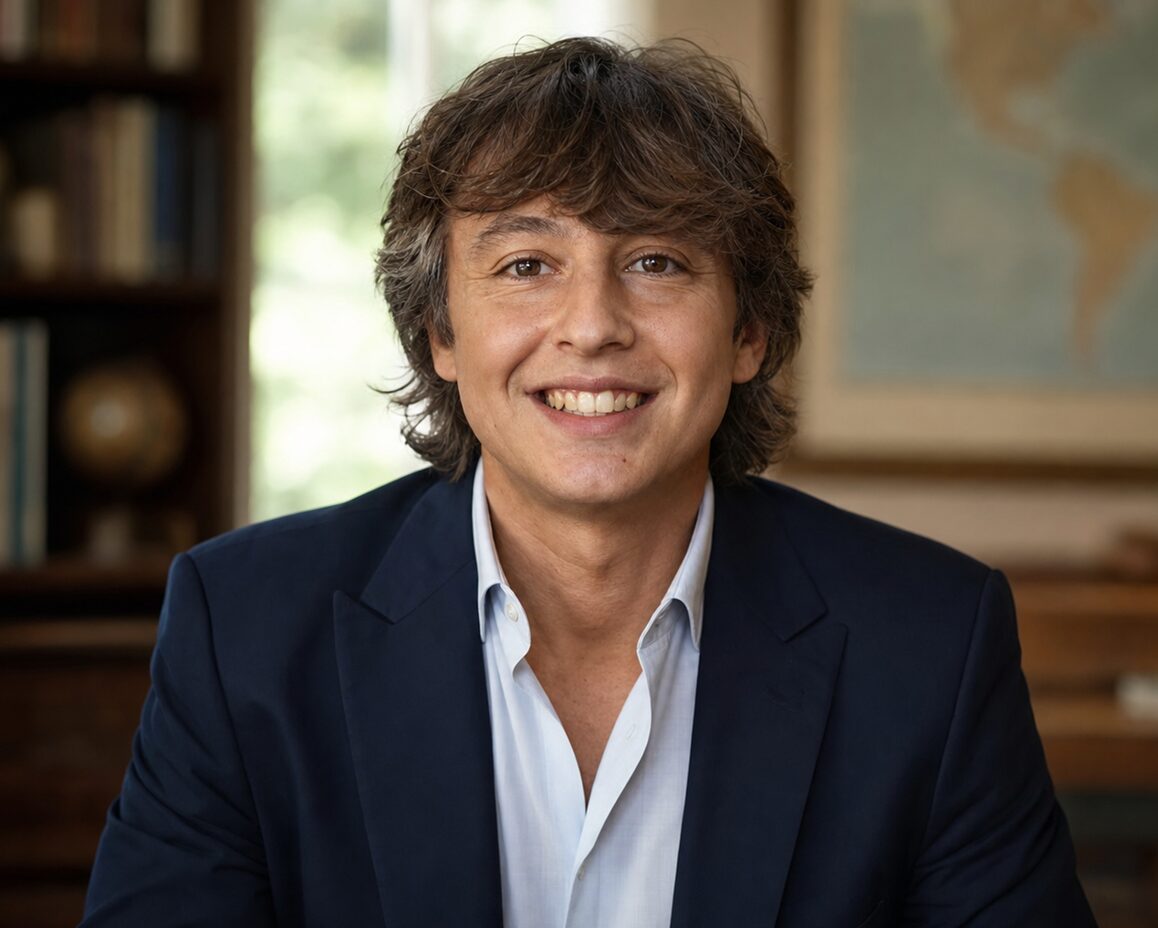
Meet Leo: The Heartbeat Behind ‘A Country A Month’
Journeying through the pages of A Country A Month, you might often feel the rhythm of a storyteller’s heartbeat, pulsating through each line, each image, and each adventure shared. That heartbeat belongs to none other than our remarkable website editor, Leo.
With a lens in one hand and a pen in the other, Leo seamlessly marries his passions for photography and writing. His eye captures moments that words can barely describe, yet his eloquence brings those images to life, transcending borders and connecting us all through shared stories. An avid traveler, every country he’s visited has added another chapter to his expansive tale, and through our platform, he generously shares these chapters with us.