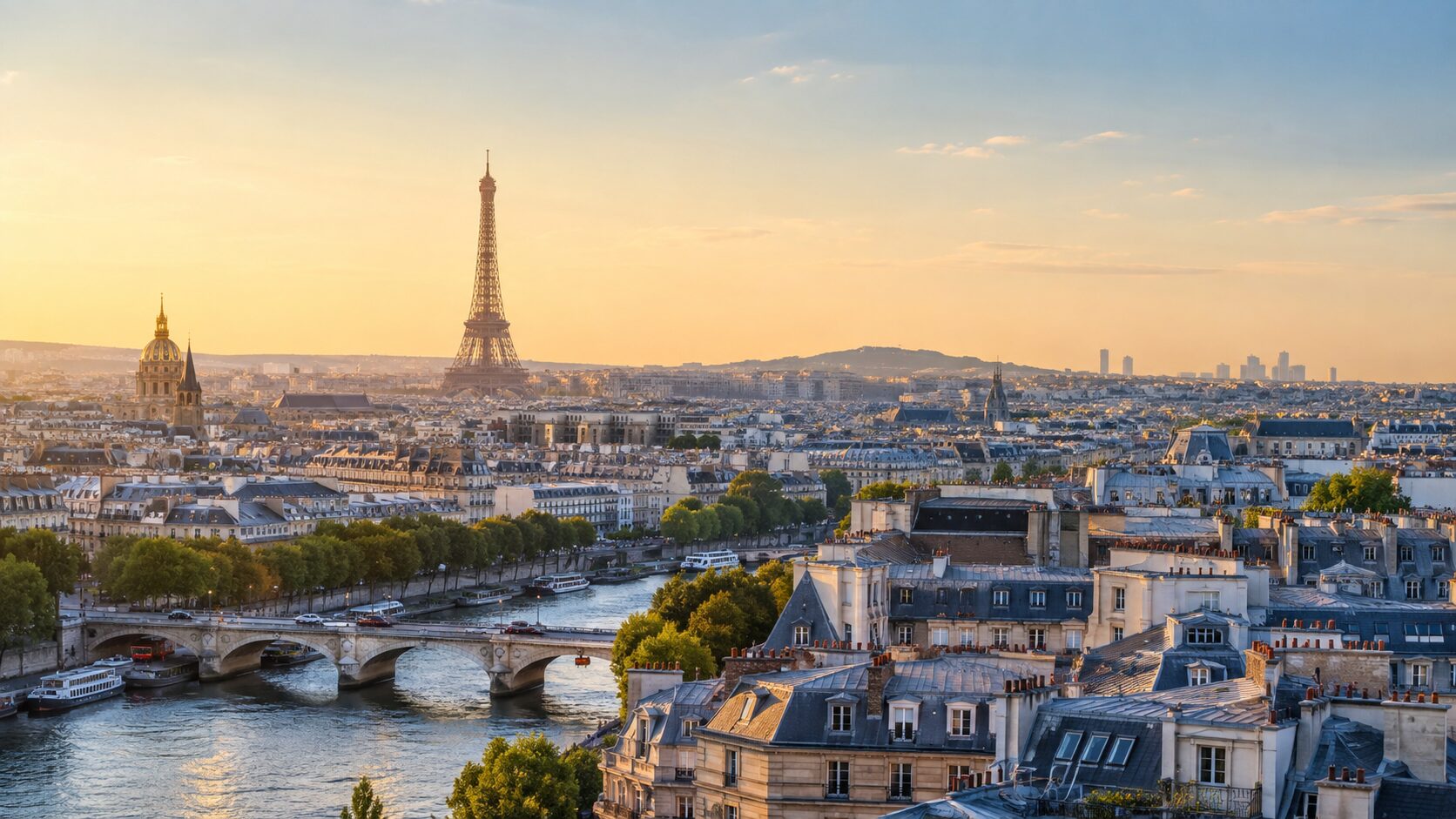
Paris rewards travelers who plan a few essentials and leave room for discovery. The famous sights deserve their reputation, but the city becomes memorable in the spaces between them: a morning bakery queue, a shaded square, a neighborhood market, or an unhurried walk beside the Seine. This complete Paris travel guide explains how to build a first trip that feels ambitious without becoming exhausting.
Paris at a glance
Paris is divided into 20 arrondissements that spiral clockwise from the center. The final two digits of a postal code usually identify the arrondissement: 75004 is the 4th, for example. Visitors do not need to memorize all 20. Think instead in clusters: the historic center and islands; the Left Bank; the grand western monuments; Montmartre in the north; and the more residential eastern districts.
For a first visit, four full days is comfortable. Three days covers the essentials with disciplined planning, while five to seven days gives you time for neighborhood wandering, smaller museums, and a day trip. Our three-day Paris itinerary groups sights geographically so you spend less time crossing the city.
When to visit Paris
Spring and autumn usually offer the best balance of walking weather and long sightseeing days, although popular periods can still be busy. Summer brings extended daylight, outdoor terraces, and major events, along with higher demand and occasional heat. Winter is colder and darker but can be rewarding for museums, dining, and lower-season atmosphere. Always check the calendar for French public holidays, temporary exhibitions, and events before reserving flights.
Where to stay
The best base is not automatically the neighborhood with the most monuments. Choose an area that matches the evenings you want and is near more than one useful transit line.
- 1st arrondissement: exceptionally central for the Louvre and Seine, but often expensive.
- Le Marais, 3rd and 4th: historic streets, shops, museums, and an active evening scene.
- Latin Quarter, 5th: lively streets, student energy, and easy access to the islands.
- Saint-Germain-des-Prés, 6th: elegant, walkable, and romantic, generally at a premium.
- 7th: convenient for the Eiffel Tower and quieter at night.
- 9th: a useful compromise for transport, restaurants, and access to central Paris.
- Montmartre, 18th: strong atmosphere and views, but hills and a less central position.
- 11th: excellent for restaurants and nightlife, with better-value possibilities than the postcard center.
Read our detailed where to stay in Paris guide before booking.
Essential things to do
See the Eiffel Tower from more than one angle
Reserve a timed ascent if going up matters to you. The official Eiffel Tower site notes that morning and later-evening periods are often quieter than midday. Even without a ticket, the gardens, esplanade viewpoints, Champ de Mars, and Trocadéro area create a satisfying visit. Buy only through the official Eiffel Tower website.
Give the Louvre a clear purpose
The Louvre is too large for a completionist visit. Choose a collection, wing, or short list of works, reserve a time slot, and stop before fatigue erases the pleasure. The museum is normally closed on Tuesdays and recommends timed booking, including for visitors eligible for free entry. Confirm current details on the official Louvre website.
Walk the historic heart
Connect Île de la Cité, Notre-Dame, the Seine quays, the Latin Quarter, and the Marais on foot. Entry to Notre-Dame Cathedral is free; its official site warns against third parties selling supposedly special admission. An optional free time slot may reduce waiting.
Choose experiences, not just landmarks
Add one activity that slows the pace: a food market, a small museum, a canal walk, Luxembourg Gardens, Père Lachaise, a covered passage, or an evening Seine cruise. See our best things to do in Paris for a prioritized list.
Getting around Paris
Central Paris is wonderfully walkable, but the Metro saves energy. RER trains are useful for some cross-city and regional journeys; verify that your ticket covers the destination. RATP currently offers separate Metro-Train-RER, Bus-Tram, airport, and unlimited visitor products. Ticket rules and prices change, so compare your actual journeys on the official RATP visitor page rather than automatically buying the most visible pass.
Validate as required, keep your ticket or digital proof until you have fully exited, and do not block train doors while checking directions. Walking one way and taking transit back is often more enjoyable than linking every short distance by Metro.
What to eat in Paris
Plan food by occasion, not by collecting famous restaurant names. A bakery breakfast, market picnic, neighborhood lunch formula, classic bistro dinner, and deliberate pastry stop show different sides of the city. Say bonjour when entering a small business, wait to be seated unless the setup is clearly self-service, and ask for l’addition when ready to pay. Our Paris food guide explains what to order and how to avoid dining near a landmark simply because you are hungry.
How much does Paris cost?
Accommodation is usually the largest expense, followed by ticketed attractions and restaurant meals. Save strategically: compare neighborhoods, use public transport, choose one paid headline sight per day, look for eligibility-based museum admission, picnic occasionally, and drink tap water where appropriate. Do not build a budget around old price lists. Check official prices shortly before traveling and use our Paris budget guide to decide where to spend and where to save.
A simple four-day plan
- Day one: Île de la Cité, Notre-Dame, Latin Quarter, and a Seine walk.
- Day two: Louvre or Musée d’Orsay, Tuileries, and the grand western axis.
- Day three: Eiffel Tower area, a neighborhood lunch, and an evening river experience.
- Day four: Montmartre in the morning, then the Marais or eastern Paris.
Reserve only the fixed points, then build flexible walking blocks around them. A good Paris day usually contains one demanding museum or monument, one neighborhood, and one meal worth anticipating.
First-time mistakes to avoid
- Scheduling major sights in distant districts back-to-back.
- Assuming every museum opens every day.
- Buying tickets from unofficial resellers without checking the operator.
- Eating beside a landmark without looking at the menu or recent reviews.
- Carrying valuables loosely in crowded transit areas.
- Trying to see Paris only through a checklist.
For arrival, etiquette, connectivity, safety, and packing advice, read our Paris first-time tips.
Frequently asked questions
How many days do you need in Paris?
Three full days can cover major highlights. Four or five days creates a better balance between landmarks and neighborhoods.
Do you need a car?
No. A car is usually an inconvenience for a central Paris visit. Walking, Metro, RER, buses, and licensed taxis cover typical visitor needs.
Should you book Paris attractions in advance?
Book any must-do timed attraction through its official website, especially the Eiffel Tower and major museums. Keep the rest of the day flexible.
Is Paris suitable for a first international trip?
Yes. The tourism infrastructure is extensive, but learning a few French courtesies and understanding the transport system will make the experience smoother.
Plan a Paris trip that feels like yours
The best Paris itinerary combines icons with ordinary city life. Choose a few non-negotiable sights, organize them by neighborhood, and protect time to walk, eat, and notice where you are. For a deeper planning companion, look for the Ultimate Paris City Guide from A Country A Month, then use the focused guides linked above to shape each day.
How to think about Paris before you book
The useful mental map of Paris is a dense, walkable core organized by twenty arrondissements, the Seine, and distinct neighborhood clusters. A successful itinerary therefore starts with clusters, not a ranked list copied from a search result. Mark the experiences that truly matter, place them on a map, and build each day around one demanding anchor plus nearby streets, meals, and restorative time.
Separate fixed decisions from flexible ones. Flights, lodging, a limited-entry landmark, and a must-see performance may deserve early commitment. A park walk, market visit, casual meal, or neighborhood detour usually benefits from flexibility. This distinction protects the trip from becoming a chain of appointments.
Count full usable days rather than hotel nights. Arrival time, immigration, airport transport, luggage storage, jet lag, and an early departure can turn two nominal travel days into fragments. Give the first evening a simple neighborhood plan and keep the final morning close to the route out of the city.
Choosing dates and understanding the seasons
Expect busy springs and autumns, long summer evenings with possible heat, and quieter winter days with shorter daylight. No month guarantees perfect conditions, so compare daylight, typical temperature, rainfall, local holidays, school calendars, and the events that matter to you. A cheaper week is poor value if the attraction at the center of the trip is closed.
Shoulder-season labels are increasingly unreliable. A famous festival, school break, sporting event, or convention can fill hotels outside the traditional peak. Search your exact dates, then compare refundable lodging before buying nonrefundable transportation.
Build a weather version of every important day. Identify which outdoor route can move, which museum needs a reservation, and where you could pause indoors without crossing the city. Weather resilience is more useful than a minute-by-minute schedule.
Understanding the principal areas
The historic center
The historic center works best for travelers interested in the islands, Notre-Dame, the Louvre surroundings, and direct walks along both banks of the Seine. Do not judge it only by straight-line distance. Map the stations, evening plans, and first appointment of the next morning, then check the precise block and the route back after dark.
The Latin Quarter
The Latin Quarter works best for travelers interested in student energy, old streets, the Panthéon, gardens, bookshops, and lively dining. Do not judge it only by straight-line distance. Map the stations, evening plans, and first appointment of the next morning, then check the precise block and the route back after dark.
Saint-Germain-des-Prés
Saint-Germain-des-Prés works best for travelers interested in elegant streets, galleries, cafes, and an exceptionally walkable but expensive base. Do not judge it only by straight-line distance. Map the stations, evening plans, and first appointment of the next morning, then check the precise block and the route back after dark.
Le Marais
Le Marais works best for travelers interested in historic architecture, museums, shopping, Jewish heritage, and active evenings. Do not judge it only by straight-line distance. Map the stations, evening plans, and first appointment of the next morning, then check the precise block and the route back after dark.
The 7th arrondissement
The 7th arrondissement works best for travelers interested in Eiffel Tower access and polished residential streets that can become quiet after sightseeing hours. Do not judge it only by straight-line distance. Map the stations, evening plans, and first appointment of the next morning, then check the precise block and the route back after dark.
The 9th arrondissement
The 9th arrondissement works best for travelers interested in department stores, covered passages, restaurants, and useful transport at a central compromise. Do not judge it only by straight-line distance. Map the stations, evening plans, and first appointment of the next morning, then check the precise block and the route back after dark.
Montmartre
Montmartre works best for travelers interested in hilltop views, artistic history, stairs, village-like side streets, and concentrated crowds near Sacré-Cœur. Do not judge it only by straight-line distance. Map the stations, evening plans, and first appointment of the next morning, then check the precise block and the route back after dark.
The 11th arrondissement
The 11th arrondissement works best for travelers interested in restaurants, nightlife, neighborhood markets, and a more residential version of contemporary Paris. Do not judge it only by straight-line distance. Map the stations, evening plans, and first appointment of the next morning, then check the precise block and the route back after dark.
Signature experiences and how to plan them
The Eiffel Tower area
Reserve an ascent only if it matters, then appreciate the structure from several public viewpoints and river approaches. Check the official operator for current hours, closures, ticket rules, accessibility, and photography policies. Build nearby streets or a meal around the experience so that a delay does not unravel the entire day.
A purposeful Louvre visit
Choose a wing, collection, or small list of works instead of attempting to complete the museum. Check the official operator for current hours, closures, ticket rules, accessibility, and photography policies. Build nearby streets or a meal around the experience so that a delay does not unravel the entire day.
The historic islands
Connect Notre-Dame, Île de la Cité, Île Saint-Louis, the quays, and the Latin Quarter on foot. Check the official operator for current hours, closures, ticket rules, accessibility, and photography policies. Build nearby streets or a meal around the experience so that a delay does not unravel the entire day.
The Musée d’Orsay or another focused museum
Select collections by interest and give yourself permission to stop before museum fatigue. Check the official operator for current hours, closures, ticket rules, accessibility, and photography policies. Build nearby streets or a meal around the experience so that a delay does not unravel the entire day.
Montmartre early
Arrive before the busiest period, then leave the main axis for quieter streets and a downhill walk. Check the official operator for current hours, closures, ticket rules, accessibility, and photography policies. Build nearby streets or a meal around the experience so that a delay does not unravel the entire day.
A Seine evening
Walk the quays, use a bridge as a viewpoint, or choose a cruise after comparing route and timing. Check the official operator for current hours, closures, ticket rules, accessibility, and photography policies. Build nearby streets or a meal around the experience so that a delay does not unravel the entire day.
A market morning
Browse as a customer, buy a picnic or snack, and respect the working rhythm of neighborhood vendors. Check the official operator for current hours, closures, ticket rules, accessibility, and photography policies. Build nearby streets or a meal around the experience so that a delay does not unravel the entire day.
Covered passages
Use historic passages as an architectural and shopping walk, especially when the weather turns. Check the official operator for current hours, closures, ticket rules, accessibility, and photography policies. Build nearby streets or a meal around the experience so that a delay does not unravel the entire day.
A major garden
Let Luxembourg Gardens, the Tuileries, or another park provide rest rather than treating it as another checkpoint. Check the official operator for current hours, closures, ticket rules, accessibility, and photography policies. Build nearby streets or a meal around the experience so that a delay does not unravel the entire day.
Eastern Paris
Add Canal Saint-Martin, Père Lachaise, Belleville, or the 11th when you want daily life beyond the monumental center. Check the official operator for current hours, closures, ticket rules, accessibility, and photography policies. Build nearby streets or a meal around the experience so that a delay does not unravel the entire day.
Getting around Paris without wasting energy
The practical network is the Metro, RER, buses, trams, and walking; the right ticket depends on the exact zones and journeys rather than the most visible visitor product. Use a live route planner, but read the proposed journey rather than following it blindly. The fastest result may require a difficult transfer, while a slightly slower route can offer elevators, fewer stairs, or a direct ride.
Walking remains part of the experience, but map estimates do not show heat, crowds, hills, cobbles, station corridors, security lines, or photo stops. Plan walking within a cluster and use transit between clusters. Comfortable, broken-in footwear matters more than packing an ambitious list of outfits.
For airport transfers, compare total door-to-door time. A premium express is not always fastest once the hotel connection is included, and the cheapest bus can be inconvenient with luggage or a very early flight. Verify the operator, terminal, last departure, and disruption policy shortly before travel.
Where to stay: a decision method
Start with the evening experience you want. A central landmark district may shorten morning sightseeing but leave dinner choices expensive or streets quiet. A lively neighborhood may improve every evening while adding one predictable train ride to the first attraction.
Open a map and test three real journeys from each candidate hotel: arrival from the airport or station, a representative sightseeing morning, and the latest planned evening. Read recent reviews for noise, room size, climate control, lifts, construction, and the immediate block rather than relying on an area name.
Compare the complete price: taxes, mandatory fees, breakfast, cancellation terms, deposits, and transport. Saving a small amount per night is rarely worthwhile if every day begins with multiple transfers or the room cannot provide adequate sleep.
Eating well in Paris
A balanced food plan might include a bakery breakfast, a market picnic, a bistro lunch formula, cheese chosen with help, seasonal pastries, North African cooking, a neighborhood wine bar, and a classic brasserie meal. These are possibilities rather than assignments. Choose dishes that fit your interests, dietary needs, and the neighborhood already on the itinerary.
Reserve only the meals that define the trip. For everything else, keep a short saved list in each district and look for places serving local customers. Check current opening days, because an excellent restaurant is useless when it is across town or closed after a long museum visit.
Communicate allergies clearly and directly. A translated card can help, but it does not replace a conversation about ingredients and cross-contact when the risk is serious. Confirm with the restaurant instead of relying exclusively on old reviews or a third-party menu.
Budgeting without reducing the trip to a spreadsheet
Price the large categories first: lodging, long-distance transport, airport transfers, insurance, and the handful of paid attractions you genuinely value. Then set daily ranges for food, local transport, and discretionary purchases. Current official prices matter more than a budget copied from an older article.
Use free public space deliberately. Parks, streets, markets, river walks, bridges, viewpoints, religious buildings, and neighborhood architecture are not consolation prizes; they are often where a city becomes memorable. Alternate paid interiors with free outdoor exploration.
Leave a contingency for weather changes, missed connections, luggage storage, medical needs, and spontaneous opportunities. A budget with no margin encourages poor decisions when the day changes. Track the total loosely, then spend where the experience is meaningfully better.
Reservations, tickets, and avoiding preventable disappointment
Use the official attraction or authorized operator whenever possible. Verify the exact venue, date, entry window, cancellation rule, identification requirement, and whether children or reduced-price visitors still require reservations. Save confirmations offline and take a screenshot of any QR code.
Do not stack limited-entry attractions back to back. Security, queues, transit disruption, and the temptation to linger make tight transfers stressful. One serious reservation in the morning and one flexible evening plan is often enough.
Recheck operating information a few days before arrival and again the night before. Temporary closures, demonstrations, strikes, private events, weather, and maintenance can change a sensible plan. Keep one alternate attraction in the same area.
Planning for different travelers
Families should treat meals, toilets, playgrounds, and downtime as itinerary anchors. Shorten museums, alternate adult and child priorities, and avoid promising a late evening after an early timed entry. A smaller plan completed happily beats a larger one completed in conflict.
Solo travelers gain flexibility but should still share the lodging address and broad plan with someone they trust. Choose comfortable late-night routes, protect phone battery, and use group tours selectively for experiences where context or company adds value.
Travelers with limited mobility should verify step-free routes with the operator, not only a general accessibility symbol. Historic surfaces, temporary lift outages, long station corridors, and entrance changes can matter. Contact accommodations and attractions directly for essential needs.
A practical planning workflow
First, write five priorities without looking at a map. Second, locate them and divide the city into natural clusters. Third, assign one cluster to each full day. Fourth, place the hardest reservation. Fifth, add meals, breaks, and an evening nearby. Only then consider optional additions.
Keep a short shared document containing addresses, reservation numbers, opening links, transport notes, and a daily map. Download it for offline use. Avoid a giant list in which critical information disappears among dozens of saved recommendations.
Each evening, check the next day’s weather, service alerts, and opening status. Move one optional item if the day already looks demanding. This five-minute reset keeps a good itinerary useful after reality begins changing it.
Frequently asked planning questions about Paris
How much should be booked? Reserve the few experiences that would cause real disappointment if missed, then protect flexibility around them. Popular does not automatically mean essential for your trip.
Is a city pass worthwhile? List the included attractions you would visit without the pass, check reservation rules, and compare the real total. Convenience can have value, but rushing to manufacture savings does not.
Should you take a day trip? Add one only when the destination is a genuine priority and the city itinerary still has breathing room. A day trip consumes more than the train time once station transfers and an early start are included.
What makes a first visit successful? In Paris, success is not completion. It is leaving with a clear sense of several neighborhoods, one or two cultural experiences, meals you enjoyed, and enough energy to notice the city between appointments.
Geographic discipline
Keep The historic center with the places naturally around it. This area is known for the islands, Notre-Dame, the Louvre surroundings, and direct walks along both banks of the Seine. A saved place across town is not automatically part of the same day; move it to another cluster or release it.
Time estimates
Add a margin to every transfer in Paris. Ticket checks, finding the correct entrance, station corridors, toilets, photographs, and a wrong turn are normal parts of travel. A plan that depends on perfect timing is already late.

Meet Leo: The Heartbeat Behind ‘A Country A Month’
Journeying through the pages of A Country A Month, you might often feel the rhythm of a storyteller’s heartbeat, pulsating through each line, each image, and each adventure shared. That heartbeat belongs to none other than our remarkable website editor, Leo.
With a lens in one hand and a pen in the other, Leo seamlessly marries his passions for photography and writing. His eye captures moments that words can barely describe, yet his eloquence brings those images to life, transcending borders and connecting us all through shared stories. An avid traveler, every country he’s visited has added another chapter to his expansive tale, and through our platform, he generously shares these chapters with us.