Tokyo becomes manageable when you stop imagining one center. It is a network of distinct districts joined by excellent trains, each with its own rhythm, food, shopping, parks, and nightlife.
How many days do you need?
Four full days provides a strong introduction. Three days covers the most famous districts at a fast pace, while five to seven days makes room for specialized interests and a day trip. Count full sightseeing days, especially when arriving after a long flight.
When to visit
Spring and autumn are popular for comfortable walking weather, but famous seasonal periods attract heavy demand. Summer is hot and humid, with a rainy period and later typhoon risk; winter is often crisp and comparatively dry. Exact seasonal timing varies, so avoid building the entire trip around a prediction.
Where to stay
Shinjuku and Shibuya offer nightlife and transport, Tokyo Station and Ginza suit central access, Ueno and Asakusa feel more traditional and can offer value, and Ebisu or Meguro provide calmer evenings. A hotel close to a useful station is often more valuable than a prestigious address. Compare options in our Tokyo neighborhood guide.
Essential Tokyo experiences
Contrast old and new
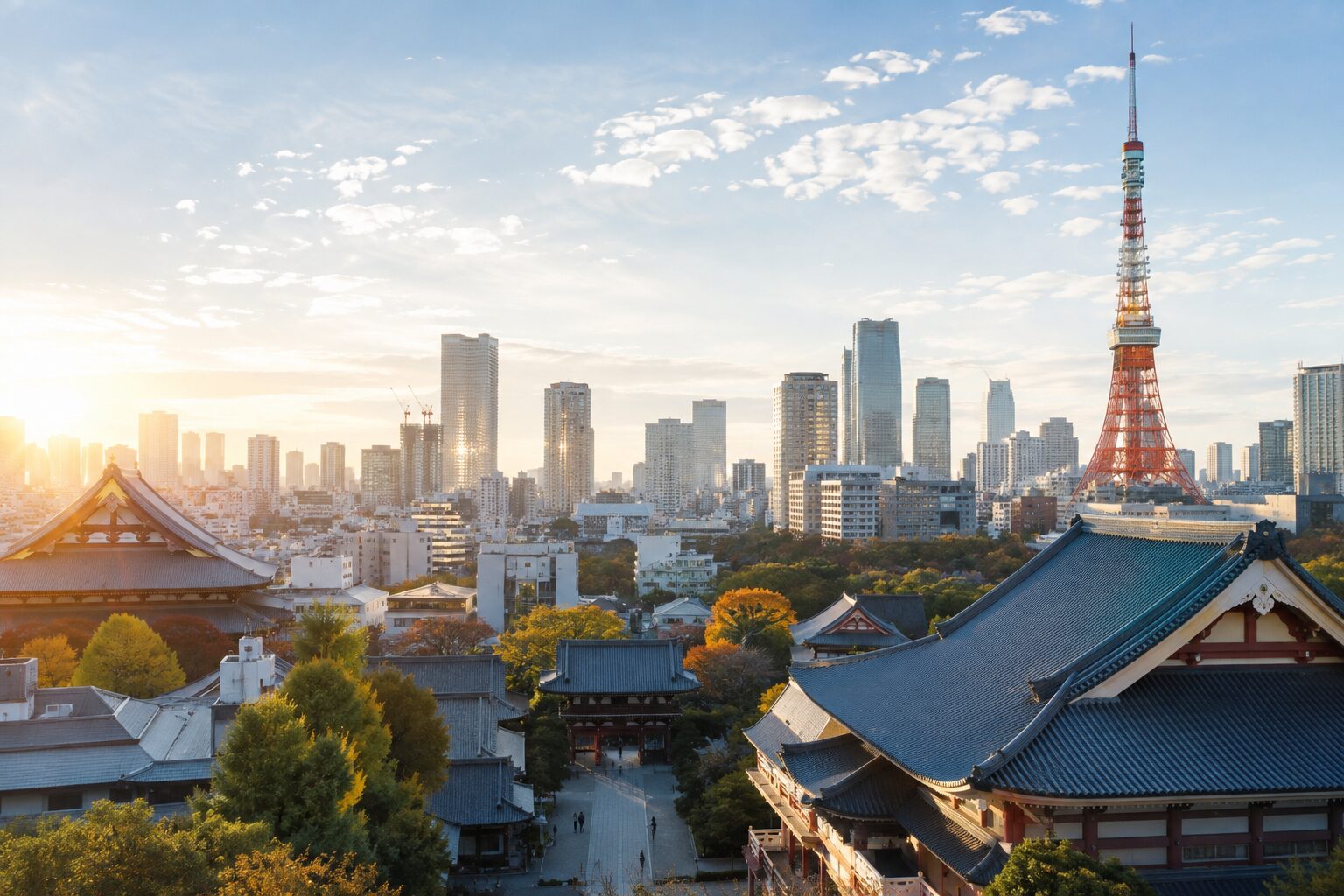
Pair the temple streets of Asakusa with contemporary Shibuya or Shinjuku. Tokyo’s appeal comes from transitions rather than a single landmark.
Visit a shrine or temple respectfully
Meiji Jingu, Senso-ji, and smaller neighborhood sites offer different experiences. Observe posted rules, keep worship areas clear, and treat ceremonies as living practice rather than performance.
See the city from above
Choose a public viewpoint or paid observation deck and check its reservation system. Clear winter days can offer long views; weather always matters.
Follow a personal interest
Anime, architecture, gardens, baseball, fashion, stationery, music, coffee, and technology can each shape an excellent half-day. Specialty districts work best when they match a real interest.
Eat across formats
Combine sushi, ramen, soba or udon, izakaya dishes, depachika food halls, bakeries, and convenience-store discoveries. Our Tokyo food guide explains ordering and etiquette.
Getting around
Rail and subway networks are operated by several companies, but route planners make transfers manageable. Rechargeable IC cards simplify many trips and small purchases, while some visitors benefit from specific passes only after comparing their actual route. See current guidance on the official GO TOKYO transport page.
Stations can be enormous. Follow exit numbers, allow transfer time, and avoid scheduling a reservation immediately after crossing the city.
A simple four-day plan
- Day one: Asakusa, Ueno, and an evening around Tokyo Station or Ginza.
- Day two: Meiji Jingu, Harajuku, Omotesando, and Shibuya.
- Day three: Tsukiji’s outer market area, a garden or museum, and Shinjuku.
- Day four: an interest-led district such as Yanaka, Kichijoji, Akihabara, Odaiba, or a day trip.
Etiquette that matters
- Keep voices low on trains and queue where indicated.
- Carry a small bag for rubbish because public bins can be limited.
- Do not tip in ordinary situations.
- Follow photography, smoking, and eating rules.
- Learn basic greetings and use translation tools politely.
Common mistakes
- Crossing the city repeatedly in one day.
- Assuming every train is covered by one pass.
- Ignoring station exit numbers.
- Planning every meal at viral restaurants.
- Expecting abundant public seating and rubbish bins.
- Skipping jet-lag recovery.
Frequently asked questions
Do you need Japanese?
No, but greetings, patience, and a translation app are helpful.
Is Tokyo expensive?
Hotels and special experiences can be costly, while transit and everyday meals can offer excellent value.
Do you need cash?
Cards and IC payments are widespread, but cash remains useful at some smaller businesses and machines.
Build Tokyo around curiosity
Choose a few anchors, group districts, and allow time for side streets and small discoveries. For a deeper planning companion, look for The Ultimate Guide to Tokyo from A Country A Month.
How to think about Tokyo before you book
The useful mental map of Tokyo is a network of large station-centered districts and quieter residential neighborhoods rather than a single downtown. A successful itinerary therefore starts with clusters, not a ranked list copied from a search result. Mark the experiences that truly matter, place them on a map, and build each day around one demanding anchor plus nearby streets, meals, and restorative time.
Separate fixed decisions from flexible ones. Flights, lodging, a limited-entry landmark, and a must-see performance may deserve early commitment. A park walk, market visit, casual meal, or neighborhood detour usually benefits from flexibility. This distinction protects the trip from becoming a chain of appointments.
Count full usable days rather than hotel nights. Arrival time, immigration, airport transport, luggage storage, jet lag, and an early departure can turn two nominal travel days into fragments. Give the first evening a simple neighborhood plan and keep the final morning close to the route out of the city.
Choosing dates and understanding the seasons
Expect humid summers, a rainy period, possible later-season storms, crisp winters, and heavily demanded spring and autumn weeks. No month guarantees perfect conditions, so compare daylight, typical temperature, rainfall, local holidays, school calendars, and the events that matter to you. A cheaper week is poor value if the attraction at the center of the trip is closed.
Shoulder-season labels are increasingly unreliable. A famous festival, school break, sporting event, or convention can fill hotels outside the traditional peak. Search your exact dates, then compare refundable lodging before buying nonrefundable transportation.
Build a weather version of every important day. Identify which outdoor route can move, which museum needs a reservation, and where you could pause indoors without crossing the city. Weather resilience is more useful than a minute-by-minute schedule.
Understanding the principal areas
Shinjuku
Shinjuku works best for travelers interested in major rail connections, department stores, viewpoints, restaurants, and nightlife spread across very different sides of the station. Do not judge it only by straight-line distance. Map the stations, evening plans, and first appointment of the next morning, then check the precise block and the route back after dark.
Shibuya
Shibuya works best for travelers interested in fashion, nightlife, modern city energy, and convenient access to western Tokyo. Do not judge it only by straight-line distance. Map the stations, evening plans, and first appointment of the next morning, then check the precise block and the route back after dark.
Tokyo Station and Marunouchi
Tokyo Station and Marunouchi works best for travelers interested in Shinkansen convenience, polished architecture, Ginza access, and central but often expensive hotels. Do not judge it only by straight-line distance. Map the stations, evening plans, and first appointment of the next morning, then check the precise block and the route back after dark.
Asakusa
Asakusa works best for travelers interested in Senso-ji, traditional streets, early-morning calm, river access, and longer rides west. Do not judge it only by straight-line distance. Map the stations, evening plans, and first appointment of the next morning, then check the precise block and the route back after dark.
Ueno
Ueno works best for travelers interested in major museums, a park, Ameyoko, practical rail links, and frequent lodging value. Do not judge it only by straight-line distance. Map the stations, evening plans, and first appointment of the next morning, then check the precise block and the route back after dark.
Ginza
Ginza works best for travelers interested in department stores, refined restaurants, architecture, and central subway connections. Do not judge it only by straight-line distance. Map the stations, evening plans, and first appointment of the next morning, then check the precise block and the route back after dark.
Ebisu and Meguro
Ebisu and Meguro works best for travelers interested in excellent dining, calmer evenings, and a neighborhood feel on useful rail lines. Do not judge it only by straight-line distance. Map the stations, evening plans, and first appointment of the next morning, then check the precise block and the route back after dark.
Kichijoji
Kichijoji works best for travelers interested in Inokashira Park, independent shops, relaxed dining, and a rewarding western-Tokyo base for repeat visitors. Do not judge it only by straight-line distance. Map the stations, evening plans, and first appointment of the next morning, then check the precise block and the route back after dark.
Signature experiences and how to plan them
Senso-ji early
Visit before peak crowds, observe worship respectfully, and explore Asakusa beyond the primary shopping approach. Check the official operator for current hours, closures, ticket rules, accessibility, and photography policies. Build nearby streets or a meal around the experience so that a delay does not unravel the entire day.
Meiji Jingu
Walk the forested approach quietly and connect the shrine with Harajuku and Omotesando. Check the official operator for current hours, closures, ticket rules, accessibility, and photography policies. Build nearby streets or a meal around the experience so that a delay does not unravel the entire day.
Shibuya beyond the crossing
Use the famous intersection as an introduction, then explore side streets, shopping, food, and a viewpoint. Check the official operator for current hours, closures, ticket rules, accessibility, and photography policies. Build nearby streets or a meal around the experience so that a delay does not unravel the entire day.
Shinjuku after dark
Choose between department stores, observation views, restaurants, or small nightlife areas rather than wandering without a plan. Check the official operator for current hours, closures, ticket rules, accessibility, and photography policies. Build nearby streets or a meal around the experience so that a delay does not unravel the entire day.
A garden
Use a landscaped garden for seasonal detail, rest, and a different understanding of urban space. Check the official operator for current hours, closures, ticket rules, accessibility, and photography policies. Build nearby streets or a meal around the experience so that a delay does not unravel the entire day.
A museum selected by interest
Choose art, history, design, animation, science, or craft instead of visiting an institution only because it is famous. Check the official operator for current hours, closures, ticket rules, accessibility, and photography policies. Build nearby streets or a meal around the experience so that a delay does not unravel the entire day.
A personal-interest district
Let anime, architecture, music, stationery, coffee, fashion, or baseball determine a meaningful half-day. Check the official operator for current hours, closures, ticket rules, accessibility, and photography policies. Build nearby streets or a meal around the experience so that a delay does not unravel the entire day.
A depachika
Browse a department-store basement for prepared dishes and gifts while respecting closing times and eating rules. Check the official operator for current hours, closures, ticket rules, accessibility, and photography policies. Build nearby streets or a meal around the experience so that a delay does not unravel the entire day.
A neighborhood train ride
Explore Yanaka, Koenji, Kichijoji, Kagurazaka, or another lower-rise district at an unhurried pace. Check the official operator for current hours, closures, ticket rules, accessibility, and photography policies. Build nearby streets or a meal around the experience so that a delay does not unravel the entire day.
A skyline view
Compare public and paid viewpoints, reserve only when necessary, and accept that weather controls visibility. Check the official operator for current hours, closures, ticket rules, accessibility, and photography policies. Build nearby streets or a meal around the experience so that a delay does not unravel the entire day.
Getting around Tokyo without wasting energy
The practical network is interconnected JR, subway, and private rail systems; route planners and rechargeable IC cards make multiple operators manageable. Use a live route planner, but read the proposed journey rather than following it blindly. The fastest result may require a difficult transfer, while a slightly slower route can offer elevators, fewer stairs, or a direct ride.
Walking remains part of the experience, but map estimates do not show heat, crowds, hills, cobbles, station corridors, security lines, or photo stops. Plan walking within a cluster and use transit between clusters. Comfortable, broken-in footwear matters more than packing an ambitious list of outfits.
For airport transfers, compare total door-to-door time. A premium express is not always fastest once the hotel connection is included, and the cheapest bus can be inconvenient with luggage or a very early flight. Verify the operator, terminal, last departure, and disruption policy shortly before travel.
Where to stay: a decision method
Start with the evening experience you want. A central landmark district may shorten morning sightseeing but leave dinner choices expensive or streets quiet. A lively neighborhood may improve every evening while adding one predictable train ride to the first attraction.
Open a map and test three real journeys from each candidate hotel: arrival from the airport or station, a representative sightseeing morning, and the latest planned evening. Read recent reviews for noise, room size, climate control, lifts, construction, and the immediate block rather than relying on an area name.
Compare the complete price: taxes, mandatory fees, breakfast, cancellation terms, deposits, and transport. Saving a small amount per night is rarely worthwhile if every day begins with multiple transfers or the room cannot provide adequate sleep.
Eating well in Tokyo
A balanced food plan might include sushi at the right price level, ramen, soba or udon, tempura, yakitori, tonkatsu or curry rice, an izakaya meal, and a department-store food hall. These are possibilities rather than assignments. Choose dishes that fit your interests, dietary needs, and the neighborhood already on the itinerary.
Reserve only the meals that define the trip. For everything else, keep a short saved list in each district and look for places serving local customers. Check current opening days, because an excellent restaurant is useless when it is across town or closed after a long museum visit.
Communicate allergies clearly and directly. A translated card can help, but it does not replace a conversation about ingredients and cross-contact when the risk is serious. Confirm with the restaurant instead of relying exclusively on old reviews or a third-party menu.
Budgeting without reducing the trip to a spreadsheet
Price the large categories first: lodging, long-distance transport, airport transfers, insurance, and the handful of paid attractions you genuinely value. Then set daily ranges for food, local transport, and discretionary purchases. Current official prices matter more than a budget copied from an older article.
Use free public space deliberately. Parks, streets, markets, river walks, bridges, viewpoints, religious buildings, and neighborhood architecture are not consolation prizes; they are often where a city becomes memorable. Alternate paid interiors with free outdoor exploration.
Leave a contingency for weather changes, missed connections, luggage storage, medical needs, and spontaneous opportunities. A budget with no margin encourages poor decisions when the day changes. Track the total loosely, then spend where the experience is meaningfully better.
Reservations, tickets, and avoiding preventable disappointment
Use the official attraction or authorized operator whenever possible. Verify the exact venue, date, entry window, cancellation rule, identification requirement, and whether children or reduced-price visitors still require reservations. Save confirmations offline and take a screenshot of any QR code.
Do not stack limited-entry attractions back to back. Security, queues, transit disruption, and the temptation to linger make tight transfers stressful. One serious reservation in the morning and one flexible evening plan is often enough.
Recheck operating information a few days before arrival and again the night before. Temporary closures, demonstrations, strikes, private events, weather, and maintenance can change a sensible plan. Keep one alternate attraction in the same area.
Planning for different travelers
Families should treat meals, toilets, playgrounds, and downtime as itinerary anchors. Shorten museums, alternate adult and child priorities, and avoid promising a late evening after an early timed entry. A smaller plan completed happily beats a larger one completed in conflict.
Solo travelers gain flexibility but should still share the lodging address and broad plan with someone they trust. Choose comfortable late-night routes, protect phone battery, and use group tours selectively for experiences where context or company adds value.
Travelers with limited mobility should verify step-free routes with the operator, not only a general accessibility symbol. Historic surfaces, temporary lift outages, long station corridors, and entrance changes can matter. Contact accommodations and attractions directly for essential needs.
A practical planning workflow
First, write five priorities without looking at a map. Second, locate them and divide the city into natural clusters. Third, assign one cluster to each full day. Fourth, place the hardest reservation. Fifth, add meals, breaks, and an evening nearby. Only then consider optional additions.
Keep a short shared document containing addresses, reservation numbers, opening links, transport notes, and a daily map. Download it for offline use. Avoid a giant list in which critical information disappears among dozens of saved recommendations.
Each evening, check the next day’s weather, service alerts, and opening status. Move one optional item if the day already looks demanding. This five-minute reset keeps a good itinerary useful after reality begins changing it.
Frequently asked planning questions about Tokyo
How much should be booked? Reserve the few experiences that would cause real disappointment if missed, then protect flexibility around them. Popular does not automatically mean essential for your trip.
Is a city pass worthwhile? List the included attractions you would visit without the pass, check reservation rules, and compare the real total. Convenience can have value, but rushing to manufacture savings does not.
Should you take a day trip? Add one only when the destination is a genuine priority and the city itinerary still has breathing room. A day trip consumes more than the train time once station transfers and an early start are included.
What makes a first visit successful? In Tokyo, success is not completion. It is leaving with a clear sense of several neighborhoods, one or two cultural experiences, meals you enjoyed, and enough energy to notice the city between appointments.
Geographic discipline
Keep Shinjuku with the places naturally around it. This area is known for major rail connections, department stores, viewpoints, restaurants, and nightlife spread across very different sides of the station. A saved place across town is not automatically part of the same day; move it to another cluster or release it.
Time estimates
Add a margin to every transfer in Tokyo. Ticket checks, finding the correct entrance, station corridors, toilets, photographs, and a wrong turn are normal parts of travel. A plan that depends on perfect timing is already late.
Official information
For Shibuya beyond the crossing, read the venue or operator’s current page shortly before the visit. Use the famous intersection as an introduction, then explore side streets, shopping, food, and a viewpoint. Third-party summaries are useful for ideas but should not control a time-sensitive reservation.
Rest and attention
Schedule a genuine seated pause before concentration disappears. Rest is not time stolen from sightseeing; it is what allows the next neighborhood, artwork, meal, or performance to register as an experience rather than another task.
Flexible alternatives
Save one indoor and one outdoor alternative near Ueno. When weather, crowds, or a closure changes the day, choose the nearby substitute. Crossing Tokyo to rescue the original checklist usually compounds the problem.
Evening judgment
Decide each evening whether the next day needs subtraction. Check weather, transport notices, and opening information, then remove one optional stop before going to sleep. The resulting space often becomes the best hour of the trip.
Local businesses
In Ebisu and Meguro, spend with businesses that serve the neighborhood as well as visitors. Read the menu or service before entering, greet staff, and avoid occupying scarce space only for photographs. Small courtesies improve both value and interaction.
A useful map
Create a map layer for Kichijoji containing the main anchor, two meal possibilities, a rest stop, and the route onward. This is more useful on the street than dozens of unrelated pins distributed across Tokyo.
Opening-hour reality
Never assume that a famous place opens daily or admits the last visitor at its posted closing time. Entry cutoffs, worship, maintenance, private events, and seasonal schedules matter. Verify the exact date before committing the surrounding itinerary.
Quality over quantity
The purpose of visiting A skyline view is not merely to say it happened. Compare public and paid viewpoints, reserve only when necessary, and accept that weather controls visibility. Give the experience enough time, then remove a weaker item rather than turning both into rushed photographs.
Arrival buffer
For a timed entry, aim to reach the immediate area early but do not join an unofficial line without checking signs. Use the buffer for a short walk or coffee, then approach the correct entrance with identification and confirmation ready.
Departure buffer
End the final full day with luggage, checkout, and onward transport already understood. Keep essential documents and medication accessible, confirm the terminal or station, and avoid a late plan that depends on the last possible connection.
Geographic discipline
Keep Ueno with the places naturally around it. This area is known for major museums, a park, Ameyoko, practical rail links, and frequent lodging value. A saved place across town is not automatically part of the same day; move it to another cluster or release it.
Time estimates
Add a margin to every transfer in Tokyo. Ticket checks, finding the correct entrance, station corridors, toilets, photographs, and a wrong turn are normal parts of travel. A plan that depends on perfect timing is already late.
Official information
For A garden, read the venue or operator’s current page shortly before the visit. Use a landscaped garden for seasonal detail, rest, and a different understanding of urban space. Third-party summaries are useful for ideas but should not control a time-sensitive reservation.
Rest and attention
Schedule a genuine seated pause before concentration disappears. Rest is not time stolen from sightseeing; it is what allows the next neighborhood, artwork, meal, or performance to register as an experience rather than another task.
Flexible alternatives
Save one indoor and one outdoor alternative near Shinjuku. When weather, crowds, or a closure changes the day, choose the nearby substitute. Crossing Tokyo to rescue the original checklist usually compounds the problem.

Meet Leo: The Heartbeat Behind ‘A Country A Month’
Journeying through the pages of A Country A Month, you might often feel the rhythm of a storyteller’s heartbeat, pulsating through each line, each image, and each adventure shared. That heartbeat belongs to none other than our remarkable website editor, Leo.
With a lens in one hand and a pen in the other, Leo seamlessly marries his passions for photography and writing. His eye captures moments that words can barely describe, yet his eloquence brings those images to life, transcending borders and connecting us all through shared stories. An avid traveler, every country he’s visited has added another chapter to his expansive tale, and through our platform, he generously shares these chapters with us.