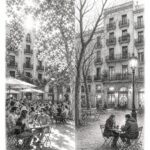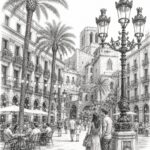
Three days in Barcelona is enough for a rewarding first visit when each day stays geographically coherent. This itinerary uses the strongest routes and planning advice from the complete guide, with demanding reservations placed early and enough space left for meals, streets, and the discoveries that make the city memorable.
Use this article with the complete Barcelona travel guide, the three-day itinerary, and the where-to-stay guide.
Every city has a short list of things you would regret missing, and Barcelona’s list is unusually front-loaded with buildings, not just views. This article is that list: the sights people cross oceans for, each with the practical truth attached, what it costs, how far ahead to book, when to go, and, where it matters, an honest worth-it verdict. If you see nothing else, see these; and where one is genuinely skippable for your trip, this article says so.
A note that will save you money and queues all week: Barcelona’s paid icons are not cheap, and several now run dynamic pricing that climbs the closer you book to your date. Book early, book direct where the venue allows it, and treat any third-party reseller charging well above the venue’s own listed range as a wrong turn. A second note, just as important: Barcelona’s two hardest-to-get sights, the Sagrada Familia and Park Guell, both run genuinely capped timed entry, not the soft, rarely-enforced kind some cities advertise. Arrive at the wrong hour without a slot already booked and you will not be waved in; you will be turned away at the gate, full stop. Build your whole week around those two bookings first, then fill in everything else around them.
Sagrada Familia
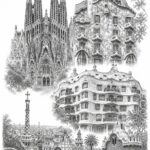
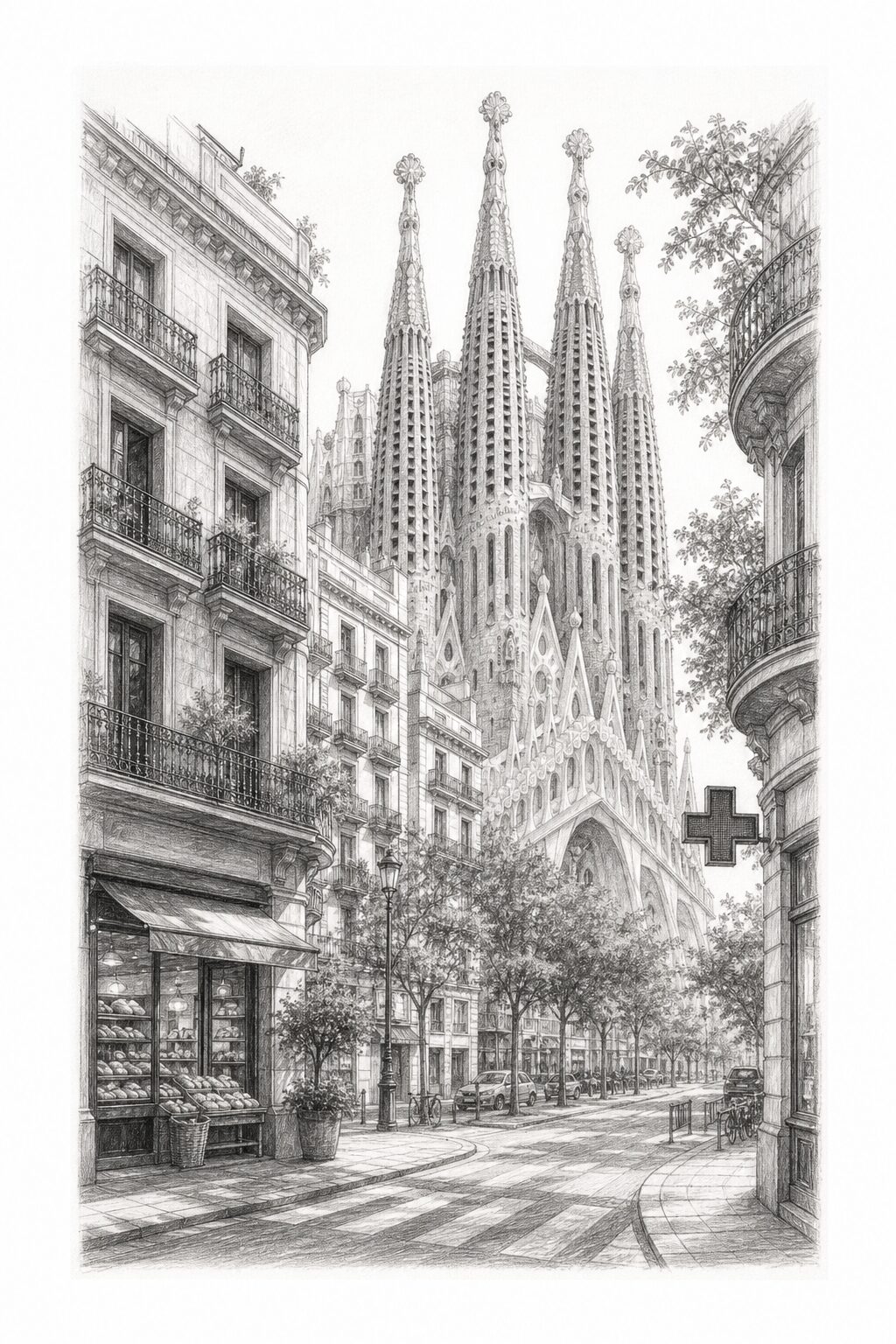
Gaudi’s unfinished cathedral is Barcelona’s single unmissable sight, and it just became more unmissable than ever: on June 10, 2026, the basilica’s central Tower of Jesus Christ was completed and consecrated, topped with its cross, making the building structurally complete for the first time in its 144-year history, even as decorative work continues for years. Basic entry runs around EUR 26, with audio guide around EUR 33, and tower access pushing higher; book online weeks ahead in high season through the official site. Allow 1.5 to 2 hours for the basilica alone, longer with a tower climb.
The interior is the payoff: forest-like columns branching into a canopy overhead, stained glass that turns the nave gold in the afternoon and blue in the morning, and a scale that photographs never quite capture. Book the first entry slot of the day or the last of the afternoon to thin the crowd, and never attempt a walk-up ticket in summer; it will not exist. This is the one sight in the book worth planning your entire arrival date around if the calendar allows it.
Park Guell
Gaudi’s public park, commissioned as a failed housing development and rescued as green civic space, is best known for its mosaic-tiled terrace and the gatehouses at its entrance. The paid monumental zone runs around EUR 18 online, more at the gate, and access is capped at 1,400 visitors an hour with timed entry, so book days to weeks ahead April through October. Allow 2 to 2.5 hours. The surrounding park beyond the monumental zone is free and worth wandering regardless of your ticket.
Go at the 9:30 opening or in the final hour before closing; midday in summer means shoulder-to-shoulder mosaic benches and a long wait even with a booked slot. The view over the city and out to the sea from the terrace is one of the best free-standing panoramas in Barcelona, ticket or not.
Casa Batllo
The most theatrical of Gaudi’s Eixample houses, its facade all bone-like balconies and a scaled, dragon-back roofline on Passeig de Gracia. Pricing is dynamic, starting from around EUR 29 for a daytime slot and climbing through premium tiers to nearly EUR 50; morning slots between 10am and 1pm sell out weeks ahead in season. Allow 1 to 1.5 hours. Go on a weekday between 9 and 10am, or after 4pm, for a noticeably calmer visit.
Casa Mila (La Pedrera)
A few blocks up Passeig de Gracia, Gaudi’s other great Eixample house has a rippling stone facade nicknamed “the quarry” and a rooftop of sculptural chimneys that feels like walking through an abstract sculpture garden. Basic entry with audio guide runs around EUR 29; a night visit with rooftop performance runs around EUR 39. Book online for the lower price and to skip the line. Allow 1.5 to 2 hours.
A practical steer worth taking seriously: Casa Batllo and Casa Mila cover similar ground, and visiting both on the same trip is repetitive rather than complementary. Pick one, pair it with the Sagrada Familia, or consider the bundled three-Gaudi-houses ticket that adds Casa Vicens for a fuller architectural day, running roughly EUR 85 as of this writing.
Barcelona Cathedral and the Gothic Quarter
The Gothic cathedral anchors the old town’s oldest core, its cloister home to a small flock of resident geese, a tradition said to honor the city’s patron saint. A paid general-visit slot covering the cathedral’s roof and choir stalls runs roughly EUR 9 to 15; the building is free to enter during worship hours, which need no booking. Allow an hour for the cathedral itself, 2 to 3 hours to properly wander the surrounding Gothic Quarter, including Roman wall fragments at Placa Nova and the excavated Roman streets beneath the City History Museum.
Go early, before 9am, to have the cathedral square and the narrowest lanes to yourself; by midmorning the Gothic Quarter’s tightest streets fill with tour groups moving in both directions at once.
Picasso Museum
Housed in a row of Gothic merchant palaces on Carrer Montcada in El Born, this museum is unusual among Picasso collections worldwide for its deep focus on his formative years in Barcelona, tracing the artist as a teenager rather than only the famous late work. Entry runs around EUR 14 online, EUR 15 at the door, free for visitors under 18; free-entry windows (the first Sunday of the month, and Thursday evenings in winter) exist but sell out fast once released. Book ahead, especially on weekends. Allow 1.5 to 2 hours, and go Tuesday or Wednesday morning for the calmest galleries.
La Boqueria and La Rambla
Barcelona’s most famous market sits just off its most famous street, and both cost nothing to browse. La Rambla itself, tree-lined and mid-renovation as of this writing with completion targeted for 2027, runs from Placa Catalunya down to the old harbor, past kiosks, the Liceu opera house, and Placa Reial. La Boqueria opens off its western side; the front stalls facing the street are built for foot traffic and photographs, so walk deeper into the market for the produce, fish, and standing bar counters that locals actually use. Allow an hour for La Rambla, another hour or more inside the market.
Go early, ideally before 11am on a weekday, both for the market’s freshest stalls and because this stretch is also the city’s densest corridor for pickpocketing; keep bags zipped and phones off the curb edge, and treat any clipboard or “free rose” approach as a distraction to walk past, never engage with.
Camp Nou
FC Barcelona’s stadium and its immersive tour draw football fans from everywhere, though as of this writing the stadium remains under phased renovation, so expect a partial, construction-affected experience rather than the classic full tour, with tickets running roughly EUR 28 to 31, discounted while work continues. Book ahead regardless. Allow about 1.5 hours, and go on a weekday morning. Honest verdict: worth it for die-hard fans wanting the badge and the history, not yet worth it as a bucket-list architectural experience until the renovation completes; check current status before booking.
Montjuic: castle, cable car, and the Magic Fountain
The green hill above the harbor bundles a half day of sights into one trip: a cable car up from Barceloneta (round trip around EUR 17 online, EUR 19 at the gate), Montjuic Castle at the summit (around EUR 5, with sweeping city and harbor views and a somber military history), and, at the base, the Magic Fountain’s free evening light-and-water show, needing no ticket at all. Allow a half day for the full loop. Go in the late afternoon and let the day end at the fountain; the hill is exposed and genuinely hot at midday in summer, with little shade. Beyond the castle, the hill also holds the Fundacio Joan Miro and the grand Palau Nacional, home to the MNAC’s Romanesque and Catalan Gothic collections, both covered further in the complete guide; if architecture and art are your priority over the view, budget a full day for Montjuic rather than a half day.
Frequently asked questions
How many days are enough for Barcelona?
Three well-planned full days cover a strong first visit, while four or five allow slower neighborhoods, additional museums, or a day trip. Count usable sightseeing days rather than hotel nights.
What should be booked first?
Reserve the experience you would be most disappointed to miss, then secure lodging and any limited-entry sights. Verify current rules and opening information on the official operator’s website shortly before travel.
How do you avoid rushing?
Group each day geographically, allow time for security and transport, and treat extra stops as optional. One demanding reservation plus nearby flexible experiences usually produces a better day than a chain of timed entries.
Continue planning Barcelona
- Complete Barcelona travel guide
- 3 days in Barcelona: first-time itinerary
- Where to stay in Barcelona
- Best things to do in Barcelona
- Barcelona food guide
- Barcelona first-time tips
- Barcelona on a budget

Meet Leo: The Heartbeat Behind ‘A Country A Month’
Journeying through the pages of A Country A Month, you might often feel the rhythm of a storyteller’s heartbeat, pulsating through each line, each image, and each adventure shared. That heartbeat belongs to none other than our remarkable website editor, Leo.
With a lens in one hand and a pen in the other, Leo seamlessly marries his passions for photography and writing. His eye captures moments that words can barely describe, yet his eloquence brings those images to life, transcending borders and connecting us all through shared stories. An avid traveler, every country he’s visited has added another chapter to his expansive tale, and through our platform, he generously shares these chapters with us.