Planning a trip to Barcelona is easier when the city is treated as a set of connected neighborhoods and decisions, not a checklist of famous names. This complete guide brings together the essential sights, the right time to visit, transport, places to stay, food, realistic costs, and the choices that most affect a first trip.
Use this article with the complete Barcelona travel guide, the three-day itinerary, and the where-to-stay guide.
Here is a fact worth sitting with before you book anything: on June 10, 2026, workers lifted a gleaming cross onto the central Tower of Jesus Christ at the Sagrada Familia, and for the first time in its 144-year history, Gaudi’s basilica stood structurally complete. It is also the centenary year of Gaudi’s death, marked across the city as the Year of Gaudi. You are reading this at a genuinely rare moment: the single most famous unfinished building on earth just finished the part that matters most, and you can go see it.
That is the kind of city Barcelona is. It does not sit still for photographs; it keeps building, arguing, cooking, and dancing while you watch. Barcelona drew roughly 26.1 million visitors in 2025, a record, in a city of only about 1.75 million residents, and yet it does not feel like a museum piece overwhelmed by its own fame. It feels like a place that happens to have Roman walls, a medieval trading quarter, a rigorously planned 19th-century grid, and some of the strangest, most beautiful buildings ever put up by one obsessive architect, all still doing their jobs: housing people, feeding people, and giving the rest of us somewhere extraordinary to walk.
Barcelona rewards you for showing up curious. The old town is small enough to cross on foot in twenty minutes and dense enough to fill a week. The sea sits at the bottom of nearly every downhill street, so a city break here comes with a real beach attached, something few of Europe’s great historic capitals can offer. The food culture, standing-bar tapas, marble-counter vermut, produce markets that have traded on the same spot for over a century, is not a sideshow to the sightseeing; for many visitors it becomes the whole point. And Catalan identity, its own language, its own festivals, its own architecture, gives Barcelona a flavor distinct from generic “Spain,” which surprises first-timers who expected flamenco and got castellers instead.
But Barcelona will also test the unprepared, and this book says so plainly rather than pretending otherwise. Its two most famous sights, the Sagrada Familia and Park Guell, run capped, timed entry that sells out weeks ahead in high season, so the traveler who wings it either pays a premium reseller or simply does not get in. Pickpocketing is a real, well-documented risk on La Rambla and the L3 metro line, not an urban legend to wave off. Summer heat runs genuinely brutal, and the city’s own residents have taken to the streets over the strain that 26 million annual visitors puts on housing and daily life, a tension worth understanding before you arrive rather than discovering by accident.
This guide is built the way a longtime local friend would build it. First the city itself and the sights everyone crosses an ocean for, with honest verdicts about which earn a full morning and which you can see from the street. Then the planning layer: when to come, how to get around, and where to sleep. Then Barcelona up close, neighborhood by neighborhood, each with a walking route you could follow this afternoon. Then the eating and drinking, the culture beyond the icons, the day trips, and ready-made itineraries for one, two, and five days. And at the end, the deeper story: how Barcelona became Barcelona, and the stonemasons, market vendors, castellers, and transit workers who keep it running today.
A word on what this book is not. It is not a directory; Barcelona has apps and ticketing sites for exhaustive listings, and they update faster than any book can. What this book does instead is judge, sequence, and tell you the truth at length: which booking window actually matters, which famous house you can skip if you have already seen one, what order turns six sights into one effortless day, and why the city looks the way it does, so the streets mean something once you are standing in them. Every price and rule here was accurate when this was written, and wherever something changes often, you will see the phrase “as of this writing” and a pointer to the official site, because fares rise, tickets sell out differently season to season, and rules around short-term rentals and entry requirements are actively in motion.
One friendly warning before the complete guide: almost everyone who visits Barcelona well starts planning a return trip before the flight home lands. Consider yourself told.
Action Steps
- Decide your trip length now; four to five days covers the core sights well, and the itineraries in the complete guide are built for one, two, and five days.
- Before booking flights, read the complete guide for which sights need advance tickets and the complete guide for the month-by-month reality.
- If you are traveling from outside the EU, check the entry-requirement notes in the complete guide early; European entry rules have been shifting and are worth confirming close to your travel date.
Step out of the Sagrada Familia metro station and the first thing that happens is that you stop walking. Everyone does. Eight towers rise out of an ordinary Eixample block, part sandcastle, part coral reef, part something that should not structurally exist, and as of this writing the tallest of them, the central Tower of Jesus Christ, carries a finished cross where for over a century there was scaffolding. Turn around and the street looks like any other grid block in the neighborhood: balconies, a bakery, a pharmacy sign glowing green. That contrast, one of the strangest buildings on earth rising out of one of the most orderly street plans on earth, is the whole city in a single glance.
Walk twenty minutes toward the sea and the grid dissolves into something older and tighter: the Gothic Quarter’s lanes, some of them following the line of a Roman wall built around 15 BC, narrow enough that the buildings seem to lean in and share gossip overhead. Keep walking and the lanes open onto La Rambla, then the harbor, then the Mediterranean itself, close enough that you can smell it from the cathedral steps. Barcelona does this to first-time visitors more than almost any other European capital: within an hour of landing, you can stand in a Roman street, admire a medieval merchants’ quarter, walk a 19th-century boulevard, and put your feet in the sea. Few cities pack that much shape into a single afternoon.
Visitors who arrive expecting a beach resort with some old buildings attached are usually surprised within the first hour by how seriously Barcelona takes itself as a city: balconies crowded with drying laundry and potted plants, delivery trucks squeezing down streets built for handcarts, a genuine working produce market a block from the cathedral. Visitors who arrive expecting a dense, serious European capital are surprised the opposite way, by how quickly the trip can turn into an afternoon with your feet in the sand. Both surprises are the same fact seen from two directions: this is a real, working Mediterranean port city that happens to also be one of the most beautiful places on earth, not a theme park built to look like one.
The old town and the grid
Barcelona’s layout tells its own history, and once you see the pattern, the whole city becomes easier to navigate. Ciutat Vella, the old town, is the original city: the Roman colony of Barcino grew into the medieval seat of the Crown of Aragon, a Mediterranean trading power whose merchants built the narrow lanes of the Gothic Quarter and the soaring, austere Santa Maria del Mar in El Born. That old town stayed cramped inside its walls for centuries, until Barcelona finally tore them down in 1854 and, in 1859, engineer Ildefons Cerda laid out the Eixample: a strict, chamfered-corner grid of wide streets designed for light, air, and a healthier city than the medieval one it replaced. The wealth of that expansion funded Modernisme, Catalan Art Nouveau, and Antoni Gaudi filled the new grid and the older hillside village of Gracia with buildings unlike anything else in Europe.
The city’s geography still organizes a visit today. Montjuic, the green hill above the harbor, and Tibidabo, the mountain that closes off the city’s inland edge, bracket Barcelona like bookends, and the sea runs along its entire southeastern flank, so nearly every downhill street eventually reaches water. Ten official districts divide the city administratively, but the visitor’s Barcelona concentrates in a handful of them: Ciutat Vella (the old town: Gothic Quarter, El Born, El Raval, and La Rambla), the Eixample (the grid and its Modernisme showcase), Gracia (the former village on the hillside above), Montjuic, and the beachfront strip running from Barceloneta through Poblenou. Learn those five or six names now; the complete guide gives each one a full walking route.
Distances in Barcelona are more forgiving than in many great capitals precisely because the visitor’s core is so compact. The old town, the Eixample, and the waterfront all sit within a few kilometers of each other, connected by a metro system that is legible within a day and, in the old town especially, often faster to cover on foot than underground. That compactness is part of why the crowding at the complete guide marquee sights feels so concentrated: the whole city’s worth of visitors funnels through a relatively small footprint of streets, which is exactly why timing, covered in the next chapter, matters as much here as in cities several times Barcelona’s size.
A day in the life
To understand the rhythm you are joining, run the city through one full day. By 7am the produce trucks are already unloading at La Boqueria and the neighborhood markets, and the first coffee crowd gathers standing at bar counters rather than sitting down. Around noon, marble-topped bars fill for vermut hour, a glass of the local aperitif with olives and a plate of something salty, the traditional throat-clearer before the day’s main meal. Lunch runs long, typically 1pm to 3pm, often built around a fixed-price menu del dia, and afterward much of the city takes a real pause: small shops close for a midday break roughly from 2pm to 4:30pm, a rhythm that surprises visitors used to stores staying open straight through. The late afternoon belongs to the beach, the parks, or a museum, and then the evening starts slowly and stretches long: dinner rarely begins before 8:30 or 9pm, kitchens outside the tourist zones may have been shut since 4pm and only reopen at 8, and bars are still filling well after midnight. Weekends add their own punctuation: castellers building human towers in a plaza, sardana dancers circling hand in hand outside the cathedral, and, most evenings on Montjuic, a free sunset performance from the Magic Fountain that needs no ticket at all. The city runs on later clocks than most northern European capitals, and the sooner your own schedule bends to match it, the better your trip goes.
The numbers, briefly
Barcelona’s city proper holds around 1.75 million residents, packed into one of Europe’s densest urban footprints, with pockets of the Eixample and the Sagrada Familia neighborhood running especially tight. The wider metropolitan area holds more than 5 million people, the largest urban area on the entire Mediterranean coast. Against that resident population, 2025’s roughly 26.1 million visitors and more than 14 billion euros in tourism spending represent an extraordinary weight of travelers moving through a genuinely compact city, and Spain as a whole set its own record with nearly 97 million foreign visitors that year. For sightseers, the headline numbers sharpen the picture further: the Sagrada Familia alone draws something on the order of 4.7 million visitors a year even before the 2026 completion, likely to rise further, while Park Guell caps its paid monumental zone at 1,400 visitors an hour, a hard limit that tells you plainly why advance booking matters so much for both.
What genuinely makes it special
Plenty of cities have one great architect’s legacy tucked into a museum wing; Barcelona has Gaudi’s work standing in ordinary streets, doing ordinary jobs, a century after he died. Nowhere else on earth do you get Modernisme at this scale and density, a house you can walk past on the way to buy groceries that also happens to be a work of genius. Then there is the beach, genuinely rare among Europe’s historic capitals: a real, swimmable Mediterranean shoreline a short walk or metro ride from a medieval old town, not a separate resort trip. The old town and the grid sitting side by side, one organic and one drafted with a ruler, gives Barcelona a visual rhythm no single-era city can match. The food culture is a destination unto itself, not a sideline to the sightseeing. And Catalan identity, its own language spoken first in daily life, its own festivals and folk traditions, gives the city a distinct character separate from any generic idea of “Spain.”
The honest cons deserve equal space. The marquee sights get genuinely crowded in peak season, and the strain is not just a visitor’s inconvenience; residents have pushed back visibly, including 2025’s water-pistol protests at Park Guell, and the city is working to phase out roughly 10,100 short-term rental licenses by November 2028 to ease housing pressure. Pickpocketing on La Rambla, the L3 metro line, and around the busiest queues is a documented, ongoing risk, not folklore. Summer heat is intense, with July and August highs regularly near 29 to 30 degrees Celsius and limited air conditioning in older buildings. Some sights need weeks of advance booking in high season. And while English works fine in restaurants and hotels, daily civic life runs in Catalan first, which occasionally catches first-timers off guard.
The districts at a glance
You will get the full walking-route treatment in the complete guide, but start forming the mental map now. The Gothic Quarter holds the postcard: the cathedral, Roman remains, and the tightest medieval streets. El Born sits just beside it, its own medieval quarter turned into a wine-bar-and-boutique district around Santa Maria del Mar and the Picasso Museum. El Raval, across La Rambla, is grittier and more multicultural, home to MACBA and a genuinely international food scene. La Rambla itself is the spine connecting them, tree-lined and mid-renovation as of this writing, running down to the harbor with La Boqueria market opening off its western side. The Eixample fans out from Placa Catalunya in its strict grid, carrying the Gaudi houses along Passeig de Gracia and the Sagrada Familia to the east. Gracia climbs the hillside above, a former independent village annexed only in 1897 that still feels like one. And the waterfront runs from Barceloneta’s old fishermen’s grid north through Poblenou, with Montjuic rising over the harbor on the opposite side, its gardens, museums, and castle inherited from two World’s Fairs.
Who this city is best for
Barcelona suits architecture and design lovers who want Modernisme at a scale found nowhere else, food-and-market people who want a city where eating well is the default rather than an upgrade, beach-plus-city travelers who want both without compromise, families drawn to a walkable core with a real beach at the end of it, and first-time Europe visitors who want one dense, richly layered city they can cover well on foot. It is also an easy sell for repeat visitors, since a second or third trip is where Gracia’s quieter squares, Casa Vicens, and a slower market-and-cooking-class pace really open up.
Who might prefer elsewhere? Travelers who want to avoid crowds entirely in high summer will find Barcelona’s marquee sights genuinely full no matter how early they book, and anyone chasing a slower, less visitor-saturated pace is better served by a smaller Catalan city, or by Barcelona itself outside the June through August window. If your dream trip is empty streets and no lines whatsoever, come in January or February instead of July, and read the complete guide closely before you pick your dates.
None of this is a reason to stay away. It is a reason to plan with your eyes open, which is the entire premise of this book. A traveler who books the Sagrada Familia and Park Guell the week their flights are confirmed, who eats where this book points rather than where the greeter on the sidewalk points, and who accepts that lunch happens after 1pm and dinner after 8:30, will have a genuinely easy, joyful week here. A traveler who wings it will spend real hours of a short trip standing in lines that a five-minute booking session would have erased. The rest of this book exists to make sure you are the first traveler.
Action Steps
- Fix the old-town-versus-grid map in your head: medieval Ciutat Vella toward the sea, the planned Eixample grid stretching inland and uphill; most of your trip happens across that line.
- Adjust your body clock early: lunch after 1pm, a genuine midday lull in small shops, and dinner rarely before 8:30pm. Fighting this rhythm wastes a day fast.
- Star the two capped-entry sights, the Sagrada Familia and Park Guell, in your mind now; the complete guide gives the full booking timeline and neither forgives a walk-up plan.
- If it is your first visit, give Barcelona four to five days; it is the difference between the postcard and the city itself.
Every city has a short list of things you would regret missing, and Barcelona’s list is unusually front-loaded with buildings, not just views. This article is that list: the sights people cross oceans for, each with the practical truth attached, what it costs, how far ahead to book, when to go, and, where it matters, an honest worth-it verdict. If you see nothing else, see these; and where one is genuinely skippable for your trip, this article says so.
A note that will save you money and queues all week: Barcelona’s paid icons are not cheap, and several now run dynamic pricing that climbs the closer you book to your date. Book early, book direct where the venue allows it, and treat any third-party reseller charging well above the venue’s own listed range as a wrong turn. A second note, just as important: Barcelona’s two hardest-to-get sights, the Sagrada Familia and Park Guell, both run genuinely capped timed entry, not the soft, rarely-enforced kind some cities advertise. Arrive at the wrong hour without a slot already booked and you will not be waved in; you will be turned away at the gate, full stop. Build your whole week around those two bookings first, then fill in everything else around them.
Sagrada Familia
Gaudi’s unfinished cathedral is Barcelona’s single unmissable sight, and it just became more unmissable than ever: on June 10, 2026, the basilica’s central Tower of Jesus Christ was completed and consecrated, topped with its cross, making the building structurally complete for the first time in its 144-year history, even as decorative work continues for years. Basic entry runs around EUR 26, with audio guide around EUR 33, and tower access pushing higher; book online weeks ahead in high season through the official site. Allow 1.5 to 2 hours for the basilica alone, longer with a tower climb.
The interior is the payoff: forest-like columns branching into a canopy overhead, stained glass that turns the nave gold in the afternoon and blue in the morning, and a scale that photographs never quite capture. Book the first entry slot of the day or the last of the afternoon to thin the crowd, and never attempt a walk-up ticket in summer; it will not exist. This is the one sight in the book worth planning your entire arrival date around if the calendar allows it.
Park Guell
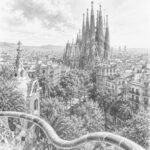
Gaudi’s public park, commissioned as a failed housing development and rescued as green civic space, is best known for its mosaic-tiled terrace and the gatehouses at its entrance. The paid monumental zone runs around EUR 18 online, more at the gate, and access is capped at 1,400 visitors an hour with timed entry, so book days to weeks ahead April through October. Allow 2 to 2.5 hours. The surrounding park beyond the monumental zone is free and worth wandering regardless of your ticket.
Go at the 9:30 opening or in the final hour before closing; midday in summer means shoulder-to-shoulder mosaic benches and a long wait even with a booked slot. The view over the city and out to the sea from the terrace is one of the best free-standing panoramas in Barcelona, ticket or not.
Frequently asked questions
How many days are enough for Barcelona?
Three well-planned full days cover a strong first visit, while four or five allow slower neighborhoods, additional museums, or a day trip. Count usable sightseeing days rather than hotel nights.
What should be booked first?
Reserve the experience you would be most disappointed to miss, then secure lodging and any limited-entry sights. Verify current rules and opening information on the official operator’s website shortly before travel.
How do you avoid rushing?
Group each day geographically, allow time for security and transport, and treat extra stops as optional. One demanding reservation plus nearby flexible experiences usually produces a better day than a chain of timed entries.
Continue planning Barcelona
- Complete Barcelona travel guide
- 3 days in Barcelona: first-time itinerary
- Where to stay in Barcelona
- Best things to do in Barcelona
- Barcelona food guide
- Barcelona first-time tips
- Barcelona on a budget

Meet Leo: The Heartbeat Behind ‘A Country A Month’
Journeying through the pages of A Country A Month, you might often feel the rhythm of a storyteller’s heartbeat, pulsating through each line, each image, and each adventure shared. That heartbeat belongs to none other than our remarkable website editor, Leo.
With a lens in one hand and a pen in the other, Leo seamlessly marries his passions for photography and writing. His eye captures moments that words can barely describe, yet his eloquence brings those images to life, transcending borders and connecting us all through shared stories. An avid traveler, every country he’s visited has added another chapter to his expansive tale, and through our platform, he generously shares these chapters with us.