If your ship is calling at Athens, it actually docks at Piraeus, the busy port city a few miles southwest of the capital, and the smartest way to spend the day is to get yourself into central Athens early, see the Acropolis before the heat and the crowds peak, and leave time to wander the old streets before the all-aboard. This Athens Piraeus cruise port guide walks through where you land, how to reach the ancient sights, and how to shape a single port day so you catch the essentials without feeling rushed.
Where your ship docks in Piraeus
Piraeus is one of the largest passenger ports in the Mediterranean, and cruise ships use dedicated terminals along its cruise quay. This is a real working port, not a pretty seaside village. The important thing to understand is distance: central Athens and the Acropolis are a genuine transfer away, not a short stroll, so plan how you are getting into the city before you step off the gangway.
You have a few options. The Athens metro connects Piraeus directly to the center, and the ride from Piraeus station to Monastiraki, the stop for the Acropolis and the old town, takes roughly 30 to 40 minutes. It is cheap, frequent and skips the heavy road traffic. The catch is that the metro station is a walk from the cruise terminals, so many people take a short taxi or port shuttle to the station first, or ride a taxi the whole way. Taxis wait near the terminals and can take you straight to the Acropolis area; agree on the fare or confirm the meter is running before you set off. Many cruise lines also sell a simple shuttle transfer into central Athens.
Whichever you choose, note your terminal name and the all-aboard time in your cruise line’s app, and give yourself a comfortable cushion for the return. Athens traffic is unpredictable, and the port is large enough that finding your berth at the end of a tiring day takes longer than you expect.
Top things to do on a port day
The Acropolis and the Parthenon
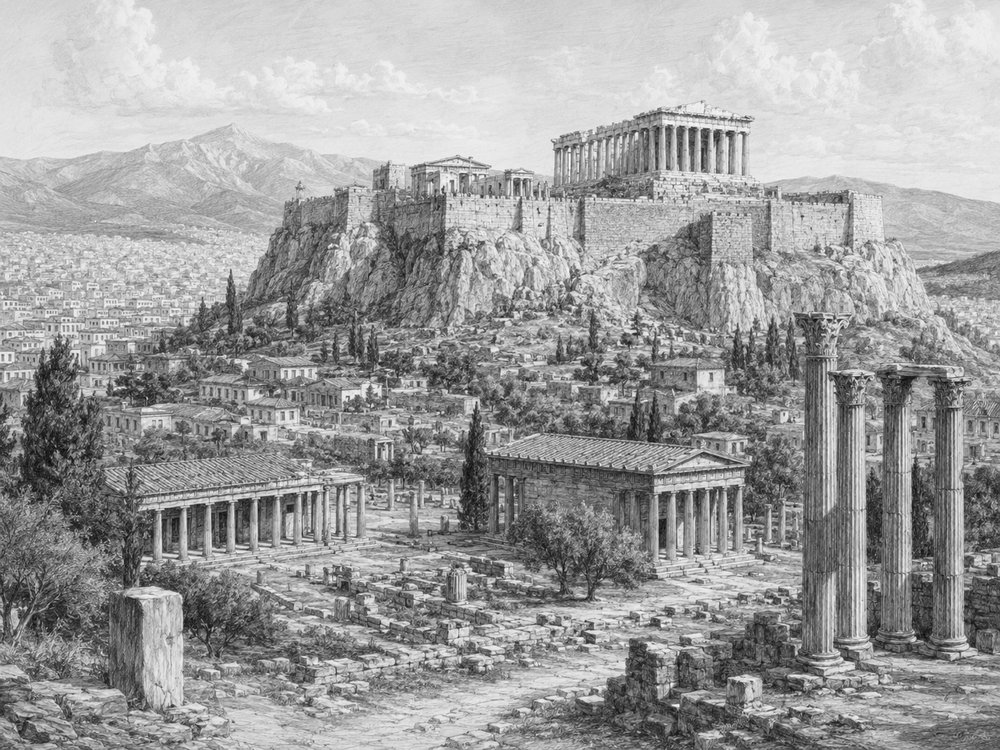
The Acropolis is the reason most people come, and the Parthenon crowning it is one of the most recognizable buildings in the world. Book a timed entry ticket in advance rather than gambling on the on-site line, and choose the earliest slot you reasonably can. Going early does two things: it beats the tour-bus crowds that fill the site by late morning, and it spares you the worst of the sun. The hill is open and exposed, the marble underfoot is smooth and slippery, and there is almost no shade, so wear proper shoes, bring water and a hat, and pace yourself on the climb.
Give yourself time to take in the whole plateau, not just the Parthenon: the Propylaea gateway, the small Temple of Athena Nike, and the Erechtheion with its famous porch of caryatids are all up there, and the views over Athens to the sea are worth a slow lap.
The Acropolis Museum
At the foot of the hill, the Acropolis Museum is the ideal companion to the ruins and a welcome, air-conditioned break from the heat. It displays the sculptures, friezes and everyday objects found on and around the Acropolis. The top-floor gallery is aligned with the Parthenon itself and shows the surviving frieze in sequence, with the hill framed through the glass. If the midday sun is punishing, this is the smart place to be.
The Plaka and Monastiraki
The Plaka is the old neighborhood spilling down the northern slope of the Acropolis, a tangle of narrow lanes, neoclassical houses, tavernas and small shops. It is touristy in places but genuinely charming, and it is the easiest part of Athens to get lost in on purpose. Adjoining it, Monastiraki is livelier and grittier, centered on a square with a flea market, street food and views back up to the Parthenon. Both are walkable from the Acropolis, and the Monastiraki metro stop is your direct link back to Piraeus, which makes this a natural place to end the day.
Syntagma Square and the changing of the guard
A short walk from Monastiraki brings you to Syntagma Square and the Greek Parliament, where the Evzones, the ceremonial guards in their distinctive uniforms and pom-pom shoes, stand watch over the Tomb of the Unknown Soldier. Their changing of the guard is a slow, formal, oddly captivating ritual that happens on the hour. It is free, takes only a few minutes to watch, and sits right on the route between the old town and the city center.
The Ancient Agora and the Temple of Olympian Zeus
If time allows, two more sites round out the classical picture. The Ancient Agora, the old marketplace and civic heart of the city, sits just below the Acropolis on the Plaka side and includes the well-preserved Temple of Hephaestus and the reconstructed Stoa of Attalos. A little further out, the Temple of Olympian Zeus stands in an open field near Hadrian’s Arch, its surviving giant columns hinting at the scale of what was once among the largest temples in the ancient world. A combined ticket often covers several of these sites, so ask when you buy your Acropolis entry.
Food: souvlaki and a proper Greek lunch
Do not leave Athens without eating souvlaki, the grilled meat wrapped in warm pita with tomato, onion and a smear of tzatziki that is the honest, cheap backbone of Greek street food. Monastiraki and the edges of the Plaka are full of places selling it, and a good one costs very little. If you want to sit down, the Plaka tavernas do meze plates, grilled fish and Greek salads; prices climb the closer you are to the big sights, so wander a street or two off the main drag for better value.
Ship tour or independent?
Athens works well both ways. A ship-organized excursion takes the logistics off your hands: transport from the port, a guide, skip-the-line entry at the Acropolis, and the reassurance that the ship will not sail without a tour that runs late. That certainty is worth a lot on a first visit or a tight schedule.
Going independent is very doable here and usually cheaper. The metro from Piraeus is straightforward, tickets can be booked online ahead of time, and the core attractions sit within a compact, walkable area. The trade-off is that you own the timing, including the return to a large, busy port. If you go on your own, book your Acropolis slot in advance and keep a firm turnaround time.
Many ships that call at Athens are sailing a wider Greek islands loop, so it is common to pair this stop with the caldera views of Santorini and the whitewashed lanes of Mykonos on the same itinerary. Check your own sailing to see how your Athens day fits the rest of the route.
How much time you need and getting back to Piraeus
A typical port call gives you enough time for the highlights but not for everything, so prioritize. A realistic day looks like this: transfer into Athens first thing, do the Acropolis on an early timed entry, drop into the Acropolis Museum, then walk down into the Plaka and Monastiraki for lunch, the changing of the guard at Syntagma, and whatever ruins you have energy left for. That is a full, satisfying day without a single wasted hour.
Budget the day around your return. Work backwards from all-aboard, add a generous buffer for Athens traffic and the size of Piraeus, and start heading back from Monastiraki metro or your taxi pickup with time to spare. Keep some cash for the metro, water and street food, and confirm the ship’s shuttle schedule if you are using it.
What to skip and watch out for
- Do not try to squeeze a far-flung day trip and the Acropolis into the same call; something will suffer.
- Skip the midday climb if you can help it. The hill bakes, and the marble is slippery underfoot.
- Watch your belongings on the metro and in crowded squares like Monastiraki, as you would in any big city.
- Do not rely on buying Acropolis tickets at the gate on a busy day; book ahead.
- Give the return journey more time than seems necessary. Traffic and the scale of the port are the two things most likely to make you late.
Cruise ships that visit Athens (Piraeus)
Frequently asked questions
Does my cruise dock in Athens or Piraeus?
Ships that list Athens actually dock at Piraeus, the port a few miles southwest of the city. Central Athens and the Acropolis are a transfer away, so plan how you will get into the city rather than expecting to walk to the sights from the pier.
How do I get from Piraeus to the Acropolis?
The metro runs from Piraeus to Monastiraki, the stop for the Acropolis and the old town, in roughly 30 to 40 minutes. Taxis will take you straight there, and many cruise lines sell a shuttle into central Athens. The metro station is a walk from the terminals, so some people taxi to the station first.
Do I need to book Acropolis tickets in advance?
Yes, book a timed entry ahead of time and pick an early slot. It lets you go straight to the site off the ship, beat the tour crowds that build through the morning, and avoid the worst of the heat on the exposed hill.
Is a ship excursion or an independent visit better?
Both work. A ship tour handles transport, guiding and skip-the-line entry and guarantees the ship waits if it runs late. Going independent is cheaper and easy here thanks to the metro, but you own the timing and the return to a large port, so keep a firm turnaround time.
What should I eat in Athens?
Souvlaki is the classic and cheap street food you should try, sold all over Monastiraki and the Plaka. For a sit-down meal, the Plaka tavernas do meze, grilled fish and Greek salads; step a street off the main tourist routes for better prices.
How much time do I need for the highlights?
A standard port day is enough for the Acropolis, the Acropolis Museum, and a wander through the Plaka, Monastiraki and Syntagma, with a ruin or two if energy allows. Prioritize the Acropolis first, then fill in the rest as the day goes on.
How early should I head back to the ship?
Start back well before all-aboard and add a generous buffer. Athens traffic is unpredictable and Piraeus is a large port, so the return leg is the easiest place to lose time. Confirm your all-aboard and any shuttle times in your cruise line’s app.

Meet Leo: The Heartbeat Behind ‘A Country A Month’
Journeying through the pages of A Country A Month, you might often feel the rhythm of a storyteller’s heartbeat, pulsating through each line, each image, and each adventure shared. That heartbeat belongs to none other than our remarkable website editor, Leo.
With a lens in one hand and a pen in the other, Leo seamlessly marries his passions for photography and writing. His eye captures moments that words can barely describe, yet his eloquence brings those images to life, transcending borders and connecting us all through shared stories. An avid traveler, every country he’s visited has added another chapter to his expansive tale, and through our platform, he generously shares these chapters with us.