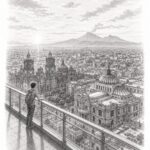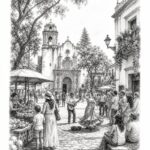
The best things to do in Mexico City combine the headline sights with neighborhoods, culture, food, and at least one experience that reveals how the city works. This guide explains what deserves advance booking, what can remain flexible, and how to avoid turning every day into a race.
Use this article with the complete Mexico City travel guide, the three-day itinerary, and the where-to-stay guide.
Every city has a short list of things you would regret missing, and Mexico City’s list rewards you unusually well for the effort, because so much of it is free. This article is that list: the sights people fly a continent for, each with the practical truth attached, what it costs, how far ahead to book, when to go, and, where it matters, an honest verdict on whether it earns your morning. If you see nothing else, see the Zocalo cluster and the Anthropology Museum. Everything after that is where your particular interests take over.
A note that will save you both money and queues all week: several of Mexico City’s best sights, the Cathedral, the Zocalo itself, Museo Soumaya, are free, and the city’s paid tickets rarely run past a few hundred pesos. Spend your booking effort on timed tickets, not on money.
Zocalo, Cathedral, and Palacio Nacional
The historic heart of the city and the natural starting point for any first visit. The Zocalo is one of the largest public squares on Earth, flanked by the Metropolitan Cathedral on one side and the Palacio Nacional on the other, both free to view from outside and both worth going in for. The Cathedral costs nothing to enter and rewards a slow look at its leaning bell towers, a legacy of the old lakebed beneath it. The Palacio Nacional, also free, requires a passport or other photo ID to enter through the Calle Moneda entrance and is typically closed Mondays, so plan around that; inside, Diego Rivera’s staircase murals sweep across Mexican history from the pre-Hispanic world through the Revolution in a single continuous composition worth the ID check alone. Allow three to four hours for the whole plaza if you are doing all three properly. Go on a weekday morning between about 9:30 and 11:30 for the calmest version of the square; weekends and, above all, the Independence Day weekend of September 15 to 16 bring the heaviest crowds and the tightest security perimeters.
Templo Mayor Museum and ruins
The excavated sacred heart of Tenochtitlan, found by accident in 1978 when electrical workers struck a carved stone disc a few steps from the Cathedral. The ruins and adjoining museum cost around 100 MXN for general admission as of this writing, with a free day for Mexican nationals on Sundays under the usual INAH policy (foreign-visitor terms are worth confirming on the official site before you go). Walk-up entry is normal; no advance booking required. Allow ninety minutes to two hours. Go on a weekday at opening if you can, both for the light on the stonework and for the smaller crowds. This is not a large site, but it is a dense one: give it real attention rather than treating it as a five-minute add-on to the Zocalo.
National Museum of Anthropology
The single most important museum in Mexico and, by most measures, one of the great museums of the Americas: a sweeping survey of Mexico’s Indigenous cultures anchored by the Aztec Sun Stone and an entire hall built around a full-scale reconstruction of Moctezuma’s feathered headdress replica and Mexica ceremonial life. Admission runs around 100 MXN as of this writing, walk-up, no advance ticket required, though arriving at opening matters here more than almost anywhere else on this list, both to beat the tour groups and because this museum genuinely rewards a slow morning. Do not try to see all 23 halls in one visit; prioritize the Mexica hall and one or two regional halls that interest you, and treat the rest as a reason to come back. Allow three to four hours, more if you love this kind of thing. Weekday mornings are calmest; weekend afternoons draw heavy local family crowds, which is lovely to witness but not restful to navigate.
Chapultepec Castle
The only royal castle in the Americas, perched on the hill where Mexican cadets known as the Ninos Heroes are still commemorated for their defense of the site in 1847, and today home to the National History Museum, including more Rivera-era murals and sweeping views over the park and city below. As of this writing, admission runs 210 MXN for foreign visitors and 105 MXN for nationals and residents, with a free day for residents on Sundays under a policy that took effect recently, worth reconfirming before you go. Walk-up entry is standard; the castle is typically closed Mondays. Allow about two hours, and come in the morning both for the clearer light on the murals and for the best long views before afternoon haze sets in.
Frida Kahlo Museum, Casa Azul
The blue house where Frida Kahlo was born, lived much of her life, and died, now the city’s most visited single-artist museum. This is the one sight on this list that genuinely requires advance planning: as of this writing, foreign visitors pay around 320 MXN for online tickets, residents around 160 MXN, and students around 60 MXN, and tickets are sold in timed slots that sell out one to three weeks ahead in high season, sometimes sooner. Book the moment your dates are fixed. Allow ninety minutes to two hours. Go for the first slot of the day if you can get it. Be honest with yourself about what this is: a house and life museum, intimate and moving, rather than a painting-dense gallery. If you want more actual paintings by Kahlo and Rivera, Museo Dolores Olmedo in Xochimilco, a quieter former hacienda with wandering peacocks, holds a deeper collection with a fraction of the crowd.
Palacio de Bellas Artes
Mexico’s grandest performance hall and, on its upper floors, a mural gallery holding major works by Rivera, Orozco, and Siqueiros under an extraordinary Art Nouveau and Art Deco building. The building itself is free to enter; the mural hall runs around 90 MXN as of this writing. No advance booking is needed; walk-up works fine any day it is open, though it is typically closed Mondays. Allow an hour to ninety minutes. Pair it naturally with a walk down Calle Madero past the Torre Latinoamericana and the tiled Casa de los Azulejos, covered fully in the Centro Historico route in the complete guide.
Bosque de Chapultepec
Mexico City’s great central park, several times the size of anything comparable in a European capital, and free to enter at any of its gates. Chapultepec Castle and the Anthropology Museum both sit inside it, but the park is worth a visit in its own right: shaded paths, a boating lake, and, in its second section, the Papalote children’s museum and the free Chapultepec Zoo. Give the park half a day at minimum if you plan to combine it with either major museum, and come on a weekday morning for the calmest version; weekends bring local families out in real force, which is a genuinely nice thing to see but changes the pace of your visit.
Xochimilco trajinera canals
Less a sight than an experience, and one of the more purely joyful afternoons available in any major city: brightly painted flat-bottomed boats called trajineras, poled along canals that are the last living remnant of the chinampa farming system the Mexica built the whole valley economy on. Boats are hired by the hour, shared among your group, running roughly 500 to 600 MXN per hour as of this writing, so gathering a few more people to split the cost changes the math considerably. There is no advance booking system in the usual sense; you simply arrive at a pier and negotiate a boat. Allow two to three hours minimum. Go on a Saturday morning for the classic version, flower and food vendors gliding alongside your boat, mariachi boats for hire mid-canal, working chinampas visible the whole way. Sunday afternoons turn the same canals into a loud, genuinely fun party-boat scene, which is a different experience entirely and worth choosing on purpose rather than by accident.
Frequently asked questions
How many days are enough for Mexico City?
Three well-planned full days cover a strong first visit, while four or five allow slower neighborhoods, additional museums, or a day trip. Count usable sightseeing days rather than hotel nights.
What should be booked first?
Reserve the experience you would be most disappointed to miss, then secure lodging and any limited-entry sights. Verify current rules and opening information on the official operator’s website shortly before travel.
How do you avoid rushing?
Group each day geographically, allow time for security and transport, and treat extra stops as optional. One demanding reservation plus nearby flexible experiences usually produces a better day than a chain of timed entries.
Continue planning Mexico City
- Complete Mexico City travel guide
- 3 days in Mexico City: first-time itinerary
- Where to stay in Mexico City
- Best things to do in Mexico City
- Mexico City food guide
- Mexico City first-time tips
- Mexico City on a budget

Meet Leo: The Heartbeat Behind ‘A Country A Month’
Journeying through the pages of A Country A Month, you might often feel the rhythm of a storyteller’s heartbeat, pulsating through each line, each image, and each adventure shared. That heartbeat belongs to none other than our remarkable website editor, Leo.
With a lens in one hand and a pen in the other, Leo seamlessly marries his passions for photography and writing. His eye captures moments that words can barely describe, yet his eloquence brings those images to life, transcending borders and connecting us all through shared stories. An avid traveler, every country he’s visited has added another chapter to his expansive tale, and through our platform, he generously shares these chapters with us.