Which of the ABC islands should you actually get off the ship for, and how hard is it to explore them on your own? The short answer: all three are worth your day, and Aruba, Bonaire, and Curaçao are among the easiest ports anywhere to do independently. They sit south of the hurricane belt off the Venezuelan coast, they are dry desert rather than rainforest, and they are Dutch — orderly, walkable, and set up for visitors. From Celebrity Ascent you can step ashore in Oranjestad, Willemstad, or Kralendijk with no tour booked and still have one of the best days of the whole voyage. This guide walks through what each island does best, where a private plan beats a ship excursion, and where you should spend versus save.
Everything in this article and far more, deck by deck, in The Ultimate Guide to Sailing on Celebrity Ascent.
Get the book →Why the ABC islands are the easy part of a long Caribbean voyage
Aruba, Bonaire, and Curaçao form the leeward edge of the Lesser Antilles, tucked close to South America and well outside the belt where hurricanes usually form. That single geographic fact shapes everything about them. The weather is reliably dry and breezy, the landscape is cactus, divi-divi trees, and scrub rather than jungle, and the sea tends to be calm on the leeward sides where the ships anchor or dock. On a long Southern Caribbean itinerary these islands are the stretch where the sailing feels settled and the shore days feel low-stress.
They are also constitutionally tied to the Netherlands, which is why the pace ashore feels different from much of the Caribbean. Roads are good, signage is clear, drivers keep to the rules, and English is spoken almost everywhere alongside Dutch, Spanish, and the local Papiamento. The US dollar is accepted across all three even though the official currencies differ. For a traveler who wants to rent a car, hail a taxi, or simply walk out of the terminal and figure it out, this is about as gentle as independent Caribbean travel gets. Celebrity Ascent typically docks central in each town, so you are not stranded at an industrial pier miles from anything.
The trade-off is that these are not lush, waterfall-and-rainforest islands. If you want dramatic green peaks you save those for the Windwards later in the sailing. What the ABCs offer instead is beach, desert, world-class water, and genuinely interesting Dutch-colonial towns. Each has a clear personality: Aruba is the beach-and-resort island, Curaçao is the city island, and Bonaire is the water island. Understanding which one leans which way is the key to planning three good, distinct days instead of three that blur together. For the wider route these ports sit on, our guide to Celebrity Ascent’s Southern Caribbean itineraries sets out how the sea days and port clusters fall.
Aruba: Eagle Beach, the desert interior, and the busiest of the three
Aruba is the most developed and most touristed of the ABCs, and the ship docks right in Oranjestad, an easy stroll from the shops and the trolley that loops the compact center. Most people come for the beach, and Aruba’s beaches deserve the reputation. Eagle Beach is the wide, pale, gently shelving one with the two famous leaning divi-divi trees, consistently rated among the best in the world. It is a short taxi from the pier and has room to spread out. Palm Beach, further along, is the high-rise resort strip with more facilities and more crowds. For a cruise day, Eagle usually wins on space and looks.
The other half of Aruba is the part visitors underestimate: the desert interior and Arikok National Park, which covers nearly a fifth of the island. This is rugged, arid country of volcanic hills, cactus, natural pools, and wind-sculpted coastline on the wild windward side. You cannot really see it on foot from the pier, so this is where a rental or a guided 4×4 trip earns its place. If you want beach in the morning and a taste of the interior in the afternoon, Aruba is the island where that combination works best because everything is close together.
Snorkelers and divers know Aruba for the Antilla, a large German freighter scuttled in World War II that now sits in shallow, clear water off the northwest coast — one of the biggest and most accessible wrecks in the Caribbean, reachable on a half-day boat trip. Because the wreck lies in relatively shallow water, even non-divers on a snorkel boat get a real look at it, which makes it one of the few Aruba activities genuinely worth a ship excursion. If diving or wreck-snorkeling is your top priority, though, hold that thought until Bonaire, which does underwater better than anywhere else on the route.
Doing Aruba on your own
Because the town is right there, Aruba rewards a walk-off approach. Taxis wait at the pier with published flat rates to the main beaches, so a beach day needs no advance booking. Rental cars are straightforward for the interior, though the best of Arikok’s rough tracks want a high-clearance vehicle or an organized tour. The one thing to watch is timing: Aruba is a popular multi-ship port, so beaches and the town fill up midday. Getting to Eagle Beach early, or heading inland while everyone else hits the sand, keeps you ahead of the crush.
Curaçao: Willemstad, the Handelskade, and a working Dutch city
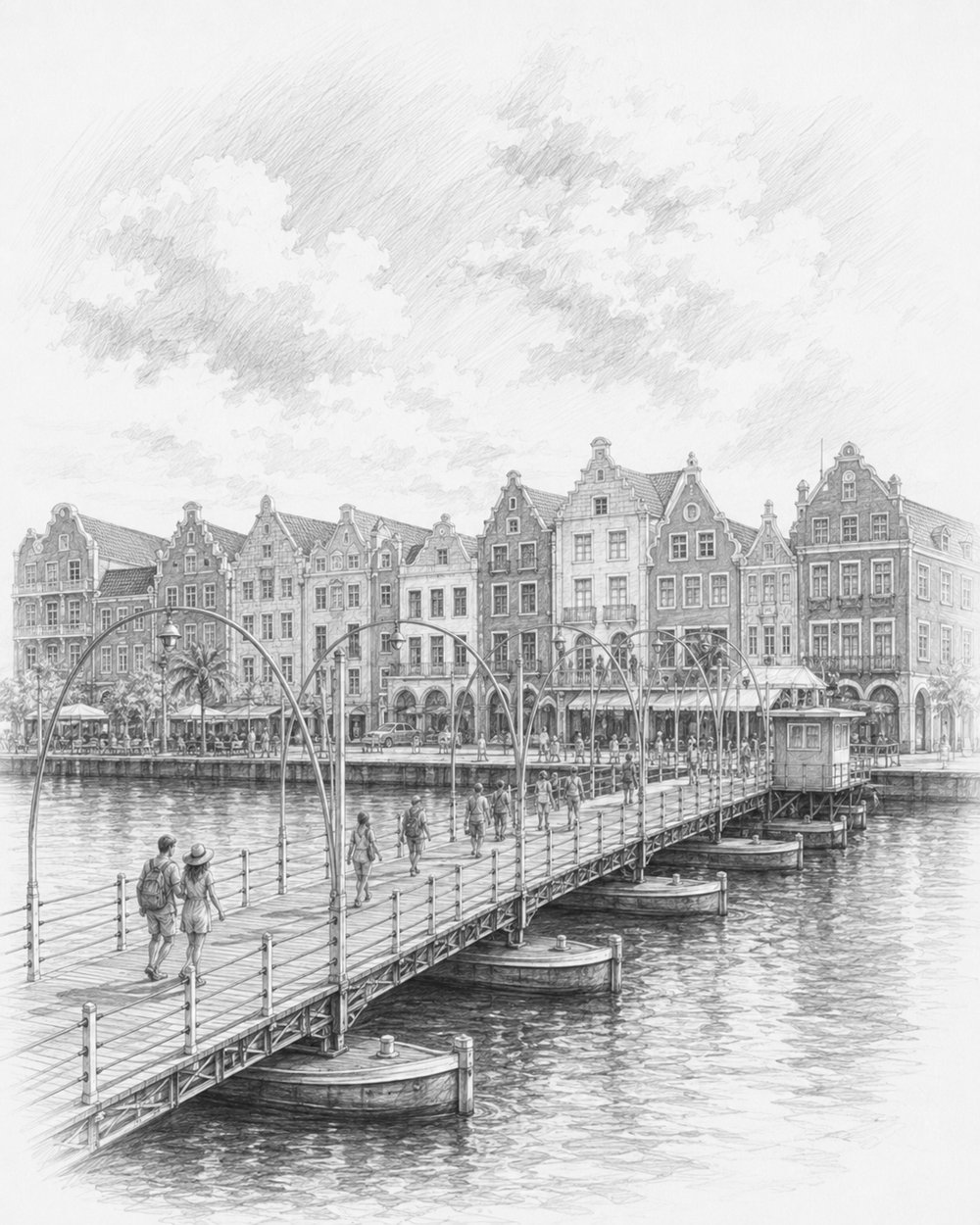
Curaçao is the one where you may never leave town — and that is fine, because Willemstad is the most interesting port city on the whole itinerary. The ship brings you to the edge of a UNESCO World Heritage capital that looks like a slice of Amsterdam painted in sherbet colors. The Handelskade, the row of tall gabled merchant houses along the waterfront in pink, ochre, blue, and green, is the postcard shot of the ABC islands and it is a two-minute walk from where you step ashore.
Willemstad is split by a channel into two halves, Punda and Otrobanda, joined by the Queen Emma pontoon bridge — a floating pedestrian bridge that swings open on the water to let ships pass, earning it the nickname “the Swinging Old Lady.” Crossing it on foot, and watching it pivot aside when a vessel comes through, is one of those small port pleasures that costs nothing. When the bridge is open, a free ferry shuttles pedestrians across, so you are never actually stuck.
Tucked into Punda is one of the quietest landmarks in the Caribbean: the Mikvé Israel-Emanuel synagogue, consecrated in 1651 and the oldest synagogue in continuous use in the Americas. Its floor is famously covered in white sand, a tradition with several tellings, and the small museum beside it fills in the history of one of the hemisphere’s oldest Jewish communities. It is a short, worthwhile stop between the shopping streets and the floating market where Venezuelan traders sell produce from their boats.
The floating platform on the outside of the hull, the Magic Carpet, makes a fine perch for the sail-in and sail-away past the Willemstad waterfront if the timing lines up. For a broader picture of Ascent’s signature spaces and how to use them across a long sailing, see our what-to-expect guide to Celebrity Ascent.
Beyond the capital, Curaçao has beaches — smaller, coved, and often backed by cliffs rather than the long open sweeps of Aruba — scattered down the leeward coast, plus its own share of good diving and snorkeling. But the honest advice is that Willemstad itself is the attraction here. Give the city the bulk of your day and treat a beach or a snorkel stop as the optional afternoon extra.
Bonaire: the diver’s island and the quietest of the three
Bonaire is the smallest, sleepiest, and, for anyone who loves the water, the best. The ship tenders or docks at Kralendijk, a low-key little capital that you can walk end to end in an hour. There is no resort strip and no big-ship bustle here; Bonaire’s whole identity is built around the sea, and specifically around the Bonaire National Marine Park, which has protected the reef that rings the entire island for decades. It is one of the oldest marine reserves in the world, and the payoff is coral in remarkable condition.
What makes Bonaire genuinely special is shore diving. Along the leeward coast, dozens of dive sites are marked by yellow-painted rocks right at the roadside — you park, walk in from the beach, and you are on a healthy reef within a few kicks, no boat required. It is world-famous among divers for exactly this reason, and it means snorkelers get the same easy access to clear, fish-thick water straight off the shore. If you carry a certification card and one shore day on the whole voyage is going to be your dive day, this is the one.
Just offshore lies Klein Bonaire, a flat, uninhabited islet ringed by reef and reachable by a short water-taxi hop from Kralendijk. It has no facilities, no shade to speak of, and some of the cleanest snorkeling in the Caribbean — bring water and reef-safe sunscreen and you have a castaway afternoon a few minutes from the pier.
Above the waterline, the south of the island is a strange, beautiful industrial landscape of salt pans — vast shallow evaporation ponds that shade from white to pink, worked for sea salt and stacked in gleaming hills near the loading pier. The same brackish water draws flamingos, and Bonaire is one of the few places in the Caribbean with a resident breeding population. You will spot them wading the pans and the inland lagoons, unmistakable and pink. A rental car or a taxi tour down the flat southern loop takes in the salt, the flamingos, the old slave huts that are a sobering part of the island’s history, and a string of roadside dive entries in a single easy circuit.
Where to spend and where to save across the three islands
The ABCs are a rare Caribbean stop where doing it yourself is often both cheaper and better, because the ports are central and the infrastructure is Dutch-reliable. That said, some things are worth paying for. Here is the rough calculus.
| Island | Worth spending on | Easy to do for free or cheap |
|---|---|---|
| Aruba | A guided 4×4 into Arikok, or the Antilla wreck snorkel boat | Eagle Beach by flat-rate taxi; walking Oranjestad and the trolley |
| Curaçao | Guided dive or snorkel boat; a distillery or interior tour if you have seen the city before | All of Willemstad — the Handelskade, the pontoon bridge, the synagogue, the floating market on foot |
| Bonaire | A dive package, or a water taxi to Klein Bonaire | Shore snorkeling off the roadside sites; the salt-pan and flamingo drive by cheap rental |
The general rule: pay for the water and the wild interior, walk to the towns. Ship excursions on these islands mostly bundle transport you can arrange yourself for less, so their real value is on activities with gear, guides, or boats attached — the Antilla wreck, an organized dive, a 4×4 into Arikok. For a straight beach day or a town wander, a taxi or your own two feet does the job for a fraction of the cost. Prices shift, so confirm current excursion and tender details in the Celebrity app before you commit.
A note on tendering and timing
Aruba and Curaçao are alongside docks in the heart of their capitals; Bonaire is sometimes alongside and sometimes a tender port depending on the berth and the day’s traffic. On a tender day, guests booked on ship excursions usually get priority for the first boats, which is one practical reason to consider a ship-run dive or snorkel trip in Bonaire specifically. Independent travelers should watch the all-aboard time carefully on the smaller island, where a leisurely southern loop can eat more of the day than you expect. As always, the last tender waits for no one, and the ship’s posted time is what counts.
Making the most of Ascent between the islands
On a long Southern Caribbean run the ABCs usually arrive as a cluster, so the days between and around them are where Celebrity Ascent earns her keep. These are stretched Edge-Class sisters, about twenty metres longer than the original Edge, with the extra room going into spaces that suit slow sea days: the two-level Retreat Sundeck, the enlarged Rooftop Garden, the tiered Sunset Bar at the stern for sail-aways, and the glass-domed Solarium that is a gift on a bright, breezy leeward-sea day. Eden, three decks of glass and greenery, is the place to watch the desert coastline slide past.
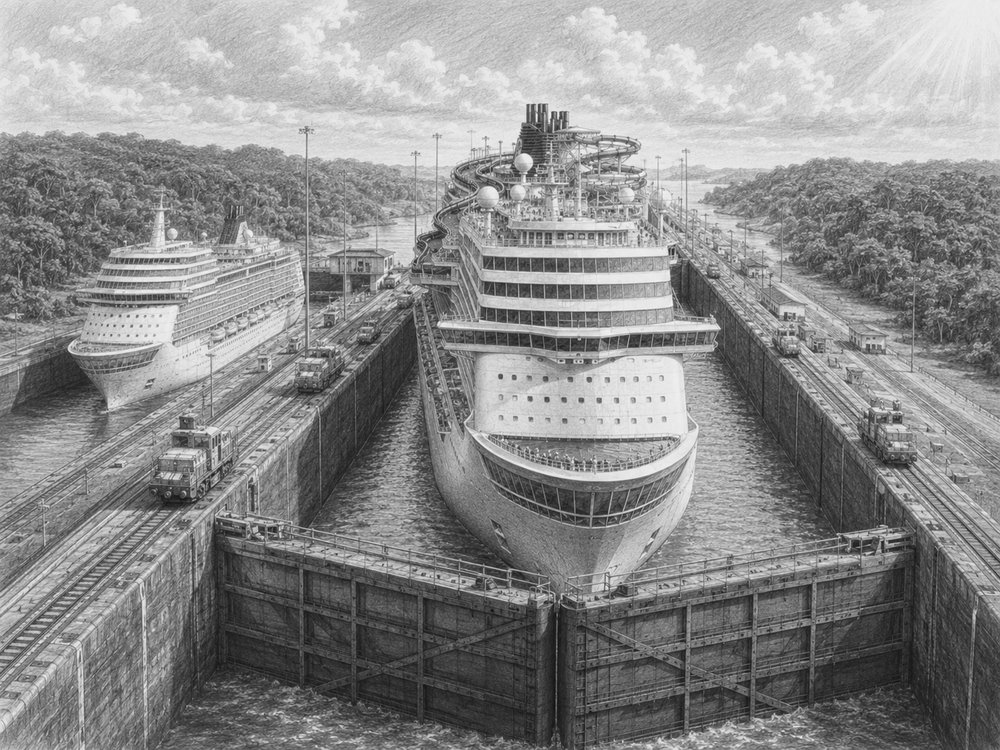
Cabin choice matters more on a voyage this long than on a quick week. The Infinite Veranda, where the whole stateroom opens to the sea, turns a sea day into private-balcony time, and an entry-level one is the sweet spot for value. If the budget stretches and you want the two-level sundeck, the Retreat Lounge, and Luminae, the enlarged Retreat suites are a genuine step up on a fortnight at sea. Our full Celebrity Ascent cruise guide breaks the categories down deck by deck, and if these islands sit on a canal itinerary for you, the Panama Canal guide covers the signature day these sailings are built around.
One rhythm that works well: treat the ABC days as active shore days — dive, drive, walk the towns — and use the sea days on either side to actually rest, because the desert sun is strong and three ports in quick succession add up. Book any specialty dinners, Le Voyage by Daniel Boulud among them, for the sea days rather than the port evenings, when you will come back sandy, tired, and happy to eat casually at the Oceanview Café.
Get the complete Celebrity Ascent playbook
If you want every port day, cabin choice, and dining decision mapped out before you sail, “The Ultimate Guide to Sailing on Celebrity Ascent” walks you through it all, port by port and deck by deck. It is part of the Ultimate Ship Guides series by Leo Sotropa, with clear action steps in every chapter so you step ashore in Aruba, Bonaire, and Curaçao with a plan instead of a guess.
Frequently asked questions
Do I need to book excursions in advance for the ABC islands?
For beach days and town wandering, no. Aruba and Curaçao dock in the center of their capitals, and taxis at the pier run published flat rates, so you can walk off and improvise. Book ahead only for activities with gear or boats attached — a scuba dive off Bonaire, the Antilla wreck snorkel in Aruba, or a guided 4×4 into Arikok. Confirm what is available and any tender arrangements in the Celebrity app.
Which of the three islands is best for diving and snorkeling?
Bonaire, clearly. Its reef sits inside a marine park protected for decades, and shore diving is world-famous there — you can walk in from roadside sites marked by yellow-painted rocks and be on healthy coral within a few kicks. Snorkelers get the same easy access, and a short water taxi to Klein Bonaire opens up some of the cleanest snorkeling in the Caribbean. Aruba’s Antilla wreck is a strong second for wreck fans.
Are the ABC islands really outside the hurricane belt?
Yes. They lie far south, close to the Venezuelan coast and below the latitudes where hurricanes usually form and track. That makes their weather notably dry and stable — desert scrub and cactus rather than rainforest — and the leeward seas where ships dock tend to stay calm. It is one reason these ports feel like the settled, low-stress stretch of a long Southern Caribbean voyage.
What should I not miss in Willemstad, Curaçao?
The painted Handelskade waterfront is the signature sight and a two-minute walk from the ship. Cross the Queen Emma pontoon bridge on foot and try to catch it swinging open for a passing vessel. Then step into the Mikvé Israel-Emanuel synagogue from 1651, the oldest in continuous use in the Americas, with its sand-covered floor. You can fill a whole excellent day inside the old town without a tour.
Can I see flamingos on Bonaire?
Often, yes. Bonaire has a resident breeding population of flamingos, and they gather around the salt pans and inland lagoons in the south of the island. A drive or taxi tour down the flat southern loop typically takes in the pink-tinged salt flats, the flamingos, the historic slave huts, and a string of roadside dive entries in one easy circuit. Sightings are never guaranteed, but the odds are good.
Is it easy to explore these islands independently?
Among the easiest in the Caribbean. All three are Dutch, with good roads, clear signage, widely spoken English, and the US dollar accepted everywhere. The ships dock or tender centrally, rental cars and taxis are straightforward, and the towns are compact and walkable. If you have ever wanted to try a self-guided port day, the ABC islands are the place to start.
How much of my day should I give to the beach versus the towns?
It depends on the island. In Aruba, lean toward the beach — Eagle Beach especially — with an optional swing inland to Arikok. In Curaçao, give the day to Willemstad itself and treat a beach or snorkel as the afternoon extra. In Bonaire, the water is the whole point, so plan around a dive, a snorkel, or a southern loop past the salt pans and flamingos rather than a single stretch of sand.
Ready for the whole ship in one place? It is all in The Ultimate Guide to Sailing on Celebrity Ascent.
Get the book →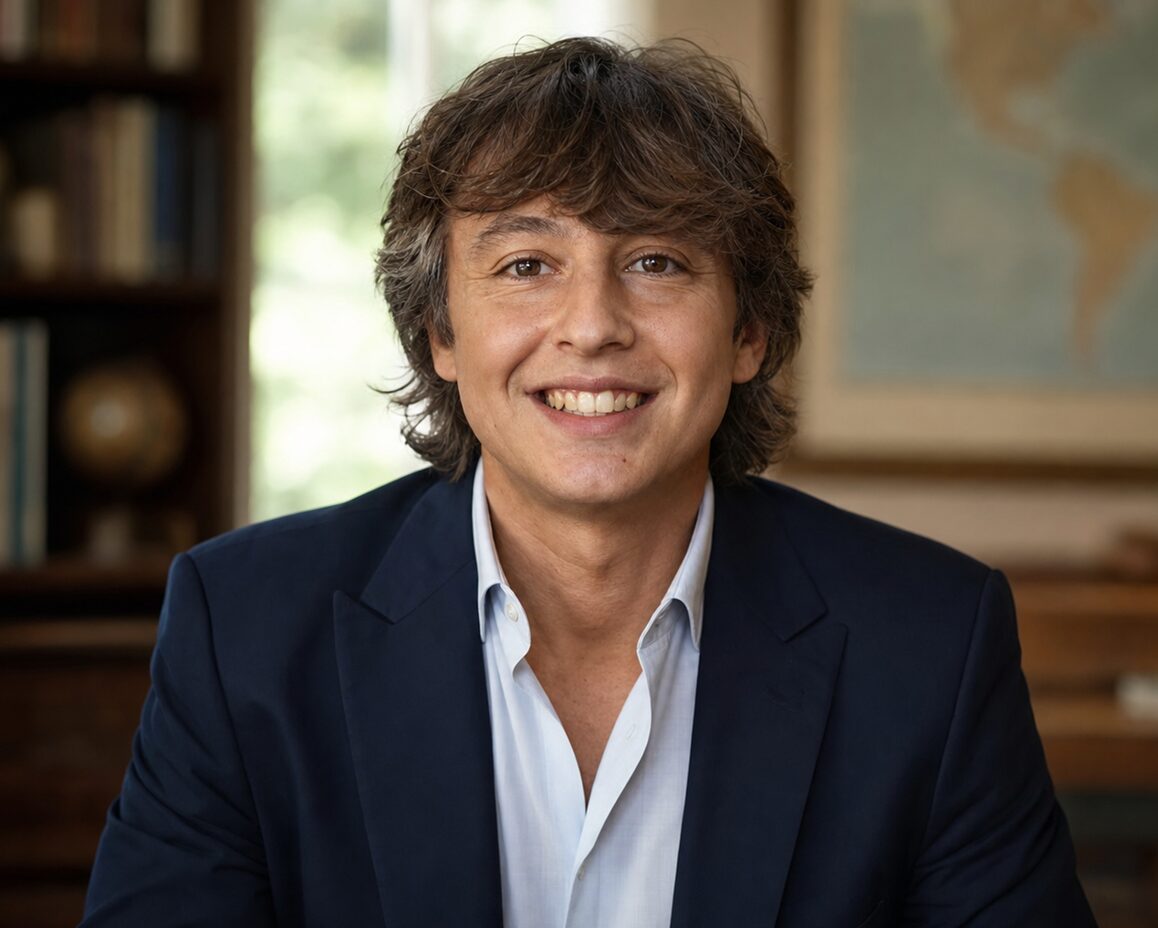
Meet Leo: The Heartbeat Behind ‘A Country A Month’
Journeying through the pages of A Country A Month, you might often feel the rhythm of a storyteller’s heartbeat, pulsating through each line, each image, and each adventure shared. That heartbeat belongs to none other than our remarkable website editor, Leo.
With a lens in one hand and a pen in the other, Leo seamlessly marries his passions for photography and writing. His eye captures moments that words can barely describe, yet his eloquence brings those images to life, transcending borders and connecting us all through shared stories. An avid traveler, every country he’s visited has added another chapter to his expansive tale, and through our platform, he generously shares these chapters with us.