What does a round-trip Alaska cruise from Seattle on Norwegian Encore actually look like? Seven nights up the Inside Passage on Norwegian Cruise Line’s flagship, calling at Ketchikan, Juneau, Skagway and Icy Strait Point, with an evening in Victoria, British Columbia, and — on the sailings that get the permit — a full scenic day inside Glacier Bay National Park. This guide walks port by port through what you will see, how to choose between a booked shore excursion and doing it yourself, and the practical details that make an Alaska cruise different from a Caribbean one: layering for cool and wet weather, packing binoculars, and understanding the documents you need for a cruise that dips into Canada. Ports vary by sailing, so treat this as the shape of the trip and confirm your exact itinerary in the NCL app.
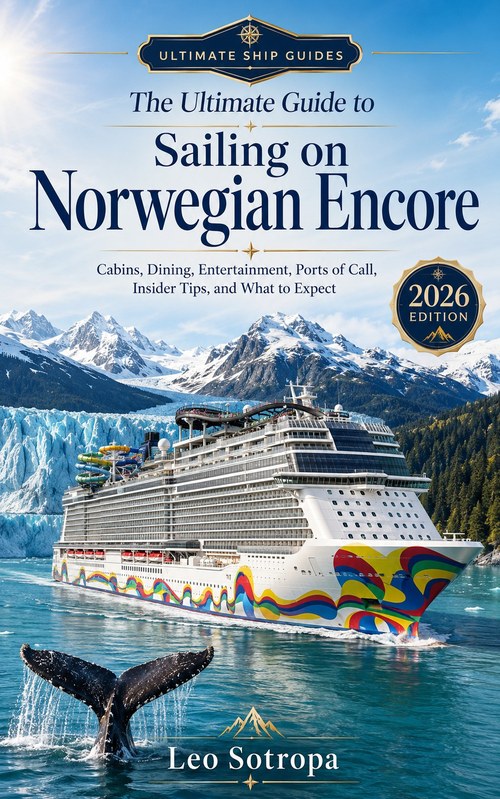
Everything in this article and far more, deck by deck, in The Ultimate Guide to Sailing on Norwegian Encore.
Get the book →Why Alaska from Seattle on Norwegian Encore
Norwegian Encore is the largest ship and flagship of Norwegian Cruise Line, the newest and grandest of the Breakaway Plus Class, sisters to Escape, Joy and Bliss. She measures around 169,000 gross tons across roughly 20 decks and carries about 3,998 guests at double occupancy, up to around 4,900 when full. Her headline season is Alaska, based in Seattle, sailing seven-night round-trip voyages up the Inside Passage from spring through early autumn. In another season she repositions to Miami for Caribbean sailings, so always confirm which voyage you are booking.
The round-trip-from-Seattle format matters for two reasons. First, it is easy to reach: Seattle is a major airport, and you can fly in a day early, see the Space Needle, Pike Place Market and the waterfront, and step onto the ship without the connections a one-way Alaska cruise from Vancouver or an Anchorage-area port can require. Second, because it starts and ends in the same US port, it is a closed-loop cruise, which changes the paperwork in your favor — more on that below. The trade-off is a required evening call in Victoria, British Columbia, which is the mechanism that lets a US-round-trip itinerary satisfy the rules for foreign ports.
Encore herself is built around Freestyle Cruising, and that suits Alaska well. After a long day ashore in the cold, you are not locked into a fixed dinner seating at a set hour. You dine when, where and with whom you like. For a fuller picture of the ship beyond the itinerary, our Norwegian Encore cruise guide covers her decks, venues and character in one place.
The seven-night route at a glance
A typical week runs Seattle to the Inside Passage and back, with a mix of Alaska port days, one marquee scenic day, the Victoria evening, and days spent cruising. Ports typically include Ketchikan, Juneau, Skagway and Icy Strait Point (Hoonah) in Alaska, plus Victoria in British Columbia and, on the sailings that secure the permit, scenic cruising in Glacier Bay National Park. Some sailings cruise Endicott Arm and Dawes Glacier or other scenic areas instead of Glacier Bay. This is the general pattern rather than a fixed schedule, and it is the single most important thing to verify in the NCL app before you book excursions.
| Stop | What it is | Signature draw |
|---|---|---|
| Ketchikan | Alaska port day | Creek Street, totems, Misty Fjords |
| Juneau | Alaska port day | Mendenhall Glacier, whale-watching, tramway |
| Skagway | Alaska port day | White Pass railway, Gold Rush town |
| Icy Strait Point | Alaska port day | Whale-watching, ZipRider, Tlingit culture |
| Glacier Bay | Scenic cruising day | Tidewater glaciers, ranger narration |
| Victoria, BC | Evening call | Butchart Gardens, Inner Harbour |
Ketchikan: Creek Street, totems and Misty Fjords
Ketchikan sits in the Tongass rainforest, and it is often the first true Alaska port of the week. The compact centre is walkable straight off the ship. Creek Street is the historic boardwalk built on pilings over the water, now lined with shops and small museums, and it is the easy, free, do-it-yourself option — you can wander it in an hour or stretch it into an afternoon.
Ketchikan is also the totem capital, with the region’s carving traditions on display at the totem parks — Totem Bight and Saxman — which sit a little outside town and are worth a booked tour or a taxi if you want context rather than just photographs. The bigger-ticket draw is Misty Fjords National Monument, a wilderness of sheer granite walls and waterfalls usually reached by floatplane or a small boat. That is a shore excursion to book ahead, not a walk-off, and in a rainforest town the “misty” part is a feature, not a warning — bring the waterproof shell.
Juneau: Mendenhall Glacier, whales and the tramway
Juneau is the state capital, reachable only by sea or air, which gives the day a slight end-of-the-road feeling even with a big ship in port. Three experiences anchor the day. The Mendenhall Glacier is the accessible glacier — a visitor centre, trails and viewpoints with the ice sheet across the water, reachable by tour bus or shuttle. Whale-watching out of Juneau is among the most reliable in Alaska for humpbacks and, with luck, orcas; it is a boat excursion worth booking rather than improvising.
Right from the dock, the Mount Roberts Tramway climbs from the waterfront to a mountainside station with trails, views over the Gastineau Channel and a chance to see eagles. It is the simplest independent option in Juneau — you buy a ticket and ride up on your own schedule. A common way to structure the day is a booked whale-watch or glacier tour in the morning, then the tramway and town in the afternoon.
Skagway: the White Pass railway and the Gold Rush
Skagway is the Klondike Gold Rush town, a small grid of restored boardwalk and false-front buildings that the National Park Service helps preserve. You can walk the historic district for free straight off the ship and get a real sense of the stampede era. The headline excursion here is the White Pass & Yukon Route railway, a narrow-gauge train that climbs the pass the gold seekers struggled over, with cliffs, trestles and waterfalls along the way. It is one of the classic Alaska rail journeys and tends to sell out, so book it early rather than hoping at the pier.
Because Skagway is so compact, it rewards a clear plan: the railway takes a good chunk of the day, so decide in advance whether you are giving the morning to the train and the rest to the boardwalk, or vice versa. Independent walkers do fine here; the railway is the one thing genuinely worth a booking.
Icy Strait Point: whales, the ZipRider and Tlingit culture
Icy Strait Point, at the Tlingit village of Hoonah, is the most purpose-built of the stops and one of the most rewarding. The waters here are known for whale-watching, and the setting leans into Tlingit Native culture, with a former salmon cannery reworked into the visitor area. The signature adventure is the world’s largest ZipRider, a long, fast zipline down toward the shore — a booked activity, and a memorable one if heights are your thing.
Icy Strait Point works well for travellers who want a lower-stress port: much of it is accessible without a bus into a distant town, so you can combine a cultural visit, a wildlife boat and time on the shore in one place. As always, confirm what is offered on your specific sailing, because the exact excursion menu can vary.
Glacier Bay: the day the whole trip is built around
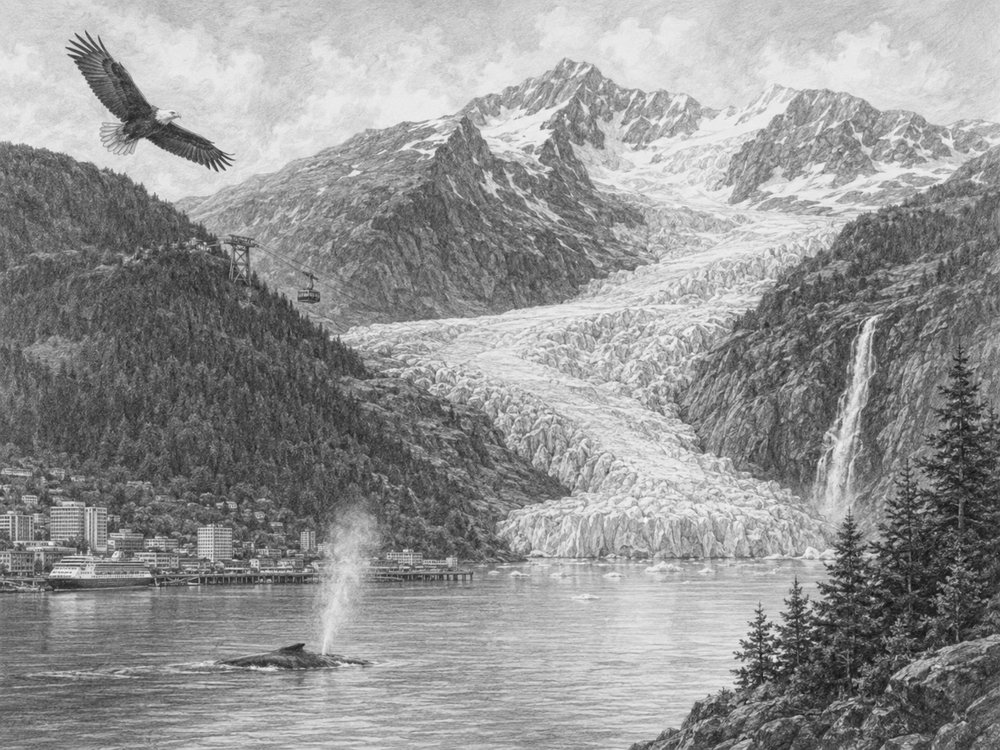
Glacier Bay National Park is the marquee scenic day, and it is worth understanding why it is a bigger deal than a generic “glacier viewing” line on a brochure. Glacier Bay is a UNESCO site entered under a strict limited-entry permit, so only a set number of ships are allowed in on any given day. Park rangers come aboard to narrate the day, pointing out the tidewater glaciers, the calving ice and the wildlife as the ship moves slowly through the bay. Not every Alaska cruise gets in, which is exactly why it is worth seeking out — some sailings cruise Endicott Arm and Dawes Glacier or other scenic areas instead.
On Encore, the best way to experience the day depends on the weather and your tolerance for cold. The open decks put you right in the air with the sound of calving ice, but the standout indoor option is the Observation Lounge, a huge forward-facing room high on the ship with floor-to-ceiling windows. It is a warm, comfortable place to watch the scenery unfold without losing the view, and it fills up on a Glacier Bay morning, so arrive early to claim a window seat. For a deeper walk-through of the scenic day, our Norwegian Encore Glacier Bay tips go further on timing and viewing spots.
Victoria, British Columbia: the evening call
Victoria is different from the Alaska ports in every way — it is a Canadian city, it is an evening call rather than a full day, and it is required on a round-trip US itinerary rather than chosen for its glaciers. The famous draw is the Butchart Gardens, a large and beautifully kept garden that many people book as a shore excursion because it sits outside the city centre and is often floodlit in the evening. Closer to the pier, the Inner Harbour, the historic downtown and the tradition of afternoon tea give you a walkable alternative if you would rather not commit to a tour.
Because it is an evening call, plan for less time and possible fading light. This is also the one stop where currency shifts: you will want Canadian dollars in Victoria, though cards are widely accepted almost everywhere.
Cruising the Inside Passage and watching for wildlife
Some of the best of an Alaska cruise happens between the ports. The Inside Passage is the protected route the ship threads, and the days spent cruising it are prime wildlife time. Bring binoculars: you are looking for humpback whales and orcas, sea otters, sea lions, bald eagles and, from a distance, bears, plus glaciers and waterfalls along the shore. The same Observation Lounge that shines on the Glacier Bay day is the natural base for this — floor-to-ceiling forward windows, warmth, and a coffee within reach — though the open decks along the Waterfront promenade put you closer to the air.
Long daylight is part of the appeal in high summer, with the light stretching well into the evening, which gives you more hours to spot wildlife and enjoy the scenery from deck. It also means blackout curtains matter for sleep, something to keep in mind when you pick a cabin.
Independent or booked? How to choose your shore time
The honest rule of thumb for this itinerary: book the things that involve distance, boats, aircraft or trains, and do the walkable town centres yourself. Alaska tours sell out early, so the marquee activities — the White Pass railway in Skagway, whale-watching in Juneau or Icy Strait Point, Misty Fjords in Ketchikan, the ZipRider, the Butchart Gardens in the evening — are worth reserving ahead rather than gambling at the pier. The free, do-it-yourself wins are Creek Street in Ketchikan, the Skagway boardwalk, the Mount Roberts Tramway in Juneau (you buy a ticket and go), and the Inner Harbour in Victoria.
- Book ahead: White Pass railway, whale-watching boats, Misty Fjords floatplane, the ZipRider, Butchart Gardens.
- Do it yourself: Creek Street, Skagway’s historic district, the Mount Roberts Tramway, Victoria’s Inner Harbour.
- Weigh both: the Mendenhall Glacier — reachable independently by shuttle, but a booked tour adds context.
Packing and practicalities for an Alaska sailing
This is not a beach-cruise packing list. Alaska is cool, changeable and often wet, with mild summer temperatures commonly in the 50s and 60s Fahrenheit, cooler out on the water and near the glaciers. The essentials are layering and a waterproof shell — you build up and peel down through a single day, and rain is normal, not a disaster. Add binoculars for wildlife, comfortable waterproof footwear for boardwalks and trails, and something warm for standing on deck in Glacier Bay.
Documents for a closed-loop cruise
Because this is a closed-loop cruise from a US port (Seattle) that calls in Canada (Victoria), the document rules are more forgiving than for a one-way or international trip. US citizens can often sail with a passport or, in many cases, a birth certificate plus government photo ID. That said, a passport is strongly recommended and is required for some travellers, so check the current CBP rules before you rely on the birth-certificate route. Non-US citizens should verify their own requirements. When in doubt, a valid passport removes the guesswork.
Money, the app and onboard basics
Onboard, in every Alaska port and in Seattle, it is US dollars; in Victoria you will want Canadian dollars, though cards are widely accepted. Your Cruise Card key card is your cashless account for everything on the ship. Service charges and gratuities apply, Wi-Fi is a paid plan, and the NCL app runs your day — deck plans, dining, excursions and, crucially, the confirmed schedule and any port changes. Ports really do vary by sailing, so the app is the source of truth, not this article.
Choosing a cabin for the scenery
For Alaska specifically, a Balcony is more worthwhile than usual because so much of the trip is scenery and wildlife you can enjoy from your own room — the Inside Passage and Glacier Bay from a private balcony, coffee in hand, is a genuine reason to spend up. Encore’s cabin range runs from Inside and Oceanview through Balcony, Club Balcony Suites, Mini-Suites, Spa cabins and solo Studios (with their own Studio Lounge) up to The Haven suites. For value, an Inside or a solo Studio does the job; the best all-round choice in Alaska is a midship Balcony on the mid-decks, which gives you both the scenery and the steadiest ride.
A few rooms to avoid, which you can confirm on the deck plan: cabins directly under the pool deck, the Garden Café or the Speedway can be noisy, as can rooms near nightlife venues; forward high-deck rooms move more in weather, which matters for anyone prone to motion; and some lower-deck balconies have obstructed views. Our full breakdown lives in the best cabins on Norwegian Encore guide.
Freestyle Cruising after a day ashore
The way Encore handles dining pays off on an Alaska trip, where port days end at different times and appetites vary. Freestyle Cruising means no fixed dining times, no assigned seats and no formal dress codes — you dine when, where and with whom you like, across a large range of restaurants, which is a real departure from the single-main-dining-room model. The complimentary options include the main dining rooms and the Garden Café buffet, so you are never forced into an extra charge. Many specialty restaurants — Cagney’s Steakhouse, Le Bistro, Ocean Blue, Onda by Scarpetta, Teppanyaki, Food Republic and the Q Texas Smokehouse among them — carry an extra charge or run through a dining package, and reservations help at peak times.
The rest of the ship gives you plenty to do on the cool-weather days: the Observation Lounge for scenery, the Galaxy Pavilion’s virtual-reality arcade, the Broadway production of “Kinky Boots” and live music at spots like the Cavern Club and the District Brew House. The Speedway go-kart track and the Aqua Park’s Ocean Loops slide are there too, weather permitting, though Alaska naturally leans more toward the indoor comforts. If you are new to this style of cruising, our first-time Freestyle guide explains how to make it work for you.
Get the complete Norwegian Encore playbook
For the full port-by-port strategy, cabin picks and Freestyle dining game plan, “The Ultimate Guide to Sailing on Norwegian Encore” gathers it all in one place. It is part of the Ultimate Ship Guides series by Leo Sotropa, with clear action steps in every chapter so you can plan your Alaska week with confidence.
Frequently asked questions
Where does Norwegian Encore’s Alaska cruise depart from?
Her Alaska season is based in Seattle, sailing seven-night round-trip voyages up the Inside Passage from spring through early autumn. Because it starts and ends in Seattle, it is a closed-loop cruise. Fly in a day early to see the Space Needle, Pike Place Market and the waterfront before you board.
Which ports does the itinerary visit?
Ports typically include Ketchikan, Juneau, Skagway and Icy Strait Point in Alaska, plus an evening call in Victoria, British Columbia, and — on sailings that secure the permit — scenic cruising in Glacier Bay National Park. Some sailings cruise Endicott Arm and Dawes Glacier or other scenic areas instead. Ports vary by sailing, so confirm your exact itinerary in the NCL app.
Will my cruise go into Glacier Bay?
Not every Alaska cruise does. Glacier Bay is a UNESCO site entered under a strict limited-entry permit, so only certain sailings get in, with park rangers coming aboard to narrate the day. Others cruise Endicott Arm and Dawes Glacier or other scenic areas instead. If Glacier Bay is a priority, check that your specific sailing includes it before booking.
What should I pack for an Alaska cruise?
Pack for cool, changeable and often wet weather, with mild summer temperatures commonly in the 50s and 60s Fahrenheit and cooler on the water and near glaciers. The essentials are layers and a waterproof shell, plus binoculars for wildlife and comfortable waterproof footwear. It is not a beach-cruise packing list.
Do I need a passport?
Because this is a closed-loop cruise from a US port that calls in Canada, US citizens can often sail with a passport or, in many cases, a birth certificate plus government photo ID. A passport is strongly recommended and required for some travellers, so check current CBP rules. Non-US citizens should verify their own requirements.
Should I book shore excursions or explore on my own?
Book the things that involve distance, boats, aircraft or trains — the White Pass railway, whale-watching, Misty Fjords, the ZipRider and the Butchart Gardens — because Alaska tours sell out early. Walkable town centres like Creek Street, the Skagway boardwalk and Victoria’s Inner Harbour are easy to do independently.
What is the best spot on the ship to watch the scenery?
The Observation Lounge, a huge forward-facing room high on the ship with floor-to-ceiling windows, is the standout warm place to watch Glacier Bay and the Inside Passage. It fills up on scenic mornings, so arrive early for a window seat. The open decks along the Waterfront put you closer to the air if you can handle the cold.
Ready for the whole ship in one place? It is all in The Ultimate Guide to Sailing on Norwegian Encore.
Get the book →
Meet Leo: The Heartbeat Behind ‘A Country A Month’
Journeying through the pages of A Country A Month, you might often feel the rhythm of a storyteller’s heartbeat, pulsating through each line, each image, and each adventure shared. That heartbeat belongs to none other than our remarkable website editor, Leo.
With a lens in one hand and a pen in the other, Leo seamlessly marries his passions for photography and writing. His eye captures moments that words can barely describe, yet his eloquence brings those images to life, transcending borders and connecting us all through shared stories. An avid traveler, every country he’s visited has added another chapter to his expansive tale, and through our platform, he generously shares these chapters with us.