What is the single most important thing to know before an Alaska cruise on Norwegian Encore? Plan your whole week around the Glacier Bay day. It is the one part of the itinerary you cannot recreate on a port excursion, cannot rush, and cannot fully appreciate if you are stuck indoors or scrambling for a viewing spot at the last minute. Glacier Bay is a UNESCO-listed park entered under a strict limited-entry permit, park rangers come aboard to narrate the day, and not every Alaska ship gets in — so if your Encore sailing includes it, that day sets the rhythm for everything else. Below are practical, specific tips for getting the most out of Glacier Bay and the rest of an Encore Inside Passage voyage, from the best places to watch the ice to what to book before you board and what to pack for cold, wet, long-daylight days.
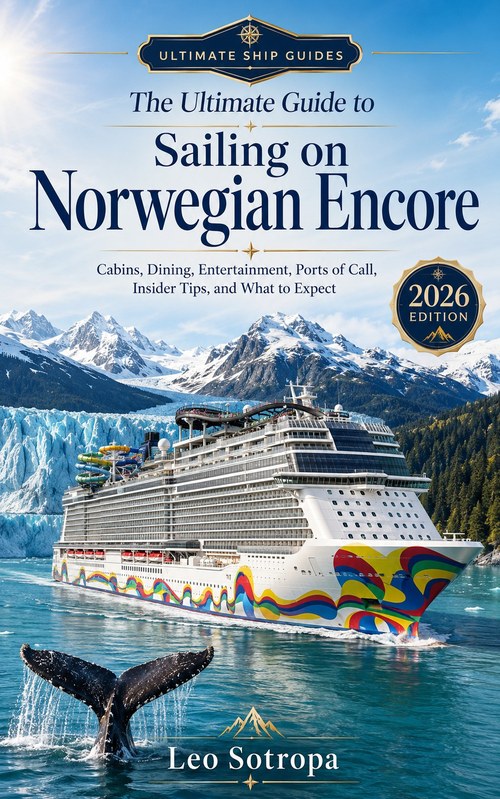
Everything in this article and far more, deck by deck, in The Ultimate Guide to Sailing on Norwegian Encore.
Get the book →Why Glacier Bay is the day that matters most
Norwegian Encore is Norwegian Cruise Line’s largest ship and flagship, the newest of the Breakaway Plus Class, and her headline season is Alaska round-trip from Seattle: seven nights up the Inside Passage. On most of those sailings the marquee day is scenic cruising in Glacier Bay National Park. This is not a port stop. You do not get off the ship. Instead, the ship spends hours easing through a fjord system toward tidewater glaciers while you watch from the decks, and that is exactly why it is special.
Glacier Bay is entered under a limited-entry permit — only a set number of ships are allowed in per day, and cruise lines compete for those slots. That scarcity is the whole point. It keeps the bay quiet and the wildlife undisturbed, and it is why some Alaska cruises never enter Glacier Bay at all, cruising Endicott Arm and Dawes Glacier or another scenic area instead. Both are beautiful, but Glacier Bay is the one people specifically seek out. If you are still choosing a sailing, confirm in the Norwegian Cruise Line app whether your voyage includes Glacier Bay or an alternate scenic day, because itineraries do vary.
The other thing that makes the day unusual is the ranger narration. National Park Service rangers board the ship for the Glacier Bay portion and narrate over the ship’s system, pointing out glaciers, wildlife and the geology as you go. There is usually a ranger presence in a public area and talks scheduled through the day. This turns hours of scenery into something you actually understand — the difference between a calving glacier and a hanging glacier, why the water is the color it is, what you are hearing when the ice cracks. Listen for the announcements and check the daily schedule so you do not miss the talks.
The best viewing spots on Encore for Glacier Bay
On a ship carrying close to 4,000 guests at double occupancy — and up to around 4,900 when full — the good viewing spots fill up on a big scenic day. Knowing where to go, and when, is most of the battle.
The Observation Lounge
The Observation Lounge is the obvious anchor. It is a huge forward-facing lounge set high on the ship with floor-to-ceiling windows, and it is the warmest, most comfortable way to watch Glacier Bay unfold — a place to sit with a hot drink while the scenery comes to you. Because it faces forward, you see glaciers and mountains as the ship approaches them rather than after you have passed. The catch is that everyone knows this, so seats near the windows go early on the Glacier Bay day. If you want a window seat, claim it well before the ship reaches the ice, then use it as a base and step out to the open decks when something appears.
Open decks and forward areas
As comfortable as the Observation Lounge is, the fullest experience is outdoors. You want to hear the ice crack and calve, feel the cold coming off the glacier, and smell the sea air. Head to the open decks and any forward-facing outdoor space you can reach when the ship nears a tidewater glacier. The ship often turns slowly so both sides get a view, so do not panic if the glacier is on the far side when you arrive — be patient and it will likely come around. Dress for standing still outside in the cold (more on packing below), because the best glacier moments reward people who are willing to stay out on deck rather than duck back inside.
Your own balcony
This is where an Alaska balcony earns its keep. On a Caribbean sailing a balcony is a nice-to-have; on an Encore Glacier Bay day it is a private, uncrowded viewing platform with no competition for the rail. You can watch the whole approach in your own space, step inside to warm up, and step back out — all without hunting for a spot. A midship balcony on the mid-decks gives you scenery plus the steadiest ride, which is why it is the sweet spot for Alaska. If you are weighing cabins, it is worth reading up on the best cabins on Norwegian Encore before you book, because the balcony decision matters more here than on almost any other route.
One honest caveat: on the Glacier Bay day itself, the ship’s orientation changes as it maneuvers, so no single fixed spot — balcony included — guarantees the marquee glacier is always on your side. The best plan is a hybrid: use your balcony or a Observation Lounge seat as home base, and move to the open decks for the big set-piece moments.
What to book early — before you even board
Encore is built around Freestyle Cruising: no fixed dining times, no assigned seats, no formal dress codes. You dine when, where and with whom you like across a large range of restaurants, which is liberating — but it also means the popular experiences are first-come, and the best ones sell out. A little planning before you sail saves a lot of frustration.
The Speedway
The Speedway is Encore’s signature thrill: a three-level electric go-kart racetrack, the largest at sea, that extends out over the side of the ship. It carries an extra charge and it books up, especially on sea days and any day with poor weather when everyone wants an indoor-ish activity. If racing is on your list, reserve it as early as you can rather than assuming you will walk up. Sailing days and the Glacier Bay day itself are often better times to race, since crowds thin out when the scenery is the main event — but the slots still go. If the Speedway is a big reason you chose Encore, it is worth understanding how it fits with the rest of the ship in a dedicated look at the Haven and the Speedway.
Specialty dining
The main dining rooms and the Garden Café buffet are complimentary and genuinely good, so you never have to spend a cent extra to eat well. But Encore’s specialty restaurants are a highlight, and the best times book out. Cagney’s Steakhouse, Le Bistro, Ocean Blue, Onda by Scarpetta, Teppanyaki, Food Republic and the Q Texas Smokehouse each carry an extra charge or run through a dining package. Teppanyaki in particular — the hibachi show with limited seatings — is one to reserve ahead. A smart move on an Alaska sailing is to book specialty dinners for your port evenings, when you come back aboard tired and hungry, and keep the scenic days flexible.
Shore excursions that sell out
Alaska’s marquee tours are the ones that fill first: whale-watching in Juneau, the White Pass & Yukon Route railway in Skagway, the ZipRider at Icy Strait Point, floatplane and Misty Fjords trips in Ketchikan. These are not experiences you want to leave to a walk-up in port, because the good ones sell out weeks ahead. Decide which single “big” excursion matters most in each port, book those early, and leave the smaller stuff to arrange as you go. For the bigger picture of how the whole Seattle-based itinerary comes together, the Norwegian Encore Alaska from Seattle guide is a useful companion to this one.
Packing for cold, wet and long daylight
This is the packing mistake first-timers make: treating an Alaska cruise like a warm-weather one. It is not. Southeast Alaska in the cruise season is cool, changeable and often wet, with mild summer temperatures commonly in the 50s and 60s Fahrenheit — and noticeably colder on the water and near glaciers, where the wind comes straight off the ice. It is also a place of very long daylight, which is wonderful for wildlife-watching but can make sleep tricky.
- Layers, always. A base layer, a warm mid-layer (fleece or light down), and a waterproof shell on top. You will peel layers on and off all week as you move from a warm lounge to a cold deck and back.
- A genuine waterproof jacket, not just a water-resistant one. Rain in Southeast Alaska is a regular feature, not an exception, and Ketchikan sits in a temperate rainforest.
- Warm hat and gloves for the Glacier Bay day. Standing at the rail near a glacier is much colder than the day’s “official” temperature suggests.
- Comfortable waterproof shoes for wet port streets, boardwalks and trails.
- Binoculars — the one item that transforms the trip (more below).
- A sleep mask, because the long daylight means it can still feel like evening at what should be bedtime.
You do not need formal wear. Freestyle Cruising means there are no formal nights, so a smart-casual outfit or two covers any specialty dinner. Prioritize warmth and waterproofing over dressing up.
Wildlife-watching: bring binoculars
If you take one tip from this whole article, take this one: bring binoculars. The Inside Passage is alive with wildlife, but much of it is at a distance — a whale spout half a mile off, a bald eagle in a treetop, a bear on a distant shoreline, sea otters rafting on the water. With the naked eye you see a dot; with binoculars you see the animal. Humpback whales, orcas, sea otters, sea lions, bald eagles and bears are all on the menu, along with glaciers and waterfalls tumbling down the passage walls.
The best wildlife-watching from the ship happens from the Observation Lounge and the open decks, especially during quiet stretches of cruising and on the Glacier Bay day. Get into the habit of scanning the water line and the shore, and keep an ear on the ranger and crew announcements — when someone spots whales, word travels fast. Early morning and the long light of evening are prime times, and because the daylight stretches so late, you get far more watching hours than a lower-latitude cruise would give you.
Planning your port days efficiently
Encore’s Alaska ports each have a clear signature. Knowing what each is really for helps you avoid over-scheduling. Here is a quick orientation; always confirm your specific stops and times in the NCL app, since ports vary by sailing.
| Port | Known for | Do-first idea |
|---|---|---|
| Ketchikan | Creek Street, Tongass rainforest, totem parks, Misty Fjords | Totems or a floatplane, plus a rainproof jacket |
| Juneau | Mendenhall Glacier, whale-watching, Mount Roberts Tramway | Book whale-watching early; capital reachable only by sea or air |
| Skagway | Klondike Gold Rush town, White Pass & Yukon Route railway, boardwalk | Reserve the railway well ahead |
| Icy Strait Point | Whale-watching, the world’s largest ZipRider, Tlingit culture | ZipRider sells out; culture and whales close behind |
The efficient way to run a port day is to pick one anchor activity and build around it, rather than trying to cram three things into a few hours. In Juneau, whale-watching or the Mendenhall Glacier is a full morning or afternoon on its own. In Skagway, the White Pass railway is the day. In Ketchikan, choose between the totem parks and a floatplane trip rather than attempting both. Icy Strait Point is smaller and more relaxed — good for whale-watching, the ZipRider, and Tlingit culture without the busier feel of the bigger towns. Give yourself buffer time to get back to the ship, and remember that a rushed port day usually means you saw a lot of transit and not much of the actual place.
Victoria’s short evening call
Victoria, British Columbia, is the odd one out — a required evening call on a round-trip US itinerary rather than a full day in port. Because it is a closed-loop cruise from Seattle that calls in Canada, the stop exists partly to satisfy the itinerary rules, and you typically get a few evening hours rather than a whole day. Set your expectations accordingly. This is not the stop for an ambitious full-day excursion.
What you can do well is a short, focused evening: a stroll around the Inner Harbour, a look at the city’s landmarks, or a quick trip out to the Butchart Gardens if it fits the timing. Afternoon tea is a Victoria tradition, though the short window means you should check the hours carefully. A practical note on money: you use US dollars onboard and in every Alaska port and in Seattle, but Victoria is in Canada, so it is Canadian dollars ashore — though cards are widely accepted, so you rarely need much cash for a brief evening call.
Using the NCL app to run your day
The Norwegian Cruise Line app is the tool that ties the whole week together, and on a ship this size it is close to essential. Use it to check the daily schedule, confirm your ports and times, see when the ranger talks and shows are happening, make and manage dining reservations, and keep an eye on any changes to the plan — Alaska weather and ice conditions can shift a schedule. Download it and get familiar with it before you sail, because the ship’s Wi-Fi is a paid plan and you will want to have your bookings sorted in advance.
Your Cruise Card — the key card — is your cashless account and your cabin key, so the app plus the card together run your daily life onboard. Service charges and gratuities apply, and the app is where you keep track of your onboard spending. If this is your first NCL sailing and the whole Freestyle model feels unfamiliar, it is worth reading a plain-language walk-through for first-time Norwegian Encore Freestyle cruisers so the no-fixed-dining, book-as-you-go approach clicks before you board. For a broader orientation to the whole ship, the Norwegian Encore cruise guide covers the venues, decks and features in one place.
A simple week-shaping strategy
Put it all together and a smart Encore Alaska week looks like this. Fly into Seattle a day early so an embarkation-day flight delay cannot cost you the cruise, and use the extra time for the Space Needle, Pike Place Market or the waterfront. Before you board, lock in your one big excursion per port, your Speedway slot, and any specialty dinners — ideally on port evenings. Keep the Glacier Bay day loose and give it your full attention: claim a Observation Lounge seat or use your balcony as home base, layer up, and be ready to move to the open decks for the glaciers. Keep binoculars on you all week. Let the NCL app handle the logistics so you can spend the days actually watching Alaska go by.
Get the complete Norwegian Encore playbook
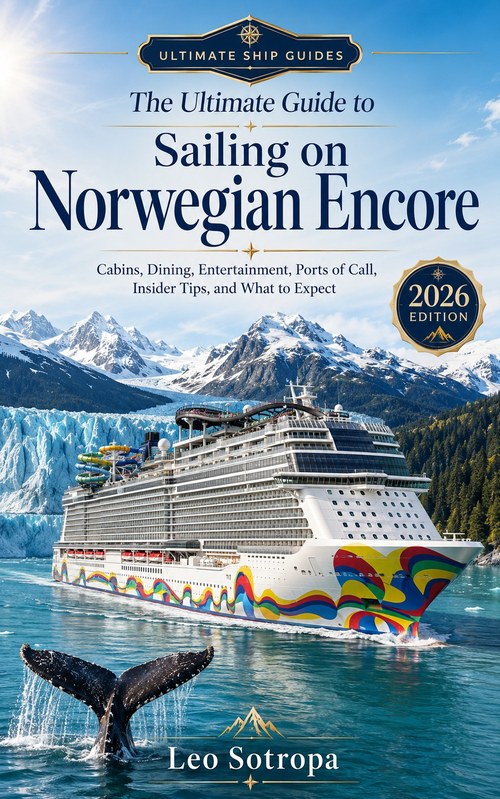
If you want every one of these tips expanded into a full, chapter-by-chapter plan, “The Ultimate Guide to Sailing on Norwegian Encore” walks you through the ship, the Alaska itinerary and the Glacier Bay day in detail. It is part of the Ultimate Ship Guides series by Leo Sotropa, with clear action steps in every chapter so you know exactly what to book, pack and do.
Frequently asked questions
Does every Norwegian Encore Alaska cruise visit Glacier Bay?
No. Glacier Bay is entered under a strict limited-entry permit, so not every Alaska sailing gets in. Some voyages cruise Endicott Arm and Dawes Glacier or another scenic area instead. Both are beautiful, but if Glacier Bay specifically matters to you, confirm in the Norwegian Cruise Line app that your particular itinerary includes it before you book.
Where is the best place on Encore to watch Glacier Bay?
The Observation Lounge — a huge forward-facing lounge with floor-to-ceiling windows — is the warmest and most comfortable spot, but its window seats go early. The fullest experience is on the open decks and forward areas where you can hear and feel the ice. If you have a balcony, it makes a private viewing platform. The best approach is to combine an indoor base with trips out to the open deck for the big glacier moments.
Is a balcony worth it for an Encore Alaska cruise?
More so than on almost any other route. In Alaska a balcony gives you a private, uncrowded platform for scenery and wildlife, which is valuable on a ship carrying close to 4,000 guests. A midship balcony on the mid-decks offers the best mix of views and a steady ride. That said, no single cabin guarantees the marquee glacier is always on your side during the Glacier Bay maneuvering, so plan to use the open decks too.
What should I pack for an Alaska cruise on Encore?
Layers and waterproofs, not a beach wardrobe. Southeast Alaska is cool, changeable and often wet, commonly in the 50s and 60s Fahrenheit and colder near glaciers. Bring a base layer, a warm mid-layer, a genuinely waterproof shell, a hat and gloves for the glacier day, waterproof shoes, binoculars, and a sleep mask for the long daylight. There are no formal nights under Freestyle Cruising, so smart-casual is plenty for specialty dining.
What should I book before I board?
The experiences that sell out: the Speedway go-kart racetrack, popular specialty restaurants such as Teppanyaki, and the marquee shore excursions — whale-watching in Juneau, the White Pass railway in Skagway, the ZipRider at Icy Strait Point, and floatplane trips in Ketchikan. Reserve your one big excursion per port and your specialty dinners early, ideally scheduling dinners for port evenings and keeping scenic days flexible.
Why do I need binoculars?
Because most of the wildlife along the Inside Passage is at a distance. Humpback whales, orcas, sea otters, sea lions, bald eagles and bears are all possible, but with the naked eye they are dots. Binoculars turn them into animals you can actually watch. The Observation Lounge and open decks are the best vantage points, and the long Alaska daylight gives you extra hours to spot them.
How much time do I get in Victoria?
Usually just a few evening hours. Victoria is a required evening call on a round-trip US itinerary rather than a full day, so it suits a short, focused visit — the Inner Harbour, the city’s landmarks, or a quick look at the Butchart Gardens if timing allows. It uses Canadian dollars ashore, though cards are widely accepted, so you rarely need much cash for such a brief stop.
Ready for the whole ship in one place? It is all in The Ultimate Guide to Sailing on Norwegian Encore.
Get the book →
Meet Leo: The Heartbeat Behind ‘A Country A Month’
Journeying through the pages of A Country A Month, you might often feel the rhythm of a storyteller’s heartbeat, pulsating through each line, each image, and each adventure shared. That heartbeat belongs to none other than our remarkable website editor, Leo.
With a lens in one hand and a pen in the other, Leo seamlessly marries his passions for photography and writing. His eye captures moments that words can barely describe, yet his eloquence brings those images to life, transcending borders and connecting us all through shared stories. An avid traveler, every country he’s visited has added another chapter to his expansive tale, and through our platform, he generously shares these chapters with us.