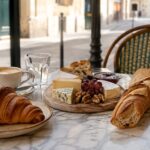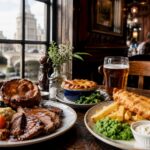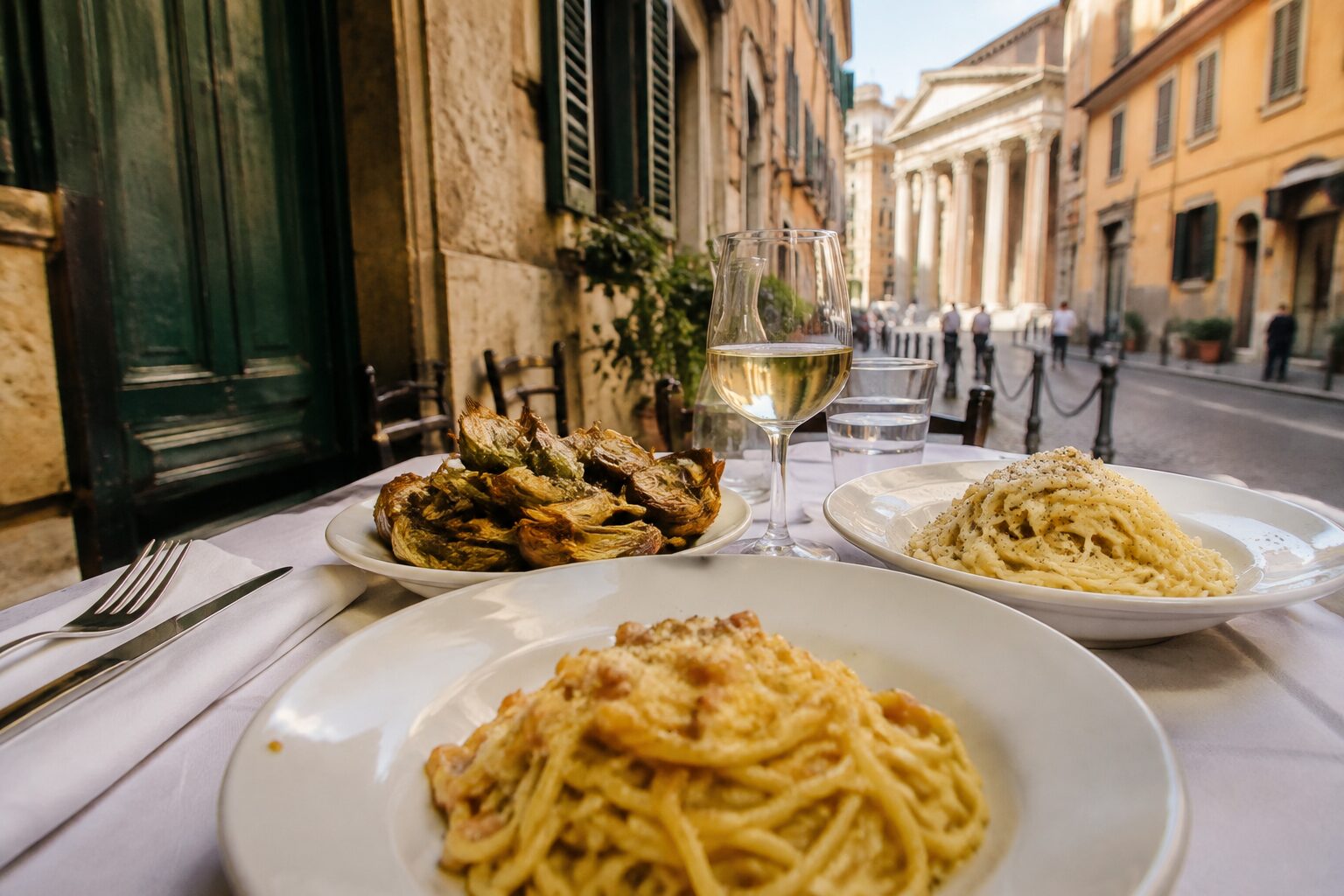
Roman food is shaped by restraint, strong flavors, seasonal produce, and traditions that make sense in their own setting. Eat across formats instead of ordering every classic in one sitting.
The four famous pastas
Cacio e pepe centers cheese and pepper; gricia adds cured pork; amatriciana adds tomato; carbonara brings egg into the equation. Good versions are balanced rather than overloaded with cream or garnish.
More dishes to try
Look for supplì, pizza al taglio sold by weight, thin Roman pizza, artichokes in season, saltimbocca, braised oxtail, tripe, and simple seasonal vegetables. Choose gelato with natural-looking colors and covered or modestly displayed tubs.
Where to eat
Testaccio is important for market and working-class food traditions; Trastevere has classics but also tourist concentration; Monti mixes old and new; Prati is useful after Vatican visits. A focused menu and local lunch crowd are stronger signals than proximity to a monument.
Coffee culture
Order at the register first where required, keep the receipt, and drink standing at the bar for the local rhythm and often a different price from table service. A cappuccino is generally a morning drink, but order what you enjoy without turning etiquette into anxiety.
How to avoid poor meals
- Do not wait until exhausted beside a landmark.
- Be cautious with aggressive solicitation and enormous multilingual menus.
- Check recent opening days.
- Reserve the one dinner that matters.
- Understand bread, cover, and service lines on the bill.
Frequently asked questions
Do you need reservations?
For popular small restaurants and special meals, yes. Casual pizza and daytime food can remain flexible.
Is tap water available?
Rome has potable public fountains, but in restaurants bottled water is common; ask clearly.
Where can you eat cheaply?
Pizza al taglio, bakeries, markets, lunch menus, and neighborhood trattorias can control costs.
Pair this guide with our Rome budget guide and neighborhood guide.
How to build a food plan for Rome
Think in meal types rather than a list of famous restaurants: one traditional meal, one modern interpretation, one market or food-hall visit, one bakery or snack stop, and one cuisine connected to the city’s immigrant communities. This approach survives closures and sold-out reservations.
Map food to sightseeing. A restaurant is rarely worth two hours of extra travel unless it is a central reason for the trip. Save several options in each district and confirm the current menu, opening hours, and reservation policy directly.
Foods and formats worth understanding
Carbonara
Treat carbonara as an invitation to compare preparation, setting, and neighborhood rather than a box to check. Look for a business that specializes or serves it naturally, order an amount that leaves room for the rest of the day, and ask questions respectfully when the staff has time.
Cacio e pepe
Treat cacio e pepe as an invitation to compare preparation, setting, and neighborhood rather than a box to check. Look for a business that specializes or serves it naturally, order an amount that leaves room for the rest of the day, and ask questions respectfully when the staff has time.
Amatriciana
Treat amatriciana as an invitation to compare preparation, setting, and neighborhood rather than a box to check. Look for a business that specializes or serves it naturally, order an amount that leaves room for the rest of the day, and ask questions respectfully when the staff has time.
Gricia
Treat gricia as an invitation to compare preparation, setting, and neighborhood rather than a box to check. Look for a business that specializes or serves it naturally, order an amount that leaves room for the rest of the day, and ask questions respectfully when the staff has time.
Roman-style pizza
Treat Roman-style pizza as an invitation to compare preparation, setting, and neighborhood rather than a box to check. Look for a business that specializes or serves it naturally, order an amount that leaves room for the rest of the day, and ask questions respectfully when the staff has time.
Carciofi in season
Treat carciofi in season as an invitation to compare preparation, setting, and neighborhood rather than a box to check. Look for a business that specializes or serves it naturally, order an amount that leaves room for the rest of the day, and ask questions respectfully when the staff has time.
Supplì
Treat supplì as an invitation to compare preparation, setting, and neighborhood rather than a box to check. Look for a business that specializes or serves it naturally, order an amount that leaves room for the rest of the day, and ask questions respectfully when the staff has time.
Gelato from a quality-focused shop
Treat gelato from a quality-focused shop as an invitation to compare preparation, setting, and neighborhood rather than a box to check. Look for a business that specializes or serves it naturally, order an amount that leaves room for the rest of the day, and ask questions respectfully when the staff has time.
Markets, food halls, and busy counters
Markets are workplaces, not outdoor museums. Keep aisles clear, ask before photographing people or displays, and buy with intention. Popular markets can be most enjoyable near opening or after the primary lunch rush, although individual stalls keep different schedules.
Food halls simplify groups with different preferences and offer shelter in poor weather. They can also be more expensive than neighborhood counters. Use them for variety and convenience, then seek at least one independent place elsewhere.
Reservations and choosing restaurants
Reserve a special meal when it represents something you truly want, not because a social feed declared it mandatory. Read the cancellation terms, arrive on time, and tell the restaurant about essential dietary needs in advance. Keep spontaneous meals flexible.
Menus posted by third parties may be stale. Check the restaurant’s own site or recent direct communication for prices, service charges, dress expectations, children’s policies, and accessibility. A short current menu often signals seasonal focus rather than limited choice.
Dietary restrictions and allergies
Research useful local terms before arrival and carry a concise translated explanation. Distinguish preference from a medically serious allergy, and ask about stock, sauces, garnishes, and shared equipment when relevant. If the risk is severe, contact suitable restaurants ahead of time.
Do not assume that removing a visible ingredient makes a dish safe or compliant. Cultural understanding helps, but direct communication matters most. Pack appropriate backup food for transit days and late arrivals.
How to eat well without overspending
Use breakfast counters, bakeries, lunch specials, noodle or sandwich shops, markets, and neighborhood takeout to balance one more expensive dinner. Order for actual hunger and share large portions when appropriate rather than wasting food for the sake of variety.
Avoid waiting until you are exhausted beside a major attraction. Save two nearby choices each morning and carry water where permitted. A modest planned snack can prevent an overpriced meal selected only because it is visible.
A one-day tasting framework
Begin with carbonara or a simple local breakfast, choose amatriciana or gricia for lunch, stop for carciofi in season or another small specialty in the afternoon, and finish with gelato from a quality-focused shop. Adjust the sequence to opening hours and appetite; the goal is contrast, not maximum consumption.
Choose by neighborhood
Look for carbonara near The historic center, then save two alternatives within walking distance. The area is associated with the Pantheon, Piazza Navona, Trevi Fountain, and exceptional walking at high prices, so the meal can become part of the neighborhood experience rather than a separate expedition.
Read the current menu
A current direct menu reveals prices, format, dietary options, and whether the restaurant still serves the dish that attracted you. Old photographs and third-party lists should inspire, not decide.
Reserve selectively
Reserve amatriciana only when a particular restaurant is central to the trip. For everyday meals, keep flexibility and choose a well-run place near the day’s route.
Understand the bill
Before ordering, notice whether tax, service, cover, bread, seating, or small-plate charges may apply. Local customs differ, and a quick menu check prevents an avoidable misunderstanding.
Order for appetite
Travel encourages over-ordering because every dish feels like a unique opportunity. Begin modestly, share when appropriate, and leave room for a later specialty instead of turning lunch into the end of the sightseeing day.
Respect a busy business
At counters and markets, know roughly what you want, keep aisles clear, and move after eating when seats are scarce. Courtesy produces better interactions and protects the place for regular customers.
Plan for dietary needs
Ask directly about the ingredients and preparation of supplì. A translated card is useful for serious restrictions, but it should support a clear conversation rather than replace one.
Use lunch strategically
Lunch can provide the same kitchen at a gentler price or a more manageable reservation time. Make it the substantial meal on a museum-heavy day, then choose a simple dinner near the hotel.
Avoid the hunger trap
Save two reliable options around The historic center before starting the day. A planned snack and water prevent the expensive, disappointing meal selected only because it sits beside an attraction.
Judge quality sensibly
The goal of trying cacio e pepe is pleasure and understanding, not winning a ranking contest. Specialization, steady local trade, transparent pricing, and careful preparation matter more than a viral queue.
Choose by neighborhood
Look for amatriciana near Prati, then save two alternatives within walking distance. The area is associated with orderly streets, Vatican access, restaurants, and Metro connections without the historic-center crush, so the meal can become part of the neighborhood experience rather than a separate expedition.
Read the current menu
A current direct menu reveals prices, format, dietary options, and whether the restaurant still serves the dish that attracted you. Old photographs and third-party lists should inspire, not decide.
Reserve selectively
Reserve Roman-style pizza only when a particular restaurant is central to the trip. For everyday meals, keep flexibility and choose a well-run place near the day’s route.

Meet Leo: The Heartbeat Behind ‘A Country A Month’
Journeying through the pages of A Country A Month, you might often feel the rhythm of a storyteller’s heartbeat, pulsating through each line, each image, and each adventure shared. That heartbeat belongs to none other than our remarkable website editor, Leo.
With a lens in one hand and a pen in the other, Leo seamlessly marries his passions for photography and writing. His eye captures moments that words can barely describe, yet his eloquence brings those images to life, transcending borders and connecting us all through shared stories. An avid traveler, every country he’s visited has added another chapter to his expansive tale, and through our platform, he generously shares these chapters with us.