What are the most useful Royal Caribbean Asia cruise tips for a Spectrum of the Seas sailing from Singapore? Book the big-ticket experiences before you board (North Star, SkyPad, specialty dining, and any cabana), download the Royal Caribbean app the moment you have your reservation, and treat the short-getaway format as its own kind of trip that rewards planning. Spectrum of the Seas is Royal Caribbean’s first Quantum Ultra-Class ship, purpose-built for this region and long the largest and most advanced cruise ship based here, so she carries a lot of reservation-only activities and specialty venues onto voyages that are often only three, four, or five nights long. The margin for wasted time is small. This guide covers what to lock in early, how to beat the lines, how to run a port day in Penang, Port Klang, or Phuket, and the money, packing, and etiquette details that matter most when you sail in Asia.

Everything in this article and far more, deck by deck, in The Ultimate Guide to Sailing on Spectrum of the Seas.
Get the book →Book the marquee experiences before you set foot onboard
The single biggest lever you have is pre-booking. Spectrum of the Seas packs an unusual number of headline attractions into a hull that carries roughly 4,200 guests at double occupancy and up to about 4,900 when full. On a short getaway, everyone wants the same handful of signature experiences during the same one or two sea days, and capacity for several is genuinely limited. Wait until you are onboard to reserve and you will spend your holiday queuing at guest services hoping for a cancellation.
The North Star is the clearest example: a jewel-shaped glass observation capsule on a mechanical arm that lifts you about 300 feet above the sea for 360-degree views, a Spectrum signature that draws a crowd. Rides are often complimentary on sea days, which sounds relaxing until you realise a free, limited-capacity, weather-dependent attraction on a packed short cruise books out fast. Reserve your slot as early as the app allows, and aim for a window when the ship is near a coastline or the light is soft rather than a flat midday over open water.
Do the same for the other reservation-driven venues. SkyPad, the bungee-trampoline experience with an optional virtual-reality headset, runs in timed sessions. RipCord by iFly, the skydiving simulator, is a vertical wind tunnel that takes a fixed number of flyers per session, so its throughput is low relative to demand. The FlowRider surf simulator is more walk-up friendly but still crowds at peak hours. Book what you can in advance and note the sessions you cannot, so you can be first in line when they open.
Lock in specialty dining and any cabana early
Spectrum’s specialty restaurants are some of the best reasons to sail her, and the good tables go quickly. The lineup includes Wonderland with its imaginative dishes, Jamie’s Italian, the Chops Grille steakhouse, Izumi, Teppanyaki, the intimate Chef’s Table, and — reflecting her home region — Sichuan Red and a Hot Pot venue serving Asian specialties you will not find on most Royal Caribbean ships elsewhere. On a three- or four-night sailing you realistically get one or two specialty dinners, so decide your priorities before you board.
Confirm prices in the app; dining packages can lower the per-meal cost if you eat out more than once. Book your preferred restaurants for the sea-day evenings first, when the Main Dining Room is busiest and a quieter specialty table feels like the biggest upgrade. Your included options — the Main Dining Room, the Windjammer buffet, Café Promenade, and Sorrento’s pizza — cover you well, so specialty dining is a treat to schedule, not a necessity to stack.
If your budget stretches to a poolside cabana or any reserved daybed-style space, book it the moment it appears in the planner — these are the first things to sell out on a hot-weather itinerary where every guest wants shade over a sun lounger. For a deeper look at how the ship’s spaces fit together before you reserve, the complete Spectrum of the Seas cruise guide is a good companion to this tips article.
Make the Royal Caribbean app run your day
The Royal Caribbean app is not optional on Spectrum; it is how the ship communicates. Download it and log in with your reservation as soon as you have booked, well before you fly to Singapore. It is where you complete online check-in, upload your documents, choose a terminal arrival time, and reserve activities and dining — all far easier at home than fighting for a signal in the terminal.
Onboard, the app holds the daily schedule, deck plans, venue hours, menus, and your account activity. Menus and details reflect the Asia market, so check the app rather than assuming a venue runs Caribbean hours. Ship Wi-Fi is a paid plan, but the app still works on the ship’s internal network for schedules and reservations even without full internet — which is why you want everything loaded before you lose your home signal.

Boarding day strategy in Singapore
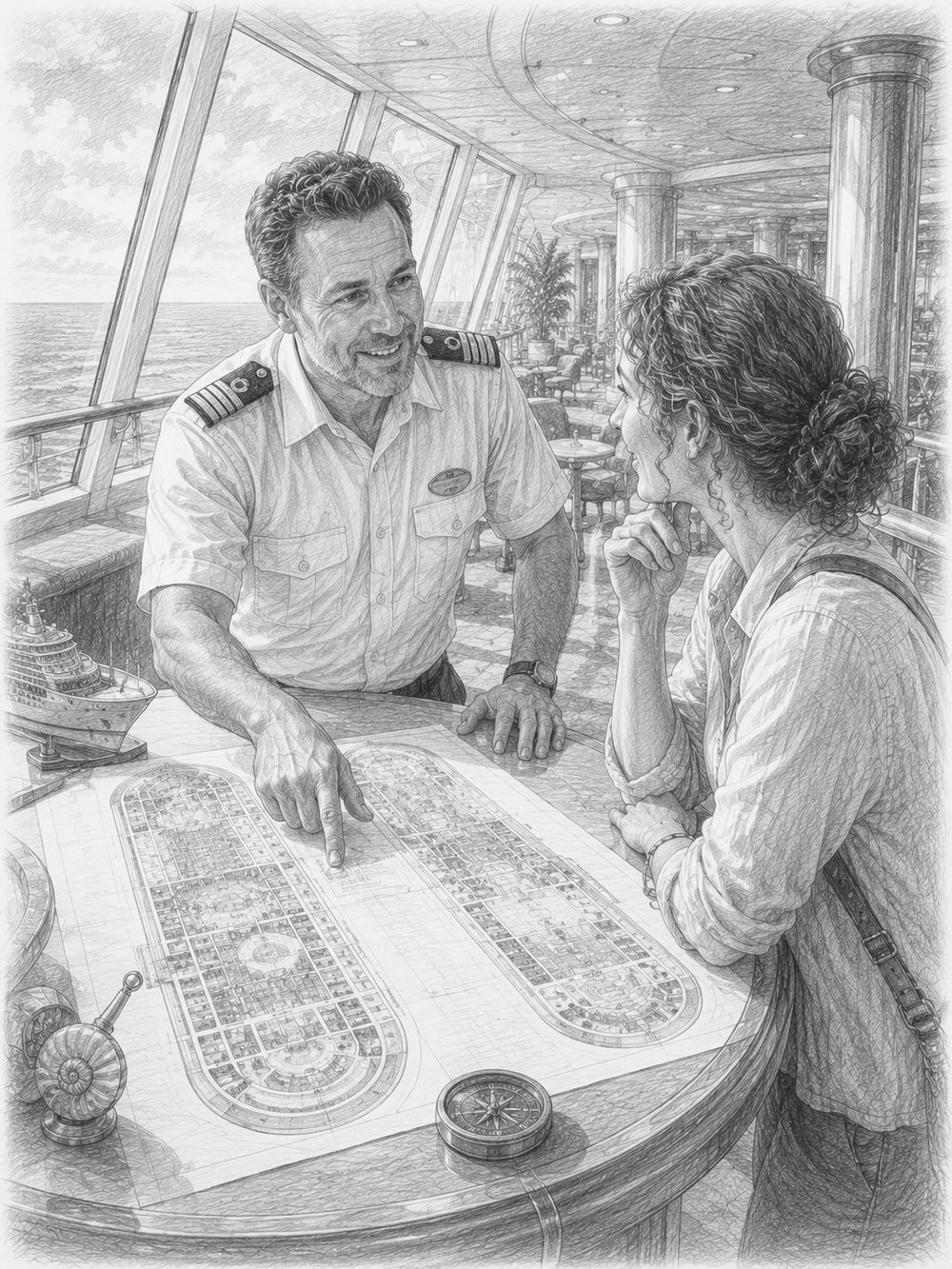
Embarkation runs out of one of two terminals: the Marina Bay Cruise Centre or the Singapore Cruise Centre at HarbourFront. Confirm which one your sailing uses before arranging transport, because they are on opposite sides of the city. The single best thing you can do for a Spectrum cruise is arrive in Singapore a day or two early — short getaways start the moment the ship leaves, and a delayed same-day flight can cost you the whole trip. An early arrival also lets you enjoy the city: Gardens by the Bay, Marina Bay Sands, Sentosa, the Merlion, and the hawker centres reward even one extra day.
On boarding day, choose an arrival time in the app that suits your plan; boarding early gets you onboard for lunch and first crack at the pool and walk-up activities, the right move on a short cruise where sea-day time is precious. Have your documents and passport ready before the terminal, and drop your bags with the porters. Your cabin may not be ready at boarding, so pack a small day bag with swimwear, sunscreen, and medication, and let your main luggage catch up later. For more on the port city and the bookend days, see the guide to Spectrum of the Seas in Singapore.
Beating the lines onboard
Crowd management on a full short cruise is mostly about timing. The Windjammer buffet is calmest if you eat slightly before or after the obvious rush, and the same logic applies to the pool deck, the Solarium, and the Vitality Spa, where the busiest windows are the sea-day mid-mornings. If your itinerary includes a full sea day, treat the first hour after breakfast as prime time to knock out the walk-up attractions before the crowds build.
- Do reservation-only thrills like North Star and SkyPad in your pre-booked slots, and hit walk-up ones such as FlowRider and the rock wall early in the day.
- Check the app’s live venue information rather than walking the ship to see whether a bar or restaurant is busy.
- Schedule specialty dinners on the busiest nights to skip the Main Dining Room crush entirely.
- Save the SeaPlex — the largest indoor active space at sea, with bumper cars, roller skating, basketball, an arcade, and Xbox — for a port afternoon when many guests are ashore.
- Arrive a little early for a Two70 show, with its glass wall by day and immersive Vistarama and Roboscreen productions by night.
The Bionic Bar with its robot bartenders is a fun novelty but slow by design; go when it is quiet if you want the spectacle without the wait. The Royal Esplanade, the indoor promenade, is your climate-controlled spine through the ship and a good way to move around on a hot afternoon without stepping into the heat.
Planning short-getaway port days efficiently
Spectrum’s Southeast Asia sailings are round-trip from Singapore, with typical ports of Penang (George Town) and Port Klang in Malaysia and Phuket in Thailand. Longer voyages may add Ko Samui, Melaka, Vietnam, or the South China Sea, and some seasons include Japan repositioning voyages. Some short sailings are cruises-to-nowhere with no port call, built entirely around sea days and the ship. Always confirm your exact itinerary in the app, because ports and lengths vary. The common thread is that each port day is short, so plan around one or two priorities rather than trying to see everything.
Penang / George Town
George Town is a UNESCO old town and one of the easiest ports to enjoy on foot. The street-art murals, the historic shophouse quarter, and the famous street food — char kway teow and laksa top the list — sit close to the centre, so you can build a walkable half-day and still be back early. For bigger sights, Kek Lok Si Temple and Penang Hill are the classic add-ons, but they need transport, so pick one rather than both on a short call.
Port Klang and the Kuala Lumpur question
Port Klang is the gateway to Kuala Lumpur, home to the Petronas Twin Towers, Batu Caves, and Merdeka Square — but the transfer is about one to one and a half hours each way, up to three hours in a vehicle on a day that may give you only eight or nine hours ashore. If Kuala Lumpur is a must, book a well-organised tour that guarantees your on-time return rather than arranging your own transport and risking the all-aboard deadline in traffic. If it feels too rushed, spend the day closer to the port and save the city for a separate land trip. This is the port that most often catches short-cruise guests out.
Phuket
Phuket gives you Patong Beach, the Big Buddha, Old Phuket Town, and boat trips out to Phang Nga Bay. The boat excursions are the standout but the most time-sensitive, since a delayed return from the water is the classic way to miss the ship — book any Phang Nga trip through a reliable operator scheduled around the ship’s departure and keep a buffer. For a fuller rundown of every stop, the guide to Spectrum of the Seas Southeast Asia ports goes port by port.
Tender ports
Most of Spectrum’s core ports are alongside berths where you walk straight off, but some sailings call at Ko Samui, a tender port where you reach shore by a smaller boat, which adds time at both ends of the day. Guests on ship-organised excursions usually get priority tenders, while independent travellers collect a tender ticket and wait to be called. If your itinerary lists a tender port, factor in the extra transfer time and do not cut your return close.
Money and onboard-account tips
Your SeaPass card is your cashless account onboard: it opens your cabin, gets you on and off the ship at ports, and pays for everything from drinks to specialty dinners. You link a payment card at check-in and settle the balance at the end. Watch your running total in the app so the final bill holds no surprises, especially on a short cruise where a couple of specialty meals, a Wi-Fi plan, and a few drinks add up quickly against a handful of nights.
Gratuities may be added daily or prepaid before you sail; prepaying makes budgeting cleaner and is worth doing when you book. Onboard currency and menus reflect the Asia market, so confirm details in the app rather than assuming US-dollar pricing. For the ports, carry a modest amount of local cash — Malaysian ringgit and Thai baht — for hawker food, taxis, and small vendors who do not take cards. You do not need much for a short port day.
Packing for a tropical short cruise
Packing for a three-to-five-night tropical getaway is different from packing for a week in the Mediterranean. The climate is hot and humid across the region, so lightweight, breathable clothing is the base of everything you bring. Because the cruise is short, you can pack light and still have a fresh outfit for each evening.
- High-SPF sunscreen and a hat — the equatorial sun is strong, and buying sunscreen onboard or in port is more expensive.
- A light rain layer, since tropical showers arrive fast and pass quickly.
- Swimwear you can wear straight off on boarding day while your luggage catches up.
- Comfortable walking shoes for George Town’s streets and Phuket’s town, plus sandals for the beach and pool.
- Modest clothing that covers shoulders and knees for temple visits such as the Big Buddha or Kek Lok Si.
- A smart-casual outfit or two for specialty dining and the ship’s evenings.
- Any medication in your carry-on day bag, plus a small stash of local cash for port day one.
Insect repellent earns a spot for temple grounds and evenings ashore. Keep your boarding-day bag light enough to carry all afternoon, since it is the one bag you will live out of until your cabin is ready.
Etiquette for sailing in Asia
Spectrum draws a broad international mix, with many travellers from across Asia sailing alongside visitors from further afield, and a little cultural awareness goes a long way. At the temples in port — the Big Buddha in Phuket, Kek Lok Si in Penang, or Batu Caves near Kuala Lumpur — dress modestly, remove your shoes where required, keep your voice down, and ask before photographing people at worship. These are living religious sites, not just photo stops.
Onboard, the usual courtesies matter more on a busy short sailing where everyone is chasing the same experiences. Do not drape towels over pool loungers to reserve them while you disappear for hours; on a packed sea day it is the fastest way to irritate everyone around you. Honour your reservation times so the venues run smoothly, and be patient at the Bionic Bar and other slow-by-design attractions. The dining rooms serve a wide range of cuisines to match the international crowd, so come with an open mind — trying Sichuan Red or the Hot Pot venue is part of what makes sailing Spectrum here distinctive. If this is your first cruise in the region, the primer on a first-time Asia cruise on Spectrum covers the rhythm of these sailings in more detail.
Choosing the right cabin for the trip you want
Where you sleep shapes the trip. The best value on a short getaway is a Virtual Balcony interior, which uses a floor-to-ceiling real-time ocean screen to bring the view inside at a lower price — sensible when you will barely be in the room on a three-night sailing. The best all-round pick is a midship balcony on the mid-decks for space, light, and a steadier ride. Studio cabins suit solo travellers, and the exclusive Suite Class tiers — Golden, Silver, and Star — unlock a private, keycard-access suite complex with perks that scale up to a private restaurant, a private lounge and sundeck, and a dedicated Royal Genie at the top Star level. If you do not book a suite, you cannot access those areas, so weigh that before you decide.
Wherever you book, check the deck plan for noise and view. Rooms directly under the pool deck or SeaPlex can be loud, as can cabins near Two70 and the nightlife venues; forward high-deck rooms move more in any swell; and some lower-deck balconies have lifeboat-obstructed views. A quick look at the best cabins on Spectrum of the Seas before you commit will steer you clear of the few rooms worth avoiding.
Get the complete Spectrum of the Seas playbook

For every tip in one place — cabin-by-cabin advice, a full breakdown of the reservation-only attractions, and port-day plans you can follow step by step — read “The Ultimate Guide to Sailing on Spectrum of the Seas.” It is part of the Ultimate Ship Guides series by Leo Sotropa, with clear action steps in every chapter.
Frequently asked questions
What should I book before boarding Spectrum of the Seas?
Reserve the limited-capacity signatures first: the North Star observation capsule and SkyPad, then RipCord by iFly. Book specialty dining — Wonderland, Chops Grille, Izumi, Teppanyaki, Sichuan Red, or the Hot Pot venue — for the sea-day evenings, and grab any cabana the moment it appears in the planner. On a short getaway these sell out fast, so do it as soon as the app lets you rather than waiting until you are onboard.
How early should I arrive in Singapore before the cruise?
Arrive at least a day or two early. Short getaways start the moment the ship sails, and a delayed same-day flight can cost you the trip. An early arrival also gives you time for Gardens by the Bay, Marina Bay Sands, Sentosa, and the hawker food, and it lets you confirm which terminal — Marina Bay Cruise Centre or the Singapore Cruise Centre at HarbourFront — your sailing uses.
Is it worth going to Kuala Lumpur from Port Klang?
It can be, but the transfer is about one to one and a half hours each way, which is up to three hours of travel on a short port day. If Kuala Lumpur is a priority, book an organised tour that guarantees your on-time return rather than arranging your own transport and risking the all-aboard deadline in traffic. If the day feels too rushed, stay closer to the port and save the city for a separate land trip.
Do I need the Royal Caribbean app?
Yes. The app is how the ship runs. Download it and log in with your reservation as soon as you book so you can complete online check-in, choose an arrival time, and reserve activities and dining before you fly. Onboard it holds the daily schedule, deck plans, menus, and your account, and it works on the ship’s internal network for schedules even without a paid Wi-Fi plan.
How do I pay for things onboard?
Your SeaPass card is a cashless account linked to a payment card at check-in; you use it for everything onboard and settle the balance at the end. Gratuities can be added daily or prepaid, and prepaying keeps budgeting simple. Onboard currency and menus reflect the Asia market, so confirm details in the app, and carry a little local cash — ringgit and baht — for hawker food, taxis, and small vendors in port.
What should I pack for a short Spectrum cruise?
Pack light and tropical: breathable clothing, high-SPF sunscreen and a hat, a light rain layer for quick showers, comfortable walking shoes plus sandals, and modest clothing that covers shoulders and knees for temple visits. Add a smart-casual outfit for specialty dining. Keep medication and a small stash of local cash in a day bag with swimwear for boarding day, since your cabin may not be ready right away.
Are any of Spectrum’s ports tender ports?
Most core stops — Penang, Port Klang, and Phuket — are alongside berths where you walk straight off. Some sailings call at Ko Samui, which is a tender port reached by a smaller boat, adding transfer time at both ends of the day. Guests on ship excursions usually get priority tenders. Always check your specific itinerary in the app, since ports and lengths vary and some short sailings are cruises-to-nowhere with no port call at all.
Ready for the whole ship in one place? It is all in The Ultimate Guide to Sailing on Spectrum of the Seas.
Get the book →
Meet Leo: The Heartbeat Behind ‘A Country A Month’
Journeying through the pages of A Country A Month, you might often feel the rhythm of a storyteller’s heartbeat, pulsating through each line, each image, and each adventure shared. That heartbeat belongs to none other than our remarkable website editor, Leo.
With a lens in one hand and a pen in the other, Leo seamlessly marries his passions for photography and writing. His eye captures moments that words can barely describe, yet his eloquence brings those images to life, transcending borders and connecting us all through shared stories. An avid traveler, every country he’s visited has added another chapter to his expansive tale, and through our platform, he generously shares these chapters with us.