Sailing on a Spectrum of the Seas Singapore cruise means one thing before you even board: you get to spend time in one of the most exciting cities in Asia. Spectrum of the Seas is based year-round in Singapore, so almost every voyage begins and ends there, and the smartest thing you can do is treat the city as part of the trip rather than a place you rush through on the way to the ship. This guide walks through the two cruise terminals, how to reach the port, why arriving a day or two early matters, what to see and eat in Singapore, and exactly how embarkation day tends to flow so you step aboard relaxed instead of frazzled.

Everything in this article and far more, deck by deck, in The Ultimate Guide to Sailing on Spectrum of the Seas.
Get the book →Why Singapore is the perfect launch point
Spectrum of the Seas is Royal Caribbean’s first Quantum Ultra-Class ship, purpose-built for Asia and long the largest and most advanced cruise ship based in the region. At around 169,000 gross tons with roughly 16 guest decks and about 4,200 guests at double occupancy, she is a genuinely big ship, and Singapore gives her a home port that matches her scale: a modern, orderly, English-speaking city with a world-class airport, clean public transport, and enough to do that a pre-cruise stay never feels like filler.
The rhythm of sailing from here is different from a week-long Caribbean cruise. Many Spectrum itineraries are short getaways of 3, 4 or 5 nights, round-trip from Singapore, so the city bookends a compact, fast-moving trip. Typical ports include Penang (George Town) and Port Klang (the gateway to Kuala Lumpur) in Malaysia, and Phuket in Thailand, while longer sailings may add Ko Samui, Melaka, or head further afield toward Vietnam and the South China Sea. Some sailings are cruises-to-nowhere, or sea-day getaways with no port call at all. Because lengths and ports vary so much, always confirm your specific itinerary in the Royal Caribbean app before you plan anything ashore.
That short-getaway pattern shapes how you should approach Singapore. On a 3-night sailing, the day or two you add in the city might be the biggest sightseeing block of the whole trip, so it is worth planning properly. If you want the full picture of the ship itself before you go, our complete Spectrum of the Seas cruise guide covers the layout, the venues and the booking basics.
The two cruise terminals: which one is yours?
Singapore has two cruise terminals, and knowing which one your sailing uses is the single most important logistical fact to nail down before the day itself. They are on opposite sides of the city, so turning up at the wrong one is a genuine risk if you assume rather than check.
Marina Bay Cruise Centre
Marina Bay Cruise Centre is the newer, larger terminal built to handle big ships, and it is where a vessel the size of Spectrum most naturally fits. It sits at Marina South, out toward the water beyond the Marina Bay district. The building is spacious and modern, with the room to move crowds that a 4,000-plus guest ship generates. The one thing to know is that it is not right on top of a train station, so your final approach is usually by taxi, ride-hail, or a shuttle rather than a short walk from the metro.
Singapore Cruise Centre at HarbourFront
The Singapore Cruise Centre at HarbourFront is the older terminal on the west side of the city, close to the HarbourFront hub and the gateway to Sentosa. It is well connected to public transport and sits beside a major shopping mall, which makes it easy to reach and easy to kill time near. It is smaller than Marina Bay, but it is a familiar embarkation point for regional cruising.
The bottom line: do not guess. Your terminal is printed on your cruise documents and shown in the Royal Caribbean app once check-in opens. Confirm it the moment you have it, note which side of the city it is on, and choose your hotel and airport transfer with that terminal in mind. The two are a real drive apart in traffic, so this one detail can save you a stressful morning.
Getting to the port
Singapore makes port transfers easy compared with most cruise cities. Changi Airport is efficient and well signposted, and taxis and ride-hail apps are plentiful, metered and reasonable. From the airport to either terminal is a straightforward ride, and if you have arrived early and are staying in the city first, you will simply travel from your hotel on embarkation day.
- Taxi or ride-hail: the simplest option with luggage, and it drops you at the terminal door. Confirm the terminal name with your driver, since the two are far apart.
- Public transport: excellent and cheap across the city, and especially handy for HarbourFront, which sits right at a transport hub. Marina Bay Cruise Centre is less directly served, so plan the last leg.
- Cruise line or hotel transfers: some hotels and the cruise line offer transfers on embarkation day; these take the guesswork out but usually run to a fixed schedule.
Whichever you choose, aim to arrive within your assigned check-in window rather than at the very start of boarding. Turning up hours early on a ship this size often just means queuing.

Arrive a day or two early — here is why
If you are flying in from outside the region, arriving a day or two before your Spectrum sailing is the best decision you can make. It protects you against flight delays and lost baggage, it lets you shake off the long-haul fatigue and adjust to the time zone, and it turns Singapore from a place you glimpse into a real part of the holiday. For a short getaway especially, those extra city days can double the amount of memorable sightseeing you get from the trip.
Where you stay is worth a moment’s thought. A hotel in the Marina Bay area puts you near the headline sights and is well placed for the Marina Bay Cruise Centre. A hotel near HarbourFront makes sense if that is your terminal and if Sentosa is high on your list. Wherever you land, one early night in a proper bed beats stumbling onto the ship jet-lagged and missing the first evening’s fun.
What to do in Singapore before or after your cruise
Singapore rewards even a short stay. The sights cluster tightly, transport is quick, and you can pack a lot into a single well-planned day. Here are the landmarks worth building your pre- or post-cruise time around.
Gardens by the Bay
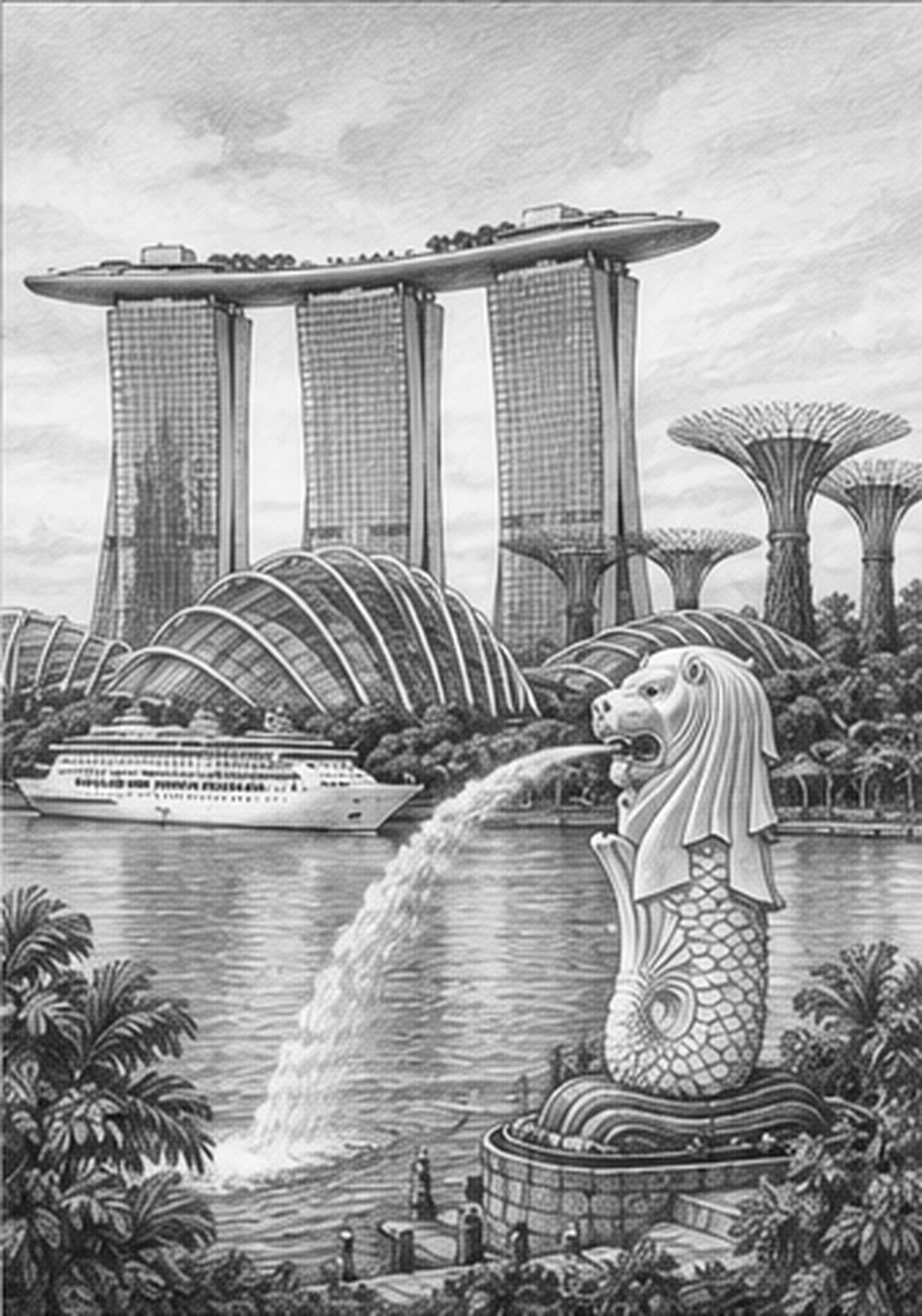
Gardens by the Bay is the futuristic garden that has become one of the city’s defining images, home to the towering Supertree structures and climate-controlled conservatories. It is an easy few hours and sits close to Marina Bay, making it a natural pairing with the surrounding sights. Go late in the day and you catch the light show after dark.
Marina Bay Sands
Marina Bay Sands, the three-tower hotel crowned by its ship-shaped SkyPark, dominates the waterfront and anchors the whole Marina Bay district. Even if you do not stay there, the area around it — the promenade, the shopping, the views back across the water — is the heart of modern Singapore and an easy walk from Gardens by the Bay.
Sentosa
Sentosa is Singapore’s resort island of beaches and attractions, reached from the HarbourFront side of the city. If your terminal is the Singapore Cruise Centre at HarbourFront, Sentosa is right there, which makes it an ideal way to spend a pre-cruise afternoon before you board. It is family-friendly and easy to reach.
The Merlion
The Merlion, the half-lion, half-fish statue that is the city’s mascot, stands on the waterfront at Marina Bay with a classic view across to Marina Bay Sands. It takes only a few minutes to see, but it is the photo that says you were in Singapore, and it fits neatly into a Marina Bay walking loop.
Hawker food
Do not leave without eating at a hawker centre. These open-air food halls are where Singapore’s food culture lives — dozens of stalls serving Chinese, Malay and Indian dishes at low prices, all under one roof. It is the most rewarding, most affordable eating you will do in the city, and a fine contrast to the specialty dining you will enjoy on board. A hawker lunch on your last morning is a great way to end a city stay before you head to the ship.
A single well-organised day can cover Marina Bay: start at the Merlion, walk the waterfront past Marina Bay Sands, spend the afternoon at Gardens by the Bay, and finish with the evening light show. A second day frees you up for Sentosa or for wandering the older neighbourhoods and their food. If your sailing includes ports like Penang or Phuket, you will find more Southeast Asian food and culture ashore too — our guide to the Spectrum of the Seas Southeast Asia ports covers what to expect at each stop.
Embarkation day, step by step
Once you know your terminal and your check-in window, embarkation day is refreshingly simple. Here is how it typically flows.
- Before you go: complete online check-in in the Royal Caribbean app ahead of time, add your documents and photo, and note your assigned arrival window. This is also where your terminal is confirmed.
- Arrival: reach the correct terminal within your window. Porters take your checked bags near the entrance — tag them with your cabin number first, and they will appear at your stateroom door later.
- Check-in and security: pass through security screening much like an airport, then complete check-in and collect or activate your SeaPass card, which is your room key and cashless account for the whole cruise.
- Boarding: walk aboard, usually into one of the ship’s dramatic public spaces. Cabins often open a little later in the afternoon, so keep essentials in your carry-on.
- First moves: grab lunch at the Windjammer buffet, explore, and use the app to confirm your dining and to book the headline experiences before they fill up.
Keep a small carry-on with your passport, medication, swimwear, chargers and anything you need for the first few hours, since checked bags can take time to arrive. Beyond that, the process is quick and the crew are practised at moving a full ship aboard. For more day-one habits that make the trip smoother, our Royal Caribbean Spectrum of the Seas tips go deeper on the small things that add up.
Booking the big experiences early
Spectrum carries the signature Quantum-class thrills, and on a short getaway the popular ones book out fast, so the app becomes your friend the moment you are aboard. The North Star, a jewel-shaped glass capsule on a mechanical arm that lifts you about 300 feet above the sea for 360-degree views, is the one to reserve first; it is often complimentary on sea days but slots go quickly. RipCord by iFly is a skydiving simulator in a vertical wind tunnel, FlowRider is a surf simulator, and SkyPad is a bungee-trampoline experience with an optional virtual-reality headset that is a Spectrum signature.
Indoors, SeaPlex is the largest active space at sea with bumper cars, roller skating, basketball, an arcade and Xbox, while Two70 turns from a glass-walled lounge by day into a venue for immersive Vistarama and Roboscreen shows at night. Add the Royal Esplanade indoor promenade, the Bionic Bar with its robot bartenders, a rock wall, the Vitality Spa and the Solarium, and there is more than enough to fill the sea days on a cruise-to-nowhere. Because the getaways are short, decide your must-dos on day one and book them straight away.
Dining, the app and your onboard account
Your fare includes the Main Dining Room, the Windjammer buffet, Café Promenade and Sorrento’s pizza, which is plenty for a short sailing. If you want to treat the trip, the specialty restaurants are worth planning around: Wonderland with its imaginative dishes, Jamie’s Italian, Chops Grille, Izumi, Teppanyaki, the Chef’s Table, and the Asian specialties that suit the region — Sichuan Red and Hot Pot. On a 3- or 4-night getaway you realistically have room for one or two specialty dinners, so book the ones you care about early.
The Royal Caribbean app runs your day: deck plans, the schedule, dining, activity bookings and account. Your SeaPass card is your cashless account on board; gratuities may be added to your account or prepaid, and Wi-Fi is a paid plan. Because Spectrum serves the Asia market, the onboard currency and some menu details reflect that — confirm the specifics for your sailing in the app.
Choosing a cabin for a short getaway
The right cabin depends partly on how long you are sailing. On a short round-trip from Singapore, the value Virtual Balcony interior — an inside room with a floor-to-ceiling real-time ocean screen — is genuinely hard to beat, because you spend so little waking time in the cabin. If you want more space and light, a midship balcony on the mid-decks gives the steadiest ride and the best all-round comfort. Solo travellers have dedicated Studio cabins, and at the top end the exclusive Suite Class tiers unlock a private, keycard-access suite complex.
That suite complex is worth understanding before you book. Spectrum introduced a private area reserved for suite guests, split into Golden, Silver and Star Suite Class tiers, with perks that scale up by class and can include a private restaurant, a private lounge and sundeck, priority everything, and a dedicated Royal Genie for top Star Class. If you do not book a suite, you cannot access these areas, so factor that into the decision rather than being surprised on board. Whatever category you choose, check the deck plan and avoid cabins directly under the pool deck or SeaPlex for noise, rooms near Two70 or the nightlife venues, forward high-deck rooms if anyone is prone to motion, and lower-deck balconies with lifeboat-obstructed views. Our guide to the best cabins on Spectrum of the Seas breaks the categories down in detail.
The short-getaway rhythm for international cruisers
If you are travelling from far away, the whole trip works best when you plan around the compact rhythm of these sailings. A 3- or 4-night getaway leaves little slack, so front-load the effort: arrive early, do your Singapore sightseeing before the cruise while you are fresh, and let the sailing itself be the relaxed part. Because some voyages are cruises-to-nowhere with no port call, the ship’s own venues carry the trip, which is exactly what Spectrum is built for.
Packing differs from a week-long cruise too. You need less, but still want swimwear ready in the carry-on, something smart for a specialty dinner, and comfortable shoes for both the ship and a Singapore walking day. Keep your travel documents secure, and remember that clearing back into Singapore at the end is straightforward but does take time, so allow a buffer before any onward flight. If this is your first time cruising in the region, our guide to a first-time Asia cruise on Spectrum walks through what feels different from cruising elsewhere.
Put together, the formula is simple: confirm your terminal, arrive a day or two early, spend that time properly on Gardens by the Bay, Marina Bay Sands, Sentosa, the Merlion and a hawker meal, then step aboard within your check-in window with your must-do experiences already booked. Do that, and a short Spectrum getaway from Singapore delivers far more than its nights suggest.
Get the complete Spectrum of the Seas playbook

Ready to make the most of every day aboard? “The Ultimate Guide to Sailing on Spectrum of the Seas” is part of the Ultimate Ship Guides series by Leo Sotropa, with clear action steps in every chapter so you know exactly what to book, when to book it, and how to plan your Singapore days around the sailing.
Frequently asked questions
Which cruise terminal does Spectrum of the Seas use in Singapore?
Singapore has two cruise terminals: the newer, larger Marina Bay Cruise Centre, which is built for big ships like Spectrum, and the Singapore Cruise Centre at HarbourFront on the west side of the city. Your sailing could use either, so always confirm the exact terminal on your cruise documents and in the Royal Caribbean app once check-in opens, and plan your hotel and transfer around it — the two are a real distance apart.
How early should I arrive in Singapore before the cruise?
Arrive a day or two early, especially if you are flying in from outside the region. It protects you against flight delays and lost luggage, gives you time to adjust to the time zone, and lets you actually enjoy Singapore. On a short 3- or 4-night getaway, those pre-cruise days may be the biggest sightseeing block of the whole trip, so they are well worth building in.
What should I do in Singapore before or after my Spectrum cruise?
Focus on the Marina Bay cluster — the Merlion, Marina Bay Sands and Gardens by the Bay all sit close together and make an easy walking day, ideally finishing with the evening light show. Add Sentosa’s beaches and attractions if you have a second day, and do not miss eating at a hawker centre, the most rewarding and affordable food in the city.
How do I get to the cruise port in Singapore?
Taxis and ride-hail apps are plentiful, metered and reasonable, and they drop you right at the terminal door — just confirm the terminal name with your driver since the two are far apart. Public transport is excellent and especially convenient for HarbourFront, while Marina Bay Cruise Centre is best reached by taxi or a shuttle. Some hotels and the cruise line also offer embarkation-day transfers.
What is a cruise-to-nowhere on Spectrum of the Seas?
Some Spectrum sailings are cruises-to-nowhere, or sea-day getaways, that sail round-trip from Singapore with no port call. The ship itself is the destination, which suits Spectrum perfectly given her North Star capsule, RipCord skydiving simulator, FlowRider, SkyPad, SeaPlex and Two70. Always check your specific itinerary in the app, since lengths and ports vary widely from one sailing to the next.
What happens on embarkation day?
Complete online check-in in the app beforehand and note your arrival window. On the day, reach the correct terminal, hand your tagged checked bags to a porter, pass through security, complete check-in and collect your SeaPass card, then board — often into a dramatic public space. Cabins usually open later in the afternoon, so keep a carry-on with your passport, medication and first-hour essentials, and use the app to book your must-do experiences right away.
Which cabin is best for a short Singapore getaway?
On a short round-trip sailing, the value Virtual Balcony interior is hard to beat because you spend so little time in the room, while a midship balcony on the mid-decks offers the best all-round space, light and steadiest ride. Solo travellers have dedicated Studio cabins. Remember that only suite guests can access the private Golden, Silver and Star Suite Class complex, so weigh that if the exclusive perks matter to you.
Ready for the whole ship in one place? It is all in The Ultimate Guide to Sailing on Spectrum of the Seas.
Get the book →
Meet Leo: The Heartbeat Behind ‘A Country A Month’
Journeying through the pages of A Country A Month, you might often feel the rhythm of a storyteller’s heartbeat, pulsating through each line, each image, and each adventure shared. That heartbeat belongs to none other than our remarkable website editor, Leo.
With a lens in one hand and a pen in the other, Leo seamlessly marries his passions for photography and writing. His eye captures moments that words can barely describe, yet his eloquence brings those images to life, transcending borders and connecting us all through shared stories. An avid traveler, every country he’s visited has added another chapter to his expansive tale, and through our platform, he generously shares these chapters with us.