Expect the biggest, busiest, most feature-packed ship at sea, sailing from Orlando. Star of the Seas is lively rather than laid-back: eight neighborhoods, more than 20 places to eat, the largest waterpark afloat, and a Back to the Future stage musical. Star is the second ship in Royal Caribbean’s Icon Class, and at 248,663 gross tons across roughly 20 decks she carries up to about 7,600 guests at full occupancy. Once you know that going in and plan around the crowds, it is a remarkable week. Here is an honest picture of what the ship is actually like day to day.
Everything in this article and far more, deck by deck, in The Ultimate Guide to Sailing on Star of the Seas.
Get the book →The scale, and the crowds
With up to around 7,600 guests, Star is effectively a floating resort town. The clever part of the design is that it spreads people across neighborhoods, so it rarely feels like 7,600 people in one place. You will still meet busy moments, mainly at the pools on sea days, at the waterpark mid-morning, and at the buffet at peak times. None of it is a dealbreaker, and all of it is solved the same way: go early or late, and reserve what you can in advance. Guests who fight the crowds have a harder week than guests who simply sidestep them.
The double-occupancy number, north of 5,000, is the figure that matters most for how the ship actually feels. That is the count on a typical sailing without every third berth and sofa bed filled. School holidays push closer to the maximum, and you notice it at the slides and the family pools rather than in the dining rooms or theaters, which are sized to absorb the load. If you have a choice of dates, a sailing outside peak weeks changes the texture of the whole trip more than any single booking decision.
The neighborhoods you’ll actually use
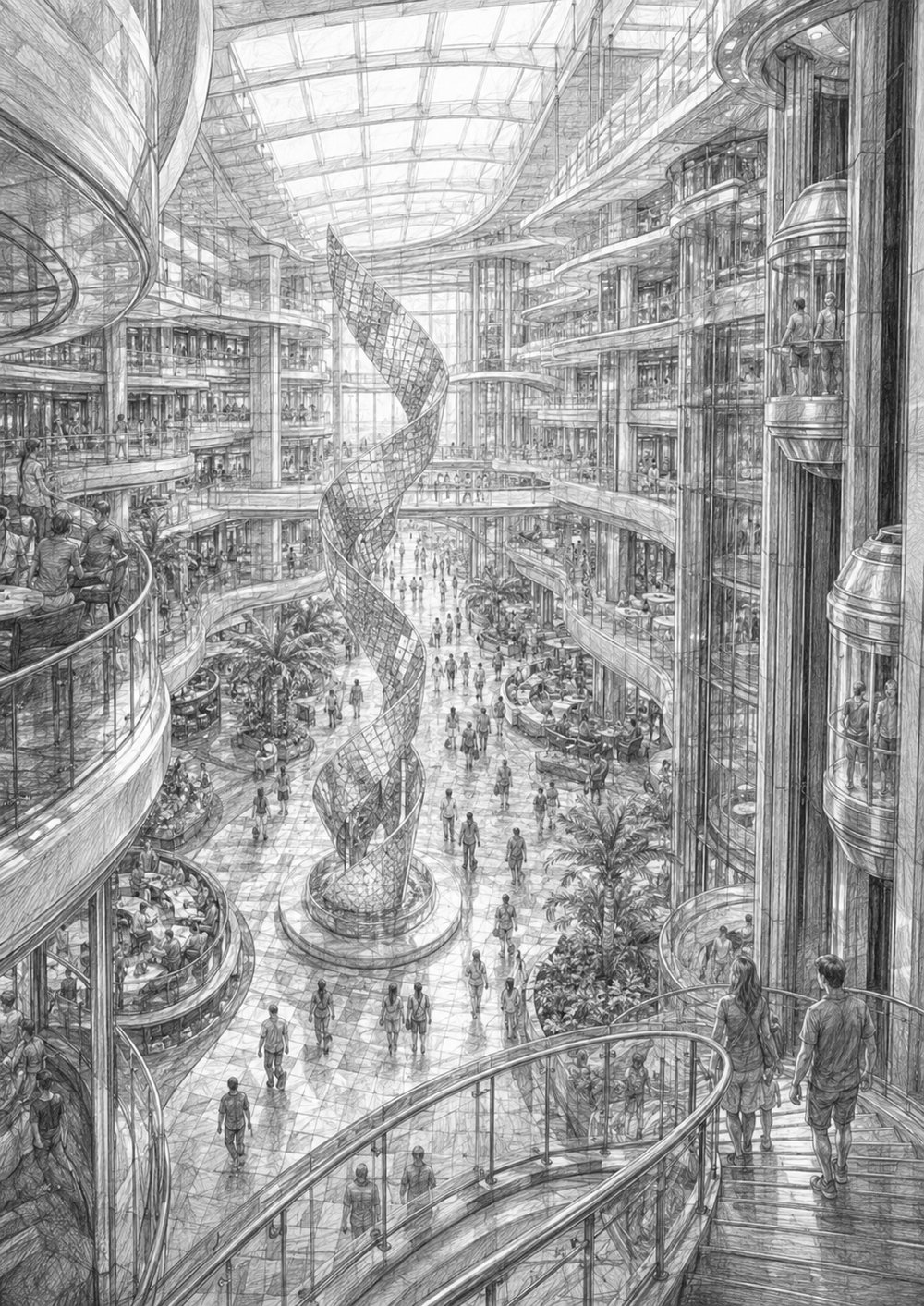
You do not need to memorize all eight neighborhoods, but a few become daily anchors. The Royal Promenade is the indoor main street you pass through for shops, bars, and events. Central Park is the calm open-air garden at the ship’s core, planted with real greenery and ringed by some of the best restaurants. AquaDome sits under a glass dome at the bow and holds a show theater and a food hall. Chill Island is the main pool zone, and Thrill Island is where the Category 6 waterpark and the boldest rides live. Learn those five first and the ship starts to feel small surprisingly fast.
The other three shape who you sail with. Surfside is the family neighborhood, built around a carousel, a splash zone, and casual food, so young kids gravitate there all day. The Hideaway is the adults-only counterpoint, a suspended infinity pool with a party atmosphere that runs from morning music to late-afternoon crowds. The Suite Neighborhood is a private enclave for Royal Suite Class guests and stays out of the flow entirely, with its own restaurants and sun deck. Knowing which of these matches your group tells you where to base yourself. A family with small children will orbit Surfside and Chill Island all week, while a couple without kids will find far more of their time in Central Park and at The Hideaway. If cabin location is still on your mind, our best cabins guide explains which neighborhoods to sleep near and which to avoid.
Dining: the included venues
Your fare already covers a great deal, and most guests never need to spend a dollar extra to eat well for a week. The Main Dining Room is the traditional sit-down option, a multi-level room serving a changing menu each evening with table service and a different theme most nights. It is also open for a calmer sit-down breakfast and, on sea days, lunch. The Windjammer is the big buffet, best treated as a first-morning fallback and an off-peak friend: arrive right when it opens or well after the rush and it is genial, hit it at 8:30 on a sea day and you will queue for a table.
The Surfside Eatery is the family neighborhood’s casual buffet, angled at kids and the parents chasing them, and it is the path of least resistance when your morning is running on toddler time. The real find, though, is the AquaDome Market, a food hall under the glass dome where several counter stalls sit side by side so a group can split up and still eat together. On Star the stalls include La Cocinita for South American plates, Pig Out BBQ, Mai Thai, Feta Mediterranean, and Creme de la Crepes for something sweet. It is the most flexible included meal on the ship and rarely as mobbed as the main buffet.
Beyond those four, casual grab-and-go spots are scattered through the Royal Promenade and the pool decks for the between-meal moments. The practical takeaway is that included food on Star is genuinely good and genuinely varied, and the specialty restaurants below are a want rather than a need.
Dining: the specialty splurges
Three specialty venues carry an extra charge, and each buys a different kind of evening. Lincoln Park Supper Club is the headline, themed to 1930s Chicago with live jazz and served as a dinner-and-show format, so you are paying for a couple of hours of theater as much as for the food. Chops Grille is the classic steakhouse, the pick when you want a straightforwardly excellent meal without a performance attached. Izumi handles hibachi and sushi, which works well for a group that wants some spectacle at the teppanyaki grill.
| Venue | Included? | Best for |
|---|---|---|
| Main Dining Room | Yes | Sit-down dinners, changing nightly menu |
| Windjammer | Yes | Fast buffet, best off-peak |
| Surfside Eatery | Yes | Families with young kids |
| AquaDome Market | Yes | Groups who want different cuisines at once |
| Lincoln Park Supper Club | Extra | A dinner-and-jazz-show night out |
| Chops Grille | Extra | A quiet, first-rate steak dinner |
| Izumi | Extra | Hibachi and sushi with some theater |
Whether the splurge is worth it depends on your appetite for a longer, showier meal versus a quick, good one. If you book only one specialty night, most guests get the most out of Lincoln Park because it doubles as an evening of entertainment. Reserve any of the three in the app before you sail; the best times on sea days go early. Our insider tips guide covers how to choose and when to book.
Entertainment worth planning around
Star leans hard into shows, and they are a real reason to sail her. The headline theater production is Back to the Future: The Musical, staged in the main theater with the full scale of a West End or Broadway-style production. It is the one show almost everyone wants to see, which means it is the one that fills first, so treat it like a dinner reservation and book it in the app before you leave home.
The rest of the lineup is unusually deep for a single ship. Torque is the aqua show, staged in the water under the AquaDome with divers and acrobatics. SOL is the figure-skating production in the ship’s ice arena. Create is a robot-themed production that leans on technology and movement. On top of those, live music runs across multiple venues through the evening, from jazz to pop sets, so there is something on most nights without a booking. The four big productions are the ones to lock in early.
- Back to the Future: The Musical — the headline theater show; book first.
- Torque — the AquaDome aqua show, divers over water.
- SOL — figure skating in the ice arena.
- Create — a robot-themed production built on tech and movement.
- Live music — nightly across the bars and lounges, no reservation needed.
The headliners fill up, so book them in the app before you sail and treat them like appointments. Turning up a few minutes early still gets you the best seats even with a booking, and if a show sells out for your preferred night, check for a standby line at the door, which often moves.
The thrills, ride by ride
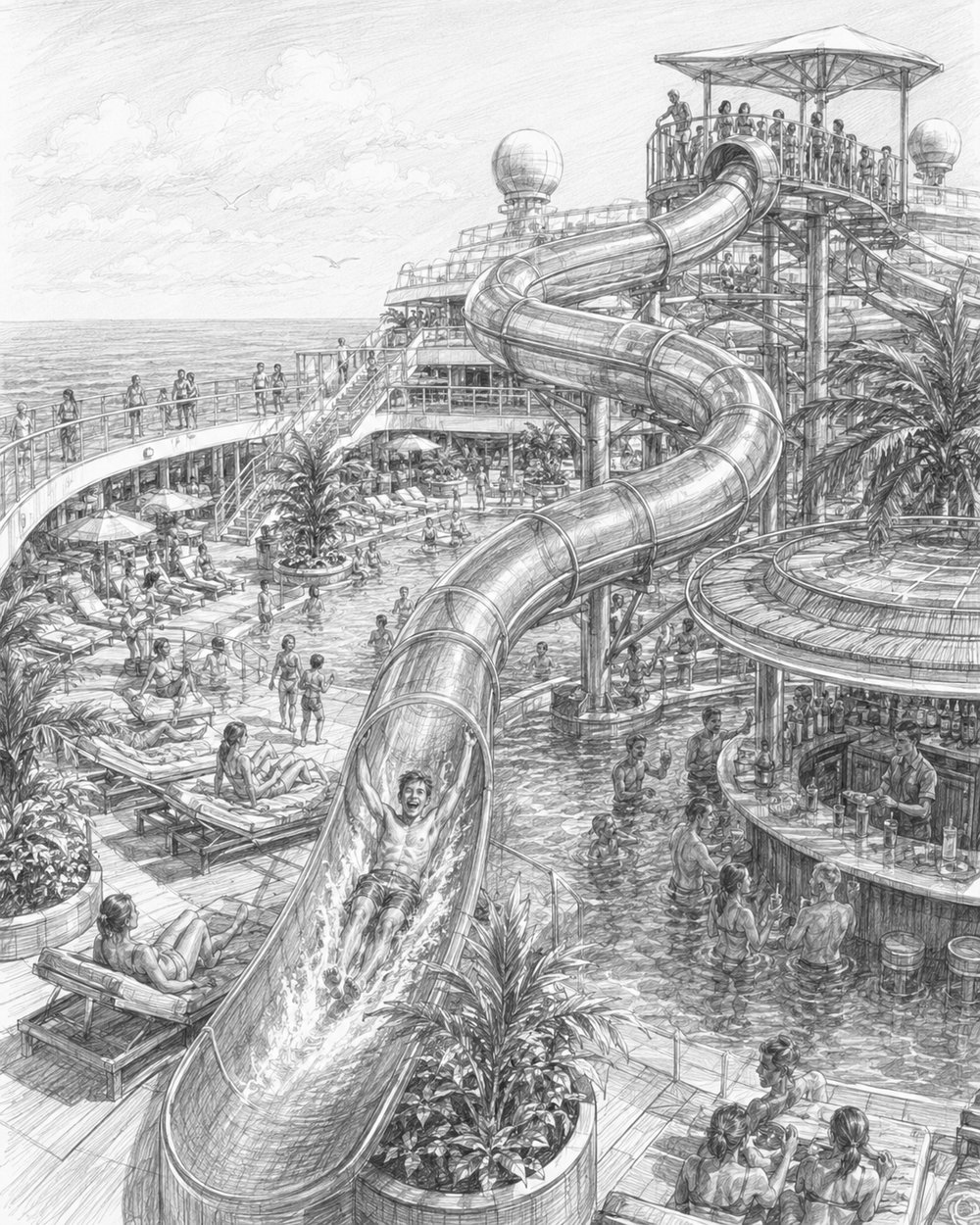
Category 6 is the largest waterpark at sea, and it anchors Thrill Island. It packs six record-setting slides, including the tallest drop at sea and an open free-fall slide that starts with a trap-door floor giving way beneath you. The slides range from the genuinely intimidating to the merely fast, so a mixed group can all find a level. The catch is throughput: this is the single most crowd-sensitive attraction on the ship, and the line mid-morning on a sea day is the longest you will stand in all week.
Beyond the slides there is the FlowRider surf simulator for stand-up and bodyboard sessions, Crown’s Edge, a skywalk that sends you out over the water with a surprise built into the walk, and a rock wall for a quick climb with a view. For cooler days, the Absolute Zero ice arena is open for skating between shows. The pattern for all of it is the same: ride early, or ride on a port day when most guests are ashore and the waits collapse. A near-empty Category 6 at 10 a.m. in port is one of the best-value hours on the whole ship.
Seven pools and the nightlife
Star has seven pools, and they are not interchangeable. Royal Bay is the largest pool at sea and the social center of Chill Island. Swim & Tonic is a swim-up bar for drinks without leaving the water. The Hideaway is the adults-only suspended infinity pool with the liveliest, party-leaning crowd. Splashaway Bay is the kids’ splash zone with shallow water and sprayers. Add the rest of the Chill Island pools and you have options for every mood, from a raucous afternoon to a quiet float.
After dark, the ship shifts to its bars and lounges. The Royal Promenade hosts events and has watering holes along its length, Central Park quiets into a place for a drink among the greenery, and The Hideaway keeps its energy into the evening. Live music threads through most of these spaces, so a night out can be as loud or as low-key as you like without ever leaving the ship. Pacing yourself here is the trick, since a full day of sun and slides has a way of ending the night earlier than planned.
A sample sea day
Sea days are when the ship is at its liveliest, and the guests who start early win the day. A workable rhythm: breakfast in the Main Dining Room or a quick counter bite, then straight to Category 6 or the pools before mid-morning while the lines are short. Late morning is for a headline show or the spa, then a relaxed lunch at the AquaDome Market to dodge the buffet crush. The afternoon opens up for a second show, a stretch at Central Park or The Hideaway, and a swim once the pool crowds thin. Dinner is your booked reservation, and the evening runs on live music or a second production. Reading the next day’s schedule in the app each night is the single habit that keeps you ahead.
A sample port day
Port days flip the logic. Most guests go ashore, so the ship empties and the slides, pools, and loungers open up for anyone who stays aboard, at least for a late-morning window before the ship gets underway again. If you are heading out, the move is to be near the gangway early, since the first wave off the ship beats the tender and taxi lines at busier stops. On a typical 7-night sailing you will have a mix: an included beach day at Perfect Day at CocoCay, a couple of genuine ports, and a sea day or two to catch what you missed. Our ports and excursions guide breaks down each stop and whether to book a tour or go independent.
The two itineraries give you a sense of the range. The Eastern route runs Port Canaveral to CocoCay, then San Juan in Puerto Rico and Philipsburg in St. Maarten, with sea days between. The Western route swaps in Costa Maya, Roatan, and Cozumel for a Mexico-and-Honduras week. Ports can shift by date, so confirm your exact sailing, but either way you are getting a beach day, real destinations, and enough time at sea to enjoy the ship itself.
Getting around, and the app
Download the Royal Caribbean app before you go. It holds your boarding pass, reservations, the daily schedule, deck maps, and check-in, and it is how you navigate, order, and plan each day. Getting comfortable with it on day one removes most first-time friction. Learn the neighborhood names, use the stairs for a deck or two rather than waiting on elevators, and orient yourself around Central Park and the Royal Promenade, which run through the middle of the ship and make natural landmarks. Newcomers should read our first-time cruiser guide alongside this one.
A few app-adjacent facts save headaches. Your SeaPass card is the onboard cashless account for everything you buy, and daily gratuities are added to it automatically for most guests. There is no free ship-wide Wi-Fi, so if you want to stay connected you buy a paid plan, and you will want your phone on airplane mode with the ship’s Wi-Fi rather than cellular to avoid roaming charges at sea. The app itself works over the ship’s network without a paid internet plan, which is what lets you check the schedule and reservations all week for free.
What might surprise a first-timer
A few things catch newcomers off guard, mostly in ways that reward planning. The ship is so spread out that you will walk far more than you expect, so comfortable shoes matter more than a big wardrobe. Cabins are not ready until the afternoon on embarkation day, so carry a day bag with swimsuits and anything you need for the first few hours. The main pools fill by mid-morning on sea days, and the best shows and specialty restaurants are reserved days or weeks ahead rather than on a whim.
There is also the matter of tipping and small costs. Nearly everything aboard is cashless through your SeaPass card, but you will still want a little cash for tipping ashore and for port taxis. Passport and documentation rules vary by itinerary; a US territory like Puerto Rico is easy for US citizens, while other stops may want a passport, so check your specific route. None of this is a problem once you expect it; it simply separates the guests who glide through the week from the ones who feel a step behind.
The Orlando factor
Because Star sails from Port Canaveral, about an hour from Orlando and its theme parks, many guests arrive with theme-park energy already spent or still to come. If you are pairing the cruise with Orlando, expect the embarkation crowd to skew toward families, and give yourself a buffer day so a delayed park trip or flight does not cost you the ship. Even without the parks, the short drive from Orlando’s airport to the terminal is one of the easiest big-ship departures in the country, which is a real part of why Star sells so well to families. Our Orlando family cruise guide covers how to combine the two without burning everyone out.
Get the complete Star of the Seas playbook
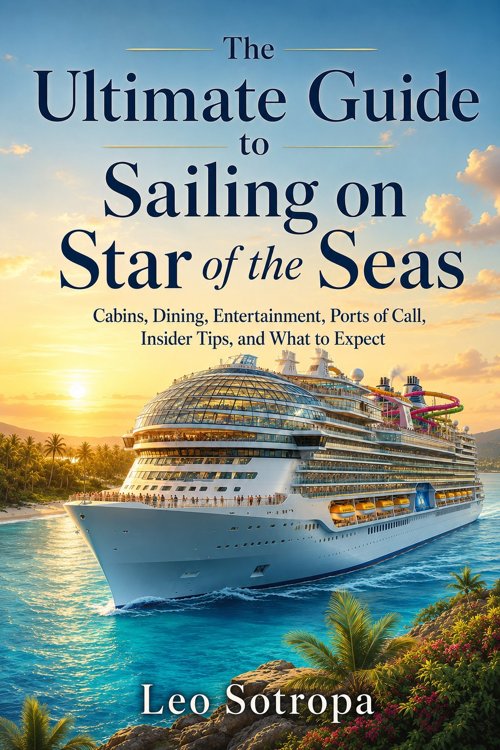
For the complete picture of what to expect, from every venue to every port, read The Ultimate Guide to Sailing on Star of the Seas. It is part of the Ultimate Ship Guides series by Leo Sotropa, with clear action steps in every chapter so you board knowing the ship like a regular.
Frequently asked questions
Is Star of the Seas too big or too crowded?
It is very large, but the neighborhood layout spreads guests out, so it seldom feels packed except at peak pool and buffet times. Timing your day around those windows turns the size into an asset rather than a drawback.
What food is included on Star of the Seas?
The Main Dining Room, the Windjammer buffet, the Surfside Eatery, and the AquaDome Market food hall, plus a range of casual spots, are included in your fare. Specialty restaurants like Lincoln Park Supper Club, Chops Grille, and Izumi carry an extra charge.
What is the main show on Star of the Seas?
The headline theater production is Back to the Future: The Musical. There is also the Torque aqua show under the AquaDome, the SOL ice-skating show, the robot-themed Create, and live music across the ship. Reserve the headliners in the app before you sail.
Do I need to reserve shows and dining in advance?
Yes, for the headline shows and any specialty restaurant. The most popular slots go weeks ahead in the app, and booking early is the easiest way to avoid disappointment.
How do I avoid the waterpark lines?
Ride Category 6 early in the morning or on a port day when most guests are ashore. Mid-morning on a sea day is the single busiest window for the slides, so it is the one time to avoid.
What should I not miss on Star of the Seas?
Most guests point to the Category 6 waterpark, Back to the Future: The Musical, a sunset at The Hideaway or in Central Park, and a beach day at Perfect Day at CocoCay. Build your week around a few must-dos rather than trying to see everything.
Is Star of the Seas relaxing?
It can be, but it takes intention. Seek out Central Park, the adults-only Hideaway, and quiet sea-day mornings. If total calm is your main goal, a smaller ship may suit you better than the newest megaship afloat.
Ready for the whole ship in one place? It is all in The Ultimate Guide to Sailing on Star of the Seas.
Get the book →
Meet Leo: The Heartbeat Behind ‘A Country A Month’
Journeying through the pages of A Country A Month, you might often feel the rhythm of a storyteller’s heartbeat, pulsating through each line, each image, and each adventure shared. That heartbeat belongs to none other than our remarkable website editor, Leo.
With a lens in one hand and a pen in the other, Leo seamlessly marries his passions for photography and writing. His eye captures moments that words can barely describe, yet his eloquence brings those images to life, transcending borders and connecting us all through shared stories. An avid traveler, every country he’s visited has added another chapter to his expansive tale, and through our platform, he generously shares these chapters with us.