The short answer: MM2H (Malaysia My Second Home) is a capital-based retirement visa, not an income-based one. The realistic federal tier (Silver) asks for a USD 150,000 fixed deposit plus a property purchase of at least RM600,000 (~$146,000). The cheaper Sarawak route asks for a RM500,000 (~$122,000) deposit and no property. Most of that capital stays yours — the deposit earns tax-free interest and the condo is a home you own. MM2H renews indefinitely but never becomes permanent residency or citizenship.
Malaysia is one of the easiest countries in the world for an American to actually live in — English runs everything and your U.S. income goes untaxed. But the door into that easy life got expensive, and any honest MM2H guide has to lead with that. For years MM2H was the friendliest retirement visa in Asia; the old version, closed to new applicants since 2020, asked for just a RM150,000 deposit or about RM10,000 a month of income, with no property. That Malaysia is gone. Here is exactly what replaced it.
This summarizes the visa chapter of No-Nonsense Guide to Retiring in Malaysia by Leo Sotropa — every tier, every trap, and the honest math on which door fits which nest egg.
The federal tiers: deposit plus property
The federal MM2H, which you need to live anywhere on Peninsular Malaysia (Penang, KL, Melaka, Ipoh, Johor, Langkawi), comes in three tiers. Every one combines a locked fixed deposit at a Malaysian bank with a mandatory property purchase you must complete within 12 months of approval.
| Tier | Fixed deposit | Property (within 12 mo) | Pass length | Work rights |
|---|---|---|---|---|
| Silver | USD 150,000 (~RM613,000) | RM600,000 | 5 years [VERIFY 5 vs 10] | None |
| Gold | USD 500,000 | RM1,000,000 | 15 years | None |
| Platinum | USD 1,000,000 | RM2,000,000 | 20 years | Limited |
For almost every retiree, the tier that matters is Silver: USD 150,000 (roughly RM613,000) in a licensed Malaysian bank, plus a property worth at least RM600,000 completed within a year. Gold and Platinum exist for the wealthy, and Platinum is the only tier that grants limited work rights.
Here is the counterweight to those big numbers: most of that money stays yours. The fixed deposit is not a fee — it is your capital, earning interest that Malaysia does not tax, and after about a year up to 50% can be withdrawn for approved purposes like property, healthcare, or education. The mandatory property is a condo or home you own and live in, which erases rent from your budget. You are not spending USD 150,000 plus RM600,000; you are parking it, most of it recoverable, some of it turned into a home.
Two costs are genuine expenses rather than parked capital: the government participation fee (about RM1,000 at Silver) and a licensed MM2H agent package, which most applicants use and which runs roughly RM20,000–50,000. For most retirees the agent is worth it — the process involves federal immigration, a bank, a property purchase, and a medical-insurance requirement all in a foreign system, and a licensed agent knows where applications stall. Get the package fee in writing with a clear list of what it includes.
The lower bar: Sarawak MM2H
If the federal numbers are out of reach, the genuinely more accessible route is Sarawak MM2H (S-MM2H), run by the state of Sarawak on Borneo and updated on January 1, 2025. Its base is Kuching, a clean, calm, very safe riverside city.
- Fixed deposit: RM500,000 (~$122,000), and that single figure covers a spouse and dependents.
- Property: none required.
- Fee: RM5,000, one time.
- Presence: only 30 days a year in Sarawak.
- Pass: 5 years, renewable once, for a 10-year maximum. Minimum age 30. Since January 2025 it even permits work and business.
The one genuinely murky area: sources conflict on whether Sarawak still imposes a monthly income requirement (roughly RM7,000–10,000) or a savings-proof figure (RM100,000–200,000 is cited in places) [VERIFY]. Confirm the current income and savings rules directly with InvestSarawak before you commit. The real trade-off is geography — Sarawak is a separate immigration jurisdiction, so S-MM2H lets you reside in Sarawak, not on the peninsula. If your heart is set on Penang or KL, this route does not put you there. But if you can embrace Kuching, it is the honest floor of retiring in Malaysia: cheaper, simpler, no property, 30 days a year.
The rules that trip people up
Beyond the money, a handful of conditions surprise applicants, and they matter enormously:
- The property lock. The property you buy to qualify carries a lock-in period, typically 5 to 10 years, set by the state land authority. Selling it early can void your visa. This is a home you commit to, not a condo you flip.
- The 50-plus presence exemption. Younger federal holders must spend around 90 days a year in Malaysia [VERIFY 60 vs 90], but applicants aged 50 and over are generally exempt from the minimum-presence rule — a real gift for retirees who want to split the year with family back home.
- Mandatory medical insurance. You must hold valid Malaysian medical insurance for your entire time on MM2H. A minimum coverage figure around RM80,000 is commonly cited, with a possible exemption for applicants over 60 [VERIFY]. Budget the premium as a fixed cost, not a maybe — and get live quotes before committing, because premiums rise steeply with age.
- No local work. On Silver and Gold you cannot work locally; only Platinum grants limited work rights. This is a retirement visa, not a work permit.
- The property floor varies by state. The minimum foreign-purchase price is the hinge of the whole federal decision: Melaka RM500,000, Kuching RM600,000, but KL, Penang island, Perak (Ipoh), and Johor all RM1,000,000. Melaka’s low floor is why a qualifying RM600,000 condo is realistic there and not on Penang island.
The niche side door and the paths that don’t work
Two things worth naming so you don’t waste time on them. There is a Special Economic/Financial Zone version of MM2H, the best known attached to Forest City in Johor, with a much lower deposit (cited around USD 32,000–65,000) [VERIFY]. On paper that’s a fraction of Silver, and it draws attention in forums — but it ties you geographically to a specific zone, the terms change, and it is not a general-purpose retirement visa. Verify current terms directly before building a plan around it.
And two routes flatly do not work for a retiree: the DE Rantau Nomad Pass requires active remote-work income (a floor around USD 24,000/year for tech, ~$60,000 for others), so a pensioner with no work income doesn’t qualify; and indefinite tourist-entry “border runs” are not a lawful long-term residence strategy and risk refused entry. For most readers, the two real doors remain federal Silver and Sarawak.
How the application actually runs
The mechanics matter as much as the money, and they run in a fixed order. Start by gathering proof of funds early — recent bank and investment statements, source-of-funds evidence, and often a bank letter — because clean financial documentation is slower to assemble than people expect, and the visa does not move until the capital is provably in place. Engage a licensed MM2H agent, who submits and shepherds the application through federal immigration (or InvestSarawak for the Sarawak route). Once approved, you arrive and get the pass endorsed and activated — approval and status are not the same thing, and almost nothing else works until the endorsement is done. Then open a Malaysian bank account (tourists generally can’t), place the fixed deposit, and, on the federal route, complete your qualifying property purchase within 12 months of approval. Line up your mandatory medical insurance policy in parallel, since coverage is a condition of the visa from the start. Move the deposit funds over with Wise in tranches rather than one lump, both to manage the exchange rate and because the ringgit strengthened in 2026. A well-run application is less a single leap than a sequence of ordinary steps in the right order.
The ceiling: renewable, never permanent
One truth to go in clear-eyed about: MM2H, federal or Sarawak, is a renewable long-stay pass and explicitly not a path to permanent residency or citizenship. You can renew indefinitely as long as you keep meeting the conditions, but you remain, in the eyes of the law, a long-term guest. The years you spend do not accrue toward PR, and Malaysian PR is very hard to get. For most retirees this is fine — you came to live well, not to naturalize — but if the idea of always being renewable rather than permanent sits badly with you, name that now. It’s also a reason to keep your capital liquid and your U.S. ties intact.
One tax note you cannot skip
Parking a large deposit abroad has a U.S. paperwork consequence that is not optional. The moment your MM2H or Sarawak fixed deposit sits in a Malaysian bank, you almost certainly cross the FBAR threshold — the requirement to report foreign accounts to the U.S. Treasury (FinCEN Form 114) when their combined value tops $10,000 at any point in the year. A RM500,000 deposit blows past that on its own, and larger holdings may also trip FATCA Form 8938. Reporting is not the same as taxing — Malaysia doesn’t tax your U.S. income and the deposit interest is tax-exempt there — but you still file the U.S. forms. Put FBAR on your annual calendar the day you open the account and you’ll never think about it again.
Want the full document checklist, the state-by-state property floors, and the three retirees’ worked visa math? It’s all in No-Nonsense Guide to Retiring in Malaysia.
FAQ
How much money do you need for the MM2H visa?
For federal Silver, USD 150,000 in a fixed deposit plus a property of at least RM600,000. For the Sarawak route, RM500,000 (~$122,000) deposited with no property. Both are mostly parked capital you keep, not fees.
Is the MM2H fixed deposit refundable?
Yes. It’s your money in your name, earning tax-free interest. On the federal route up to 50% is withdrawable after about a year for approved uses, and the balance returns to you when you exit the program, subject to the withdrawal timeline.
Does MM2H lead to permanent residency or citizenship?
No. It’s a renewable long-stay pass only. You can renew indefinitely while meeting the conditions, but the years build no entitlement toward PR or a passport.
Keep reading: Can you retire in Malaysia on Social Security? · Moving to Malaysia: the step-by-step guide · The complete guide to retiring in Malaysia
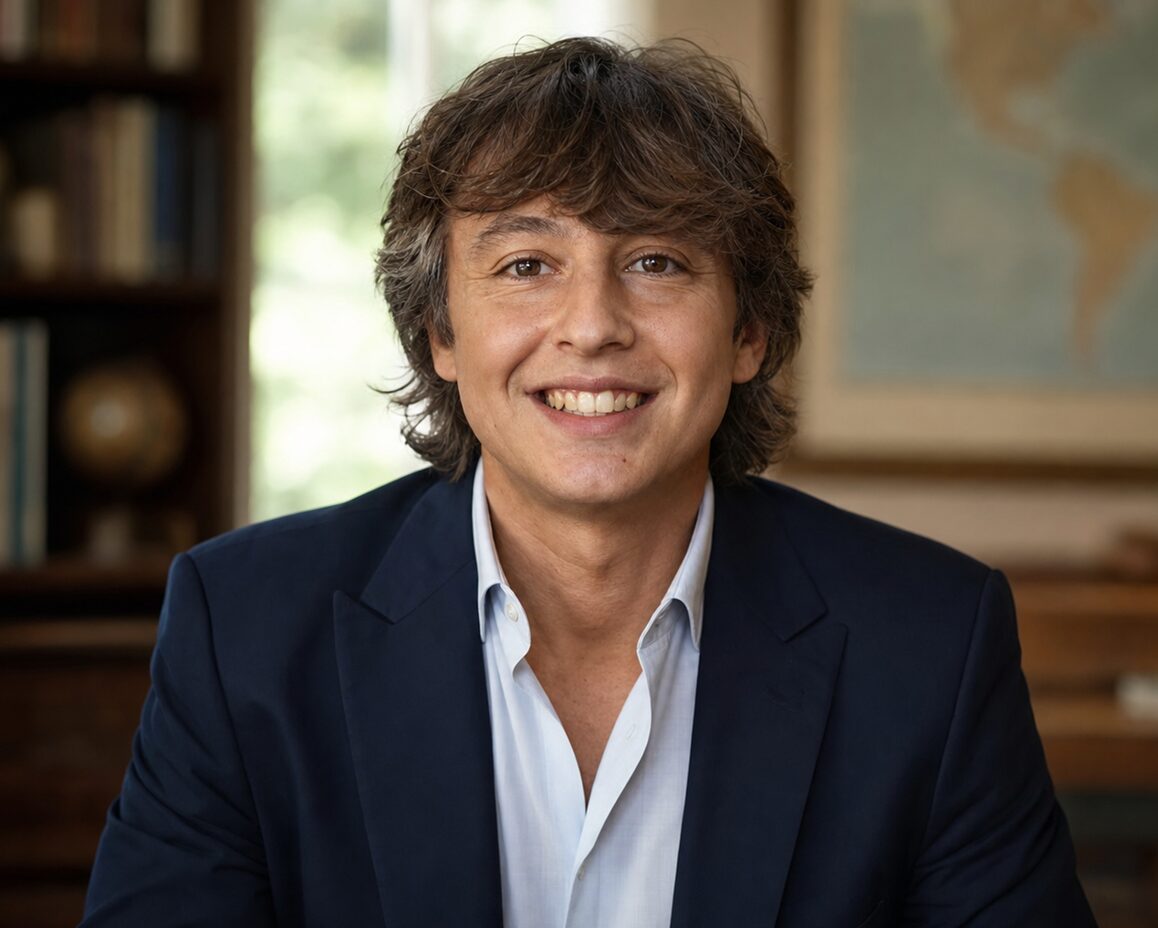
Meet Leo: The Heartbeat Behind ‘A Country A Month’
Journeying through the pages of A Country A Month, you might often feel the rhythm of a storyteller’s heartbeat, pulsating through each line, each image, and each adventure shared. That heartbeat belongs to none other than our remarkable website editor, Leo.
With a lens in one hand and a pen in the other, Leo seamlessly marries his passions for photography and writing. His eye captures moments that words can barely describe, yet his eloquence brings those images to life, transcending borders and connecting us all through shared stories. An avid traveler, every country he’s visited has added another chapter to his expansive tale, and through our platform, he generously shares these chapters with us.