The short answer: Your Social Security check will comfortably cover a monthly life in Malaysia — a single retiree lives well in Kuching or Ipoh for about RM3,000 (~$730). But the MM2H visa is capital-based, not income-based, so a check alone will not get you in the door. You must park roughly RM500,000 (~$122,000) for the Sarawak route or about USD 150,000 plus a property for the federal route. If you have that nest egg, Social Security funds a genuinely comfortable life on top of it. If you don’t, Malaysia’s visa is likely out of reach for now — and this article says so plainly.
This is the question that trips up more would-be Malaysia retirees than any other, because the honest answer has two halves that point in opposite directions. Most countries make you prove a monthly income; Malaysia makes you prove capital. So “can I retire here on Social Security?” splits into “can my check cover the living?” (almost always yes) and “can my check get me the visa?” (almost always no). Let’s take both halves honestly, with the real numbers.
This summarizes the affordability chapters of No-Nonsense Guide to Retiring in Malaysia by Leo Sotropa — two-column budgets that keep the parked capital and the monthly life separate, so you never confuse the price of the gate with the cost of the life.
Half one: your check covers the living, easily
Start with the good news, because it is genuinely good. Once you are through the door, Malaysia is cheap and your U.S. income is untaxed by Malaysia. A single retiree lives leanly in a cheap city like Ipoh or Kuching for about RM3,000 a month (~$730), and comfortably in Penang or Kuala Lumpur for about RM5,250 (~$1,280). A couple lives comfortably for roughly RM5,770–8,490 ($1,407–2,071).
Set those against a typical Social Security check of $1,200–3,000 and the arithmetic is reassuring:
- Grace, 67 and solo in Kuching, lives on about RM3,630 (~$885) against a $1,850 check — a cushion near $965 a month, before the interest her parked deposit throws off.
- Ron and Judy, a couple in Melaka who own their condo, spend about RM5,540 (~$1,351) against ~$2,900 combined — a cushion of over $1,500, wide precisely because they deleted the rent line.
- Walter, 70 in Penang, spends about RM6,620 (~$1,615) against ~$3,000, absorbing a hefty age-70 insurance premium and still clearing nearly $1,400.
The line items behind those totals are small: a hawker meal RM6–15 ($1.50–3.70), fiber internet RM89–150, a Grab ride RM6–15, groceries RM400–1,000 for a single. On the monthly cost of living, Social Security is more than enough for a comfortable Malaysian life. That half of the question is a clean yes.
Half two: the visa is the wall, and it isn’t income
Now the hard half. Malaysia’s retirement visa, MM2H, was rebuilt into something capital-heavy, and there is no low-asset retiree visa anymore. The old easy path — a modest deposit or about RM10,000 a month of income — closed to new applicants in 2020. What replaced it asks you to park a lump of capital, and your Social Security check, however reliable, does not substitute for it.
There are two doors, and you only need one:
| Route | Fixed deposit | Property required | Where you live |
|---|---|---|---|
| Sarawak MM2H | RM500,000 (~$122,000) | None | Kuching / Sarawak |
| Federal MM2H (Silver) | USD 150,000 (~RM613,000) | RM600,000+ (~$146,000) | Peninsular Malaysia |
The reassuring part is that this capital is mostly parked, not spent. The fixed deposit sits in a licensed Malaysian bank in your name, earning interest that Malaysia does not tax, and on the federal route up to 50% can be withdrawn after about a year for property, healthcare, or education. The property is a home you own outright. So the visa’s price is largely a transfer of where your money lives — but you still have to have the money. A Social-Security-only retiree with a thin savings account cannot manufacture RM500,000 out of a monthly check.
The lowest realistic bar: the Sarawak route
If your savings are modest but real, the honest floor worth trying is Sarawak MM2H, run by the state of Sarawak on Borneo and based in the riverside city of Kuching. It asks for a RM500,000 (~$122,000) fixed deposit that covers a spouse, no mandatory property purchase, a one-time RM5,000 fee, and just 30 days a year in Sarawak. Since January 2025 it even permits work and business, and the minimum age dropped to 30.
This is Grace’s route. She sold her house, netted about $140,000, parked RM500,000, and lives well in Kuching on $1,850 a month with the deposit interest on top. The trade-off is geography: Sarawak is a separate immigration jurisdiction, so this route puts you in Kuching, not Penang or KL. But Kuching is a clean, calm, very safe, English-friendly city with good hospitals and a cost of living below the peninsula — not a consolation prize. One murky point to confirm: sources differ on whether Sarawak still imposes a monthly-income test (roughly RM7,000–10,000) or a savings-proof figure, so verify the current rule with InvestSarawak before you commit.
If you can’t clear even the Sarawak bar
A wise friend tells you the hard thing before you get your hopes up, not after. If neither RM500,000 nor USD 150,000-plus-a-property is within reach, Malaysia’s visa is, for now, out of reach, and this book will not pretend otherwise. Two paths that people ask about do not solve it: the DE Rantau nomad pass requires active remote-work income (roughly USD 24,000/year for tech workers, ~$60,000 for others), so a pensioner with no work income does not qualify; and indefinite tourist-visa “border runs” are not a lawful long-term residence strategy and risk being refused entry.
That does not mean the door is closed forever. Malaysia may fit you later, when a home sale or an inheritance changes the math. And if your deciding factor is monthly cost rather than parked capital, another country in this series will likely serve you better today. Knowing that now saves you from selling a house to chase a visa you can’t clear.
Do the honest math with two numbers, not one
The single most useful thing you can do is stop asking the one-number question (“is my check enough?”) and ask the two-number version. Write down both:
- Your liquid savings — the capital you could actually lock in a Malaysian fixed deposit, plus anything you could put toward a property. Compare it to the two bars: ~$122,000 for Sarawak, or ~$150,000 plus a property for federal. This is the real test.
- Your monthly income — Social Security plus any pension. Compare it to the budget for your target city (RM3,000 lean, RM5,250 comfortable single). This decides how comfortable the life is after you’re in.
Most retirement guides blur these together and leave you confused. Keep them in separate columns and the picture snaps into focus: for the great majority of readers, the monthly income clears the bar with room to spare, and the whole decision turns on whether the capital does. If it does, Social Security funds one of the best-value retirements in Asia on top of it. If it doesn’t, you have your answer, and it’s kinder to have it early.
Getting your Social Security to Malaysia
Once you are in, collecting your benefit is refreshingly easy. Malaysia is on the Social Security Administration’s International Direct Deposit list, so the SSA can pay your benefit straight into a Malaysian bank account in ringgit (form SSA-1199-OP56) — U.S. citizens receive it without the restrictions that hit residents of some other countries. Many retirees instead keep the benefit landing in a U.S. account and move money over with Wise, which gives them control over when they convert dollars to ringgit — useful because the ringgit strengthened in 2026, so a dollar now buys fewer ringgit (plan your budget at 4.0). Your annual COLA raise follows you to Malaysia, and spousal and survivor benefits continue there too, so a surviving spouse keeps the larger of the two checks. Keep a U.S. bank account and mailing address alive for all of it.
Protecting a spouse on a Social Security household
If you’re married, Social Security is not just your check, and the household picture deserves planning before you move, not after. Spousal benefits let a lower-earning spouse claim on the higher earner’s record — potentially up to half the higher benefit at full retirement age — and these pay to U.S. citizens abroad, so living in Malaysia does not cut them off. Survivor benefits are the ones to plan for hardest: when one spouse dies, the survivor generally steps up to the higher of the two benefits going forward, and for U.S. citizens those payments continue in Malaysia (an International Direct Deposit country) without special restriction. That continuity matters enormously to a widow or widower dealing with loss in a foreign country: the larger of your two checks keeps arriving. Pair it with awareness of the visa side — on the federal MM2H a spouse is often a dependent on the primary holder’s pass, so if the primary holder dies the survivor may need to requalify to keep residing. Know that rule in advance so a grieving spouse isn’t blindsided by an immigration problem on top of a loss, and get your specific spousal and survivor numbers from the SSA before you go.
Want the full two-column worksheet, the three retirees’ complete numbers, and the currency-tranche playbook for a strengthening ringgit? It’s all in No-Nonsense Guide to Retiring in Malaysia.
FAQ
Can I retire in Malaysia on Social Security alone?
The monthly living, yes — a single check of $1,200–3,000 comfortably covers a Malaysian life. The visa, generally no, because MM2H requires parked capital (about $122,000 for Sarawak) rather than monthly income. The two questions have opposite answers.
What is the cheapest way to get an MM2H visa?
The Sarawak route: a RM500,000 (~$122,000) fixed deposit, no property purchase, a RM5,000 fee, and 30 days a year in Kuching. It’s the lowest realistic bar, though still not a “budget” visa.
Will Malaysia tax my Social Security?
No. Malaysia’s territorial tax system exempts foreign-source income for residents through 2036, so your Social Security is untaxed there. You still file U.S. taxes and, once your deposit lands, an FBAR.
Keep reading: Cost of living in Malaysia for retirees · Retire abroad on a budget: the Sarawak route · The complete MM2H visa guide · The complete guide to retiring in Malaysia
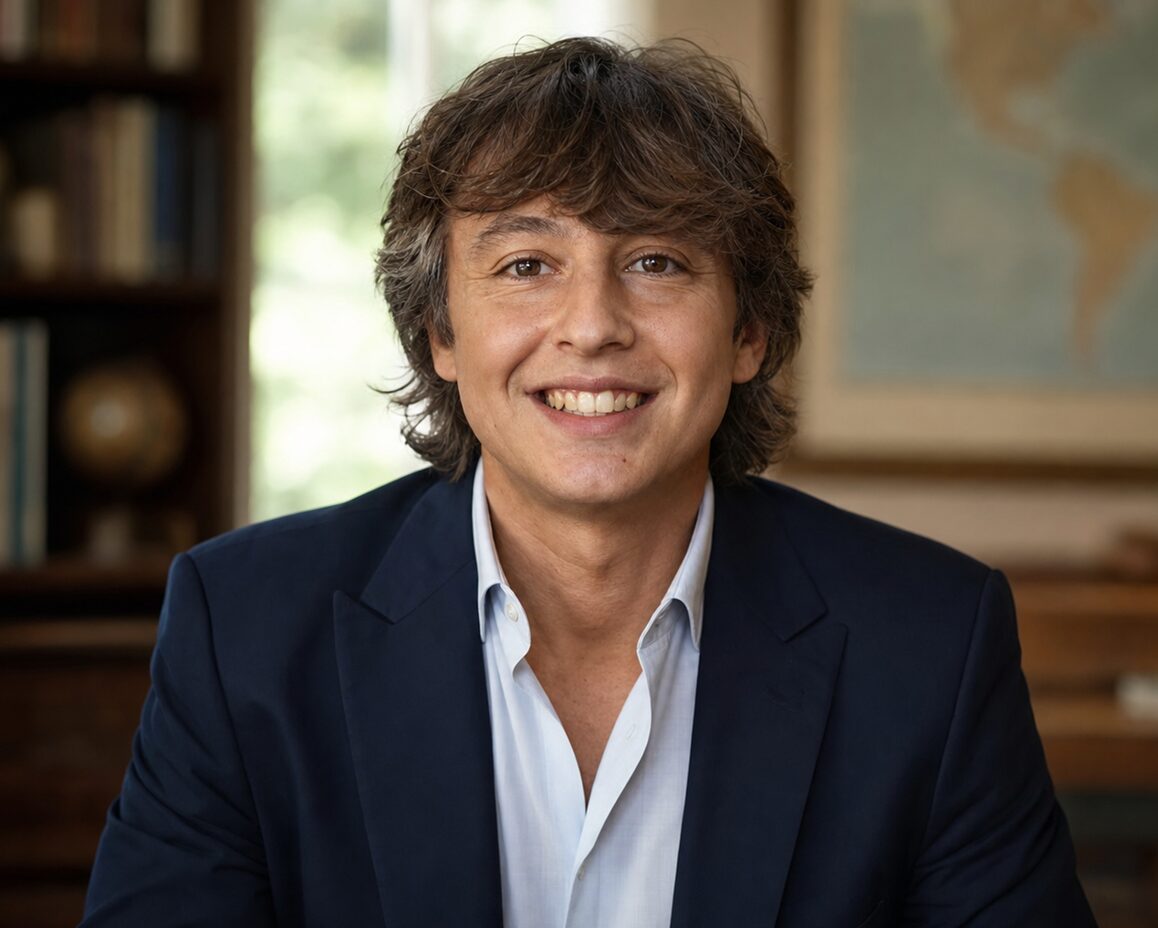
Meet Leo: The Heartbeat Behind ‘A Country A Month’
Journeying through the pages of A Country A Month, you might often feel the rhythm of a storyteller’s heartbeat, pulsating through each line, each image, and each adventure shared. That heartbeat belongs to none other than our remarkable website editor, Leo.
With a lens in one hand and a pen in the other, Leo seamlessly marries his passions for photography and writing. His eye captures moments that words can barely describe, yet his eloquence brings those images to life, transcending borders and connecting us all through shared stories. An avid traveler, every country he’s visited has added another chapter to his expansive tale, and through our platform, he generously shares these chapters with us.