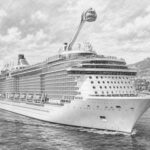
What makes Ovation of the Seas so good in Alaska? It is the rare ship where the onboard thrills actually improve the scenery instead of competing with it. Royal Caribbean’s Quantum-Class ship carries a jewel-shaped glass capsule called the North Star that lifts you roughly 300 feet above the water, a skydiving simulator, a surf simulator, and the largest indoor active space at sea — and in Alaska those attractions sit against a backdrop of glaciers, fjords and forested coastline. This guide walks through each signature venue with an Alaska lens: what to expect, and, just as important, how and when to reserve so you actually get on. Book early, watch the Royal Caribbean app, and confirm your own sailing, because ports and schedules vary.

Everything in this article and far more, deck by deck, in The Ultimate Guide to Sailing on Ovation of the Seas.
Get the book →Ovation is a mid-size megaship of around 168,000 gross tons, with roughly 16 guest decks and about 4,180 guests at double occupancy. Her defining feature for this itinerary is glass: glass-walled indoor spaces, a glass-roofed pool, a glass-domed Solarium, and that glass observation capsule. Alaska is cool and often wet, and a ship built around indoor light and big windows suits it better than most. Her Alaska sailings are open-jaw, one-way runs between Vancouver and Seward, so you fly into one city and out of the other, with a scenic glacier-cruising day worked into the route. That single day of ice is where several of these attractions earn their reputation.
North Star: the 300-foot view that defines the ship
The North Star is the attraction people come aboard talking about, and in Alaska it is genuinely worth the fuss. It is a jewel-shaped glass observation capsule mounted on a long mechanical arm. The arm swings the capsule out over the side of the ship and lifts it about 300 feet above the sea, rotating slowly so everyone inside gets a full turn of the horizon. On a warm-weather sailing it is a pleasant novelty. On an Alaska sailing, when the arm carries you up over a fjord with a glacier at the head of it, the experience changes entirely — you are looking down on forested shorelines, drifting ice, and a coastline that stretches far beyond anything you can see from a balcony.
Here is what to expect once you are inside. The capsule holds a small group at a time, the floor and walls are glass, and the ride is smooth and quiet rather than thrilling — this is an observation experience, not a fairground one. A full cycle lasts several minutes, long enough to take photographs, get your bearings, and simply look. On a clear day the light off the water and snow is extraordinary. On an overcast day, which Alaska serves up often, the low cloud and moody grey can be just as photogenic, so do not write off a ride because the weather looks flat.
Now the practical part, because this is where most people go wrong. There are two ways to ride the North Star. On regular sea days and while the ship is moving between ports, rides are complimentary, though you may need a timed reservation and there can be a queue. On the marquee days — specifically the scenic glacier-cruising day — Royal Caribbean often sells reserved, timed rides for a fee, precisely because demand is highest when the view is best. The pattern to remember is simple: the more spectacular the backdrop, the more likely the ride costs money and the faster it sells out.
So plan for both. If you only want the free experience, ride the North Star on an ordinary sea day or as you cruise a scenic stretch of coast between ports, when it is complimentary and the lines are shorter. If your heart is set on floating 300 feet above the glacier itself, treat the paid glacier-day slot as something to reserve the moment booking opens — check the app before you sail and again on embarkation day. Aim for a time near the ship’s scheduled arrival at the glacier rather than after it has turned back out to sea. Prices are relative and change, so confirm the current cost in the app; just do not assume the free version will be available at the exact moment the ice is in front of you.
North Star booking checklist
- Check the app for North Star availability before you sail and again on day one.
- Expect free rides on ordinary sea days; expect a paid, timed ride on the glacier day.
- Target a slot near the glacier arrival, not after departure.
- Bring a jacket — it is cooler up top — and keep the lens clean for glass-through photos.
- Have a backup free ride planned for a scenic-coast stretch in case the paid day sells out.
RipCord by iFly: skydiving without the jump
RipCord by iFly is a skydiving simulator — a vertical wind tunnel that suspends you on a column of fast-moving air so you float as if in free fall. You suit up, get a short safety briefing, and an instructor is in the chamber with you the whole time controlling the airflow and your position, so first-timers manage it easily. Each flight is short but intense, and it is the kind of thing that is far more fun than it looks from the viewing window.
Why does this belong in an Alaska guide? Because RipCord is one of the best rainy-day and cold-day activities on the ship. When the weather closes in — and in Alaska it will at some point — the indoor and semi-covered active venues are where the day happens, and RipCord is a highlight. It runs on a schedule with limited slots, and the introductory session that comes included is popular. Book it in the app as soon as you board, aim for a sea day rather than a busy port morning when everyone is ashore, and arrive a little early to get fitted. If you love it, there are usually paid options for longer or higher flights that you can add on the spot.
FlowRider: the surf simulator on deck
The FlowRider is a surf simulator: a sheet of water pumped up an angled surface fast enough that you can bodyboard or stand-up surf in place. It is bracing, wet, and genuinely good fun to try even if you have never been near a wave. There are two ways to ride — lying down on a bodyboard, which most people find easier to start with, and standing up on a flowboard, which takes more balance and a few wipeouts to get going.
Be honest with yourself about Alaska weather here. The FlowRider is on deck and you will get soaked, so this is a warm-layer, pick-your-moment attraction rather than an all-day hangout. The trick is to watch for a break in the weather — a bright, calm stretch on a sea day — and go then. Sessions run to a posted schedule, and the introductory sessions are typically included, with lessons and private time available for a fee. You do not usually reserve a specific time far in advance the way you do the North Star; instead, check the daily schedule in the app, show up for a session, and expect a short queue. Go early in the sailing so you have a second chance if your first attempt gets weathered out.
SeaPlex: the cold-day headquarters
If there is one venue that quietly makes Ovation work in Alaska, it is SeaPlex, the largest indoor active space at sea. This is a genuine sports-and-play hall under cover, and on a grey, drizzly day it becomes the busiest, happiest room on the ship. It packs in bumper cars, roller skating, a basketball court, and an arcade, and the space reconfigures through the day so the same floor hosts different activities on a rotating schedule.
The bumper cars are the headline — proper electric dodgems that run in timed sessions, popular with kids and adults alike. Roller skating uses the same floor at other times, with skates available to borrow. The basketball court doubles for pick-up games and organized activities, and the arcade sits alongside for when someone in the group wants a break. Because everything shares one space, the schedule is everything: bumper cars might run in the morning, skating in the afternoon, a sports session in between. Open the app, read the SeaPlex schedule for the day, and plan around the sessions you care about. On a cold sea day the bumper-car slots fill quickly, so arrive at the start of a session rather than halfway through.
SeaPlex is also where families ride out bad weather without anyone getting cabin fever, and it pairs naturally with the arcade and the nearby indoor spaces. If you are traveling with children, it is worth reading our companion notes on what the ship is like day to day in what to expect on Ovation of the Seas, because knowing the rhythm of sea days and port days helps you time SeaPlex visits when it is least crowded.
Two70: glass wall by day, Vistarama and Roboscreen by night
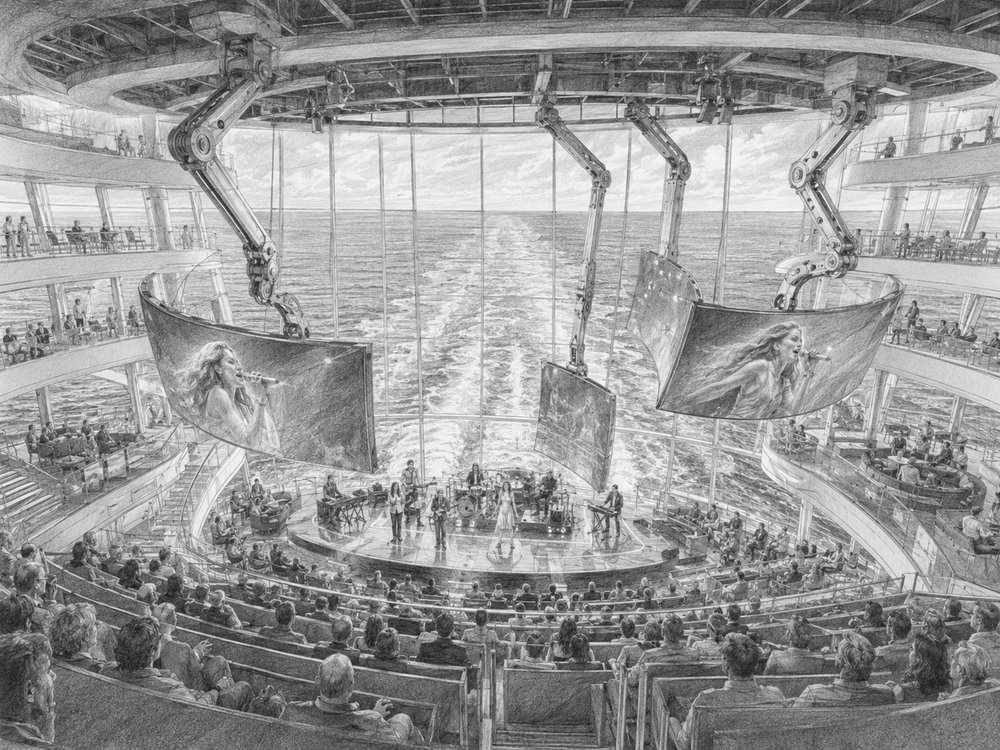
Two70 is one of the cleverest rooms afloat and a perfect fit for Alaska. It is a multi-story venue at the back of the ship with an enormous wall of glass. By day, that glass frames the ship’s wake and whatever coastline you are passing, and the room works as a relaxed lounge with casual seating, coffee and light bites — a warm, bright place to watch Alaska slide by without standing out on a cold deck. Grab a seat by the glass on a scenic afternoon and it is one of the best free views on the ship.
By night the room transforms. A system called Vistarama turns that same glass wall into a vast, seamless screen for immersive scenes, and a set of robotic screens known as Roboscreens moves in choreographed sequences during the evening productions. The result is a technically ambitious show that is unlike the traditional main-theater format. These shows run on select evenings, seating fills up, and the best productions are popular, so check the app for showtimes early in the sailing and arrive with time to get a good seat. There is nothing to pre-pay here — it is included entertainment — but treat popular nights the way you would any headline show and turn up early.
The glass-roofed pool and the Solarium
This is where the ship’s glass design pays off most obviously for Alaska cruisers. Ovation has an indoor pool under a glass roof, so you can swim in warmth while the cold, dramatic scenery passes overhead and alongside. It is exactly what an outdoor pool cannot offer on a cool, wet sailing, and it stays comfortable regardless of the weather on deck. Expect it to be busiest on sea days and during rain, so if you want a calmer swim, go during a port stop when many guests are ashore.
The Solarium is the grown-up counterpart: a glass-domed, adults-only retreat with loungers, calm, and big windows onto the sea. On an Alaska sailing it is one of the most sought-after spots on the ship — a quiet, light-filled room to read, doze and watch the coast without wind or drizzle. There is no reservation for either space; the strategy is simply timing. Claim a Solarium lounger early in the morning on a scenic cruising day, because those seats disappear fast when the ship is passing something worth watching. Neither venue costs extra, and both are core to why this particular ship handles Alaska so gracefully. For a broader rundown of the ship’s indoor spaces and how they connect, our full Ovation of the Seas cruise guide maps them out.
The rock wall and the rest of the active deck
The rock climbing wall rounds out the active lineup. It is a proper climbing wall with routes of varying difficulty, staffed by crew who handle the harnessing and belaying, so beginners and kids can try it safely. Climbing here comes with a view — you are up high on the ship with the sea and coastline behind you — which makes even a short climb memorable in Alaska. Like the FlowRider, it is weather-dependent because it is outdoors, so pick a dry, calm window.
Sessions run to a posted schedule and are included, with equipment provided; you generally do not book a specific time far ahead, you just show up during an open session. Wear closed-toe shoes and go early in the day before the queue builds. Around the rock wall and the sports areas you will find the ship’s other active features clustered together, so it is easy to combine a climb with a FlowRider attempt and a walk past SeaPlex in one circuit on a decent-weather afternoon.
Putting it together: a thrill-seeker’s Alaska plan
The single biggest mistake is treating these attractions as something to sort out once you are aboard and settled. The popular ones — the North Star, especially on the glacier day, and the RipCord introductory sessions — reward guests who plan. The moment you can access bookings in the Royal Caribbean app, look at your itinerary, find your scenic glacier day, and build the rest around it.
| Attraction | Best Alaska timing | How to secure it |
|---|---|---|
| North Star | Paid ride on the glacier day; free on a sea day | Reserve a timed slot early in the app |
| RipCord by iFly | A sea day or rainy day | Book the included session on day one |
| FlowRider | A bright, calm break in the weather | Check the daily schedule; queue for a session |
| SeaPlex | Cold and wet days | Follow the daily session schedule |
| Two70 shows | Evenings on select nights | Check showtimes; arrive early for seats |
| Glass pool and Solarium | Scenic cruising days | Claim a spot early in the morning |
| Rock wall | Dry, calm afternoons | Show up during an open session |
Layer weather over that plan. Alaska hands you a mix of grey, wet stretches and sudden brilliant clearings, and the smart move is to keep the outdoor attractions — FlowRider, rock wall, the outer decks — loosely scheduled so you can pounce when the sky opens. Anchor the indoor ones — SeaPlex, RipCord, the glass pool, Two70 — to the days when the weather keeps you inside anyway. A midship balcony cabin gives you a private base to watch conditions and dash out at the right moment; if you are still choosing a room, our notes on the best cabins on Ovation of the Seas explain why a real balcony earns its keep on this itinerary.
Finally, remember that the ship is only half of an Alaska cruise. Ports like Juneau, Skagway, Sitka, Icy Strait Point and Ketchikan have their own famous outings — the Mendenhall Glacier, the White Pass railway, whale watching, the ziplines at Hoonah — and those sell out early too. Balance your onboard bookings against your shore plans so you are not double-booked on the glacier day, and lean on the app to keep both sides straight. For more on pacing the whole voyage, see our Royal Caribbean Ovation of the Seas tips.
Get the complete Ovation of the Seas playbook

Want every North Star booking window, cold-day backup plan and cabin recommendation in one place? “The Ultimate Guide to Sailing on Ovation of the Seas,” part of the Ultimate Ship Guides series by Leo Sotropa, turns all of this into clear action steps in every chapter so you board knowing exactly what to reserve and when.
Frequently asked questions
What is the North Star on Ovation of the Seas?
It is a jewel-shaped glass observation capsule on a long mechanical arm that lifts you about 300 feet above the sea and rotates slowly for a full view of the horizon. In Alaska it is an extraordinary way to look down on glaciers, fjords and coastline. The ride is smooth and quiet rather than thrilling, and a full cycle lasts several minutes — enough time to take it in and photograph it.
Does the North Star cost extra?
It depends on the day. On ordinary sea days and scenic-coast stretches, rides are usually complimentary, though you may need a timed reservation. On the marquee glacier-cruising day, Royal Caribbean often sells reserved, timed rides for a fee because demand peaks when the view is best. Prices are relative and change, so confirm the current cost in the Royal Caribbean app and book early.
When should I reserve the North Star for the glacier day?
As soon as booking opens. Check the app before you sail and again on embarkation day, and aim for a slot near the ship’s scheduled arrival at the glacier rather than after it turns back out to sea. Have a backup free ride planned for a scenic-coast stretch in case the paid glacier slots sell out before you get one.
What is there to do on Ovation on a cold or rainy day?
Plenty, which is why the ship suits Alaska. SeaPlex, the largest indoor active space at sea, has bumper cars, roller skating, basketball and an arcade under cover. RipCord by iFly is an indoor skydiving simulator, the pool sits under a glass roof, the Solarium is a glass-domed retreat, and Two70 is a bright glass-walled lounge by day and a show venue by night.
Do I need to book the FlowRider and rock wall in advance?
Generally no. Both run on posted daily schedules with included introductory sessions, and you show up during an open session rather than reserving a specific time far ahead. Because both are outdoors, watch for a dry, calm break in the weather and go then. Lessons and longer sessions are usually available for a fee, and arriving early keeps you ahead of the queue.
Is RipCord by iFly suitable for beginners?
Yes. RipCord is a vertical wind tunnel with an instructor in the chamber controlling the airflow and your position the whole time, so first-timers manage it easily after a short safety briefing. Each flight is brief but intense. Book the included session in the app as soon as you board, choose a sea day over a busy port morning, and arrive early to get fitted.
What are the Two70 shows?
Two70 is a multi-story venue with a huge glass wall. By night, a system called Vistarama turns that wall into a vast immersive screen, and robotic Roboscreens move in choreographed sequences during the evening productions. The shows run on select evenings and are included entertainment, but seating fills up, so check showtimes in the app early in the sailing and arrive with time to get a good seat.
Ready for the whole ship in one place? It is all in The Ultimate Guide to Sailing on Ovation of the Seas.
Get the book →
Meet Leo: The Heartbeat Behind ‘A Country A Month’
Journeying through the pages of A Country A Month, you might often feel the rhythm of a storyteller’s heartbeat, pulsating through each line, each image, and each adventure shared. That heartbeat belongs to none other than our remarkable website editor, Leo.
With a lens in one hand and a pen in the other, Leo seamlessly marries his passions for photography and writing. His eye captures moments that words can barely describe, yet his eloquence brings those images to life, transcending borders and connecting us all through shared stories. An avid traveler, every country he’s visited has added another chapter to his expansive tale, and through our platform, he generously shares these chapters with us.