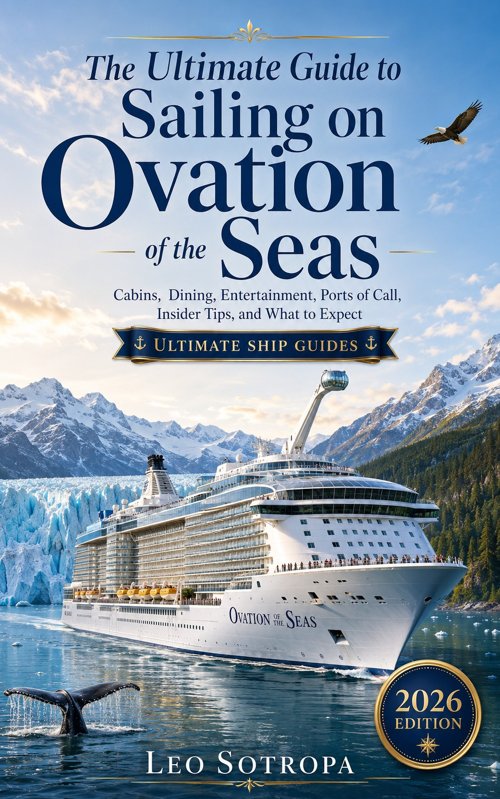
What is the Ovation of the Seas book, and will it actually make your cruise better? Yes — if the ship you have booked is Royal Caribbean’s Ovation of the Seas, this is a plan you can act on. The Ultimate Guide to Sailing on Ovation of the Seas by Leo Sotropa is an independent, ship-specific handbook: a start-to-finish walkthrough of one vessel, written so you know which cabin to book, which restaurants to reserve, when to ride North Star, and how to spend your days in Juneau, Skagway, Sitka, and the rest without wasting a single afternoon figuring things out on board.
This page describes what the book is, what is inside it, and who it helps. It is a companion to the free articles on this site, so you can read a good deal about the ship before you decide to buy the full guide. If you would rather browse first, the Ovation of the Seas cruise guide is a solid place to start.
What the book is
The Ultimate Guide to Sailing on Ovation of the Seas is part of the Ultimate Ship Guides series. Each title in the series covers a single ship in depth rather than trying to explain cruising in general. That is the whole idea. A generic cruise primer can tell you what a muster drill is and how tipping works, but it cannot tell you which deck on Ovation is quietest, where the glass-roofed pool sits, or why a midship balcony earns its keep on an Alaska sailing. This book can, because it is written about this ship and no other.
It is independent and unofficial. It is not published by or affiliated with the cruise line, which means it is free to be honest — to name the cabins worth avoiding, to tell you when a dining package pays off and when it does not, and to point out the common mistakes that cost first-timers time and money. Royal Caribbean’s own materials are useful, and the book tells you to keep the Royal Caribbean app close for live details, but the app is a schedule, not a strategy. This guide is the strategy.
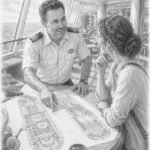
The book comes as a Kindle ebook and as a 6×9 paperback, and it is illustrated with graphite chapter illustrations. It is written for real trips: every chapter closes with a short set of clear, practical Action Steps, so you finish a section knowing exactly what to do next rather than just having read something interesting. The paperback is easy to mark up and pack; the Kindle version travels in your pocket and searches instantly when you are standing on deck wondering where Two70 is.
The ship this book is about
Ovation of the Seas is one of Royal Caribbean’s Quantum-Class ships, and she has been amplified with newer features. She is a mid-size megaship of around 168,000 gross tons, with roughly 16 guest decks and space for about 4,180 guests at double occupancy — up to around 4,900 when every berth is full. What sets her apart from many big ships is glass: she has a great deal of glass-walled indoor space, which makes her unusually comfortable in cool weather. That is exactly why her signature program is Alaska.
The book leans into that. It treats Ovation as the Alaska ship she primarily is, while noting that she sails other regions and home ports in other seasons, so you should always confirm your own voyage. Her Alaska cruises are open-jaw, one-way sailings between Vancouver, Canada, and Seward, the port for Anchorage — running northbound or southbound. Because they are one-way, you need to fly into one city and out of the other, and the guide reminds you to plan flights accordingly rather than assuming a round trip. If you want the full route breakdown, the Vancouver to Seward itinerary walkthrough covers it in detail.
Ports typically include Juneau, Skagway, Sitka, Icy Strait Point at Hoonah, and Ketchikan, plus a day of scenic glacier cruising — Hubbard Glacier, or Dawes Glacier in Endicott Arm — watched from deck. Ports vary by sailing, so the book teaches you how to read your own itinerary rather than promising a fixed list. That distinction matters, because the difference between a good Alaska day and a wasted one usually comes down to booking the right excursion before it sells out, and Alaska excursions sell out early.
What’s inside the book
The ship’s layout and how to navigate her
The guide opens with a tour of the layout — the decks, the spaces, and how they connect — so you stop wasting vacation time getting lost. On a ship with 16 guest decks, that is not a small thing. You learn where the indoor promenade, the Royal Esplanade, runs, where the glass-roofed indoor pool and the glass-domed adults-only Solarium sit (both a relief on a cold Alaska day), and how to move between the active spaces and the quiet ones without crossing the whole vessel twice.
The full cabin guide
This is the chapter most readers open first, and for good reason: your cabin choice shapes the whole trip. The book walks through the categories — the value Virtual Balcony interior, with its floor-to-ceiling real-time ocean screen; Ocean View rooms; true Balcony cabins, which are all outward-facing with real sea views; Studio cabins built for solo travelers; and suites all the way up to the two-deck Royal Loft Suite.
More usefully, it tells you what to book and what to avoid. For pure value, a Virtual Balcony interior is hard to beat. For an Alaska sailing specifically, the book’s best all-round pick is a midship Balcony on the mid-decks — for the scenery, the extra space, and the steadiest ride. A real balcony is worth more than usual in Alaska, because glaciers and wildlife appear on their own schedule and you want to watch them from your own room, coffee in hand, without racing to a public deck.
Then the honest part: the cabins to avoid. Confirm these on the deck plan, but as a rule, steer clear of rooms directly under the pool deck or SeaPlex, where you will hear the noise; rooms near Two70 or the Music Hall, where the nightlife runs late; forward high-deck rooms if anyone in your party is prone to motion; and lower-deck balconies where lifeboats obstruct the view. A five-minute read here can save you from a week of regret. For a deeper look, the best cabins on Ovation of the Seas guide expands on the same logic.
The complete dining guide
Dining on a big Royal Caribbean ship is a small economy of its own, and the book maps it clearly. It separates what is already included from what costs extra, so you can plan around your budget without surprises. Included venues are the Main Dining Room, the Windjammer buffet, Café Promenade, and Sorrento’s pizza — enough that you never have to spend a cent beyond your fare to eat well.
The specialty restaurants cost extra, and the guide tells you which are worth the splurge and what to reserve before you board: Wonderland, with its imaginative dishes; Jamie’s Italian; the steakhouse Chops Grille; Izumi; the Chef’s Table; and Johnny Rockets. The advice stays practical — book the places that matter to you before sailing, because the best times go quickly, and keep prices in perspective by deciding in advance which one or two experiences are worth it rather than paying for all of them.
Entertainment and the signature thrills
Ovation carries the Quantum-Class thrills, and the book gives you the insider timing to beat the lines rather than just a list of attractions. North Star is the standout: a jewel-shaped glass observation capsule on a mechanical arm that lifts you roughly 300 feet above the sea. On an Alaska cruise it is one of the finest ways in existence to see glaciers, fjords, and coastline, and the book is blunt about it — reserve it early, because demand on scenic days is intense. The Alaska North Star guide goes deeper on when to ride it.
Beyond North Star, there is RipCord by iFly, a skydiving simulator built around a vertical wind tunnel; FlowRider, the surf simulator; and SeaPlex, the largest indoor active space at sea, with bumper cars, roller skating, basketball, and an arcade. Two70 is a multi-story venue with a glass wall by day and immersive Vistarama and Roboscreen shows by night. There is the Music Hall, the Bionic Bar with its robot bartenders, a rock wall, and the Vitality Spa. The book explains how to fit these around your port days and glacier day so you actually get to everything instead of realizing on the last night that you never made it to SeaPlex.
The ports of call chapter
This is where a ship-specific guide really pays off, because Ovation’s Alaska ports each reward a different plan. The book gives destination guides, top excursions, and a must-do shortlist for each stop, with the reminder to confirm and book early since the good tours sell out.
- Vancouver, Canada, at the start or end: Stanley Park, Granville Island, Gastown, and the Capilano Suspension Bridge.
- Juneau: the Mendenhall Glacier, whale watching, and the Mount Roberts Tramway.
- Skagway: the White Pass and Yukon Route railway and Klondike Gold Rush history.
- Sitka: Russian heritage at St. Michael’s Cathedral, the totems of Sitka National Historical Park, the Alaska Raptor Center, and rich wildlife.
- Icy Strait Point at Hoonah: whale watching, one of the world’s longest ziplines, and Tlingit culture.
- Ketchikan: historic Creek Street, the totem poles of Totem Bight, Misty Fjords, and salmon.
- Seward, at the start or end: Kenai Fjords National Park, and the gateway to Anchorage and Denali.
For the glacier day at Hubbard or Dawes Glacier, the advice is simple and specific: watch the ice calve from an open deck or, better, from the North Star, and dress for cold even in summer. The book helps you decide where to be and when, so the highlight of the trip does not catch you indoors.
Honest money advice
The money chapter is one of the most valuable in the book because it is written to save you from upcharges, not to sell you on them. It lays out what is already included in your fare, when the various packages actually pay off, and how to avoid the small charges that add up. Your SeaPass card is your cashless account on board; daily gratuities are added; Wi-Fi is a paid plan. The guide keeps every price relative — it does not quote numbers that go stale — and instead teaches you how to judge value for your own trip, so a family of four and a solo traveler each come away with a plan that fits.
Family know-how and adults-only escapes
Ovation is a genuine family ship, and the book covers both ends of that. For families, there is Adventure Ocean for kids and the whole roster of active spaces, plus practical guidance on managing sea days with children in cool Alaska weather. For grown-ups who want quiet, the glass-domed adults-only Solarium is a real refuge, and the book points you to the calmer corners of the ship. It reads like advice from someone who has sailed her, not a brochure.
Embarkation strategy, pro tips, and Action Steps
The book includes an embarkation-day strategy so your first hours on board are smooth rather than chaotic, along with a chapter of pro tips, common pitfalls, and frequently asked questions. And, as in every title in the series, each chapter ends with Action Steps — short, concrete tasks you can tick off before and during your cruise. That is what turns a good read into a usable plan.
Who the book is for
First-timers get the most obvious benefit: it removes the guesswork and the low-grade anxiety of not knowing how anything works. Instead of arriving unsure, you board with a plan for your cabin, your dining, your thrills, and your ports. If this is your first Royal Caribbean sailing, the first-time cruise on Ovation of the Seas article pairs well with the book.
Families use it to keep everyone happy across very different interests — kids who want bumper cars and a surf simulator, parents who want a quiet hour in the Solarium, and grandparents who want the glacier day to go perfectly. Seasoned cruisers, who already know how ships work, still get value from the ship-specific detail: the exact cabins to target on this hull, the specialty restaurants worth booking here, and the timing tricks for North Star on a scenic day. And because it is genuinely useful and nicely illustrated, it makes a thoughtful gift for anyone who has an Ovation sailing booked and wants to make the most of it.
Why a ship-specific guide beats a generic cruise primer
A generic cruise book has to hedge. It describes cabins in the abstract, dining in the abstract, and ports in the abstract, because it is trying to cover dozens of ships at once. That leaves you doing the translation yourself — figuring out which of its general points apply to Ovation and which do not. A ship-specific guide skips the translation. When it says avoid the rooms under SeaPlex, it means these rooms; when it says book a midship balcony for Alaska, it means these decks on this ship.
The practical result is less pre-cruise stress. Most of the worry before a big cruise comes from open questions: Did I book the right room? Should I have reserved a restaurant? Will I miss North Star? Am I going to waste the glacier day? The book closes those questions one by one, and the Action Steps make sure you actually handle them rather than just reading about them. You spend your planning energy once, in advance, and then relax into the trip. That is the honest promise of the book — not that it makes the cruise perfect, but that it removes the avoidable mistakes and lets you enjoy the ship you paid for.
About the author and the series
The book is written by Leo Sotropa, author of the Ultimate Ship Guides series — a growing collection of independent, single-ship handbooks. The approach is consistent across the series: cover one ship thoroughly, stay honest and practical, and end every chapter with Action Steps the reader can use. The companion website, acountryamonth.com, hosts free articles for each ship, so you can read a substantial amount before you decide whether the full guide is worth it to you. The free pieces and the book are meant to work together: the articles orient you, and the book gives you the complete, organized plan.
One steady note runs through everything: confirm the current details in the Royal Caribbean app. Venues, itineraries, and prices change, and the book is written to stay useful across editions by teaching you how to check and decide rather than freezing a snapshot in time. Use the latest edition for the strategy, and use the app for the live specifics on your sailing.
Get The Ultimate Guide to Sailing on Ovation of the Seas
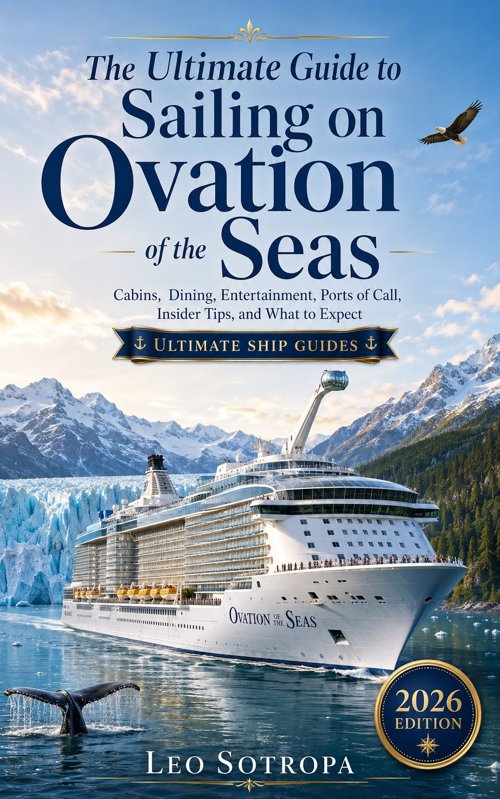
The Ultimate Guide to Sailing on Ovation of the Seas by Leo Sotropa, part of the Ultimate Ship Guides series, is your independent, ship-specific handbook to cabins, dining, thrills, and Alaska ports — available on Kindle and paperback, with clear Action Steps in every chapter.
Frequently asked questions
Is this an official Royal Caribbean book?
No. It is independent and unofficial, written by Leo Sotropa and not published by or affiliated with the cruise line. That independence is the point — it lets the book be honest about which cabins to avoid, when packages are worth it, and where first-timers usually go wrong, in a way official materials generally will not.
Should I get the Kindle or the paperback?
Both cover the same content, so it comes down to how you like to read. The Kindle ebook is searchable and travels in your pocket, which is handy on board when you want to check something fast. The 6×9 paperback is easy to mark up, share with your travel companions, and pack. Many readers use the paperback to plan at home and keep the Kindle version on their phone during the cruise.
Is the book up to date?
The guide is kept current through its latest edition, and it is written to stay useful over time by teaching you how to check and decide rather than freezing details that change. Prices, venues, and itineraries do shift, so the book consistently tells you to confirm the current specifics for your sailing in the Royal Caribbean app.
Does it cover Ovation’s specific Alaska ports?
Yes. There is an in-depth ports of call chapter with destination guides, top excursions, and must-do shortlists for the stops Ovation typically visits — Juneau, Skagway, Sitka, Icy Strait Point, and Ketchikan — plus Vancouver and Seward as the one-way endpoints and the scenic glacier-cruising day. Because ports vary by sailing, it also teaches you how to plan around your own itinerary and book early, since Alaska excursions sell out.
Is it good for first-time cruisers?
It is especially good for first-timers. It explains how the ship, the SeaPass card, dining, gratuities, and Wi-Fi work, walks you through embarkation day, and ends each chapter with Action Steps so you always know your next move. First-timers get the biggest reduction in pre-cruise stress because the book answers the questions you do not yet know to ask.
Would it make a good gift?
Yes. For anyone with an Ovation of the Seas sailing booked, it is a practical and thoughtful gift, and the graphite chapter illustrations make the paperback pleasant to give and to keep. It suits new cruisers who need a hand and seasoned ones who want the ship-specific edge.
Does the book replace the Royal Caribbean app?
No, and it does not try to. Think of them as two different tools. The app is your live schedule on board — daily times, reservations, and account details. The book is the strategy you bring with you: which cabin, which restaurants, when to ride North Star, and how to spend each port day. Use the book to plan and decide, and use the app to confirm the current details for your specific voyage.

Meet Leo: The Heartbeat Behind ‘A Country A Month’
Journeying through the pages of A Country A Month, you might often feel the rhythm of a storyteller’s heartbeat, pulsating through each line, each image, and each adventure shared. That heartbeat belongs to none other than our remarkable website editor, Leo.
With a lens in one hand and a pen in the other, Leo seamlessly marries his passions for photography and writing. His eye captures moments that words can barely describe, yet his eloquence brings those images to life, transcending borders and connecting us all through shared stories. An avid traveler, every country he’s visited has added another chapter to his expansive tale, and through our platform, he generously shares these chapters with us.