Should you sail the Alaska cruise from Vancouver to Seward, and how does the one-way routing actually work? In short: yes, this open-jaw itinerary on Ovation of the Seas is one of the best ways to see Southeast Alaska and the Gulf of Alaska, but it asks a little more planning than a round-trip because you fly into one city and out of the other. You board in Vancouver, Canada (or in Seward, the port for Anchorage, if you go the other direction), sail past a string of famous ports and at least one full day of glacier viewing, then step off in a different place from where you started. This guide explains the northbound and southbound options, walks through every port using only the landmarks that belong there, and helps you decide between ship tours and going independent, when to book, and where to stand for the best views.
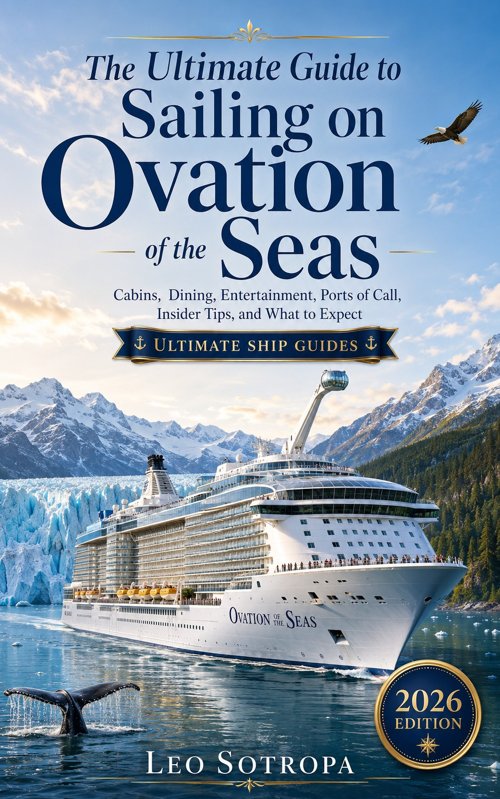
Everything in this article and far more, deck by deck, in The Ultimate Guide to Sailing on Ovation of the Seas.
Get the book →What “Vancouver to Seward” really means
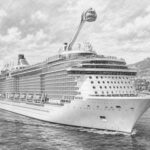
Ovation of the Seas is a Royal Caribbean Quantum-Class ship, freshly amplified, and her signature program is Alaska. Her Alaska sailings are open-jaw, which is the cruise industry’s word for one-way: instead of returning to the city where you embarked, the ship runs the length of the Inside Passage and the Gulf of Alaska between Vancouver, Canada and Seward, Alaska. Seward is the ocean gateway to Anchorage and, beyond it, Denali. Because the ship does not double back, you see new coastline every day rather than repeating the same water, and you can reach ports and a glacier region that a round-trip loop simply cannot fit.
The trade-off is logistics. Your flights land in one city and depart from the other, so a simple return ticket will not work. Most travelers fly into Vancouver, cruise north, and fly home from Anchorage, or reverse the whole thing. It is worth pricing both directions, because open-jaw air is sometimes cheaper than you expect. Whichever way you go, confirm your exact itinerary and port days in the Royal Caribbean app before you book anything ashore, since ports vary by sailing.
Northbound versus southbound
Northbound means starting in Vancouver and finishing in Seward; southbound is the reverse. The ports of call and the glacier day are largely the same set in either direction, so neither route is dramatically “better” for scenery. The decision usually comes down to what you want to bolt on at the Alaska end. If you plan to add a land tour to Denali and Anchorage, sailing northbound puts that land portion at the natural end of your trip, so you disembark in Seward and continue inland without backtracking. If you would rather do your land exploring first and unwind on the ship afterward, southbound lets you tour the interior, then join the ship in Seward and end in the comforts of Vancouver.
There are smaller practical differences too. Vancouver is an international departure with its own airport, while Seward is a smaller port town roughly a couple of hours from Anchorage’s airport, so transfer times differ at each end. Look at flight prices, how much interior land time you want, and which city you would rather have a spare day in, then pick the direction that fits.
Why Ovation of the Seas suits this route
Alaska is cool and often wet, and this ship was built with a lot of glass-walled indoor space, which makes her unusually comfortable when the weather turns. She is a mid-size megaship of around 168,000 gross tons with roughly 16 guest decks and about 4,180 guests at double occupancy, so there is room to spread out on a gray afternoon. The glass-roofed indoor pool and the glass-domed adults-only Solarium mean you can be warm and dry while still watching the coastline slide past.
Her signature Quantum-Class thrills are genuinely useful here rather than just fun. North Star, the jewel-shaped glass observation capsule on a mechanical arm, lifts you about 300 feet above the sea for an extraordinary view of glaciers, fjords, and the coast; it is the single best onboard vantage point on the whole trip, and it books up fast, so reserve it early. SeaPlex, the largest indoor active space at sea, keeps kids and restless teens busy with bumper cars, roller skating, basketball, and an arcade when it is too cold to be outside. Two70 has a glass wall by day and immersive Vistarama and Roboscreen shows at night. There is also RipCord by iFly skydiving simulation, the FlowRider surf simulator, the Royal Esplanade indoor promenade, Music Hall, the Bionic Bar with its robot bartenders, a rock wall, and the Vitality Spa. If you want a deeper tour of the ship herself, the Ovation of the Seas cruise guide covers her venues in more detail.
A balcony earns its keep on this itinerary more than on almost any other. Being able to watch for whales or a calving glacier from your own room, coffee in hand, is worth the upgrade in Alaska. If the budget is tight, the value Virtual Balcony interior gives you a floor-to-ceiling real-time ocean screen; the best all-round choice is a midship Balcony on the mid-decks for scenery, space, and the steadiest ride. For a full breakdown, see the guide to the best cabins on Ovation of the Seas.
The ports, one by one
A typical Vancouver-to-Seward sailing calls at Juneau, Skagway, Sitka, Icy Strait Point, and Ketchikan, plus a day of scenic glacier cruising. Your exact ports and their order depend on the sailing, so treat what follows as a portrait of each place rather than a fixed schedule, and confirm the specifics in the app.
Vancouver, Canada
Whether Vancouver is your start or your finish, it deserves a day of its own on either side of the cruise. Stanley Park’s seawall and forest sit right beside downtown, Granville Island is a walkable market and maker district, and Gastown is the historic quarter for a slow wander. If you have more time, the Capilano Suspension Bridge crosses a river gorge north of the city. Building in an extra night here is smart insurance against flight delays and a gentle way to shake off jet lag before you sail.
Juneau
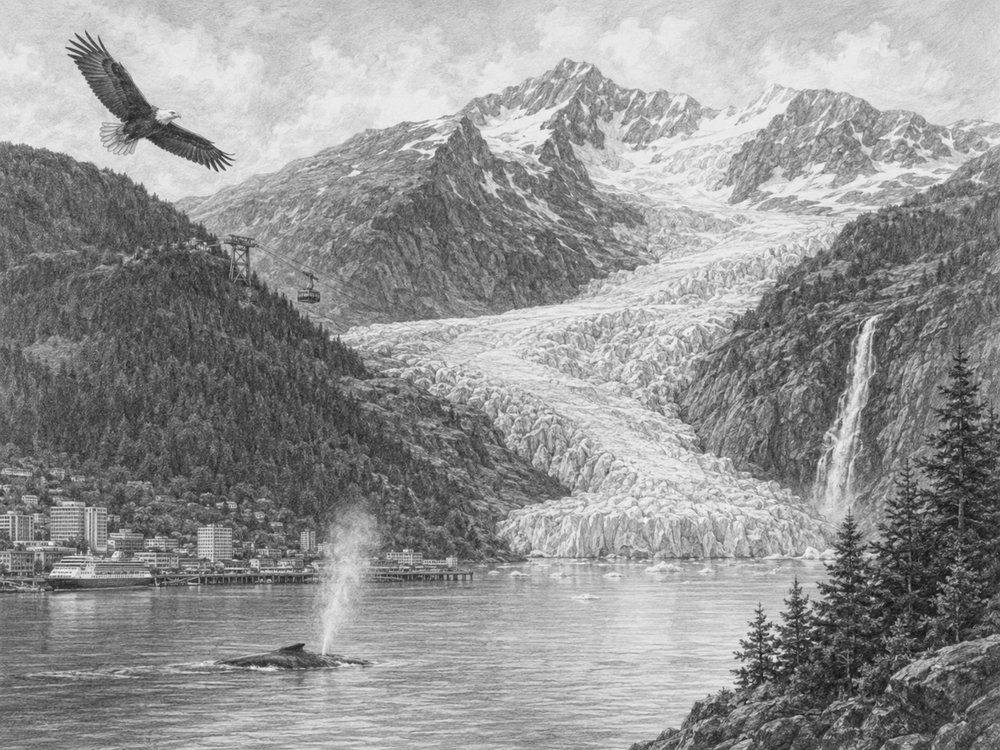
Alaska’s capital is hemmed in by mountains and water, reachable only by sea or air, which gives it an end-of-the-road feel even with cruise ships in port. The headline sight is the Mendenhall Glacier, a river of ice with a visitor area and trails, easy to reach and genuinely impressive up close. Juneau is also one of the strongest whale-watching ports on the route, with humpbacks feeding in the nearby waters through the season. For a view over the whole scene, the Mount Roberts Tramway climbs from the waterfront to a mountainside station with trails and a lookout. Many travelers pair a whale trip with the glacier in a single day, since both sit near town.
Skagway
Skagway is a small town with an outsized history, built as the gateway to the Klondike Gold Rush, and it still wears that heritage on its wooden storefronts. The signature excursion is the White Pass & Yukon Route railway, a narrow-gauge line that switchbacks up through the mountains along the old prospectors’ trail, with cliffs, trestles, and waterfalls along the climb. Even a stroll through town is a walk through Gold Rush history. Because the railway is the marquee experience here, seats go early, so book it well ahead if it is on your list.
Sitka
Sitka faces the open Pacific rather than the sheltered Inside Passage, and it carries a distinct Russian heritage from its history as a colonial capital, seen most clearly in St. Michael’s Cathedral. The totems of Sitka National Historical Park stand along wooded trails by the water, and the Alaska Raptor Center rehabilitates eagles and other birds and lets you see them up close. Wildlife is rich all around town. Sitka has a different, quieter character than the busier gold and glacier ports, and it rewards travelers who like history and nature in equal measure.
Icy Strait Point (Hoonah)
Icy Strait Point, at the Tlingit village of Hoonah, is a smaller, less developed call built around a restored cannery, and it leans hard into the outdoors. The waters here are excellent for whale watching, one of the best on the itinerary. For adrenaline, it is home to one of the world’s longest ziplines, sending riders down the mountainside above the shore. Tlingit culture runs through the port’s programming, from performances to guided storytelling. Because the facilities are compact, the nature-based excursions here fill up, so decide early if this is where you want your whale trip or your zipline ride.
Ketchikan
Ketchikan clings to a steep hillside and calls itself the salmon capital, and it has the totem heritage to match. Historic Creek Street is a boardwalk of shops built on stilts over the water, easy to explore on foot. The totem poles of Totem Bight display the region’s carving traditions, and Misty Fjords, a wilderness of sheer granite walls and waterfalls, is reachable by boat or floatplane for those who want to go deeper. Salmon runs shape the town’s rhythm through the season. Ketchikan is often the last Alaska port before the ship turns toward home waters, so it is a fitting place to buy any final carvings or smoked salmon.
The glacier-cruising day
At least one full day is given over to scenic glacier cruising, with no port stop, when the captain noses the ship toward a tidewater glacier such as Hubbard Glacier or Dawes Glacier in Endicott Arm. There is nothing to book and nowhere to go; the point is simply to be on deck, or in the North Star capsule, watching the ice. If conditions allow, the ship will sit near the glacier’s face and slowly rotate so every side gets a look. You may hear the crack and boom of the ice calving into the sea before you see it. Dress in layers, get outside early to claim a spot on the rail, and keep binoculars handy for seals hauled out on the floating ice.
Seward
Seward is where the sea route meets the Alaska mainland, and it is the launch point for Kenai Fjords National Park, a coast of glaciers and marine wildlife best seen on a day boat tour into the fjords. It is also the gateway to Anchorage and Denali beyond. If Seward is your final port, resist the urge to rush straight to the airport; if your schedule allows, a Kenai Fjords tour or a slower overland trip toward Anchorage turns a transfer day into one of the best days of the trip.
Ship tours versus going independent
Every port raises the same question: book the excursion through the ship, or arrange it yourself? Ship-run tours cost more, but they buy peace of mind. The biggest advantage is timing: if a cruise-line excursion runs late, the ship waits for it, because it is the line’s own tour. In ports where the marquee activity sits some distance from the pier, that guarantee is worth paying for.
Independent booking, either directly with a local operator or on your own two feet, usually costs less and often means smaller groups and more flexibility. It works best when the activity is close to the pier or the town is compact enough to explore without a plan. Several ports on this route reward simply walking off the ship: Skagway’s Gold Rush streets, Ketchikan’s Creek Street, and Vancouver’s downtown are all doable on foot. The catch is that if you go independent, keep a firm eye on the all-aboard time, because the ship will not wait for a private tour that runs behind. For more onboard-versus-shore trade-offs, the piece on Royal Caribbean Ovation of the Seas tips is a useful companion.
Book excursions early
Alaska excursions sell out early, and the marquee experiences sell out first. The White Pass railway in Skagway, whale-watching trips in Juneau and Icy Strait Point, the zipline at Icy Strait Point, and Kenai Fjords boat tours from Seward are the ones that go soonest, because each port can only take so many people onto a train, a boat, or a mountain in a single day. If a specific activity is the reason you chose this cruise, treat it as a reservation to make as soon as booking opens, not a decision to leave for the pier.
The same urgency applies onboard. North Star and the specialty restaurants are in high demand on Alaska sailings, so reserve North Star early and aim for a slot on the glacier day for the best view from the capsule. The table below sorts the ports by how quickly the standout excursions tend to fill.
| Port | Standout excursion | How early to book |
|---|---|---|
| Skagway | White Pass & Yukon Route railway | As soon as booking opens |
| Juneau | Whale watching plus Mendenhall Glacier | Very early |
| Icy Strait Point | Whale watching or the zipline | Very early |
| Seward | Kenai Fjords boat tour | Early |
| Onboard | North Star capsule ride | The moment reservations open |
Adding a land tour or Denali
The open-jaw routing exists partly so you can extend the trip inland, and Denali is the classic add-on. Because you finish (or start) in Seward, you are already on the mainland with Anchorage and Denali within reach, so it makes sense to tack on a few days of interior travel rather than flying home the instant you disembark. A pre- or post-cruise land tour typically strings together Anchorage, the rail or road corridor north, and a stay near Denali National Park, where you trade coastal scenery for tundra and the continent’s highest peak.
Direction shapes how this feels. Northbound, the land tour comes after the cruise as a continuation deeper into Alaska; southbound, you do the interior first and let the ship be your wind-down. Either way, add a buffer night at the transition so a delay does not cascade into a missed connection, and settle your land plans before you lock in flights, since that portion determines which airport you fly home from. Confirm current schedules in the Royal Caribbean app.
The best viewing
Good viewing on this cruise is mostly about being in the right place at the right time and dressing for it. On the glacier day, get outside early; the rail near the bow and the open upper decks fill quickly once the ship approaches the ice, and the payoff is watching the face calve while the ship slowly turns. A booked North Star ride timed to the glacier day or a scenic passage is the premium version of the same view, lifting you about 300 feet up for a perspective no deck can match, which is exactly why it sells out.
From your cabin, a midship balcony on the mid-decks gives the steadiest private vantage for scanning shorelines and watching for whales. Keep layers and binoculars within reach, because wildlife and weather do not run to a schedule, and the long, low Alaska light flatters photographs late into the evening. If riding and photographing the observation capsule interests you, the guide to the Ovation of the Seas Alaska North Star goes deeper. For a broader sense of daily life aboard, see what to expect on Ovation of the Seas.
Get the complete Ovation of the Seas playbook
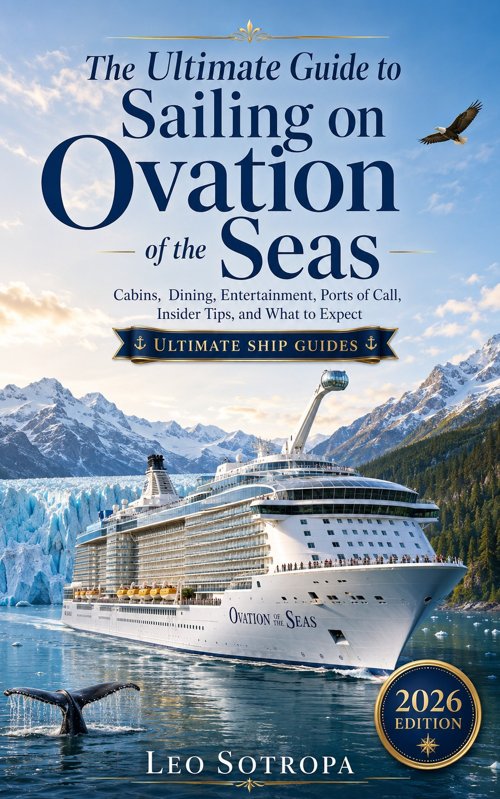
For a port-by-port, cabin-by-cabin plan of this exact Alaska route, read “The Ultimate Guide to Sailing on Ovation of the Seas.” It is part of the Ultimate Ship Guides series by Leo Sotropa, with clear action steps in every chapter so you know what to book, when, and where to stand.
Frequently asked questions
Why does the Vancouver-to-Seward cruise only go one way?
Ovation of the Seas sails Alaska as an open-jaw, one-way itinerary between Vancouver, Canada and Seward, Alaska, running northbound or southbound. Sailing one way lets the ship cover new coastline every day and reach the Gulf of Alaska ports and glacier regions a round-trip loop cannot fit. The trade-off is that you fly into one city and out of the other, so plan your flights accordingly and confirm the routing in the Royal Caribbean app.
Should I sail northbound or southbound?
The ports and glacier day are largely the same either way, so it comes down to logistics and any land tour. Northbound ends in Seward, which flows naturally into an inland trip toward Anchorage and Denali. Southbound lets you tour the interior first and end in Vancouver. Compare open-jaw flight prices in both directions and decide where you would rather spend your extra time.
Where is Seward, and how do I get to the airport?
Seward is the ocean port for Anchorage, sitting on the coast roughly a couple of hours from Anchorage’s airport by road or rail. If it is your final port, build in transfer time rather than booking a same-day flight the moment you dock, and consider a Kenai Fjords tour or a slower overland journey to make the most of the day before you head inland or home.
Which excursions sell out first?
Alaska excursions sell out early, and the marquee ones go soonest: the White Pass & Yukon Route railway in Skagway, whale watching in Juneau and Icy Strait Point, the Icy Strait Point zipline, and Kenai Fjords boat tours from Seward. Onboard, the North Star capsule is in similar demand. If a specific experience is why you chose this cruise, book it as soon as reservations open.
Do I need a balcony for an Alaska cruise?
You do not need one, but a real balcony earns its keep in Alaska more than usual, because you can watch for whales and glaciers from your own room. A midship Balcony on the mid-decks gives the best mix of scenery, space, and a steady ride. If the budget is tight, the value Virtual Balcony interior offers a floor-to-ceiling real-time ocean screen as a cheaper alternative.
What is the glacier-cruising day like?
It is a full day at sea with no port stop, when the ship approaches a tidewater glacier such as Hubbard Glacier or Dawes Glacier in Endicott Arm. There is nothing to book; you simply watch from deck or from the North Star capsule as the ship sits near the ice and slowly rotates. Dress in layers, get outside early for a spot on the rail, and listen for the ice calving into the sea.
Can I add Denali to this cruise?
Yes. Because the route starts or ends in Seward on the Alaska mainland, Anchorage and Denali are within reach for a pre- or post-cruise land tour. These typically link Anchorage, the corridor north, and a stay near Denali National Park. Add a buffer night at the transition and settle your land plans before booking flights, since the interior portion determines which airport you fly home from. Confirm current schedules in the Royal Caribbean app.
Ready for the whole ship in one place? It is all in The Ultimate Guide to Sailing on Ovation of the Seas.
Get the book →
Meet Leo: The Heartbeat Behind ‘A Country A Month’
Journeying through the pages of A Country A Month, you might often feel the rhythm of a storyteller’s heartbeat, pulsating through each line, each image, and each adventure shared. That heartbeat belongs to none other than our remarkable website editor, Leo.
With a lens in one hand and a pen in the other, Leo seamlessly marries his passions for photography and writing. His eye captures moments that words can barely describe, yet his eloquence brings those images to life, transcending borders and connecting us all through shared stories. An avid traveler, every country he’s visited has added another chapter to his expansive tale, and through our platform, he generously shares these chapters with us.