The short answer: Retiring in Malaysia splits cleanly into two questions, and only one is easy. Can you afford the monthly life? Almost certainly yes — a single retiree lives leanly in Kuching or Ipoh for about RM3,000 a month (~$730) and comfortably in Penang for about RM5,250 (~$1,280), and Malaysia does not tax a cent of your U.S. income. Can you afford the door? That is the real test, and it has nothing to do with your Social Security check. Malaysia’s MM2H retirement visa now asks you to park capital: roughly USD 150,000 plus a property on the federal route, or about RM500,000 (~$122,000) on the cheaper Sarawak route. Most of that money stays yours. If you have a nest egg to park, Malaysia is one of the best-value retirements in Asia. If your savings are genuinely small, this guide will tell you so honestly.
Most “retire in Malaysia” articles sell you a country that no longer exists at the front door. This guide leads with the truth instead of burying it, because the honest shape of Malaysia is different from almost anywhere else. The living here is gloriously cheap and easy: English is spoken almost everywhere (this is a former British colony), the private hospitals are world-class at a fraction of U.S. prices, the food is famous and costs a few dollars a plate, the streets are safe, and a territorial tax system leaves your Social Security, pension, and IRA withdrawals completely alone. Once you are settled, a modest check goes a very long way.
But the door got expensive. Malaysia overhauled its My Second Home program (MM2H), and the old easy path — a modest deposit or about RM10,000 a month of income — closed to new applicants in 2020. What replaced it moved Malaysia decisively upmarket: a capital-heavy visa built for someone who sold a house or holds a real nest egg, not for a Social-Security-only budget. The good news, and it is genuinely good, is that the capital is mostly parked, not spent — a bank deposit earning tax-free interest, or a condo you own outright. This guide pulls together the real numbers, the visa, healthcare, taxes, and the best-value cities, and links out to a deeper guide on each. Throughout, dollar figures convert at 1 USD ≈ 4.1 ringgit (the mid-2026 rate); the ringgit strengthened this year, so plan conservatively at 4.0.
Want the whole plan in one place? This article summarizes No-Nonsense Guide to Retiring in Malaysia: Without a Millionaire’s Budget by Leo Sotropa — three real retirees with both their parked capital and their low monthly life, the MM2H visa tier by tier, healthcare, taxes, and city-by-city costs, every figure sourced. No hype, no fear, just the honest math.
What this guide covers
- Is retiring in Malaysia realistic? The capital gate
- What it actually costs: real monthly budgets
- Where to live: the best-value cities
- The MM2H visa, in plain steps
- Healthcare (and what happens to your Medicare)
- Money, taxes, and the paperwork with teeth
- Settling in and daily life
- Is it right for you? The honest trade-offs
- What the move costs up front
- A realistic first-year timeline
- Frequently asked questions
Is retiring in Malaysia realistic? The capital gate
The most useful way to answer that is to watch ordinary people do it. The book follows three composite retirees — honest blends of real budgets, cities, and visa rules — and for each one it shows both halves: the nest egg they had to park to get in, and the comfortable, cheap monthly life they lead once they are in.
- Grace, 67, a widowed librarian, sold her house and netted about $140,000. She took the accessible Sarawak route to Kuching: she parked RM500,000 (~$122,000) as a fixed deposit, no property required. On a single Social Security check of ~$1,850/month she lives on about RM3,630 (~$885), banking most of a thousand dollars before the deposit interest.
- Ron and Judy, 68 and 66, sold their Ohio home for ~$320,000 and moved the equity. On the federal route in Melaka they parked a USD 150,000 deposit and bought a RM600,000 (~$146,000) condo that satisfies the visa and is their home. On ~$2,900 combined they spend about RM5,540 (~$1,351) — no rent line at all.
- Walter, 70, a retired engineer on ~$3,000/month, chose Penang for its world-class hospitals. He parked the USD 150,000 deposit and bought a RM1,000,000 condo (Penang island’s foreign-ownership floor). His budget runs ~RM6,620 (~$1,615), the biggest line being comprehensive health insurance at 70.
| Retiree | Income / mo | City & route | Capital parked | Budget / mo |
|---|---|---|---|---|
| Grace (solo) | ~$1,850 | Kuching / Sarawak | RM500k deposit | ~RM3,630 (~$885) |
| Ron & Judy (couple) | ~$2,900 | Melaka / federal | $150k + RM600k condo | ~RM5,540 (~$1,351) |
| Walter (solo) | ~$3,000 | Penang / federal | $150k + RM1M condo | ~RM6,620 (~$1,615) |
Notice the pattern that sets Malaysia apart from every other retirement destination: the monthly living was cheap for all three, but not one of them could have done it on Social Security alone. The capital is what separated them from a retiree with a good monthly check but an empty savings account. So the Malaysia question is not “can I afford to live here” — if you are through the door, you almost certainly can. The question is “do I have a nest egg to park.” If your answer is yes (roughly $122,000 for Sarawak, or ~$150,000 plus a property for federal), read on with confidence. If it is no, the honest counsel is that Malaysia’s visa is likely out of reach for now, Sarawak is the lowest realistic bar, and another country may fit your numbers better. A friend tells you that before you sell the house.
What it actually costs: real monthly budgets
Here is the good news that follows the hard news. Once you clear the gate, the daily cost of living is low, and your U.S. retirement income is untaxed by Malaysia. Individual prices anchor it: a hawker meal runs RM6–15 ($1.50–3.70), a Western restaurant meal RM25–50 ($6–12), a local kopi RM2–4, home fiber internet RM89–150 ($22–37), a generous mobile SIM RM30–50, and a Grab ride across town RM6–15. Groceries for a single run RM400–1,000. The two lines that move most are air-conditioning electricity (RM150–400 in warm Penang or KL) and health insurance, which climbs steeply with age.
Put together, here are the four representative budgets from the book:
| Budget | Where | Per month |
|---|---|---|
| Single, lean | Ipoh / Kuching | ~RM3,000 (~$730) |
| Single, comfortable | Penang / KL | ~RM5,250 (~$1,280) |
| Couple, comfortable | Ipoh / Kuching | ~RM5,770 (~$1,407) |
| Couple, comfortable | Penang / KL | ~RM8,490 (~$2,071) |
Read those against a Social Security check of $1,200–3,000 and you see the shape of it: every one of those numbers sits under a typical retirement income, often well under. And there is one lever that changes everything — rent. On every table, rent is the single largest line. If you took the federal route and bought your condo, you delete that line completely; your only housing cost becomes condo maintenance of RM400–600. A Penang single who owns instead of renting drops from about RM5,250 to closer to RM3,650. That is why the federal route, expensive as its door is, produces the cheapest ongoing life. Read the full breakdown, with every line and the currency math, in Cost of Living in Malaysia for Retirees.
Where to live: the best-value cities
Malaysia is split into two immigration jurisdictions, and that fact — not scenery — usually decides your city. Peninsular Malaysia (Penang, KL, Melaka, Ipoh, Johor Bahru, Langkawi) requires the expensive federal MM2H. Kuching, in Sarawak on Borneo, uses the separate, cheaper Sarawak MM2H. They do not cross over. So if your capital only reaches the Sarawak bar, your city is effectively Kuching; if you have the federal capital, the whole peninsula opens up.
| City | 1BR central rent | Visa | Foreign property floor | Best for |
|---|---|---|---|---|
| Penang (George Town) | RM2,000–2,600 ($488–634) | Federal | RM1M island / RM500k mainland | Healthcare, community, heritage |
| Kuala Lumpur | ~RM2,397 ($585) | Federal | RM1,000,000 | City amenities, top hospitals, transit |
| Ipoh | ~RM1,500 ($366) | Federal | RM1,000,000 | Cheap living and food (rent-first) |
| Melaka | RM1,000–1,400 ($244–341) | Federal | RM500,000 | Owning a qualifying condo cheaply |
| Kuching (Sarawak) | RM1,400–2,100 ($341–512) | Sarawak | RM600,000 (optional) | The affordable route, safety, calm |
| Johor Bahru | RM1,000–1,500 outside ($244–366) | Federal | RM1,000,000 | Singapore access |
| Langkawi | ~RM1,290 ($315) | Federal | RM1,000,000 | Island quiet, if you are healthy |
The single most powerful lever for a federal buyer is the property floor. Melaka’s RM500,000 state floor makes a qualifying RM600,000 condo realistic — which is exactly why Ron and Judy bought there — while Penang island and KL demand RM1,000,000. And whatever the differences, what these cities share is a high floor: English everywhere, cheap famous food, untaxed U.S. income, nationwide Grab, and strong private healthcare where it is strongest. See Retiring in Penang for the country’s top medical-hub city, and Retire Abroad on a Budget for the lowest-cost Sarawak-and-Ipoh route.
The MM2H visa, in plain steps
The retirement visa is MM2H (Malaysia My Second Home). The federal program now comes in three tiers, each combining a locked bank deposit with a mandatory property purchase completed within 12 months:
| Tier | Fixed deposit | Mandatory property | Who it’s for |
|---|---|---|---|
| Silver | USD 150,000 (~RM613,000) | RM600,000 (~$146,000) | The realistic federal retiree |
| Gold | USD 500,000 | RM1,000,000 | High net worth |
| Platinum | USD 1,000,000 | RM2,000,000 | Wealthy (only tier with work rights) |
Almost every retiree is looking at Silver: place USD 150,000 in a licensed Malaysian bank and buy a property worth at least RM600,000. The reassuring counterweight: most of that money stays yours. The deposit earns interest that Malaysia does not tax, and after about a year up to 50% can be withdrawn for property, healthcare, or education. The property is a home you own outright that deletes rent from your budget. You are not spending ~$296,000; you are transferring where your money lives — half in a bank, half in a condo you sleep in.
The accessible alternative is Sarawak MM2H, run by the state of Sarawak on Borneo: a RM500,000 (~$122,000) fixed deposit that covers a spouse, no property purchase, a one-time RM5,000 fee, and just 30 days a year required in Sarawak. It is the true floor of retiring in Malaysia. Key rules across both routes: applicants aged 50 and over are generally exempt from the federal minimum-stay requirement; you must carry valid Malaysian medical insurance throughout (a ~RM80,000 minimum is cited, with a possible over-60 exemption — verify); the property carries a 5-to-10-year lock; and MM2H never leads to permanent residency or citizenship — you remain a renewable long-term guest. Most retirees use a licensed agent (RM20,000–50,000) to line up immigration, the bank, and the property. Full detail — the tiers, the Sarawak murky spots, the routes that don’t work — is in Malaysia’s MM2H Visa: The Retiree’s Complete Guide.
Healthcare (and what happens to your Medicare)
Of all the anxieties about aging abroad, Malaysia answers the healthcare one better than almost anywhere. It is a top medical-tourism destination: the doctor who treats you very likely trained in the UK, U.S., or Australia and speaks fluent English, the hospital is clean and modern, and the bill runs 60–80% below U.S. prices. A GP visit is $20–61, a specialist $61–146, a full health check under $200, a knee replacement $6,100–10,976 against $30,000–50,000 back home. The top private hospitals cluster in Penang (Gleneagles, Island Hospital, Adventist, Pantai), KL (Prince Court, Gleneagles KL, Sunway, and IJN the national heart institute), Melaka (Mahkota), and Kuching (Timberland, Normah).
The one genuinely hard problem is insurance as you age. Indicative annual premiums for international plans climb from $3,000–5,000 at 55–59 to $9,000–15,000 at 70–74, with medical inflation around 15% a year — and MM2H requires you to carry valid Malaysian coverage. Because cash prices are so low, some retirees carry only catastrophic cover and pay cash for routine care, but confirm any policy still satisfies the visa rule. Your Medicare is a separate decision, and an expensive one to get wrong: it does not cover you in Malaysia at all. Keep free Part A; decide Part B ($202.90/month in 2026) deliberately, because dropping it triggers a permanent 10%-per-year late-enrollment penalty if you ever re-enroll — and veterans must keep Part B to preserve TRICARE For Life, which does work overseas. Full detail on the hospitals and insurance-by-age in Retiring in Penang, Malaysia’s medical hub.
Money, taxes, and the paperwork with teeth
Here is the best tax news in the whole book: Malaysia barely touches a retiree’s money. It runs a territorial tax system and exempts foreign-source income for residents — a policy just renewed through December 31, 2036. So your Social Security, pension, and IRA/401(k) withdrawals are not taxed by Malaysia. There is no wealth tax, no inheritance or estate tax, no tax on foreign capital gains, and the interest on your MM2H fixed deposit is tax-exempt for individuals. There is no U.S.–Malaysia tax treaty, but here that barely matters, because the exemption already covers your retirement income, so there is no double taxation for a treaty to fix.
The catch is the U.S. side, which does not disappear. Because America taxes by citizenship, you still file a Form 1040 every year on worldwide income (with an automatic extension to June 15 abroad). And the moment your large fixed deposit lands, you cross the FBAR threshold — foreign accounts over $10,000 combined at any point in the year — so file FinCEN Form 114 annually, and check whether FATCA Form 8938 applies too. Neither is a tax; both are reports, but the penalties for skipping them are steep, so put them on a fixed annual checklist the day your deposit opens. On the practical side, keep both a U.S. and a Malaysian bank account, move dollars over with Wise (not SWIFT wires) in tranches to manage the stronger 2026 ringgit, and pay day-to-day with the Touch ‘n Go eWallet and DuitNow QR. Malaysia is a Social Security direct-deposit country (form SSA-1199-OP56), though many retirees keep the benefit landing in the U.S. and convert themselves for the currency control.
Settling in and daily life
Arrival runs on a fixed sequence, because the steps depend on each other. First get your MM2H pass endorsed (approval and status are not the same thing). Then open a local bank account — CIMB is the most foreigner-friendly, Maybank has the largest network — and place your fixed deposit. Federal buyers purchase their qualifying property within 12 months (rent first for a few months to learn the neighborhood); Sarawak retirees and interim renters put down about 3.5 months up front on a tenancy. Buy a SIM, order fiber, set up Touch ‘n Go, file for Social Security, and — a real MM2H perk — convert your U.S. driver’s license (MM2H holders kept conversion eligibility after Malaysia ended it for most expats in May 2025), all within your first weeks.
The daily life is the payoff, and its defining feature is ease: you understand everyone, because English runs the hospitals, the banks, and the hawker stalls. You eat some of the best food on earth for a few dollars a plate, a multicultural festival calendar (Hari Raya, Chinese New Year, Deepavali) folds you in through open houses, and cheap fast fiber keeps the grandkids a crisp video call away across a 12–13 hour gap. See Living in Malaysia on a Fixed Income for what day-to-day life actually feels like, and Moving to Malaysia as an American Retiree for the full arrival and downsizing checklist.
Is it right for you? The honest trade-offs
The book is frank about the trade-offs worth reading before you fall in love:
- The door is capital, not income. There is no low-asset retiree visa anymore. If your savings can’t reach the ~$122,000 Sarawak bar, Malaysia probably isn’t your country right now.
- The visa never becomes permanent. MM2H is renewable indefinitely but leads to no PR and no passport — you remain a long-term guest.
- Insurance gets expensive with age, and it is a mandatory condition of the visa. Budget it generously if you move in your late 60s or 70s.
- The heat and haze are real. It’s 25–33°C year-round, and transboundary haze can foul the air from August to October — a genuine factor if you have a respiratory condition.
- The road is the real danger, not crime. Malaysia has one of the region’s highest road-death rates and drives on the left; lean on Grab and transit.
None of these is a dealbreaker; each is a plan, not a surprise. If you have a nest egg to park, you are at peace with being a welcomed guest rather than a citizen, and you want an English-speaking, food-rich, low-tax retirement with world-class cheap healthcare, then retiring in Malaysia is one of the best-value moves in this series. It is arithmetic — two numbers, not one — that you can do at your kitchen table tonight.
What the move costs up front
The monthly budgets are the easy part to picture; the one-time costs are what people forget. Beyond the deposit (and property, on the federal route), plan for:
- The agent and government fees: a licensed MM2H agent package runs RM20,000–50,000, plus about RM1,000 in federal participation fee (RM5,000 one-time for Sarawak).
- Property transaction costs (federal buyers): legal fees, a tiered stamp duty of roughly 1–4%, and state consent — budget several percent of the price on top.
- The first year of mandatory insurance, priced to your age (from ~$3,000/year in your late 50s to $9,000–15,000 in your early 70s).
- Flights and almost no shipping: rentals come furnished and 240-volt goods are cheap locally, so arrive with suitcases, not a container.
- A ringgit buffer: a few months’ expenses held locally, so a bad exchange-rate month never forces a bad decision.
None of it is exotic, but it adds up to several thousand dollars in genuine spending on top of the parked capital — money worth having ready rather than discovering mid-move.
A realistic first-year timeline
Here is the shape of a well-run move, from first idea to fully settled:
- Months −6 to −3: confirm your bucket (federal, Sarawak, or not-yet), list the house if the sale funds the visa, gather proof-of-funds documents, and engage a licensed MM2H agent.
- Months −3 to −1: a scouting trip if you can — ideally during haze season (August–October) so you see a city at its worst, not its best — and line up your mandatory medical insurance with live quotes for your age.
- Month 0: arrive, get the pass endorsed, open your bank account and place the deposit, buy a SIM, set up Touch ‘n Go, and rent short-term.
- Months 1–3: choose your neighborhood from the inside, buy the qualifying condo (federal) or sign a lease (Sarawak), convert your license, register at your nearest good hospital, and plug into the expat groups.
- Month 12: on the federal route, up to half your deposit becomes withdrawable for approved uses; review your insurance, your bank minimums, and your U.S. FBAR filing as a single annual housekeeping pass.
Follow that arc and “move to another country” resolves from a daunting leap into a sequence of ordinary, doable steps.
Ready to build your own plan? No-Nonsense Guide to Retiring in Malaysia gives you the three worked profiles (capital and monthly life, kept in separate columns), the full MM2H checklist, the healthcare sequence, the tax reality, and a city-by-city comparison — the dream and the truth, in the same breath.
Frequently asked questions
Can I retire in Malaysia on just Social Security?
The monthly life, yes — a modest check covers a comfortable Malaysian life easily. The visa, usually no. MM2H is capital-based, not income-based, so the real test is savings, not your check. See Can You Retire in Malaysia on Social Security?
How much money do I need to retire in Malaysia?
To clear the visa, roughly RM500,000 (~$122,000) parked for the Sarawak route, or about USD 150,000 plus a RM600,000+ property for the federal route. To live, budget RM3,000–5,250/month single or RM5,770–8,490 couple, plus mandatory insurance.
Does Malaysia tax my U.S. retirement income?
No. Malaysia’s territorial system exempts foreign-source income for residents (renewed through 2036), so your Social Security, pension, and IRA/401(k) withdrawals are untaxed there. You still file U.S. taxes and an FBAR.
Do I need to speak Malay?
No. English is spoken almost everywhere — in hospitals, banks, and daily life — so you can function from day one. A few Malay courtesies are appreciated but never required.
What happens to my Medicare?
It doesn’t work in Malaysia. Keep free Part A; decide Part B deliberately, because dropping it triggers a permanent 10%-per-year penalty. Veterans should keep Part B to preserve TRICARE For Life, which works overseas.
Is the fixed deposit gone forever?
No — it’s your money, parked. It sits in your name earning tax-free interest, up to 50% is withdrawable after a year on the federal route, and it comes home with you if you exit the program. The visa’s price is mostly a transfer of where your money sits, not a fee.
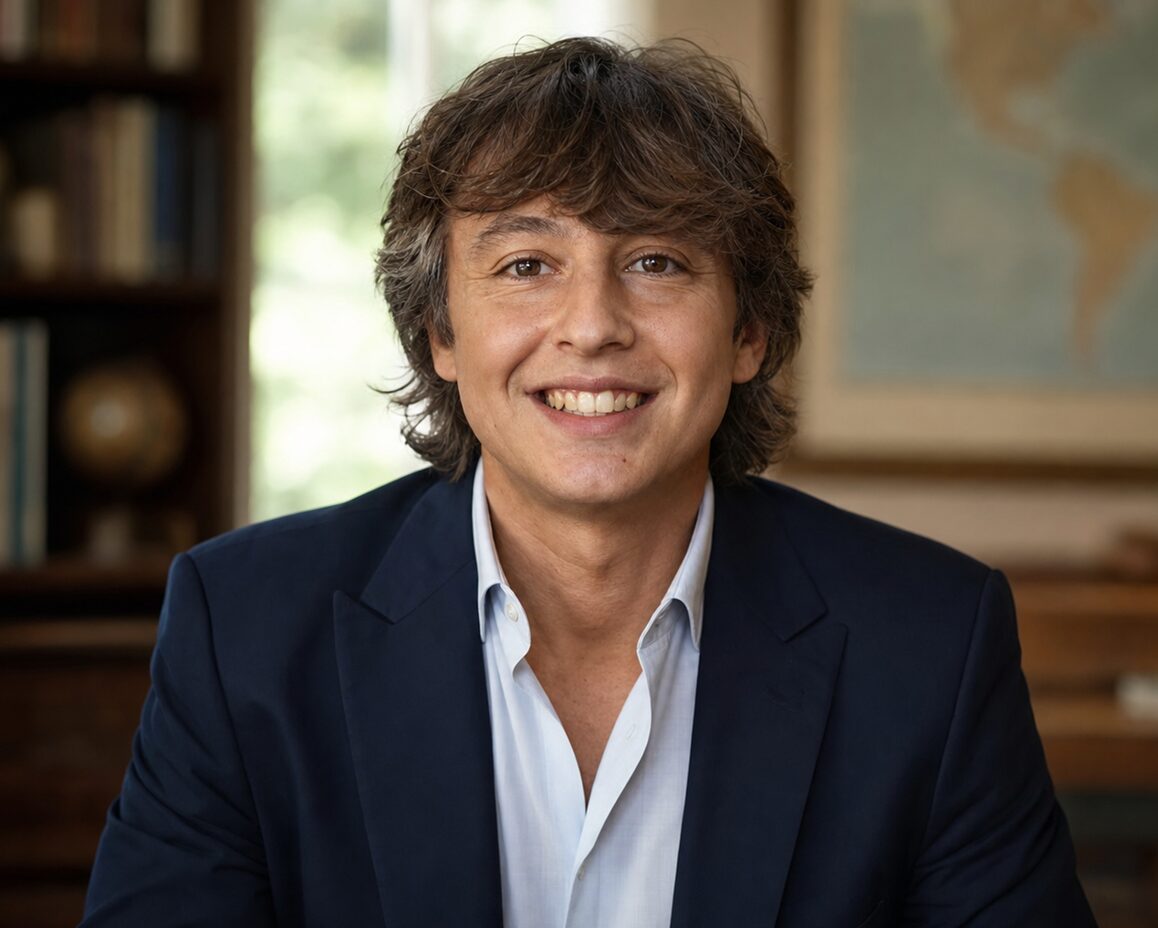
Meet Leo: The Heartbeat Behind ‘A Country A Month’
Journeying through the pages of A Country A Month, you might often feel the rhythm of a storyteller’s heartbeat, pulsating through each line, each image, and each adventure shared. That heartbeat belongs to none other than our remarkable website editor, Leo.
With a lens in one hand and a pen in the other, Leo seamlessly marries his passions for photography and writing. His eye captures moments that words can barely describe, yet his eloquence brings those images to life, transcending borders and connecting us all through shared stories. An avid traveler, every country he’s visited has added another chapter to his expansive tale, and through our platform, he generously shares these chapters with us.